Empty Nest Transition in Miami

In Miami, the empty nest hits at the intersection of Latin family closeness and snowbird identity — the structure that organized everything is suddenly absent.

The child left. The purpose architecture collapsed with them.

Empty nest is an identity crisis at the neural level. It can be rebuilt.

Book a Strategy Call

Key Points

  1. The identity void produced by the empty nest is not a cognitive error to be corrected with accurate framing.
  2. The reward system's calibration to high-density parenting inputs also creates a specific problem with activities that the empty nest parent knows should be satisfying.
  3. The relational reckoning that the empty nest surfaces does not require a crisis to be addressed.
  4. The goal of working at the neural architecture level is not the resolution of grief or the achievement of acceptance.
  5. Most people who enter the empty nest phase were not unprepared in any ordinary sense.
  6. The neural architecture that is about to lose its primary organizing input operates below that level entirely.
  7. The brain's self-evaluation network had been calibrated, incrementally and over nearly two decades, around the parenting role.

Why the Empty Nest Hits Harder Than Anyone Predicted

“The goal of working at the neural architecture level is not the resolution of grief or the achievement of acceptance.”

Most people who enter the empty nest phase were not unprepared in any ordinary sense. They anticipated the departure. They celebrated it. They may have spent years preparing their child for independence. And then the child leaves, and the experience is nothing like what anticipatory awareness suggested it would be. The reason is structural. Cognitive preparation operates in the narrative mind. The neural architecture that is about to lose its primary organizing input operates below that level entirely.

The brain’s self-evaluation network had been calibrated, incrementally and over nearly two decades, around the parenting role. It is the system responsible for generating a coherent sense of who you are, what matters, and what your time means. Every morning’s schedule, every weekend’s structure, every decision about where to live — all of it was organized in relation to a child who is no longer there. The network does not receive the departure notice and reconfigure. It simply loses the input it was organized around. The result is disorientation that feels nothing like ordinary sadness.

The reward system is simultaneously deprived of its most consistent and reliable activation source. Parenting generates reward-system activation through multiple channels: the responsiveness of a child, the sense of being needed, the daily markers of growth and progress, the social identity of being someone’s parent. These inputs were not occasional. They were structural. When they disappear, the reward system does not substitute automatically. It registers the absence as loss — not once, but in every moment that previously carried a parenting-related reward signal and now carries nothing instead.

The Identity Void That Insight Cannot Fill

A common experience in the empty nest phase is the discovery that insight offers less traction than expected. You can articulate clearly that your child’s independence was the goal of parenting. You can understand this completely and find that the understanding does not change the experience. That gap is not a failure of rationality or self-awareness. It is the natural consequence of working with the wrong tool on the wrong level of the problem.

The identity void produced by the empty nest is not a cognitive error to be corrected with accurate framing. It is a structural gap in the self-evaluation network — a system that generates meaning and coherence through neural pathways, not through conclusions. The narrative mind’s correct understanding of the situation does not reach the identity network at the level where the void exists. This is why people who know exactly what the empty nest means still experience the disorientation as profound and persistent.

The self-evaluation network, left without its primary input, does not remain neutral. It generates output that reflects the structural gap: the sense of not knowing who you are outside the parenting role. The difficulty answering what you want now. The schedule that was once full to overflowing, now feeling both empty and purposeless. These are not existential questions waiting for philosophical answers. They are the symptoms of a network that has lost its organizing principle and has not yet found a replacement with the same structural weight.

The Relationship System the Child Was Mediating

Many couples who enter the empty nest phase discover that the child was doing structural work in the relationship they did not fully recognize while it was happening. The shared project of parenting — the logistics, the scheduling, the coordination, the shared focus — provided a relational architecture that gave the partnership coherence and daily purpose. With the child gone, the couple faces each other without that shared organizing project. The relational system that had been operating through the child’s presence now has to function differently or not at all.

This is not a failure of the relationship. It is the exposure of a structural dependency that the parenting phase made invisible. Partners who love each other and have built a life together can find themselves in the empty nest without a reliable conversational architecture. Without the shared focus that once made parallel life feel like genuine partnership. Without the daily coordination that created a sense of operating as a unit. The child’s absence does not create a bad relationship. It reveals the degree to which the relationship had been organized through the parenting role rather than independently of it.

The neural architecture of attachment — the systems that regulate closeness and connection in adult partnerships — can be rebuilt around new inputs. But rebuilding requires that both partners understand what has been lost structurally, not just emotionally. Couples who wait for the empty nest disorientation to resolve on its own often find that it consolidates instead. The parallel drift deepens. The conversational silence grows. The sense of being strangers in a shared space becomes the new default.

The Reward System Void

The reward system’s loss in the empty nest is not a single deprivation event. It is a cascade of micro-deprivations across every dimension of daily life that parenting had saturated with activation. The morning routine that once involved preparing a child for the day generated a low-level but continuous stream of reward-system input: the responsiveness, the dependency, the sense of being necessary. The evening routine that involved homework supervision, meal coordination, or simply the sounds of another person in the house carried the same continuous activation at a structural level. None of these were dramatic reward events. But their cumulative removal constitutes a withdrawal of the reward system’s primary operating environment.

What the empty nest parent often experiences as flatness, low motivation, or inability to generate enthusiasm for activities that once held meaning is the reward system operating in an environment that no longer has the density of activation it was calibrated to receive. The activities remain available. The capacity for engagement has not been permanently damaged. But the system is running below its calibrated threshold, and the gap between the activities’ available reward and the system’s trained expectation registers as disappointment even when there is no identifiable reason for disappointment.

The reward system’s calibration to high-density parenting inputs also creates a specific problem with activities that the empty nest parent knows should be satisfying. Travel, creative work, social engagements — these carry genuine reward-system potential. But the parent who engages with them immediately after the child’s departure often finds that the engagement feels hollow. Not because the activities are wrong, but because the reward system is calibrated to a density and quality of input that these activities, in isolation, do not match. The hollowness is not a judgment on the activities. It is a measurement of the gap between what the system was calibrated for and what it is currently receiving. Understanding this gap is the starting point for building inputs that actually close it.

Rebuilding the reward system’s primary inputs is not a matter of finding hobbies or filling the schedule. It requires identifying inputs that carry the specific qualities the parenting role provided — genuine consequence, relational responsiveness, the sense of contributing to something that matters beyond the self, daily markers of progress or growth. These inputs exist outside the parenting role. But they require deliberate construction, not accidental discovery. The precision of the work is in knowing exactly what the reward system lost and building replacements that match the structural weight of what is absent.

When the Marriage Resurfaces

The empty nest frequently operates as an unwanted clarity device in long-term partnerships. The years of shared parenting created an architecture of joint purpose that did not require either partner to answer fundamental questions about what they wanted from the relationship, what kind of shared life they were building, or whether the partnership itself was organized around something that would survive the departure of the organizing project. The child’s presence made those questions unnecessary. The child’s departure makes them unavoidable.

What surfaces in the empty nest is not always conflict. Sometimes it is distance — a kind of polite parallel existence between two people who have been living alongside each other for years without the shared project that once made the proximity feel like partnership. The house is quiet not just because the child is gone but because the two adults living in it have discovered that they do not know how to generate relational texture in the absence of the parenting logistics. The silences are not hostile. They are disorienting — the product of a relational system that has lost its organizing structure and has not yet found a new one.

Sometimes what surfaces is genuine incompatibility that the parenting years suppressed. The urgency of raising a child together can sustain a partnership through disagreements and divergences that, without the urgency, would have required a different kind of reckoning. When the child leaves, the urgency goes with them. The incompatibilities that were managed rather than resolved now occupy a space that parenting once filled. The empty nest does not create these incompatibilities. It removes the structure that was containing them. Distinguishing between a relational system that simply needs a new organizing architecture and one whose underlying structure requires a different kind of attention is part of the precision work.

The relational reckoning that the empty nest surfaces does not require a crisis to be addressed. In fact, the couples who navigate the empty nest most effectively are often those who recognize the structural nature of the relational shift before it produces visible strain. Who understand that the silence and the distance are not evidence of a failed relationship but symptoms of a relational system that needs a new organizing architecture. Who begin the work of building that architecture deliberately rather than waiting for the discomfort to become acute enough to demand attention.

Identity Beyond Parenting

The parent who cannot answer the question of who they are outside the parenting role is not experiencing a failure of self-knowledge. They are accurately reporting the state of a self-evaluation network that had organized its output almost entirely around a role that no longer exists. The network did not fail to retain a separate identity during the parenting years. It did what neural systems do: it calibrated its architecture around the most structurally dominant input available, which was the parenting role, and it did so efficiently. The efficiency is now the problem.

The parts of the identity that exist independently of the parenting role — the interests, the relational capacities, the ways of engaging with the world that preceded the child’s arrival — did not disappear. They receded. The self-evaluation network deprioritized them because they were not required to maintain the coherence of the parenting identity. Neural systems allocate resources according to what is structurally dominant. Receding is not the same as erasure. But retrieval requires deliberate reconstruction, not simple introspection. The person who searches for who they are outside parenting and finds the question difficult is not lacking in self-knowledge. They are working with a system that is not yet organized to generate that particular output.

The self-evaluation network’s reorganization around a new identity is not a linear process. It does not proceed from confusion to clarity in a steady arc. It tends to move in the pattern typical of neural reorganization: periods of apparent progress followed by moments of apparent regression, days when the new organizational logic holds and days when it does not, experiences that activate the old parenting-identity architecture alongside experiences that activate the new one. The parent who interprets these regressions as evidence that the reorganization is failing is making an inaccurate assessment of what the pattern actually means. They are the normal outputs of a system in the process of restructuring. The goal is not to eliminate them but to shorten the intervals between them and ensure that each return to the old architecture produces less structural disruption than the one before.

Identity reconstruction in the empty nest is not a search for a prior self. It is the deliberate construction of a new organizational logic — one that integrates the parenting years, retains what those years built. Organizes the self-evaluation network around inputs that carry genuine weight for this phase of life. The parenting years are part of the identity, not a parenthesis in it. The question is not how to return to the self that existed before them. It is how to build a self that fully contains them and continues forward from where they left off.

Marble console with crystal brain sculpture and MindLAB journal in warm Miami evening light with tropical hardwood and copper accents

What Rebuilding Purpose Architecture Looks Like

Purpose architecture is not a concept. It is a structural description of what the brain requires to generate the experience of meaning in daily life. The self-evaluation network generates meaning-output when the daily activities it monitors carry genuine consequence, when the relational systems it tracks register genuine responsiveness. When the actions it processes contribute to a narrative of progress or growth. Parenting provided all three of these simultaneously and continuously over nearly two decades. That is an exceptionally dense source of purpose architecture. Its removal creates a structural gap that requires equally deliberate construction to fill.

What rebuilding looks like at the behavioral level varies significantly by person. For some, it involves committing to work that carries consequence in ways the professional role during the parenting years did not fully allow. Projects or contributions that were deprioritized because the parenting logistics demanded priority. For others, it involves constructing relational commitments that carry the responsiveness and dependency qualities the parenting role provided — not substitutes for parenting, but relational inputs that activate the same reward-system channels through different content. For still others, it involves building a shared project with a partner that replaces the parenting project as an organizing architecture for the relationship.

The common denominator across all of these is structural deliberateness. Purpose architecture does not rebuild itself through patience or through the simple passage of time. The neural systems that generate coherence and meaning are responsive to deliberate input construction — to the intentional identification and installation of new organizing structures. The person who waits for purpose to return on its own is waiting for a structural reconstruction to happen without the structural work. The precision of this approach is in knowing what the architecture requires and building it with the specificity that any reconstruction demands.

What Changes When the Architecture Rebuilds

The goal of working at the neural architecture level is not the resolution of grief or the achievement of acceptance. Both may follow as byproducts. But they are outputs, not the target. The target has three parts. First: reconstructing the self-evaluation network around a self that does not require the parenting role to generate coherence. Second: recalibrating the reward system’s primary inputs so that meaning-generation and daily structure return. Third: rebuilding the relational architecture so that the partnership can organize itself around something other than what has now departed. The architecture can reorganize. The brain that built its purpose around parenting has the same capacity to build purpose around what comes next.

When the identity architecture stabilizes around a rebuilt self-concept, the disorientation lifts. Not because the child’s absence becomes easier to accept. Because the absence no longer threatens the coherence of who you are. The schedule is no longer a reminder of what is missing. The reward system finds new inputs that carry genuine weight. The relational system between partners develops a new shared architecture that does not depend on the child as its organizing principle. This is not a return to who you were before children. It is the construction of a self that has integrated the parenting years and can move forward with the full architecture of that identity intact — reorganized around what comes next.

Marker What You Experience What's Happening Neurologically What We Restructure
the Empty Nest Hits Harder It is the system responsible for generating a coherent sense of who you are, what matters, and what your time means. It registers the absence as loss — not once, but in every moment that previously carried a parenting-related reward signal and now carries nothing instead. Most people who enter the empty nest phase were not unprepared in any ordinary sense.
Identity Void That Insight Cannot You can articulate clearly that your child's independence was the goal of parenting. It is a structural gap in the self-evaluation network — a system that generates meaning and coherence through neural pathways, not through conclusions. You can articulate clearly that your child's independence was the goal of parenting.
Relationship System the Child Was Without the shared focus that once made parallel life feel like genuine partnership. The neural architecture of attachment — the systems that regulate closeness and connection in adult partnerships — can be rebuilt around new inputs. But rebuilding requires that both partners understand what has been lost structurally, not just emotionally.
Reward System Void But the parent who engages with them immediately after the child's departure often finds that the engagement feels hollow. The reward system's loss in the empty nest is not a single deprivation event. Rebuilding the reward system's primary inputs is not a matter of finding hobbies or filling the schedule.
the Marriage Resurfaces The empty nest frequently operates as an unwanted clarity device in long-term partnerships. The empty nest frequently operates as an unwanted clarity device in long-term partnerships. The relational reckoning that the empty nest surfaces does not require a crisis to be addressed.
Identity Beyond Parenting The parent who cannot answer the question of who they are outside the parenting role is not experiencing a failure of self-knowledge. It did what neural systems do: it calibrated its architecture around the most structurally dominant input available, which was the parenting role, and it did so efficiently. They are working with a system that is not yet organized to generate that particular output.

Why Empty Nest Transition Matters in Miami

Empty Nest Transition in Miami

Miami’s snowbird population carries a variant of the empty nest experience that is rarely named directly. Families who split time between Miami and northern cities organized that seasonal rhythm around the children. School calendars, holiday visits, the logic of the seasonal move — all of it was shaped by when the kids were home and when they weren’t. When the children establish independent lives, the seasonal pattern loses its organizing logic. The parents find themselves in Miami in February without the structure that once gave the warmth and the displacement their meaning.

Latin family culture in Miami adds its own weight to the empty nest experience. The proximity, the expectation of ongoing closeness, the structural integration of extended family into daily life — all of it makes the child’s departure land differently. In a cultural context where independence is the assumed endpoint, the departure is a milestone. Here, it can feel like a rupture. For families where children are expected to remain close and accessible — reachable without a flight — the child’s movement to another city is not merely a developmental milestone. It is a cultural rupture. The neural architecture was organized around a proximity the culture reinforced. The absence is correspondingly structural, not occasional.

The retirement-community context adds another layer. Miami’s abundant retirement communities are filled with parents who arrived in part to build the life that would come after parenting. They are now living that life without having fully resolved the identity reorganization the empty nest requires. The community’s social architecture offers activities and social contact. None of it reaches the level of the identity void that parenting left. The busyness is real. The reorganization is incomplete.

For Cuban-American and Venezuelan families in particular, the empty nest can intersect with migration grief in ways that compound both. The child leaving for a college in another state activates the same separation circuitry the family’s own displacement once trained. The sense of distance, of family scattered, of reunion requiring planning rather than proximity — all of it becomes familiar again. The neural architecture that carries the original migration grief receives a second activation through the child’s departure. The two losses reinforce each other at the level of the loss circuitry. The family may not recognize them as structurally connected.

The compounded layer matters. What presents as an unusually intense empty nest response often carries the unprocessed weight of the original migration separation — a loss the family moved through practically without resolving neurally. The child’s departure gives that earlier encoding a new activation point. Addressing the current disruption without accounting for the layered structure underneath it tends to produce partial results at best.

The reward system void in Miami has a specific quality shaped by the city’s daily rhythms. Parents whose mornings were organized around school logistics in Coral Gables or Coconut Grove, whose weekends revolved around shared family time along the waterfront, whose daily schedules were built around a child’s activities. All of those rhythms encoded reward-system activation through repetition over years. When the logistics disappear, the routes and neighborhoods remain unchanged, but the environmental cues continue to activate neural patterns that no longer resolve into the relational contact they once anticipated. The city itself becomes a map of the absence.

My work with people navigating the empty nest in Miami addresses the specific structural patterns this city’s population produces. The snowbird identity reorganization. The cultural rupture of Latin family separation. The retirement-community bypass of real identity work. The compounded grief when migration loss and child departure activate the same neural architecture. Understanding which system has been disrupted, and what it needs to rebuild, is where the precision work begins.

Dr. Sydney Ceruto, PhD — Founder, MindLAB Neuroscience

Dr. Sydney Ceruto, PhD — Founder & CEO, MindLAB Neuroscience

Dr. Ceruto holds a PhD in Behavioral & Cognitive Neuroscience from NYU and two Master’s degrees from Yale University. She lectures at the Wharton Executive Development Program at the University of Pennsylvania and has been an Executive Contributor to the Forbes Coaching Council since 2019. Dr. Ceruto is the author of The Dopamine Code (Simon & Schuster, June 2026). She founded MindLAB Neuroscience in 2000 and has spent over 26 years pioneering Real-Time Neuroplasticity™ — a methodology that permanently rewires the neural pathways driving behavior, decisions, and emotional responses.

References

Pillemer, D. B., & Kuwabara, K. J. (2012). Directive functions of autobiographical memory: Theory and method. In D. Berntsen & D. C. Rubin (Eds.), Understanding autobiographical memory: Theories and approaches (pp. 181–196). Cambridge University Press.

Diehl, M., Elnick, A. B., Bourbeau, L. S., & Labouvie-Vief, G. (1998). Adult attachment styles: Their relations to family context and personality. Journal of Personality and Social Psychology, 74(6), 1656–1669. https://doi.org/10.1037/0022-3514.74.6.1656

Aron, A., Fisher, H., Mashek, D. J., Strong, G., Li, H., & Brown, L. L. (2005). Reward, motivation, and emotion systems associated with early-stage intense romantic love. Journal of Neurophysiology, 94(1), 327–337. https://doi.org/10.1152/jn.00838.2004

Northoff, G., Heinzel, A., de Greck, M., Bermpohl, F., Dobrowolny, H., & Panksepp, J. (2006). Self-referential processing in our brain — A meta-analysis of imaging studies on the self. NeuroImage, 31(1), 440–457. https://doi.org/10.1016/j.neuroimage.2005.12.002

Success Stories

“When my youngest left for college, I didn't just feel sad — I felt erased. My entire sense of self had been wired to caregiving for two decades, and I didn't know who I was without it. Years of talk-based approaches hadn't touched it. Dr. Ceruto mapped the identity circuitry that had fused with the role and restructured it. I didn't find a new purpose — I found the one that had been underneath the whole time.”

Diane L. — Nonprofit Director Chicago, IL

“The divorce wasn't destroying me emotionally — it was destroying me neurologically. My amygdala was treating every interaction with my ex, every legal update, every quiet evening as a survival-level threat. Years of talk-based approaches hadn't touched it. Dr. Ceruto identified the attachment disruption driving the response and restructured it at the root. The threat response stopped. Not because I learned to tolerate it — because the pattern was no longer running.”

Daniela M. — Attorney North Miami Beach, FL

“I'd relocated internationally before, but this time my nervous system wouldn't settle. Everything unfamiliar registered as danger — new people, new routines, even the sound of a different language outside my window. Pushing through it only deepened the pattern. Dr. Ceruto identified that my nervous system was coding unfamiliarity itself as threat and restructured the response at its source. The world stopped feeling hostile. I stopped bracing.”

Katarina L. — Gallerist Zurich, CH

“When the inheritance came, it didn't feel like a gift — it felt like a grenade in every family relationship I had. I couldn't make a single financial decision without a flood of guilt and second-guessing. Years of talking through it hadn't changed anything. Dr. Ceruto identified the neural loop connecting money to fear of family rejection and dismantled it. The paralysis didn't fade — it stopped.”

Vivienne R. — Philanthropist Palm Beach, FL

“From our first meeting, Sydney made me think about what I actually wanted and helped me change my perspective. She immediately put me at ease. I’ve only been working with her a short time, but I already have a more positive outlook — for the first time, I really see that I can find a career I’ll be happy in. What I like most is her honesty and ability to make you examine what’s holding you back in a way that doesn’t make you feel judged.”

Nyssa — Creative Director Berlin, DE

“I came to Dr. Ceruto thinking I needed help with my career, but she quickly recognized that the real roadblocks were the relationships I was choosing and how I dealt with conflict. With her support, I finally left unhealthy situations I’d struggled to end for years. She helped me identify deep-seated patterns I didn’t realize were holding me back. I never feel rushed, and she follows up with detailed written insights I reflect on for weeks. She uncovered major blockers I would never have spotted alone.”

Rachel L. — Brand Strategist Montecito, CA

Frequently Asked Questions About Empty Nest Transition

Why does the empty nest feel like more than sadness — more like not knowing who I am?

Because the experience is not primarily emotional. It is structural. The brain's self-evaluation network — the system responsible for generating a coherent sense of identity, purpose, and meaning — had been calibrated around the parenting role over 18 or more years. Every daily routine, every schedule, every decision about how to spend time and attention was organized in relation to the child. When the child leaves, the network loses its primary organizing input. The disorientation — the sense of not knowing who you are outside of parenting, the difficulty answering what you want now — is the output of a network that has lost its reference point. It is a structural gap, not a mood event. That is why insight and reframing offer less traction than you might expect: they operate on the narrative mind, while the void exists at the level of the neural architecture.

I raised my child to be independent. I knew this was coming. Why does it feel this hard?

Because cognitive preparation and neural architecture are two different systems. The narrative mind can hold the correct understanding — that independence was the goal, that this outcome is success, that the grief is not proportionate to the facts. Meanwhile, the neural architecture that is losing its primary input operates entirely beneath that level of reasoning. You prepared yourself in the part of the brain that processes understanding. The disruption is happening in the part that generates identity coherence and reward-system activation. These systems do not communicate as directly as we tend to assume. This is not a failure of preparation or perspective. It is the predictable result of working with the wrong tool on the wrong level of the problem.

Why does the house feel different — almost unbearable — even when I am filling my time?

The physical environment was organized around the child's presence — not just emotionally, but structurally. The sounds, the objects, the spatial logic of a home that housed a child carry associative encoding in the brain. When the presence disappears, the environment continues to activate the neural patterns associated with it. But those patterns now lead nowhere — they do not resolve into the interactions, the sounds, the relational contact they were wired to anticipate. The result is an environment that generates activation without completion, which the brain registers as absence. Filling time with activity addresses the schedule. It does not address the environmental encoding. The house does not feel different because you are not busy enough. It feels different because the brain is still running the pattern that expects the child to be there.

My relationship with my partner feels different now that the kids are gone. Is that normal?

It is predictable, which is different from normal in the sense that it requires something to address it. When the child was present, the parenting logistics provided a shared organizing project — something to coordinate around, a shared focus that gave the partnership daily texture and purpose. The couple did not have to generate that structure from scratch. When the child leaves, that organizing project ends. The partnership has to find a new architecture or operate without one. The relational disorientation is not evidence that the relationship was dependent on the child or that something was wrong beneath the surface. It is the exposure of a structural dependency that the parenting years made invisible. Recognizing it as a structural issue — rather than a relational problem or a personal failure — is the starting point. The work is rebuilding the partnership around a new organizing principle, one that does not require the child to be present.

I keep thinking about all the things I did not do while they were growing up. Is that part of this?

Yes — and it is one of the more difficult dimensions of the empty nest because it arrives at the moment when the window has closed. The self-evaluation network, reorganizing around the absence of the parenting role, does not only inventory what has been lost. It also inventories what was not fully inhabited while it was available. The grief for the parenting that did not happen — the presence divided by other demands, the moments not fully taken — arrives alongside the grief for the child's departure. Both activate the same self-evaluation systems. These are distinct losses that require distinct attention. Conflating them — treating the missed-window grief as simply more of the departure grief — tends to leave the former unresolved and therefore more persistent.

How is this different from depression? The symptoms seem similar.

The overlap in experience is real — the low energy, the difficulty finding motivation, the sense that things that once mattered no longer do. But the underlying architecture is different, and the difference matters for what is actually useful. A generalized flattening of the reward system involves a different pattern than what the empty nest produces — which is a targeted loss of specific organizing inputs. The self-evaluation network loses its reference point. The reward system loses its primary activation sources. The daily-structure circuitry loses its organizing logic. The experience can look similar on the surface. But working at the level of the structural disruption — identifying precisely which systems have lost which inputs and rebuilding those inputs deliberately — is different from working at the level of mood-state regulation. The specificity of the disruption is what makes precision work possible and more efficient than general support.

Will I feel like myself again? I am not sure I remember who I was before I became a parent.

The goal is not a return to who you were before — that self existed before nearly two decades of experience that are genuinely part of who you are now. The goal is the construction of a self that has fully integrated the parenting years and can move forward with the complete architecture of that identity, reorganized around what comes next. The parenting role contributed to the self. It did not replace it. But the neural architecture that generates identity coherence had been organized around the parenting role for so long that the independent self needs deliberate reconstruction rather than simple rediscovery. It is there. It needs the same precision work that any structural reconstruction requires: identifying what is missing, building the new inputs, and allowing the network to reorganize around them over time.

What does a Strategy Call involve, and is it the right first step?

The Strategy Call is a one-hour conversation by phone — not video, not in person. It is $250, and that fee does not apply toward any program. In that hour, I assess the specific architecture of what you are experiencing — which systems are disrupted, what the disruption is organized around, and what precision approach is appropriate for your particular situation. The empty nest presents very differently across individuals. The missed-window grief of a career-first parent is a different architectural problem than the expat isolation of a parent far from their adult child. And both are different from the dual-role collapse of a parent who was also a child performer's career manager. Understanding the specific configuration is what makes the work precise rather than general. The Strategy Call is where that understanding begins. If you are finding that busyness and reframing are not reaching the level where the disruption actually lives, that is an accurate signal. The structural work is what is needed.

How long does the empty nest reorganization typically take?

The timeline depends on what is specifically disrupted and how long the architecture has been operating without its primary organizing input. A person who begins precision work shortly after the child's departure is working with a system that has not yet consolidated around the absence. A person who has been in the empty nest for two years and found neither activity nor reframing to be sufficient is working with a system that has had time to stabilize around the void. Rather than rebuild around new inputs, it has organized itself around the absence. That stabilization takes more deliberate work to reorganize. What I can say with confidence is that the duration is shorter when the work operates at the correct level. General support, insight-based approaches, and activity substitution address the surface of the experience. They do not reach the level of the architecture. Precision work at the structural level, starting with an accurate understanding of exactly what is disrupted, is what compresses the timeline.

I have worked with a practitioner before and found it helpful in some ways. How is this different?

Insight-based work, emotional processing, and narrative approaches are genuine contributions to wellbeing. The limitation is that the self-evaluation network's reorganization, the reward system's recalibration, and the identity architecture's reconstruction do not happen primarily through insight or narrative processing. They happen at the level of the neural systems themselves, which respond to a different kind of input than conversation and reflection. My work at MindLAB Neuroscience addresses the empty nest at the level of the specific systems that are disrupted. Not by bypassing reflection, but by targeting the structural layer that insight-based approaches do not reach directly. The question worth asking is not whether prior work was helpful but whether the specific disruption you are experiencing now has been reached at the level where it actually exists. If the disorientation persists after significant insight work, the structural level is likely what remains unaddressed.

Also available in: Wall Street · Midtown Manhattan · Beverly Hills · Lisbon

Take the First Step

The Strategy Call is a focused conversation with Dr. Ceruto that maps the specific neural mechanisms driving your concerns and determines the right path forward.

Book a Strategy Call
MindLAB Neuroscience consultation room

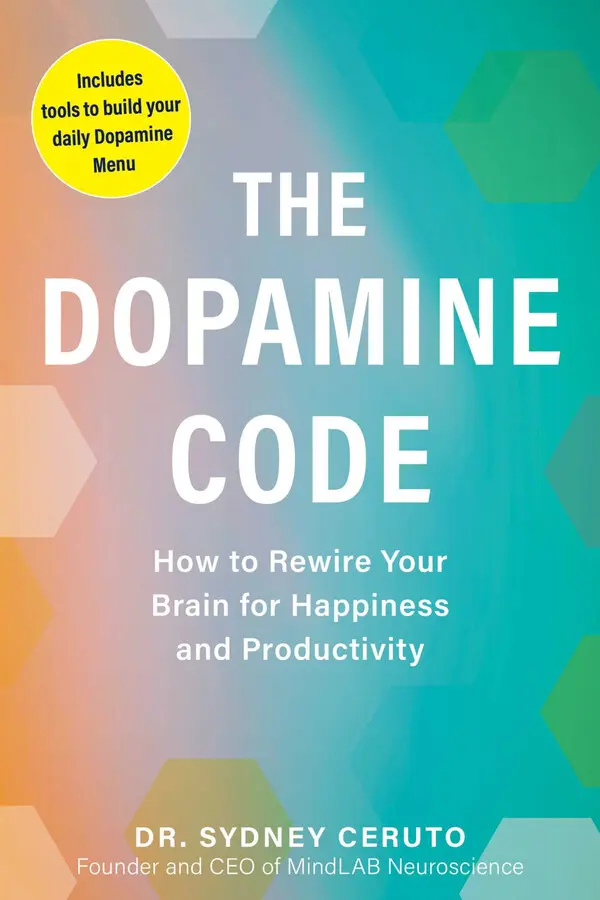
The Dopamine Code

Decode Your Drive

Why Your Brain Rewards the Wrong Things

Your brain's reward system runs every decision, every craving, every crash — and it was never designed for the life you're living. The Dopamine Code is Dr. Ceruto's framework for understanding the architecture behind what drives you, drains you, and keeps you locked in patterns that willpower alone will never fix.

Published by Simon & Schuster, The Dopamine Code is Dr. Ceruto's framework for building your own Dopamine Menu — a personalized system for motivation, focus, and enduring life satisfaction.

Order Now

Ships June 9, 2026

The Dopamine Code by Dr. Sydney Ceruto — Decode Your Drive
Locations

The Intelligence Brief

Neuroscience-backed analysis on how your brain drives what you feel, what you choose, and what you can’t seem to change — direct from Dr. Ceruto.