





Nervous System Regulation & Vagal Tone in Westchester County

The autonomic nervous system determines whether the brain operates from executive precision or reactive survival. Dr. Ceruto provides neuroscience-based assessment of vagal tone and autonomic regulation to restore cognitive flexibility and stress resilience.

When the nervous system can't shift out of high alert, everything else pays the price — sleep, focus, relationships, decisions. The vagus nerve — the body's primary reset pathway from stress back to calm — is trainable. At MindLAB Neuroscience, we identify what's disrupting your nervous system's natural recovery cycle and build the conditions for durable regulation.
Book a Strategy Call
ForbesUSA TodayHuffPostNewsweekAssociated PressCosmopolitanBusiness InsiderForbesUSA TodayHuffPostNewsweekAssociated PressCosmopolitanBusiness Insider

Key Points

  1. The neural circuits governing autonomic regulation and executive cognition share the same anatomical substrate — nervous system state directly determines the quality of thought.
  2. Heart rate variability consistently predicts superior performance across working memory, inhibitory control, cognitive flexibility, and wise reasoning.
  3. Burnout is vagal resource exhaustion — emotional exhaustion is independently associated with reduced vagal tone during both rest and emotional challenge.
  4. Midlife heart rate variability predicts the rate of cognitive decline over a decade, establishing vagal tone as a biomarker of long-term neural trajectory.
  5. The autonomic nervous system operates through a three-tiered hierarchy: social engagement, fight-or-flight, and freeze-shutdown — stress progressively moves the system down the tiers.
  6. The speed of autonomic recovery following challenge is itself a trainable variable that independently predicts cognitive performance stability.
  7. Recalibrating the autonomic setpoint involves baroreflex sensitization, prefrontal-subcortical circuit strengthening, and interoceptive resolution training — producing durable shifts over eight to twelve weeks.

Every cognitive function that defines high-level performance — working memory, inhibitory control, cognitive flexibility, strategic decision-making — depends on the state of the autonomic nervous system. This is not a peripheral wellness consideration. The neural circuits governing autonomic regulation and executive cognition share the same anatomical substrate, meaning the state of the nervous system directly determines the quality of thought.

Three States, One Hierarchy

“Every cognitive function that defines high-level performance — working memory, inhibitory control, cognitive flexibility, strategic decision-making — depends on the state of the autonomic nervous system. This is not a peripheral wellness consideration.”

The autonomic nervous system operates through a three-tiered hierarchy ordered by evolutionary age. The newest circuit supports social engagement, calm attention, and cognitive flexibility. It is the state from which clear thinking, nuanced decision-making, and accurate social perception naturally emerge. Below it sits the sympathetic mobilization system, governing fight-or-flight responses. And at the base, the oldest circuit, the dorsal vagal system, mediates freeze, shutdown, and metabolic conservation.

High-performing humans operate primarily from the ventral vagal state. But stress, accumulated physiological burden, and chronic threat perception can progressively down-regulate this system, recruiting sympathetic and, in extreme cases, dorsal vagal responses. The individual does not choose this shift. It occurs below conscious awareness through neuroception, unconscious environmental threat monitoring.

Macro cross-section of neural pathway with copper sheathing forming around blue signal core depicting active brain optimization

Vagal Tone as a Neural Readiness Index

Heart rate variability, fluctuation between successive heartbeats, is the primary operational measure of vagal tone. But its significance extends far beyond cardiovascular health. The neurovisceral integration model, developed across decades of research, establishes that the central autonomic network encompasses the prefrontal cortex. This circuit governs both executive cognitive function and cardiac vagal outflow.

Because these functions share neural substrates, resting vagal tone indexes the functional integrity of the prefrontal inhibitory control network. Higher resting heart rate variability reflects a more responsive inhibitory system capable of flexible, context-sensitive suppression of subcortical threat responses. This enables access to prefrontal executive resources rather than reactive survival processing.

The association between vagal tone and executive function is among the most replicated findings in applied psychophysiology. Systematic review of dedicated studies found that higher heart rate variability consistently predicted superior performance across working memory, inhibitory control, cognitive flexibility, and wise reasoning. The effects are most pronounced for conflict monitoring and inhibitory tasks — functions relevant to executive decision-making.

The Autonomic Signature of Chronic Stress

Chronic sympathetic dominance, prevalent dysregulation in professionals, produces a recognizable cognitive phenotype. Decision fatigue combined with paradoxical urgency: decisions feel increasingly costly to make, yet the individual is reluctant to defer them. Emotional blunting: reduced responsiveness to positive stimuli with preserved or heightened reactivity to negative ones. Hypervigilance: persistent low-grade scanning behavior that prevents sustained focused attention.

The physiological signature includes elevated resting heart rate, blunted heart rate recovery following challenge. Sustained cortisol elevation disrupts sleep architecture and redistributes prefrontal blood flow favoring subcortical defensive circuits at the cost of dorsolateral prefrontal resources.

Burnout represents the exhaustion endpoint of this trajectory. The autonomic signature of burnout is specific: emotional exhaustion, not cynicism or reduced accomplishment, is independently associated with reduced vagal tone during both rest and emotional challenge. This identifies burnout as vagal resource exhaustion, the physiological mechanism by which prolonged demand outpaces recovery capacity. Longitudinal data confirm that midlife heart rate variability predicts the rate of cognitive decline over a decade, establishing vagal tone not merely as a performance-state variable but as a biomarker of long-term neural trajectory.

Recalibrating the Autonomic Setpoint

The goal of neuroscience-informed autonomic regulation is not merely achieving a single calm episode. It is recalibrating the homeostatic setpoint from which the nervous system operates — shifting baseline toward higher vagal dominance.

Neuroscience consultation — rosewood table with crystal brain sculpture and branded journal for strategy call preparation

This involves multiple evidence-based mechanisms. Baroreflex sensitization produces measurable increases in resting vagal tone over eight to twelve weeks of consistent practice. Prefrontal-subcortical inhibitory circuit strengthening occurs bidirectionally: interventions that enhance vagal tone via afferent pathways also strengthen the top-down inhibitory circuit. Interoceptive resolution training enhances the precision of the insular cortex’s body-state representation. This produces downstream effects on emotional regulation, managing emotional responses, and autonomic flexibility.

A critical but underutilized principle: the speed and completeness of autonomic recovery following challenge is itself a trainable variable. The ability to rapidly restore parasympathetic tone following a stressor independently predicts cognitive performance stability. Training protocols that include deliberate recovery phases develop neural circuits governing active recovery, which is distinct from passive rest.

Dr. Ceruto provides the neuroscience education and assessment framework that identifies where an individual’s autonomic system is stuck, which circuits need recalibration, and which evidence-based protocols will produce the fastest, most durable nervous system reorganization.


Marker What You Experience What's Happening Neurologically What We Restructure
Decision fatigue with paradoxical urgency Decisions feel increasingly costly to make, yet you are reluctant to defer any of them Chronic sympathetic dominance has shifted prefrontal blood flow toward subcortical defensive circuits, consuming the resources needed for deliberate decision-making The autonomic setpoint — shifting baseline nervous system state from sympathetic dominance toward higher vagal tone
Emotional blunting Reduced responsiveness to positive experiences while negative ones still hit with full force The ventral vagal system — the circuit supporting calm attention and nuanced social perception — has been down-regulated by sustained physiological burden Ventral vagal circuit capacity so the nervous system can access the state from which clear thinking and accurate perception naturally emerge
Persistent hypervigilance Low-grade scanning behavior that prevents sustained focused attention, always on alert for the next problem Neuroception — the brain's unconscious environmental threat monitoring — is stuck in threat-detection mode, recruiting sympathetic responses below conscious awareness The neuroceptive threshold so the nervous system accurately distinguishes genuine threats from safe environments
Burnout exhaustion Emotional exhaustion that persists despite rest, vacation, and reduced workload Vagal resource exhaustion — prolonged demand has outpaced recovery capacity, and the autonomic system no longer has the reserves to restore parasympathetic dominance Vagal recovery capacity through targeted baroreflex sensitization and active recovery training — distinct from passive rest
Slow stress recovery Taking hours or days to return to baseline after a stressful interaction that used to resolve in minutes The speed and completeness of autonomic recovery following challenge has degraded as the inhibitory circuit weakened The trainable variable of recovery speed — building neural circuits governing active autonomic restoration after challenge

Why Nervous System Regulation & Vagal Tone Matters in Westchester County

Nervous System Regulation and Vagal Tone in Westchester County

Vagal tone — the efficiency of the vagus nerve’s regulation of the autonomic nervous system — degrades predictably under the sustained demands of the Westchester commuter lifestyle. The vagus nerve is the primary pathway through which the brain signals the body to shift from sympathetic activation into parasympathetic recovery. When this nerve’s signaling efficiency declines, the body’s capacity to downshift after stress is impaired. The commuter whose heart rate stays elevated for hours after the workday ends, whose digestion is chronically disrupted, whose sleep onset is delayed despite exhaustion — these are markers of reduced vagal tone, not merely stress.

The Westchester dual-life structure is particularly effective at degrading vagal tone because it eliminates the environmental transition cues that support parasympathetic activation. In a non-commuter life, arriving home signals safety — the nervous system can begin its recovery process. In the commuter’s life, arriving home in Hastings-on-Hudson or Dobbs Ferry after a 7 PM train signals the start of a second demand cycle: children, dinner, homework, household maintenance. The vagus nerve receives no genuine safety signal because no genuine period of zero-demand exists in the daily architecture.

The physical compression of the commute itself may directly affect vagal function. Prolonged seated posture, shallow breathing patterns in crowded train cars, and the neck-and-shoulder tension that accumulates across the commute can all reduce vagal nerve transmission efficiency through mechanical compression and postural restriction of the nerve’s thoracic pathway.

My work addresses vagal tone at the level of the autonomic regulatory system: restoring the vagus nerve’s capacity to signal parasympathetic recovery, rebuilding the nervous system’s ability to distinguish between genuine threat and habitual activation, and creating the neural conditions under which the body can actually recover from the demands that each day imposes.

Dr. Sydney Ceruto, PhD — Founder, MindLAB Neuroscience

Dr. Sydney Ceruto, PhD — Founder & CEO, MindLAB Neuroscience

Dr. Ceruto holds a PhD in Behavioral & Cognitive Neuroscience from NYU and two Master’s degrees from Yale University. She lectures at the Wharton Executive Development Program at the University of Pennsylvania and has been an Executive Contributor to the Forbes Coaching Council since 2019. Dr. Ceruto is the author of The Dopamine Code (Simon & Schuster, June 2026). She founded MindLAB Neuroscience in 2000 and has spent over 26 years pioneering Real-Time Neuroplasticity™ — a methodology that permanently rewires the neural pathways driving behavior, decisions, and emotional responses.

References

Porges, S. W. (2022). Polyvagal Theory: A science of safety. Frontiers in Integrative Neuroscience, 16, 871227. https://doi.org/10.3389/fnint.2022.871227

Forte, G., Favieri, F., & Casagrande, M. (2019). Heart rate variability and cognitive function: A systematic review. Frontiers in Neuroscience, 13, 710. https://doi.org/10.3389/fnins.2019.00710

Lehrer, P., & Gevirtz, R. (2014). Heart rate variability biofeedback: How and why does it work? Frontiers in Psychology, 5, 756. https://doi.org/10.3389/fpsyg.2014.00756

Kanthak, M. K., et al. (2017). Autonomic dysregulation in burnout and depression: Evidence for the central role of exhaustion. Scandinavian Journal of Work, Environment & Health, 43(5), 475-484. https://doi.org/10.5271/sjweh.3647

Success Stories

“After the concussion, my processing speed collapsed — I couldn't hold complex information the way I used to, and no one could explain why the fog wasn't lifting. Dr. Ceruto mapped the damaged pathways and built compensatory networks around them. My brain doesn't work the way it did before the injury. It works differently — and in some ways, more efficiently than it ever did.”

Owen P. — Orthopedic Surgeon Scottsdale, AZ

“I'd optimized everything — diet, fitness, sleep — but my cognitive sharpness was quietly declining and no one could explain why. Dr. Ceruto identified the synaptic density patterns that were thinning and built a protocol to reverse the trajectory. This wasn't prevention in theory. My neuroplasticity reserve is measurably stronger now than it was three years ago. Nothing I'd tried before even addressed the right problem.”

Henrique L. — University Dean Lisbon, PT

“Slower processing, foggier recall, decisions that used to be instant taking longer than they should — I'd been accepting it all as inevitable decline for two years. Dr. Ceruto identified the prefrontal efficiency pattern that was degrading and restructured it at the neurological level. The sharpness didn't just come back. It came back faster and more precise than it was a decade ago. Nothing I'd tried before even addressed the right problem.”

Elliott W. — Wealth Advisor Atherton, CA

“Nothing was wrong — and that's exactly why no one could help me. I wasn't struggling. I wanted to know what my brain was actually capable of if its resting-state architecture was optimized. Dr. Ceruto mapped my default mode network and restructured how it allocates resources between focused and diffuse processing. The cognitive clarity I operate with now isn't something I'd ever experienced before — and I had no idea it was available.”

Nathan S. — Biotech Founder Singapore

“The same relational patterns my mother and grandmother lived through kept repeating in my own life — the hypervigilance, the emotional shutdown, the inability to feel safe even when nothing was wrong. Talking through it changed nothing. Dr. Ceruto identified the epigenetic stress signatures driving the pattern and restructured them at the neurological level. The cycle that ran through three generations stopped with me.”

Gabriela W. — Real Estate Developer Miami, FL

“After years of burnout, the dopamine optimization work helped me finally understand and balance my dopamine levels in a way nothing else had. The personalized plan made all the difference — I’m now motivated, focused, and performing at my best without the crashes that used to follow every productive stretch. The science behind this approach is real and the results are measurable. It gave me a daily framework I still rely on to stay consistent, sharp, and fully in control of my energy.”

Larz D. — Tech Founder Palo Alto, CA

Frequently Asked Questions About Nervous System Regulation & Vagal Tone in Westchester County

What is vagal tone assessment at MindLAB Neuroscience?

Dr. Ceruto evaluates the functional state of the autonomic nervous system — the body's automatic control network. She assesses the balance between circuits that support calm cognition and those that drive reactive or shutdown states. This includes assessing heart rate variability patterns, stress recovery dynamics, and the cognitive and emotional signatures of autonomic dysregulation — breakdown of normal control systems.

How does the autonomic nervous system affect cognitive performance?

The neural circuits governing autonomic regulation and executive cognition share the same brain infrastructure. When vagal tone is high, the prefrontal cortex, the brain's executive control center, maintains strong inhibitory control over subcortical threat-detection systems. This enables working memory, cognitive flexibility — the ability to shift thinking between concepts —, and measured decision-making. When vagal tone drops and sympathetic activation takes over, the brain shifts resources away from executive function toward reactive survival processing, degrading precisely the cognitive capacities that professional performance demands.

Who seeks nervous system regulation work at MindLAB?

Individuals who notice that their stress tolerance has narrowed, their emotional reactivity has increased, or their sleep has deteriorated. Also those whose cognitive flexibility, the ability to shift thinking between concepts, has diminished despite no change in intellectual capacity. Also those experiencing burnout patterns — feeling wired yet exhausted — or people who track their own HRV data. People who want a neuroscience-grounded framework for actually changing their autonomic baseline rather than just monitoring it.

How does someone get started?

The process begins with a Strategy Call — a phone-only conversation with a $250 fee. Dr. Ceruto uses this call to understand the individual’s autonomic patterns, stress history, and cognitive concerns, and to determine whether neuroscience-based nervous system regulation is the right approach. Program structure and investment details are discussed during the Strategy Call.

How quickly can autonomic regulation improve?

Acute improvements in vagal tone — the body's ability to calm itself — can occur within individual sessions — a single resonance frequency breathing practice produces measurable heart rate variability increases. The deeper goal, however, is trait-level recalibration: shifting the baseline autonomic operating point through neuroplastic adaptation (related to the brain's ability to rewire itself). This typically requires eight to twelve weeks of consistent protocol adherence for measurable baroreflex gain increases and structural autonomic setpoint shifts. Dr. Ceruto tracks progress through objective physiological markers, not subjective impression alone.

Also available in: Miami · Wall Street · Midtown Manhattan · Beverly Hills · Lisbon

Take the First Step Toward Nervous System Balance

The Strategy Call is a focused conversation with Dr. Ceruto that maps the specific neural mechanisms driving your concerns and determines the right path forward.

Book a Strategy Call
MindLAB Neuroscience consultation room

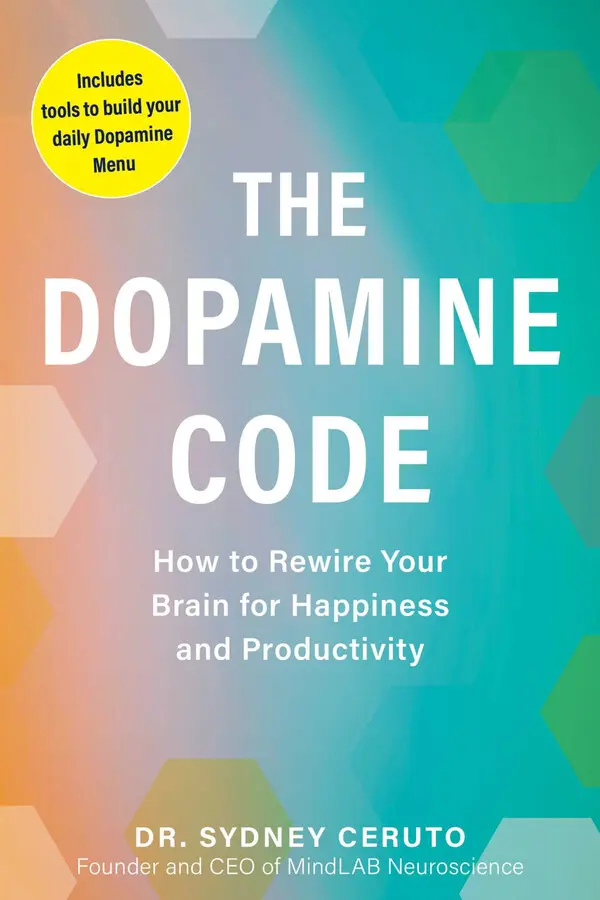
The Dopamine Code

Decode Your Drive

Why Your Brain Rewards the Wrong Things

Your brain's reward system runs every decision, every craving, every crash — and it was never designed for the life you're living. The Dopamine Code is Dr. Ceruto's framework for understanding the architecture behind what drives you, drains you, and keeps you locked in patterns that willpower alone will never fix.

Published by Simon & Schuster, The Dopamine Code is Dr. Ceruto's framework for building your own Dopamine Menu — a personalized system for motivation, focus, and enduring life satisfaction.

Order Now

Ships June 9, 2026

The Dopamine Code by Dr. Sydney Ceruto — Decode Your Drive
Locations

The Intelligence Brief

Neuroscience-backed analysis on how your brain drives what you feel, what you choose, and what you can’t seem to change — direct from Dr. Ceruto.