Brain Health & Optimization in Nassau County

The brain's cognitive architecture depends on interlocking biological systems — neuroinflammation regulation, hormonal balance, circadian timing, autonomic control, and stress-hormone calibration. Dr. Ceruto maps which systems need intervention and targets them with precision.

Brain health is not a single variable to optimize. It is an integrated system of biological mechanisms that either protect and sustain cognitive function or progressively erode it. Dr. Ceruto’s methodology assesses the full landscape — neuroinflammation, HPA axis integrity, circadian architecture, vagal tone, gut-brain signaling, and hormonal status — to identify which systems are compromised and where intervention produces the greatest return.

Book a Strategy Call
ForbesUSA TodayHuffPostNewsweekAssociated PressCosmopolitanBusiness InsiderForbesUSA TodayHuffPostNewsweekAssociated PressCosmopolitanBusiness Insider

Brain Fog & Cognitive Clarity

Brain fog corresponds to measurable disruptions across three interconnected systems: neuroinflammation from chronically activated microglia, depleted neuromodulatory reserves in the locus coeruleus — the brainstem nucleus governing attentional sharpness — and degraded connectivity between the dorsal attention and default mode networks. Dr. Ceruto differentiates which mechanism is primary and targets the biological source rather than managing symptoms generically.

Learn more about Brain Fog & Cognitive Clarity in Nassau County →

Brain Longevity & Neuroprotection

By the time cognitive symptoms appear, years of silent neuronal loss have already occurred. Brain-derived neurotrophic factor begins declining approximately ten years before symptom onset. Hippocampal volume decreases in neurologically healthy individuals in their mid-forties. Dr. Ceruto maps the individual’s current status across neuroplasticity, cognitive reserve, and neuroprotective mechanisms to intervene during the window when it matters most.

Learn more about Brain Longevity & Neuroprotection in Nassau County →

Circadian Biology & Cognitive Performance

The molecular clock drives rhythmic variations in neurotransmitter synthesis, synaptic plasticity, and the metabolic processes that fuel neural activity, producing cognitive performance differentials of 12 to 15% between circadian alignment and misalignment. Dr. Ceruto maps the individual’s circadian architecture — chronotype, light-exposure patterns, cortisol rhythmicity, and sleep architecture — to align neural performance peaks with highest-stakes cognitive demands.

Learn more about Circadian Biology & Cognitive Performance in Nassau County →

Cortisol & HPA Axis Optimization

The HPA axis governs the cortisol rhythm that distinguishes day from night, alert from recovering, active from resting. Chronic dysregulation produces dendritic atrophy in the hippocampus and prefrontal cortex while the amygdala grows more reactive. Dr. Ceruto assesses diurnal cortisol patterns, sleep architecture, and autonomic function to restore the hormonal rhythm that protects neural architecture.

Learn more about Cortisol & HPA Axis Optimization in Nassau County →

Gut-Brain Axis & Neurotransmitter Health

The gut produces over 90% of the body’s serotonin and more than 50% of its dopamine. When gut microbiome diversity declines, intestinal barrier permeability increases, and inflammatory signals enter systemic circulation, the consequences reach the brain through vagal, endocrine, and immune pathways. Dr. Ceruto maps the neuroscience of gut-brain communication to connect digestive health to the cognitive outcomes that matter most.

Learn more about Gut-Brain Axis & Neurotransmitter Health in Nassau County →

Hormones, the Brain & Cognitive Performance

Hormones cross the blood-brain barrier and bind receptors throughout the cortex and hippocampus, directly modulating synaptic plasticity, neurotransmitter synthesis, and neural connectivity. Estradiol drives rapid dendritic spine formation. Testosterone modulates prefrontal-amygdala connectivity. Thyroid hormones regulate processing speed. Dr. Ceruto provides the cognitive neuroscience context that connects hormonal transitions to brain outcomes.

Learn more about Hormones, the Brain & Cognitive Performance in Nassau County →

Nervous System Regulation & Vagal Tone

The neural circuits governing autonomic regulation and executive cognition share the same anatomical substrate. Higher resting heart rate variability consistently predicts superior performance across working memory, inhibitory control, and cognitive flexibility. Dr. Ceruto assesses the functional state of the autonomic nervous system and builds protocols to recalibrate the baseline toward higher vagal dominance and greater dynamic range.

Learn more about Nervous System Regulation & Vagal Tone in Nassau County →

Neuroinflammation & Brain Health

Chronic neuroinflammation silently degrades synaptic architecture through pro-inflammatory cytokines that impair long-term potentiation, suppress hippocampal neurogenesis, and compromise blood-brain barrier integrity. Microglial priming renders the brain’s immune cells hypersensitive to subsequent insults, explaining why cognitive impairment can persist long after the original trigger resolves. Dr. Ceruto identifies which inflammatory drivers are active and targets root mechanisms.

Learn more about Neuroinflammation & Brain Health in Nassau County →

Brain Health & Optimization in Nassau County

Nassau County’s professional class operates neural architecture at sustained high output for decades, and the question of brain health optimization arises from a specific recognition: that the cognitive system which built this life requires deliberate maintenance to continue performing at the level the life demands. The finance professional in Great Neck, the physician in Manhasset, the attorney in Garden City — these individuals depend on prefrontal function, working memory, processing speed, and executive control as the primary tools of their professional output. Unlike physical health, where the consequences of neglect are visible, cognitive decline operates invisibly until it reaches a threshold where compensation fails.

The professional lifestyle that defines Nassau County creates specific brain health challenges. The LIRR schedule compresses available time for the physiological inputs that neural architecture requires — sleep, physical activity, nutritional timing, and cognitive recovery. The professional who leaves Port Washington at six-thirty in the morning and returns at seven-thirty in the evening has a daily structure that systematically deprioritizes the very inputs the brain needs to maintain the output level the schedule demands. Over years, this produces a cumulative deficit that manifests as reduced mental sharpness, increased cognitive fatigue, slower recovery from demanding work periods, and a general sense that the system is not operating at the level it once did.

The optimization opportunity in Nassau County is significant precisely because the baseline cognitive architecture is high-performing. These are individuals whose neural systems were selected for and developed through demanding educational and professional environments. The architecture is sophisticated. The question is whether it is being maintained, or whether the lifestyle that it built is gradually degrading the system that supports it. Sleep disruption from stress, inflammatory dietary patterns driven by convenience, exercise patterns compressed into weekends, and chronic low-grade allostatic load from the dual-domain performance demands of Nassau County life — each of these factors operates on brain health independently, and in combination they produce accelerated cognitive wear.

Dr. Ceruto’s approach to brain health optimization in Nassau County is architectural — examining the specific inputs, demands, and recovery patterns that shape neural function in this environment, and designing protocols that work within the constraints of a high-demand Long Island professional life rather than requiring a lifestyle that does not exist here.


Dr. Sydney Ceruto, PhD — Founder, MindLAB Neuroscience

Dr. Sydney Ceruto, PhD — Founder & CEO, MindLAB Neuroscience

Dr. Ceruto holds a PhD in Behavioral & Cognitive Neuroscience from NYU and two Master’s degrees from Yale University. She lectures at the Wharton Executive Development Program at the University of Pennsylvania and has been an Executive Contributor to the Forbes Coaching Council since 2019. Dr. Ceruto is the author of The Dopamine Code (Simon & Schuster, June 2026). She founded MindLAB Neuroscience in 2000 and has spent over 26 years pioneering Real-Time Neuroplasticity™ — a methodology that permanently rewires the neural pathways driving behavior, decisions, and emotional responses.

References

Diamond, A. (2013). Executive functions. Annual Review of Psychology, 64, 135–168. https://doi.org/10.1146/annurev-psych-113011-143750

Lövdén, M., Bäckman, L., Lindenberger, U., Schaefer, S., & Schmiedek, F. (2010). A theoretical framework for the study of adult cognitive plasticity. Psychological Bulletin, 136(4), 659–676. https://doi.org/10.1037/a0020080

Arnsten, A. F. T. (2009). Stress signalling pathways that impair prefrontal cortex structure and function. Nature Reviews Neuroscience, 10(6), 410–422. https://doi.org/10.1038/nrn2648

Success Stories

“I'd optimized everything — diet, fitness, sleep — but my cognitive sharpness was quietly declining and no one could explain why. Dr. Ceruto identified the synaptic density patterns that were thinning and built a protocol to reverse the trajectory. This wasn't prevention in theory. My neuroplasticity reserve is measurably stronger now than it was three years ago. Nothing I'd tried before even addressed the right problem.”

Henrique L. — University Dean Lisbon, PT

“After the concussion, my processing speed collapsed — I couldn't hold complex information the way I used to, and no one could explain why the fog wasn't lifting. Dr. Ceruto mapped the damaged pathways and built compensatory networks around them. My brain doesn't work the way it did before the injury. It works differently — and in some ways, more efficiently than it ever did.”

Owen P. — Orthopedic Surgeon Scottsdale, AZ

“Slower processing, foggier recall, decisions that used to be instant taking longer than they should — I'd been accepting it all as inevitable decline for two years. Dr. Ceruto identified the prefrontal efficiency pattern that was degrading and restructured it at the neurological level. The sharpness didn't just come back. It came back faster and more precise than it was a decade ago. Nothing I'd tried before even addressed the right problem.”

Elliott W. — Wealth Advisor Atherton, CA

“Nothing was wrong — and that's exactly why no one could help me. I wasn't struggling. I wanted to know what my brain was actually capable of if its resting-state architecture was optimized. Dr. Ceruto mapped my default mode network and restructured how it allocates resources between focused and diffuse processing. The cognitive clarity I operate with now isn't something I'd ever experienced before — and I had no idea it was available.”

Nathan S. — Biotech Founder Singapore

“Unfortunate consequences finally forced me to deal with my anger issues. I’d read several books and even sought out a notable anger specialist, but nothing was clicking. Then I found Sydney’s approach and was intrigued. Her insightfulness and warm manner helped me through a very low point in my life. Together we worked through all my pent-up anger and rage, and she gave me real tools to manage it going forward. I now work to help others learn how to control their own anger.”

Gina P. — Trial Attorney Naples, FL

“The way I was processing decisions under pressure had a cost I couldn't see — until Dr. Ceruto mapped it. She identified the neural pattern driving my reactivity in high-stakes situations and restructured it at the root. I don't just perform better under pressure now. I think differently under pressure. That's not something any executive coach or performance program ever came close to delivering.”

Rob W. — Portfolio Manager Manhattan, NY

Frequently Asked Questions About Neuroscience-Based Brain Optimization

What does brain health optimization actually involve beyond general wellness recommendations?

General wellness recommendations — sleep, exercise, nutrition — provide baseline neural support. Optimization goes further: identifying the specific neural systems most constrained in your individual profile and targeting them for enhancement. This might involve strengthening prefrontal endurance for sustained cognitive demand, recalibrating stress-response architecture that is degrading other functions, or optimizing the neural conditions supporting creative and strategic processing.

At what age does brain optimization become relevant?

Neuroplasticity operates throughout adulthood — the brain's capacity for reorganization and strengthening does not expire. Optimization is relevant whenever cognitive demands exceed the brain's current architecture. For professionals under sustained cognitive load, this can be as early as the thirties. The approach is not about preventing decline — it is about expanding capacity to match the demands of your current life and professional context.

How does brain optimization differ from biohacking or nootropics?

Biohacking and nootropics attempt to modulate brain chemistry through external inputs — supplements, protocols, and devices. Dr. Ceruto's approach restructures the neural architecture itself — the circuits and systems that determine cognitive function. Chemical modulation produces temporary state changes. Architectural restructuring produces permanent capacity changes. The approaches operate at fundamentally different levels.

Can brain optimization improve creativity and strategic thinking?

Yes. Creativity depends on default mode network engagement. Strategic thinking requires sustained prefrontal activation alongside integrative processing. Both functions are degraded by chronic stress, cognitive overload, and the sustained demands of professional life. Optimizing the neural conditions that support these functions — reducing interfering activation, strengthening supporting circuits, and ensuring adequate resource allocation — measurably improves creative and strategic output.

How does Dr. Ceruto assess my current neural performance baseline?

The assessment maps cognitive function across the domains most relevant to your professional and personal demands: executive function endurance, emotional regulation capacity, stress-response calibration, attentional efficiency, and the balance between directed and creative processing modes. This identifies where your neural architecture is strongest, where it is most constrained, and where targeted intervention will produce the greatest return.

What improvements can I expect and how quickly?

Most individuals notice improved cognitive clarity, better stress recovery, and enhanced sleep quality within the first weeks of targeted work. Sustained cognitive endurance, creative capacity expansion, and decision quality improvements develop as the underlying architecture is strengthened over subsequent months. The timeline depends on which systems are being optimized and how significantly they are currently constrained.

Is this a one-time optimization or an ongoing process?

Architectural improvements are permanent — once neural circuits are strengthened and systems recalibrated, the enhanced capacity persists without ongoing maintenance. However, some individuals choose to return for optimization targeting new domains as their professional demands evolve or as they identify additional neural systems they want to enhance.

What does the Strategy Call cover for brain optimization?

The Strategy Call maps your current neural performance profile against the specific demands of your life and career. It identifies the systems where targeted optimization will produce the greatest cognitive, emotional, and performance return — providing a clear neurological picture of your current capacity and where expansion is both possible and most impactful.

The biological systems that govern cognitive function are identifiable, measurable, and modifiable.

The Strategy Call is a focused conversation with Dr. Ceruto that maps the specific neural mechanisms driving your concerns and determines the right path forward.

Book a Strategy Call
MindLAB Neuroscience consultation room

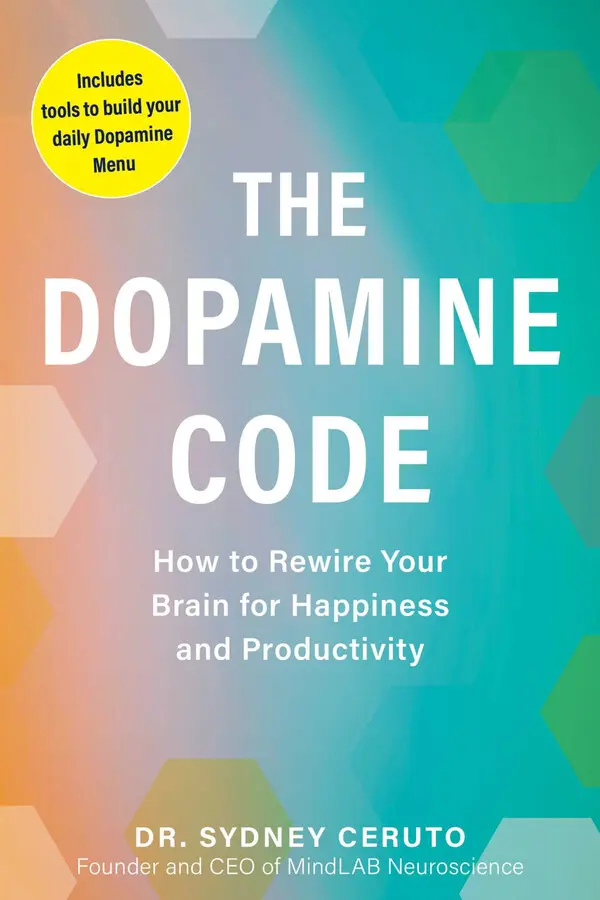
The Dopamine Code

Decode Your Drive

Why Your Brain Rewards the Wrong Things

Your brain's reward system runs every decision, every craving, every crash — and it was never designed for the life you're living. The Dopamine Code is Dr. Ceruto's framework for understanding the architecture behind what drives you, drains you, and keeps you locked in patterns that willpower alone will never fix.

Published by Simon & Schuster, The Dopamine Code is Dr. Ceruto's framework for building your own Dopamine Menu — a personalized system for motivation, focus, and enduring life satisfaction.

Order Now

Ships June 9, 2026

The Dopamine Code by Dr. Sydney Ceruto — Decode Your Drive
Locations

The Intelligence Brief

Neuroscience-backed analysis on how your brain drives what you feel, what you choose, and what you can’t seem to change — direct from Dr. Ceruto.