Identity After Major Life Change in Bergen County

When the move was supposed to be a fresh start — and you arrived not knowing who you were anymore

After a divorce, a career pivot, a retirement, or the sudden loss of a defining role, people often describe the same disorienting sensation: they no longer recognize the person looking back at them. This is not metaphor. The brain's self-referential network — the system responsible for constructing and maintaining a coherent sense of who you are — undergoes measurable disruption when the external anchors that once organized your identity are removed. The default mode network, which integrates autobiographical memory and future-oriented self-projection, loses its prediction targets. You are not broken. Your brain is doing exactly what it was built to do when its identity model collapses: it signals distress until a new model can be built.

The work is not introspective journaling or affirmations — it is neurological reconstruction. The brain forms identity through repeated, coherent signals about who you are, what you value, and what roles you occupy. When those signals are disrupted, the reconstruction process requires deliberate, structured engagement with the systems that process self-relevant information. At MindLAB, that process is precise, evidence-based, and built around how your specific brain reorganizes after role loss — not a generic framework applied to every person navigating change.
Book a Strategy Call
ForbesUSA TodayHuffPostNewsweekAssociated PressCosmopolitanBusiness InsiderForbesUSA TodayHuffPostNewsweekAssociated PressCosmopolitanBusiness Insider

Key Points

  1. The brain’s default mode network constructs and maintains your sense of identity through continuous self-referential processing — this processing can be observed and redirected.
  2. Identity rigidity — the feeling of being stuck as a particular version of yourself — reflects established neural pathways in the default mode network, not an essential truth about who you are.
  3. Major life changes require neural identity restructuring: the brain must update its self-model to incorporate a new reality, and this process has a measurable metabolic cost.
  4. Self-limiting beliefs are not psychological constructs floating in the mind — they are encoded in specific neural pathways that fire automatically and can be systematically weakened.
  5. The capacity for personal reinvention depends on neuroplasticity — the brain’s ability to form new connections and prune old ones — which remains available throughout adult life.

The brain does not experience identity as a concept. It experiences identity as a prediction model — a continuously updated internal map that tells you who you are in relation to your environment, your relationships, and your roles. When that map becomes obsolete overnight, the result is not sadness or confusion alone. It is a full-system disruption that touches how you make decisions, how you interpret social signals, and how you imagine any version of the future.

## What the Brain Is Actually Doing

The self-referential network — anchored in the medial prefrontal cortex and the posterior cingulate cortex — processes information about the self. It is always running, integrating incoming experience against the stored model of who you are. When a major life change removes a core role, this network loses the scaffolding it has organized around. A person who has been a spouse for twenty years, or an executive for fifteen, or a full-time parent for a decade has a self-referential network that is densely wired around those roles. The neural patterns are not shallow — they are structural, reinforced over thousands of repetitions.

The disorientation that follows role loss is the network’s response to a prediction failure — the internal model keeps generating expectations that no longer match reality. “I should be heading to the office.” “I should be making dinner for two.” Each failed prediction registers as error signal. Over time, the cumulative error signal is experienced as anxiety, disengagement, or a generalized numbness that people describe as feeling like a ghost in their own life.

Autobiographical memory reorganization compounds this. The brain’s memory consolidation systems — particularly those involving the hippocampus and its connection to the prefrontal cortex — file and retrieve memories in relation to identity context. When the identity context shifts, previously organized memories become harder to integrate into a coherent self-narrative. Events from your life that once formed a clear arc suddenly feel like they belong to a different person. This is not dissociation in a clinical sense. It is the normal, disorienting experience of memory systems that have lost their organizational framework.

## Why Generic Frameworks Do Not Work

Most approaches to identity transition rely on the assumption that insight produces change. If you understand why you feel lost, the theory goes, you will stop feeling lost. The neurological evidence does not support this. Insight is processed in the prefrontal cortex, but identity is reconstructed through repeated, pattern-forming experience — a function distributed across multiple brain systems that operate below conscious awareness.

A person who intellectually understands that their divorce does not define them can simultaneously feel, at the level of lived experience, that their entire sense of self has been erased. The intellectual understanding and the neurological disruption exist in parallel, and insight alone does not resolve the disruption. Reconstruction requires experience — structured, consistent, identity-relevant input that gives the self-referential network new material to organize around.

This is why the process at MindLAB is not conversation-based in the traditional sense. Conversation can support reconstruction, but only when it is precisely calibrated to engage the systems that process self-relevant information. The work identifies which neural patterns are still intact, which have been disrupted, and which new patterns can form the foundation of a rebuilt identity model.

## The Architecture of Identity Reconstruction

Reconstruction does not mean replacement. The neural patterns formed over decades of lived experience do not disappear — they become the raw material for a new configuration. The brain’s capacity for neuroplasticity — the ability to form new connections and reorganize existing ones — does not stop functioning after a major life change. It operates continuously. The question is whether that reorganization happens reactively, in response to distress signals, or deliberately, in response to structured engagement.

In deliberate reconstruction, three systems receive targeted attention. First, the self-referential network is given new anchoring material — not affirmations, but concrete, behaviorally grounded experiences that the brain can use to begin forming new identity-consistent predictions. Second, the autobiographical memory system is engaged in re-contextualization work — not revision of the past, but integration of past experience into a self-narrative that accommodates the change rather than being severed by it. Third, the prospective memory and future-simulation systems — which rely on the default mode network — are given structured input to rebuild forward projection. The brain cannot generate coherent motivation without a stable enough sense of who it is projecting into the future.

The pace of this work is individual. Some neural reorganization patterns resolve over months. Others require sustained engagement over a longer arc. What does not work is waiting for the brain to self-correct without structured input — the self-referential network will reorganize, but without deliberate engagement it tends to reorganize around distress signals rather than around new identity architecture.

Neuroscience consultation — rosewood table with crystal brain sculpture and branded journal for strategy call preparation

## What Changes After Reconstruction

The goal is not a return to who you were before the change. That architecture was built around conditions that no longer exist. The goal is a rebuilt identity model that is internally coherent, that can generate stable predictions about who you are and what you value, and that can accommodate ongoing change without catastrophic disruption.

People who have completed this process describe a specific shift: the past no longer feels like it belongs to a different person, and the future no longer feels like an unnavigable void. The self-referential network has new material to work with. Decisions become less paralyzing. Social interactions no longer trigger the disorientation of not knowing how to present yourself. The continuous low-level error signal quiets as the new identity model gains coherence.

This is neurological reconstruction. It is precise, it is evidence-based, and it is possible — regardless of the nature of the change that initiated the disruption.

Marker Traditional Approach Neuroscience-Based Approach Why It Matters
Self-Understanding Exploring personal history, values clarification, and narrative reconstruction through dialogue Mapping the default mode network patterns that construct and maintain the current self-model, identifying which patterns are architectural constraints versus genuine values
Change Process Journaling, affirmations, and gradual behavioral experiments to build a new self-concept Targeted restructuring of self-referential processing circuits so that the updated identity becomes the brain’s default rather than an effortful aspiration
Durability New self-concept requires ongoing reinforcement and can feel fragile under stress Architectural changes to the default mode network create a stable foundation for the new identity that persists under pressure

Why Identity After Major Life Change Matters in Bergen County

Identity During Life Change in Bergen County, New Jersey

Major life transitions in Bergen County produce identity disruption shaped by the specific structures this community provides. The career change that eliminates the GW Bridge commute removes not just a job but a daily structure, a professional identity, and the Manhattan life that the bridge connected. The divorce that dissolves the partnership dismantles the social unit that Bergen County's community evaluated. The children's departure for college removes the role that organized the suburban identity for eighteen years. Each transition exposes the degree to which the identity was constructed from external reference points the community provided.

Bergen County's cultural dimension adds identity-transition complexity. The individual whose cultural identity was maintained through community connections — the temple, the mosque, the cultural center, the language school — may find that life transitions also alter their position within the cultural community. The divorce may change standing. The career change may affect respect. The children's Americanization may create a generational identity gap that the transition brings into focus.

My work addresses identity during life change at the neural architecture level — the self-model reorganizing when its foundational reference points are removed, the cultural identity dimensions that the transition may disrupt, the threat-detection system processing the community's observation, and the meaning-making systems that must generate new identity architecture from the resources available after the previous structure has changed.

Dr. Sydney Ceruto, PhD — Founder, MindLAB Neuroscience

Dr. Sydney Ceruto, PhD — Founder & CEO, MindLAB Neuroscience

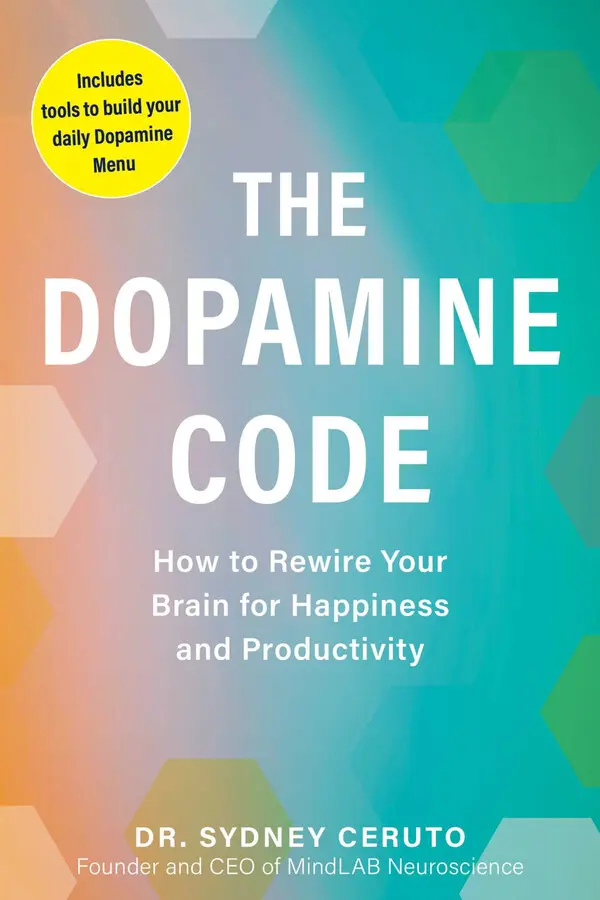
Dr. Ceruto holds a PhD in Behavioral & Cognitive Neuroscience from NYU and two Master’s degrees from Yale University. She lectures at the Wharton Executive Development Program at the University of Pennsylvania and has been an Executive Contributor to the Forbes Coaching Council since 2019. Dr. Ceruto is the author of The Dopamine Code (Simon & Schuster, June 2026). She founded MindLAB Neuroscience in 2000 and has spent over 26 years pioneering Real-Time Neuroplasticity™ — a methodology that permanently rewires the neural pathways driving behavior, decisions, and emotional responses.

References

Northoff, G., Heinzel, A., de Greck, M., Bermpohl, F., Dobrowolny, H., & Panksepp, J. (2006). Self-referential processing in our brain: a meta-analysis of imaging studies on the self. NeuroImage, 31(1), 440–457. https://doi.org/10.1016/j.neuroimage.2005.12.002

Ochsner, K. N., & Gross, J. J. (2005). The cognitive control of emotion. Trends in Cognitive Sciences, 9(5), 242–249. https://doi.org/10.1016/j.tics.2005.03.010

Pascual-Leone, A., Amedi, A., Fregni, F., & Merabet, L. B. (2005). The plastic human brain cortex. Annual Review of Neuroscience, 28, 377–401. https://doi.org/10.1146/annurev.neuro.27.070203.144216

Success Stories

“Dr. Ceruto's methodology took me from a founder on the verge of quitting to a leader capable of building the team and culture that drove Liquid IV's success. Her ability to restructure how I make decisions and lead under pressure changed the trajectory of the entire company. I don't say that lightly. The company I built after working with her was fundamentally different from the company I was building before — because I was fundamentally different.”

Brandin C. — Tech Founder Los Angeles, CA

“Ninety-hour weeks felt like discipline — the inability to stop felt like a competitive advantage. Nothing I tried touched it because nothing identified what was actually driving it. Dr. Ceruto mapped the dopamine loop that had fused my sense of identity to output. Once that circuit was visible, she dismantled it. I still work at a high level. I just don't need it to know who I am anymore.”

Jason M. — Private Equity New York, NY

“I knew the scrolling was a problem, but I didn't understand why I couldn't stop — or why it left me feeling hollow every time. Dr. Ceruto identified the dopamine-comparison loop that had fused my sense of worth to a feed. Years of trying to set boundaries with my phone hadn't worked because the problem was never the phone. Once the loop broke, the compulsion just stopped. My relationships started recovering almost immediately.”

Anika L. — Creative Director Los Angeles, CA

“When my youngest left for college, I didn't just feel sad — I felt erased. My entire sense of self had been wired to caregiving for two decades, and I didn't know who I was without it. Years of talk-based approaches hadn't touched it. Dr. Ceruto mapped the identity circuitry that had fused with the role and restructured it. I didn't find a new purpose — I found the one that had been underneath the whole time.”

Diane L. — Nonprofit Director Chicago, IL

“When the demands of my career began negatively impacting my quality of life, I knew I needed help beyond my usual coping mechanisms. I landed on Dr. Ceruto’s name and couldn’t be happier. Her credentials are impeccable, but upon meeting her, all uneasiness dissipated immediately. She has an innate ability to navigate the particulars of your profession no matter how arcane it may be. By the middle of the first session, you’re talking to a highly intelligent and intuitive friend. She is simply that good.”

Norine D. — Attorney Newport Beach, CA

“The way I was processing decisions under pressure had a cost I couldn't see — until Dr. Ceruto mapped it. She identified the neural pattern driving my reactivity in high-stakes situations and restructured it at the root. I don't just perform better under pressure now. I think differently under pressure. That's not something any executive coach or performance program ever came close to delivering.”

Rob W. — Portfolio Manager Manhattan, NY

Frequently Asked Questions About Identity After Major Life Change

Why does losing a job, a marriage, or a role feel like losing myself entirely — not just losing a situation?
Because neurologically, you have. The brain does not store identity as an abstract sense of self — it builds identity as a prediction model organized around the roles, relationships, and environments you consistently occupy. When a core role is removed, the prediction model loses its organizing architecture. The disorientation you feel is the self-referential network registering a system-level disruption, not an emotional overreaction to a life event. The feeling is accurate: the neural structure that organized your sense of self has lost its scaffolding.
How long does identity disruption after a major life change typically last?
There is no universal timeline because identity reconstruction is a neurological process, not a grief stage. The brain's reorganization speed depends on the depth of the original neural patterns, the availability of new identity-relevant input, and whether the reconstruction is happening deliberately or reactively. For people who spent decades in a single role or relationship, the disruption can persist for years without structured intervention — not because they are failing to recover, but because the neural reorganization requires more material than passive time provides. With deliberate, structured engagement, the timeline shortens significantly.
I understand intellectually that my divorce doesn't define me — so why do I still feel completely lost?
Because insight and identity reconstruction operate through different neural systems. Intellectual understanding is processed in the prefrontal cortex, but identity is maintained through distributed neural patterns that operate largely below conscious awareness. You can hold both simultaneously: a genuine intellectual grasp that a role or relationship does not define your worth, and a neurological disruption that has not yet resolved. The path out is not better intellectual framing — it is structured experience that gives the identity-processing systems new material to reorganize around.
Does retiring count as a major life change in the same neurological sense?
Yes — and in many cases it is one of the most significant identity disruptions a person will experience, precisely because it is often treated as a reward rather than a disruption. A person who built a professional identity over a 35-year career has a self-referential network that is densely organized around that work. The morning after retirement, the inputs that organized that system are simply gone. The brain generates disorientation proportionate to how thoroughly the career organized the self, regardless of how welcome the change was intellectually.
I moved somewhere new for a fresh start and I feel more lost than before. What is happening?
The relocation removed the environmental inputs that were maintaining your old identity model without replacing them with a stable new set of inputs. You are running an old prediction model in a new environment — the brain keeps generating expectations that do not match the new context, which registers as continuous low-level disorientation. A fresh start does not automatically produce a new identity; it removes the scaffolding of the old one. Reconstruction requires deliberate work to build new identity-consistent signals, not just a change of environment.
Becoming a parent was something I wanted. Why do I feel like I lost myself in it?
Because the identity reorganization required by parenthood is total and rapid, regardless of how desired the change was. The self-referential network has to absorb a new primary role — one that is enormously demanding of attention, time, and self-definition — while maintaining continuity with the pre-parent identity. The parts of you that organized around professional identity, relational identity, physical autonomy, and social role are all renegotiated simultaneously. The feeling of losing yourself is the brain's accurate report of a major reorganization in progress, not evidence that something has gone wrong.
Can the previous version of my identity be restored after a major life change?
The goal is not restoration — it is reconstruction. The neural patterns formed over years of lived experience do not disappear after a major change; they become the raw material for a new configuration. But the previous identity was organized around conditions that no longer exist. Attempting to restore it would require recreating the environmental inputs that built it, which is generally not possible and frequently not desirable. What is possible is a rebuilt identity model that is internally coherent, stable enough to accommodate ongoing change, and organized around the self you are now rather than the self you were.
How do I start working with MindLAB on identity after a major life change?
The process begins with a Strategy Call — a one-hour conversation by phone with Dr. Ceruto. The fee is $250. This is not a sales conversation. It is a precise assessment of your specific neural disruption pattern, the nature of the identity architecture that was organized before the change, and what reconstruction requires in your particular case. From that conversation, a clear picture of the work emerges. You can reach us through the contact page to schedule.
Is what I am experiencing a mental health crisis, or is this neurological?
The distinction matters less than it might seem — the brain is the substrate of all mental and emotional experience. What is important is accurate characterization: identity disruption after major life change is a normal, predictable neurological response to the removal of the inputs that organized your self-concept. It is not a disorder, not a pathology, and not evidence of fragility. It is the self-referential network doing exactly what it was built to do when its prediction model loses its organizing architecture. Accurate characterization is the first step toward structured reconstruction rather than pathologizing a normal process.
Why does identity disruption after career change feel different from other kinds of loss?
Because career identity, in many professional environments, becomes deeply fused with the self over time — not through weakness of character but through the neurological effect of repeated, daily inputs that associate the professional role with self-concept. The loss of a role that organized twenty years of daily prediction is qualitatively different from the loss of an external possession. It is the loss of a primary organizing system. The brain's response is proportionate to that depth, which is why career identity disruption often feels more destabilizing than losses that might seem objectively larger.

Also available in: Miami · Wall Street · Midtown Manhattan · Beverly Hills · Lisbon

Take the First Step

The Strategy Call is a focused conversation with Dr. Ceruto that maps the specific neural mechanisms driving your concerns and determines the right path forward.

Book a Strategy Call
MindLAB Neuroscience consultation room

The Dopamine Code

Decode Your Drive

Why Your Brain Rewards the Wrong Things

Your brain's reward system runs every decision, every craving, every crash — and it was never designed for the life you're living. The Dopamine Code is Dr. Ceruto's framework for understanding the architecture behind what drives you, drains you, and keeps you locked in patterns that willpower alone will never fix.

Published by Simon & Schuster, The Dopamine Code is Dr. Ceruto's framework for building your own Dopamine Menu — a personalized system for motivation, focus, and enduring life satisfaction.

Order Now

Ships June 9, 2026

The Dopamine Code by Dr. Sydney Ceruto — Decode Your Drive
Locations

The Intelligence Brief

Neuroscience-backed analysis on how your brain drives what you feel, what you choose, and what you can’t seem to change — direct from Dr. Ceruto.