Key Points
- Communication breakdowns persist because the brain's social-processing circuits generate threat-based responses before conscious thought can intervene.
- Real-Time Neuroplasticity™ rewires the neural architecture governing how you connect, so authentic communication becomes the default.
- Once the circuits are recalibrated, the old patterns of defensiveness, withdrawal, or bluntness no longer fire automatically.
- Dr. Sydney Ceruto maps your specific communication pattern during the Strategy Call to determine the precise approach.
- MindLAB's methodology produces structural neural change, no scripts, no devices, no indefinite maintenance.
| Marker | Traditional Approach | Neuroscience-Based Approach | Why It Matters |
|---|---|---|---|
| Target of Intervention | Surface communication behaviors | Neural circuits governing social response | Root-cause rewiring vs. surface techniques |
| Primary Method | Scripts, frameworks, active listening drills | Real-Time Neuroplasticity™ rewiring | Automatic responses change, not just habits |
| Duration of Results | Fades without ongoing practice | Durable neural pathway restructuring | Change that holds without rehearsal |
| Approach to Social Anxiety | Exposure practice and coping tools | Threat-circuit recalibration at the source | The brain stops generating the fear signal |
| Role of Conscious Effort | High: must remember and apply techniques | Minimal: the automatic circuit is rewired | Connection becomes effortless, not forced |
| Personalization | Generic communication models | Mapped to your specific neural architecture | Precision targeting for your exact pattern |
Why Communication & Interpersonal Skills Matters in Bergen County
Bergen County is one of the most densely populated and culturally diverse counties in the United States, home to nearly a million residents across 70 municipalities. From Ridgewood and Tenafly to the Korean-American hub of Fort Lee to the family neighborhoods of Paramus, the county contains a remarkable range of cultural communication norms within a compact geography. A person living here navigates multiple interpersonal codes daily: the expectations at a PTA meeting in Upper Saddle River differ markedly from a business lunch in Englewood or a neighborhood gathering in Hackensack.
This cultural layering creates an interpersonal environment that demands more from the brain’s social-processing system than most residents recognize. Bergen County’s population includes significant Korean, Indian, Filipino, and Latin American communities, each with distinct norms around emotional expression, directness, hierarchy, and personal disclosure. The brain must constantly recalibrate how it reads social signals and generates appropriate responses. For someone whose interpersonal circuits were already strained (generating defensiveness, withdrawal, or misreading) this additional calibration load pushes the system past its capacity. The result is not a lack of social skill. It is a neural system running beyond its bandwidth.
The family dynamics specific to Bergen County carry their own interpersonal intensity. The county’s strong school systems, ranked consistently among New Jersey’s best, attract families who invest heavily in their children’s development. That investment creates households where the emotional stakes of communication are exceptionally high. A conversation about grades in Tenafly, a disagreement about activities in Ridgewood, a teenager’s withdrawal in Glen Rock, these carry weight beyond the immediate topic. The family’s identity is intertwined with achievement. When the communication pattern governing these interactions is defensive or reactive, the damage accumulates in ways that reshape family relationships over years.
Bergen County’s proximity to Manhattan means many households include at least one person whose daily professional life demands intense interpersonal performance. The person who navigates complex human dynamics all day arrives home with a depleted social-processing system. Their partner, who has been managing the equally demanding interpersonal landscape of school, community, and household, has their own depletion. The window for genuine connection is narrow. Both brains default to their most deeply encoded patterns, and those patterns, forged under pressure, are rarely the ones that produce warmth, patience, or understanding.
Multicultural families in Bergen County face an additional layer. When partners come from different cultural communication traditions, their brains are literally running different interpersonal software. What one brain encoded as respectful silence, the other reads as emotional withholding. What one brain produces as passionate directness, the other processes as aggression. These are not misunderstandings that conversation can resolve. They are neural-level differences in how social information is processed and how interpersonal responses are generated.
Dr. Ceruto’s methodology addresses communication difficulty at the level where it is encoded. Real-Time Neuroplasticity™ recalibrates the neural circuits governing social processing and interpersonal response, so the brain shifts from generating protective, reactive, or avoidant outputs to producing genuine connection as its default. The Strategy Call maps your specific patterns and identifies the mechanisms driving the disconnect.


Dr. Sydney Ceruto, PhD, Neuroscientist & Author, MindLAB Neuroscience
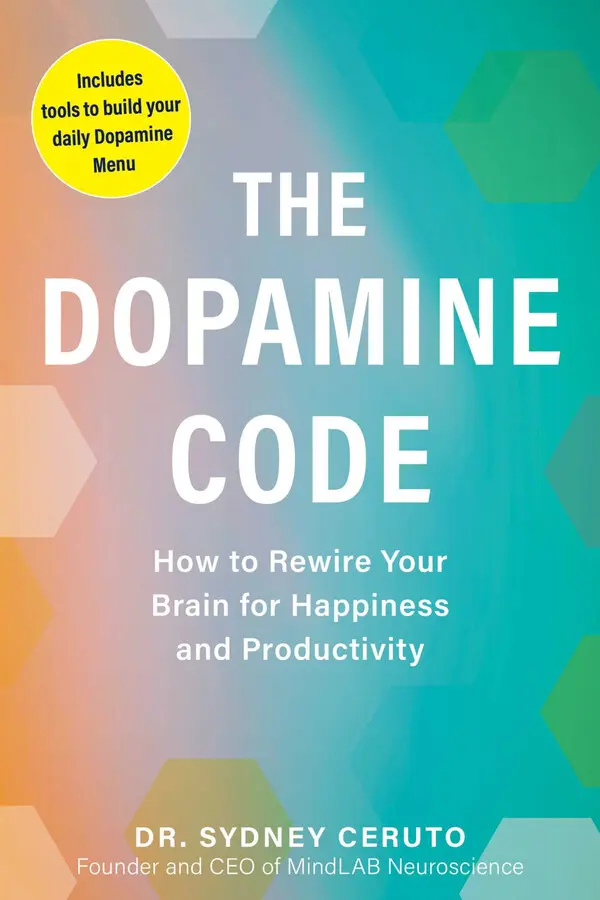
Dr. Ceruto holds a PhD in Behavioral & Cognitive Neuroscience from NYU and Master’s degrees in Clinical Psychology and Business Psychology from Yale University. She lectures at the Wharton Executive Development Program at the University of Pennsylvania and has been an Executive Contributor to the Forbes Coaching Council since 2019. Dr. Ceruto is the author of The Dopamine Code (Simon & Schuster, June 2026). She founded MindLAB Neuroscience in 2000 and has spent over 26 years leading it, pioneering Real-Time Neuroplasticity™, a methodology that durably rewires the neural pathways driving behavior, decisions, and emotional responses.
Frequently Asked Questions About Communication & Interpersonal Skills in Bergen County
Why do communication problems get worse in the evening?
The prefrontal cortex (responsible for social judgment, emotional regulation, and response calibration) runs on limited metabolic resources. After a full day of interpersonal demands, these resources are depleted. The brain defaults to its most deeply encoded communication patterns, which are typically the least adaptive ones. Evening is when the circuits governing nuanced interaction are at their weakest.
Can this help with cultural communication differences in my relationship?
Yes. Cross-cultural communication challenges reflect neural-level differences in how social information is processed. Dr. Ceruto's methodology restructures the circuits governing your interpersonal responses, improving your brain's capacity to read, interpret, and respond to social signals across any cultural context.
How is this different from communication workshops or courses?
Workshops teach techniques that require conscious application in the moment. MindLAB's methodology restructures the neural circuits that generate your automatic responses. The difference is between remembering to pause before reacting and having a brain that no longer produces the reactive impulse in the first place.
What happens during the Strategy Call?
The Strategy Call is a focused phone conversation with Dr. Ceruto. She maps the specific neural mechanisms driving your communication patterns and determines whether MindLAB's methodology is the right approach.
Is MindLAB accessible from Bergen County?
Yes. Dr. Ceruto works with clients by phone. The Strategy Call and ongoing engagement are conducted via phone-based conversation, making the full methodology accessible from Ridgewood, Tenafly, Fort Lee, Paramus, Englewood, or anywhere in Bergen County.
How long before communication patterns begin to shift?
Most clients notice meaningful changes in their automatic interpersonal responses within the first few weeks. The pace depends on how long the pattern has been established and how many relational contexts activate it. Dr. Ceruto provides a realistic timeline during the Strategy Call.
Why is Bergen County's diversity relevant to communication challenges?
Bergen County's cultural diversity means the brain must constantly recalibrate its social-processing algorithms across different communication norms. This continuous recalibration depletes neural resources and amplifies pre-existing interpersonal patterns. The brain that is already generating defensive responses does so more frequently when the social environment requires constant adjustment.
Can this help with parent-child communication breakdowns?
Yes. Parent-child communication difficulties often reflect a circuit mismatch: the parent's well-intentioned engagement activates the child's evaluation-detection or autonomy-threat circuits. Dr. Ceruto identifies the neural mechanism driving the specific breakdown pattern and recalibrates the parent's interpersonal circuitry.
Do I need a referral?
No referral is required. If communication or interpersonal patterns are creating persistent difficulty in your relationships despite your efforts to address them, that is sufficient to begin.
Are the results permanent?
Real-Time Neuroplasticity™ produces structural changes in the neural pathways governing interpersonal response. Once the circuits are recalibrated, the new patterns become the brain's default output. Most clients do not require indefinite engagement.
Also available in: Miami · Wall Street · Midtown Manhattan · Beverly Hills · Lisbon
Take the First Step
One hour with Dr. Sydney Ceruto. You leave knowing which neural pattern is actually driving this, and what to do about it.
Book a Strategy Call
The Dopamine Code
Decode Your Drive
Why Your Brain Rewards the Wrong Things
Your brain's reward system runs every decision, every craving, every crash, and it was never designed for the life you're living. The Dopamine Code is Dr. Ceruto's framework for understanding the architecture behind what drives you, drains you, and keeps you locked in patterns that willpower alone will never fix.
Published by Simon & Schuster, The Dopamine Code is Dr. Ceruto's framework for building your own Dopamine Menu, a personalized system for motivation, focus, and enduring life satisfaction.
Order Now!Available now