







Personal Identity Reconstruction in Midtown Manhattan

The city kept moving. The industry kept shifting. Somewhere in the acceleration, the person you thought you were stopped matching the life you are living.

Identity is not something you discover. It is something the brain constructs — a dynamic architecture of self-referencing patterns built through experience, reinforcement, and environmental feedback. When that architecture loses its structural supports, the result is not confusion. It is a specific neural state: the old identity is dissolving, the new one has not yet consolidated, and you are living in the gap. MindLAB Neuroscience works at the circuit level to accelerate that reconstruction.

Book a Strategy Call
ForbesUSA TodayHuffPostNewsweekAssociated PressCosmopolitanBusiness InsiderForbesUSA TodayHuffPostNewsweekAssociated PressCosmopolitanBusiness Insider
Marker Traditional Approach Neuroscience-Based Approach Why It Matters

Why Personal Identity Reconstruction Matters in Midtown Manhattan

Midtown’s Identity Pressure: When the Industry That Built You Stops Existing

Midtown Manhattan has always been a place where professional identity and personal identity overlap almost completely. The publishing professional on Park Avenue. The advertising creative on Sixth Avenue. The media executive near Times Square. Each built a sense of self inside an industry that provided structure, community, and daily meaning. When those industries undergo fundamental restructuring, the identity architecture they maintained goes with them.

The Omnicom-IPG merger and the broader advertising consolidation have made this visible at scale. Thousands of creative and strategic professionals across Midtown are navigating not just a career disruption but an identity event. The person who spent fifteen years building a reputation inside a specific agency culture is not simply unemployed when that culture disappears. Their brain is processing the loss of the environmental framework that told them who they were every day. The morning commute to the office, the creative reviews, the specific rhythm of campaign cycles — all of it reinforced a self-concept that no longer has a home.

Publishing along Park Avenue and the East Side has undergone its own version of this over the past decade. The editor whose identity was organized around a specific imprint and literary sensibility faces repeated disruption. That identity was maintained by an industry structure that has contracted and reorganized multiple times. Each round of restructuring does not simply change the job market. It removes another piece of the environmental scaffolding that the brain was using to maintain the self-concept. The capacity to edit remains. The identity of “editor” in the way it was originally encoded becomes increasingly difficult for the brain to sustain.

The AI displacement wave hitting Midtown’s creative sector has introduced a new dimension to identity disruption. When a skill you spent a decade developing can be approximated by a tool that did not exist two years ago, the brain does not process this as a market development. It processes it as a threat to the foundation of self-worth. The prefrontal cortex — the region responsible for maintaining your sense of continuity and agency — registers the devaluation of a core competency as an identity-level event. The question stops being about work. It becomes: who am I if the thing I was built around no longer matters?

The performing arts community around the Theater District and Hell’s Kitchen carries a particularly intense version of identity fragility. When your profession requires you to literally become other people, the boundary between professional skill and personal identity becomes neurally blurred. Performers who have spent years inhabiting characters often find that the question of who they are outside of performance does not have a clear answer. Career disruptions — a show closing, an extended period without work, an aging out of certain roles — expose this gap with sudden force.

Midtown’s post-pandemic landscape has created identity disruption even for people whose careers remain stable. The shift to hybrid work reorganized daily life in ways that the brain processed as identity-relevant. The professional who now splits time between a home office in the East 50s and a corporate headquarters on Sixth Avenue is not simply managing logistics. Their brain is running two partial identity frameworks and struggling to consolidate either one fully. The home self and the office self operate on different rhythms, different social cues, different reward structures. Neither is complete.

Dr. Ceruto works with people across Midtown Manhattan who are experiencing this specific pattern. The person they were has become structurally unavailable. The person they are becoming has not yet taken shape. Real-Time Neuroplasticity™ engages the self-referencing circuits directly, enabling the brain to release identity structures that are no longer functional and consolidate new ones that reflect current reality. A Strategy Call is a phone conversation — $250 — the beginning of understanding what your brain built, what dissolved, and what the reconstruction involves.

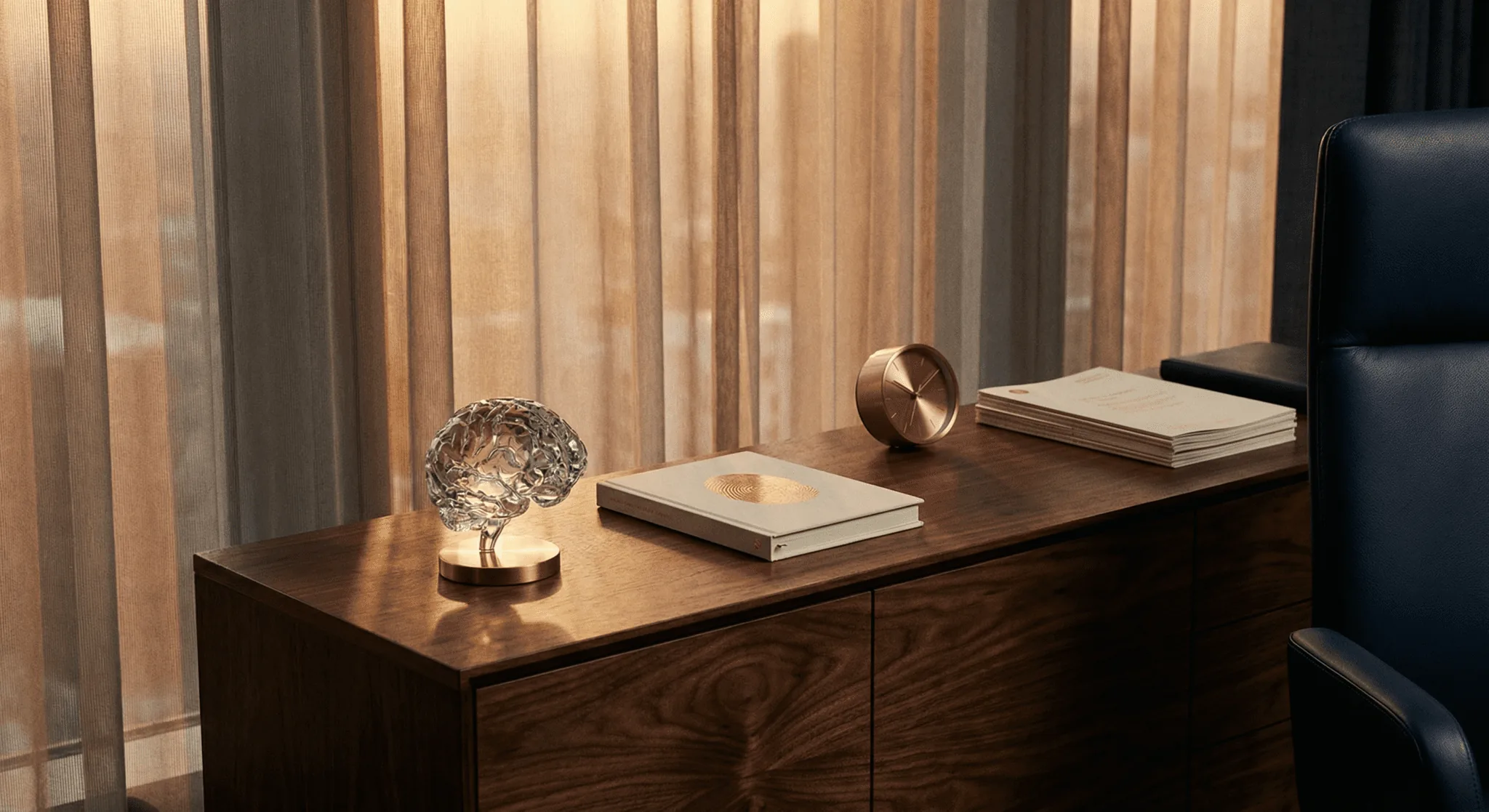
Walnut credenza with crystal brain sculpture and MindLAB journal in diffused dusk light suggesting high-floor Midtown Manhattan private office
Dr. Sydney Ceruto, PhD — Founder, MindLAB Neuroscience

Dr. Sydney Ceruto, PhD — Founder & CEO, MindLAB Neuroscience

Dr. Ceruto holds a PhD in Behavioral & Cognitive Neuroscience from NYU and two Master’s degrees from Yale University. She lectures at the Wharton Executive Development Program at the University of Pennsylvania and has been an Executive Contributor to the Forbes Coaching Council since 2019. Dr. Ceruto is the author of The Dopamine Code (Simon & Schuster, June 2026). She founded MindLAB Neuroscience in 2000 and has spent over 26 years pioneering Real-Time Neuroplasticity™ — a methodology that permanently rewires the neural pathways driving behavior, decisions, and emotional responses.

Success Stories

“Nothing was wrong — and that's exactly why no one could help me. I wasn't struggling. I wanted to know what my brain was actually capable of if its resting-state architecture was optimized. Dr. Ceruto mapped my default mode network and restructured how it allocates resources between focused and diffuse processing. The cognitive clarity I operate with now isn't something I'd ever experienced before — and I had no idea it was available.”

Nathan S. — Biotech Founder Singapore

“It took years and many other professionals — not to mention tens of thousands of dollars — before I was recommended to Dr. Ceruto. I’d been suffering with chronic anxiety, OCD, and distorted thinking. After just two sessions, I started to see positive change. By the time my program ended, I had my sanity and my life back. Sydney creates a warm, supportive atmosphere where I found myself sharing things I’ve never told anyone. She is there for you anytime you need her.”

Nicholas M. — Private Equity Hong Kong

“Dr. Ceruto's methodology sharpened my negotiation instincts and built a level of mental resilience I didn't know I was missing. The difference showed up in how my team responds to me — trust, respect, and a willingness to follow that I'd been trying to manufacture for years. I stopped trying to project authority and started operating from it. That's the difference.”

Victoria W. — Trial Attorney New York, NY

“Dr. Ceruto restructured how I show up in high-stakes conversations. The blind spots I couldn't see for years became visible in our first sessions. I went from an overwhelmed Managing Director to a leader people actually want to follow. The change wasn't cosmetic — it was architectural. The way I process high-pressure interactions is fundamentally different now.”

Matteo R. — Investment Banker London, UK

“My communication was damaging every relationship in my professional life and I couldn't see it. Dr. Ceruto's neuroscience-based approach didn't just improve how I communicate — it rewired the stress response that was driving the pattern in the first place. The people around me noticed the change before I fully understood what had happened. That tells you everything.”

Bob H. — Managing Partner London, UK

“Every system, every supplement, every productivity method I tried collapsed within weeks — and nothing held because nothing addressed why my attention kept fragmenting. Dr. Ceruto identified the dopamine regulation pattern that was hijacking my prefrontal cortex every time I needed sustained focus. She didn't give me another workaround. She restructured the architecture underneath. My brain holds now. That's not something I ever thought I'd be able to say.”

Derek S. — Film Producer Beverly Hills, CA

Frequently Asked Questions About Personal Identity Reconstruction in Midtown Manhattan

Also available in: Miami · Wall Street · Beverly Hills · Lisbon

Take the First Step

The Strategy Call is a focused conversation with Dr. Ceruto that maps the specific neural mechanisms driving your concerns and determines the right path forward.

Book a Strategy Call
MindLAB Neuroscience consultation room

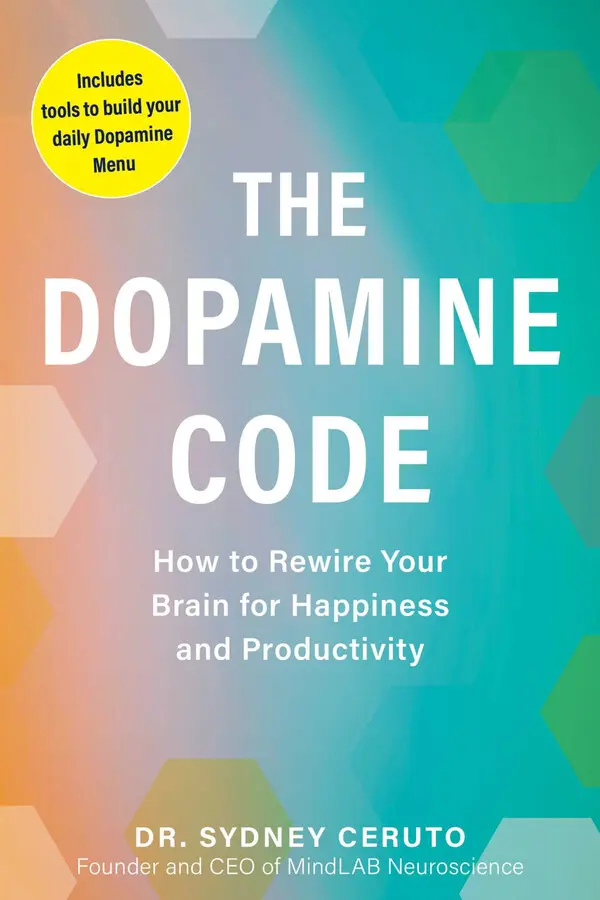
The Dopamine Code

Decode Your Drive

Why Your Brain Rewards the Wrong Things

Your brain's reward system runs every decision, every craving, every crash — and it was never designed for the life you're living. The Dopamine Code is Dr. Ceruto's framework for understanding the architecture behind what drives you, drains you, and keeps you locked in patterns that willpower alone will never fix.

Published by Simon & Schuster, The Dopamine Code is Dr. Ceruto's framework for building your own Dopamine Menu — a personalized system for motivation, focus, and enduring life satisfaction.

Order Now

Ships June 9, 2026

The Dopamine Code by Dr. Sydney Ceruto — Decode Your Drive
Locations

The Intelligence Brief

Neuroscience-backed analysis on how your brain drives what you feel, what you choose, and what you can’t seem to change — direct from Dr. Ceruto.