





Key Points
- Neural pattern analysis identifies the exact brain circuits driving unwanted behaviors, emotional responses, and decision-making tendencies.
- Patterns persist because the brain automates repeated responses, not because of weak willpower or insufficient self-awareness.
- Real-Time Neuroplasticity™ uses the precision of neural mapping to target and durably rewire the specific circuits sustaining each pattern.
- Dr. Sydney Ceruto maps your unique neural architecture during the Strategy Call, replacing guesswork with structural clarity.
- The methodology produces durable change without reliance on ongoing maintenance, coping strategies, or electronic equipment.
| Marker | Traditional Approach | Neuroscience-Based Approach | Why It Matters |
|---|---|---|---|
| Focus of Assessment | Personality traits and symptom categories | Specific neural circuits driving behavior | Architectural precision vs. broad categorization |
| Outcome of Analysis | Descriptive labels and recommendations | Actionable neural architecture map | Directly informs targeted rewiring |
| Method of Change | Coping strategies and awareness building | Real-Time Neuroplasticity™ circuit rewiring | Structural change, not symptom management |
| Duration of Results | Requires ongoing reinforcement | Durable neural pathway restructuring | Change that holds without constant effort |
| Pattern Recurrence | Expected; managed with new tools | Addressed at the circuit level | Eliminates the automated sequence itself |
| Personalization | Standardized assessment instruments | Mapped to your unique neural architecture | Precision targeting for your exact patterns |
Why Neural Pattern Analysis Matters in Wall Street
The Financial District builds neural circuits designed for one thing: performing under pressure. From the trading desks near Broad Street to the private equity offices above FiDi, every professional demand reinforces speed, pattern recognition, and decisive action. These circuits become remarkably efficient, and remarkably rigid. A managing director near Water Street who makes brilliant calls during market hours but cannot stop making destructive ones after them is not showing a character weakness. A portfolio manager in Battery Park City whose risk appetite at work has migrated into compulsive personal behaviors is not choosing recklessness. These are neural patterns operating exactly as they were built, under conditions that no longer apply, but with the same automatic precision they had the day they were encoded.
Neural pattern analysis is the discipline of identifying these circuits with specificity. Most conventional approaches treat the presenting behavior (the anger, the compulsion, the self-sabotage) as the problem to be managed. What they miss is that the behavior is the output of a deeper architecture. The brain organizes experience into predictive sequences: a specific emotional trigger fires a specific automatic response, and that response reinforces the circuit that produced it. A trader who has spent fifteen years building neural pathways optimized for rapid risk assessment does not simply turn those pathways off at five o’clock. The same circuit that reads market signals with extraordinary speed may be reading personal relationships with the same adversarial lens: scanning for threat, calculating advantage, responding before reflection is possible.
In Lower Manhattan, these patterns carry particular weight because the professional environment actively rewards them during business hours. The hypervigilance that makes a fund manager exceptional at reading counterparty risk becomes the same hypervigilance that makes domestic life feel like a series of negotiations. The emotional suppression that allows a banker near Wall Street to navigate a hostile board meeting becomes the same suppression that erodes intimacy and makes genuine connection feel like exposure. The pattern does not distinguish between contexts. It fires wherever the trigger exists.
Dr. Ceruto’s methodology maps these patterns with a precision that broad-spectrum approaches cannot match. Neural pattern analysis identifies the exact sequence: the specific sensory or emotional input that activates the circuit, the automatic response it produces, and the reinforcement mechanism that locks it in place. This mapping is what allows Real-Time Neuroplasticity™ to intervene at the architectural level rather than layering management strategies on top of an unchanged foundation. For professionals in Tribeca, the Seaport District, and throughout the Financial District, this represents a fundamentally different approach to patterns they may have been attempting to override for years.
Lower Manhattan’s culture of relentless performance makes it easy to tolerate patterns indefinitely. There is always another quarter, another closing, another reason to defer the reckoning. But neural circuits consolidate with repetition. The pattern that is manageable at forty-five becomes structural by fifty-five. The Strategy Call with Dr. Ceruto is a focused phone conversation that maps the specific neural architecture at work, often providing the first genuine clarity about why the pattern has persisted despite considerable resources and effort directed at changing it.


Dr. Sydney Ceruto, PhD, Neuroscientist & Author, MindLAB Neuroscience
Dr. Ceruto holds a PhD in Behavioral & Cognitive Neuroscience from NYU and Master’s degrees in Clinical Psychology and Business Psychology from Yale University. She lectures at the Wharton Executive Development Program at the University of Pennsylvania and has been an Executive Contributor to the Forbes Coaching Council since 2019. Dr. Ceruto is the author of The Dopamine Code (Simon & Schuster, June 2026). She founded MindLAB Neuroscience in 2000 and has spent over 26 years leading it, pioneering Real-Time Neuroplasticity™, a methodology that durably rewires the neural pathways driving behavior, decisions, and emotional responses.
Frequently Asked Questions About Neural Pattern Analysis
What is neural pattern analysis?
Neural pattern analysis identifies the specific brain circuits driving automatic behaviors, emotional reactions, and decision-making tendencies. It maps the underlying architecture sustaining patterns that resist conscious effort to change.
How does Dr. Ceruto identify neural patterns in high-pressure professionals?
Dr. Ceruto uses detailed behavioral and cognitive assessment developed over 26 years. She identifies how professional environments like Wall Street build specific neural circuits and how those circuits operate outside their original context.
Can patterns built by years of high-stakes work actually be rewired?
Yes. The brain retains its capacity for structural change regardless of how long a pattern has been active. Real-Time Neuroplasticity™ targets the specific circuit, not the behavior it produces, making durable restructuring possible even for deeply consolidated patterns.
How is this different from executive coaching?
Executive coaching builds skills and strategies on top of existing neural architecture. Neural pattern analysis identifies and rewires the architecture itself. The distinction is between managing a pattern and eliminating the circuit that drives it.
Is this available for professionals in the Financial District?
Yes. MindLAB Neuroscience works with clients throughout Lower Manhattan including Wall Street, FiDi, Battery Park City, Tribeca, and the Seaport District. The initial Strategy Call is conducted by phone.
What types of patterns are common among Wall Street professionals?
Hypervigilance that extends beyond professional contexts, emotional suppression leaking into personal relationships, escalating risk tolerance, compulsive behaviors that intensify during low-pressure periods, and reactive decision-making driven by circuits built for market speed.
Will the analysis affect my professional performance?
The goal is precision. Neural pattern analysis distinguishes between circuits that serve your professional performance and those that undermine other areas. Rewiring targets the specific patterns causing problems without disrupting the architecture that supports your strengths.
What happens after the patterns are mapped?
Once Dr. Ceruto identifies the specific neural circuits, she applies Real-Time Neuroplasticity™ to rewire them. The result is durable structural change: the automatic pattern stops firing, eliminating the need for ongoing management.
Do I need a referral?
No referral is required. MindLAB does not operate within a clinical framework. If you recognize persistent patterns that resist your efforts to change them, that is sufficient to begin the conversation.
What should I expect from the Strategy Call?
The Strategy Call is a focused phone conversation with Dr. Ceruto. She maps the neural mechanisms driving your specific patterns and determines whether MindLAB’s methodology fits your situation. The call typically lasts 45–60 minutes.
Also available in: Miami · Midtown Manhattan · Beverly Hills · Lisbon
Take the First Step
One hour with Dr. Sydney Ceruto. You leave knowing which neural pattern is actually driving this, and what to do about it.
Book a Strategy Call
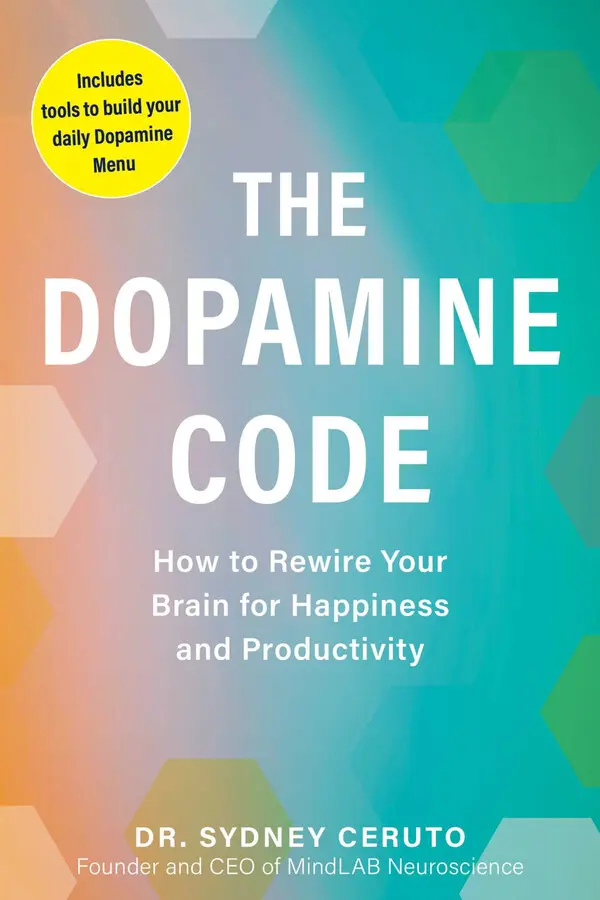
The Dopamine Code
Decode Your Drive
Why Your Brain Rewards the Wrong Things
Your brain's reward system runs every decision, every craving, every crash, and it was never designed for the life you're living. The Dopamine Code is Dr. Ceruto's framework for understanding the architecture behind what drives you, drains you, and keeps you locked in patterns that willpower alone will never fix.
Published by Simon & Schuster, The Dopamine Code is Dr. Ceruto's framework for building your own Dopamine Menu, a personalized system for motivation, focus, and enduring life satisfaction.
Order Now!Available now