Key Points
- Westchester concentrates senior leaders whose neural architecture was built for institutional environments that no longer match their current strategic context.
- The transition from institutional leadership to entrepreneurship requires neural recalibration, not just knowledge transfer, because the decision circuits are fundamentally different.
- Board service across multiple industries demands rapid neural framework switching that most leaders perform inconsistently without architectural awareness.
- Real-Time Neuroplasticity™ precision-calibrates decision architecture for the specific demands of this career chapter without discarding the wiring that built decades of success.
- In Westchester's interconnected professional community, strategic output quality at each table directly affects opportunities and reputation across every other table.
| Marker | Traditional Approach | Neuroscience-Based Approach | Why It Matters |
|---|---|---|---|
| Foundation | Behavioral Strategy Development | Executive Advisory Services | Strategic Coaching |
| Focus | Neural decision architecture | Market positioning and growth | Leadership effectiveness |
| Method | Real-Time Neuroplasticity™ | Advisory and consulting | Conversational development |
| Durability | Durable circuit-level change | Depends on ongoing engagement | Fades without reinforcement |
| Scope | All strategic contexts mapped | Single venture or role | General leadership capacity |
| Execution Alignment | Architecture matched to context | Assumes capable execution | Does not address architecture |
Why Behavioral Strategy Development Matters in Westchester County
How Westchester’s Executive Population Creates Distinct Strategic Patterns
Westchester County holds one of the highest concentrations of senior executives, managing directors, and C-suite leaders in the country. From Scarsdale to Rye, Bronxville to Chappaqua, the professionals living here have built careers at the top of finance, media, law, and corporate leadership. Many have spent twenty or thirty years operating in Manhattan’s most competitive environments before establishing themselves in Westchester. This trajectory shapes a particular neural profile: decision architecture built for high-stakes, fast-cycle environments that now operates in contexts requiring different strategic capabilities. The founder launching a venture from a home office in Larchmont carries circuits built for the pace of midtown, but the venture demands patience, iterative learning, and tolerance for ambiguity that those circuits were never designed to produce.
The transition from institutional leadership to entrepreneurship, advisory work, or portfolio management is one of the most common strategic inflection points for Westchester professionals. In communities like White Plains, Tarrytown, and Mamaroneck, leaders who spent careers executing within established organizational structures are now building their own. The neural architecture that made them effective inside large institutions, circuits optimized for navigating hierarchy, managing upward, and executing within defined parameters, often becomes a liability when the strategic environment has no hierarchy, no established parameters, and no institutional momentum to carry decisions forward. These leaders have the knowledge, the network, and the capital. What they lack is neural architecture calibrated for the strategic demands of their new context.
Why Behavioral Strategy Matters for Westchester’s Next-Chapter Leaders
Westchester’s professional community also includes executives who remain in senior institutional roles while living in the county. For these leaders, the strategic challenge is different but equally rooted in neural architecture. Running a division or firm from an office in Purchase or Armonk while maintaining relationships in Manhattan creates a dual-context operating environment where the brain must switch between strategic modes that require fundamentally different circuitry. The circuits needed for a board presentation at headquarters differ from those required for the long-range planning that happens when the daily noise of the office recedes. Leaders who can leverage this geographic duality have an enormous strategic advantage. Those whose neural architecture defaults to one mode regardless of context miss the opportunity entirely.
Board service, which is common among Westchester’s senior leaders, presents another behavioral strategy challenge. Sitting on multiple boards in industries spanning healthcare, finance, technology, and real estate requires the ability to shift neural frameworks rapidly. Each board meeting activates a different set of strategic circuits, and the leader who carries unprocessed neural residue from a contentious finance committee into a technology company’s growth discussion will distort the strategic output of both meetings without realizing it. In Westchester’s interconnected professional community, where board seats overlap and reputations travel through Harrison, Bedford, and Pelham Manor in days, the quality of strategic thinking at each table shapes opportunities at every other table.
Real-Time Neuroplasticity™ addresses these challenges at the neural level where they actually operate. Dr. Sydney Ceruto maps the decision architecture you built over decades of high-level leadership and identifies where those circuits serve your current strategic needs and where they create blind spots. The result is not a personality overhaul. It is precision calibration of your strategic wiring for the specific demands of this chapter, whether that means launching a venture, serving on boards, advising portfolio companies, or leading an institution through its next phase from Westchester’s unique vantage point.


Dr. Sydney Ceruto, PhD, Neuroscientist & Author, MindLAB Neuroscience
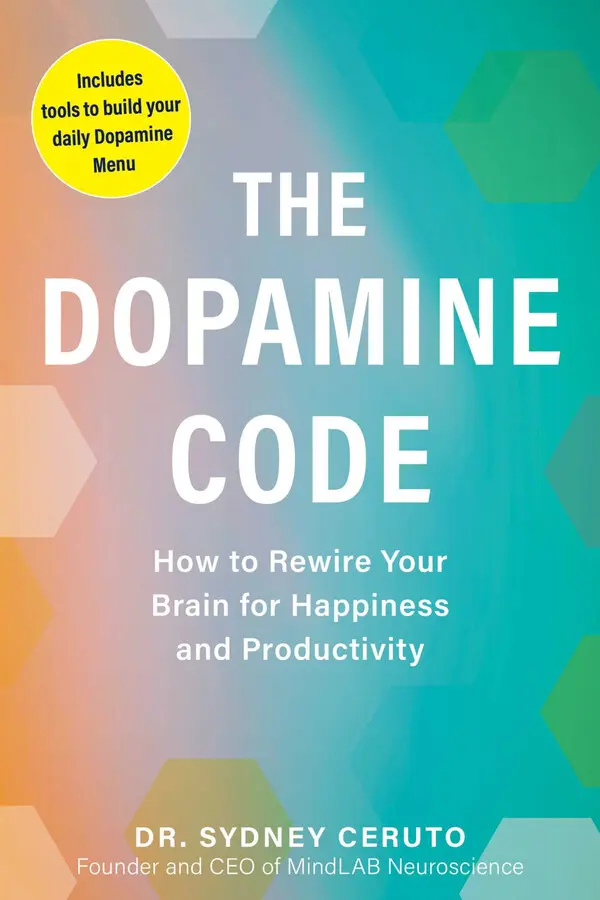
Dr. Ceruto holds a PhD in Behavioral & Cognitive Neuroscience from NYU and Master’s degrees in Clinical Psychology and Business Psychology from Yale University. She lectures at the Wharton Executive Development Program at the University of Pennsylvania and has been an Executive Contributor to the Forbes Coaching Council since 2019. Dr. Ceruto is the author of The Dopamine Code (Simon & Schuster, June 2026). She founded MindLAB Neuroscience in 2000 and has spent over 26 years leading it, pioneering Real-Time Neuroplasticity™, a methodology that durably rewires the neural pathways driving behavior, decisions, and emotional responses.
Frequently Asked Questions About Behavioral Strategy Development
What is Behavioral Strategy Development?
Behavioral Strategy Development maps the neural circuits driving how you make strategic decisions and builds frameworks aligned with that architecture. It works with the brain's real operating system rather than assuming that knowledge and experience automatically produce optimal strategy.
Why is this particularly relevant for Westchester professionals?
Westchester concentrates executives whose neural architecture was shaped by decades in Manhattan's most competitive environments. That wiring was built for specific conditions. When career context shifts to entrepreneurship, advisory work, or board service, the same circuits often produce strategic misalignment.
I have decades of strategic experience. Why would I need this?
Experience and neural architecture are different systems. Your knowledge base is extensive. The circuits that process and apply that knowledge were calibrated for conditions that may no longer match your current strategic context. Recalibrating those circuits makes your experience dramatically more effective.
How does the shift from institutional to entrepreneurial work affect strategy?
Institutional careers build neural architecture optimized for hierarchy, defined parameters, and organizational momentum. Entrepreneurial contexts remove all three. Leaders with extraordinary institutional track records frequently struggle not because they lack capability but because their decision circuits were built for a different environment.
Can this help with strategic decision-making across multiple board seats?
This is one of its strongest applications. Each board meeting activates different strategic circuits, and unprocessed neural residue from one context distorts thinking in the next. Mapping and calibrating these transitions produces significantly better strategic output across every board you serve.
What does the process look like?
It begins with a Strategy Call where Dr. Ceruto maps the core decision architecture driving your strategic behavior. She then identifies the specific circuits creating misalignment with your current objectives and designs a rewiring protocol calibrated to your specific professional context.
How quickly do results appear?
Most leaders notice measurable shifts in their decision-making patterns within the first several weeks. Real-Time Neuroplasticity™ works at the circuit level, producing faster change than executive coaching or strategic advisory that addresses behavior without modifying the underlying architecture.
Is this relevant for executives who are still in active institutional roles?
Absolutely. Leaders running divisions or firms while living in Westchester operate in dual-context environments that demand different neural modes. Mapping and optimizing the circuits that govern strategic switching between these contexts produces measurable improvement in both.
How does Westchester's professional network factor into strategic behavior?
In a community where board seats overlap and professional reputations circulate rapidly, the quality of strategic thinking at each table affects opportunities at every other. Neural architecture that produces inconsistent strategic output in one context creates reputational effects across the entire network.
How is Dr. Ceruto qualified for this work?
Dr. Ceruto holds a PhD in Behavioral and Cognitive Neuroscience from NYU and two Master's degrees from Yale. She lectures at the Wharton Executive Development Program at the University of Pennsylvania and has spent over 26 years applying Real-Time Neuroplasticity™ to individual and organizational performance.
Also available in: Miami · Wall Street · Midtown Manhattan · Beverly Hills · Lisbon
Take the First Step
One hour with Dr. Sydney Ceruto. You leave knowing which neural pattern is actually driving this, and what to do about it.
Book a Strategy Call
The Dopamine Code
Decode Your Drive
Why Your Brain Rewards the Wrong Things
Your brain's reward system runs every decision, every craving, every crash, and it was never designed for the life you're living. The Dopamine Code is Dr. Ceruto's framework for understanding the architecture behind what drives you, drains you, and keeps you locked in patterns that willpower alone will never fix.
Published by Simon & Schuster, The Dopamine Code is Dr. Ceruto's framework for building your own Dopamine Menu, a personalized system for motivation, focus, and enduring life satisfaction.
Order Now!Available now