Key Points
- Bergen County's industry diversity means leaders carry neural architecture shaped by specific sectors into strategic decisions that increasingly span multiple industries.
- Dual-context careers bridging New Jersey and Manhattan require neural architecture that toggles between strategic modes, with most leaders defaulting to one mode regardless of context.
- Business growth builds competing layers of neural architecture from each phase, and the fastest-firing circuits often override the ones the current inflection point actually requires.
- Cross-cultural business demands in Bergen County create competing neural frameworks for processing hierarchy, obligation, and conflict that surface in every strategic decision.
- Real-Time Neuroplasticity™ maps decision circuits across all contexts and calibrates the architecture for current strategic demands rather than historical conditions.
| Marker | Traditional Approach | Neuroscience-Based Approach | Why It Matters |
|---|---|---|---|
| Foundation | Behavioral Strategy Development | Traditional Business Consulting | Executive Coaching |
| Focus | Neural decision architecture | Market and operational analysis | Leadership effectiveness |
| Method | Real-Time Neuroplasticity™ | Frameworks and recommendations | Conversational development |
| Durability | Durable circuit-level change | Requires ongoing engagement | Fades without reinforcement |
| Scope | All strategic contexts mapped | Single business or market | General leadership capacity |
| Execution Alignment | Architecture matched to context | Assumes rational execution | Does not address architecture |
Why Behavioral Strategy Development Matters in Bergen County
How Bergen County’s Professional Landscape Shapes Strategic Behavior
Bergen County concentrates accomplished professionals across an unusually broad range of industries. From the pharmaceutical and healthcare executives in communities like Paramus and Ridgewood to the financial leaders in Alpine and Demarest, the legal professionals in Hackensack and Teaneck, and the technology executives in Mahwah and Saddle River, the county spans nearly every sector that defines the metropolitan economy. This diversity creates a professional community where strategic thinking crosses industry boundaries through networks, partnerships, and the informal exchange that happens in Bergen County’s towns every weekend. The neural architecture these leaders carry was shaped by their specific industries, but their strategic decisions increasingly require frameworks that function across the sectors their careers, investments, and advisory relationships now span.
Many Bergen County professionals maintain careers that bridge New Jersey’s corporate landscape and Manhattan’s business environment. The pharmaceutical companies headquartered along Route 17 and the corporate campuses in Montvale and Park Ridge operate on different strategic rhythms than the financial firms and media companies their leaders interact with across the Hudson. This dual-context career creates neural architecture that toggles between strategic modes built for fundamentally different environments. The circuits activated in a quarterly review at a Paramus-based healthcare company process risk, timeline, and regulatory constraint through architecture built by that industry’s specific demands. Those same circuits must then shift when the leader advises a startup in Manhattan or evaluates an investment outside their core sector. Without mapping these competing architectures, leaders default to whichever mode the brain finds most familiar, producing strategic output optimized for one context and misaligned with every other.
Why Behavioral Strategy Development Fits Bergen County’s Professional Reality
Bergen County’s entrepreneurial landscape presents strategic challenges that traditional consulting does not address. Business owners in Englewood, Fort Lee, and Tenafly have often built enterprises that serve both the local market and the broader metropolitan region. The neural architecture driving a business that started as a local operation and grew into a regional presence was built in stages, each adding circuits optimized for that phase of growth. The scrappy decision-making that launched the business, the operational discipline that stabilized it, and the strategic sophistication that scaled it each left neural traces that persist and compete for activation. When the business faces its next inflection point, the founder’s brain has three competing sets of strategic architecture, and the one that fires fastest often wins regardless of which one the current challenge actually requires.
The Korean-American business community concentrated in Bergen County, particularly in Palisades Park, Fort Lee, and Leonia, brings a distinct cultural dimension to strategic behavior. Leaders operating between Korean business norms and American corporate expectations carry neural architecture that processes hierarchy, obligation, and strategic timing through culturally specific circuits. A business owner whose professional life spans both frameworks must navigate strategic situations where the neural responses appropriate in one cultural context directly conflict with those demanded by the other. These are not surface-level cultural adjustments. They are competing sets of deeply embedded neural architecture that shape every strategic decision from hiring to market expansion to how conflict with a business partner gets resolved.
Real-Time Neuroplasticity™ maps the specific decision circuits driving your strategic behavior across every context you operate in. Dr. Sydney Ceruto identifies where those circuits serve your current objectives and where they produce drift, hesitation, or misalignment. For Bergen County professionals navigating multi-sector careers, growing enterprises, or cross-cultural business demands, this produces strategic coherence that no amount of planning or advisory alone can achieve. The result is decision architecture matched to the specific demands of this chapter, not the historical conditions that built it.


Dr. Sydney Ceruto, PhD, Neuroscientist & Author, MindLAB Neuroscience
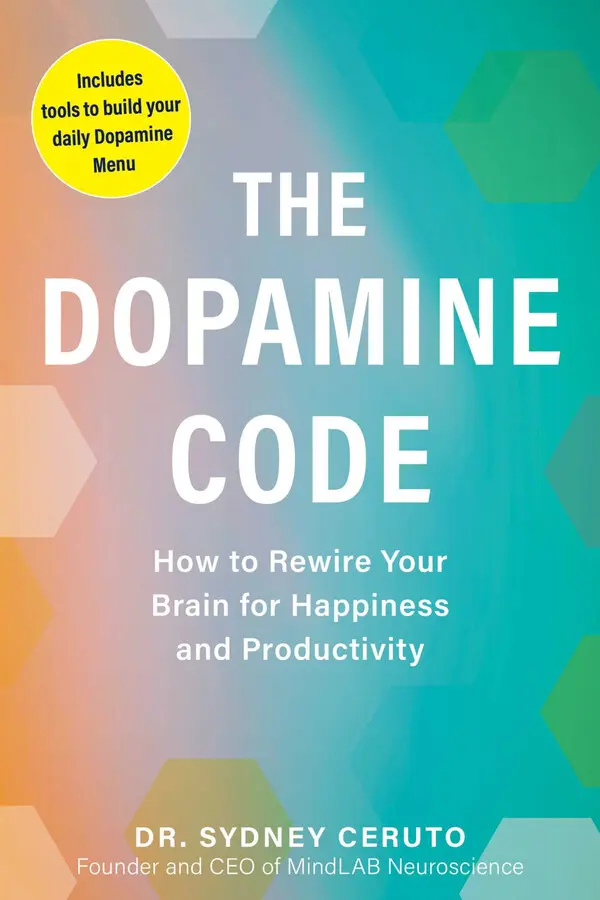
Dr. Ceruto holds a PhD in Behavioral & Cognitive Neuroscience from NYU and Master’s degrees in Clinical Psychology and Business Psychology from Yale University. She lectures at the Wharton Executive Development Program at the University of Pennsylvania and has been an Executive Contributor to the Forbes Coaching Council since 2019. Dr. Ceruto is the author of The Dopamine Code (Simon & Schuster, June 2026). She founded MindLAB Neuroscience in 2000 and has spent over 26 years leading it, pioneering Real-Time Neuroplasticity™, a methodology that durably rewires the neural pathways driving behavior, decisions, and emotional responses.
Frequently Asked Questions About Behavioral Strategy Development
What is Behavioral Strategy Development?
Behavioral Strategy Development maps the neural circuits driving your strategic decisions and builds frameworks aligned with that architecture. It designs strategy around how your brain actually processes opportunity, risk, and complexity rather than assuming uniform rational execution.
Why is Bergen County's professional environment a specific factor?
Bergen County spans pharmaceuticals, finance, technology, healthcare, and law across a single professional community. Leaders here increasingly operate across multiple sectors, carrying neural architecture shaped by one industry into strategic decisions that require a different framework entirely.
How does operating across New Jersey and Manhattan affect strategy?
Maintaining careers that bridge both environments creates neural architecture that must toggle between strategic modes built for different conditions. Without deliberate calibration, the brain defaults to its most familiar mode regardless of which context it is actually operating in.
Can this help business owners navigate growth inflection points?
This is one of its most direct applications. Each phase of business growth builds neural architecture optimized for that phase. When the next inflection arrives, the brain has competing sets of circuits and the fastest-firing one often wins, regardless of whether it matches the current strategic demand.
How do cultural backgrounds affect strategic decision-making?
Leaders operating between cultural frameworks carry competing neural architecture for processing hierarchy, obligation, and conflict. In Bergen County's diverse business community, these competing circuits shape every strategic decision and cannot be addressed through cultural awareness alone.
What does the process look like?
It begins with a Strategy Call where Dr. Ceruto maps the core decision architecture driving your strategic behavior. She then identifies the circuits creating bottlenecks or misalignment and designs a rewiring protocol calibrated to your specific professional and industry context.
How quickly do results appear?
Most leaders notice measurable shifts in decision-making patterns within the first several weeks. Real-Time Neuroplasticity™ works at the circuit level, producing faster change than strategic coaching or advisory relationships that address behavior without modifying the underlying architecture.
Is this relevant for healthcare and pharmaceutical executives?
Highly relevant. Healthcare and pharmaceutical strategy requires navigating regulatory complexity, long development timelines, and risk frameworks that differ fundamentally from other sectors. The neural architecture built for this industry has specific strengths and blind spots that behavioral mapping reveals precisely.
Does this work for teams or only individual leaders?
Both. Individual leaders benefit from mapping their personal decision architecture. Teams benefit from understanding how their collective neural dynamics produce strategic output that may differ significantly from what any individual member would produce independently.
How is Dr. Ceruto qualified for this work?
Dr. Ceruto holds a PhD in Behavioral and Cognitive Neuroscience from NYU and two Master's degrees from Yale. She lectures at the Wharton Executive Development Program at the University of Pennsylvania and has spent over 26 years applying Real-Time Neuroplasticity™ to individual and organizational performance.
Also available in: Miami · Wall Street · Midtown Manhattan · Beverly Hills · Lisbon
Take the First Step
One hour with Dr. Sydney Ceruto. You leave knowing which neural pattern is actually driving this, and what to do about it.
Book a Strategy Call
The Dopamine Code
Decode Your Drive
Why Your Brain Rewards the Wrong Things
Your brain's reward system runs every decision, every craving, every crash, and it was never designed for the life you're living. The Dopamine Code is Dr. Ceruto's framework for understanding the architecture behind what drives you, drains you, and keeps you locked in patterns that willpower alone will never fix.
Published by Simon & Schuster, The Dopamine Code is Dr. Ceruto's framework for building your own Dopamine Menu, a personalized system for motivation, focus, and enduring life satisfaction.
Order Now!Available now