Dopamine Detox in New York City

The pull to check, scroll, and refresh is not a willpower problem. Using Real-Time Neuroplasticity™, Dr. Sydney Ceruto recalibrates the reward system behind it, by phone, across New York City.

New York City runs on the quick hit, the notification, the next tab, the refresh that promises something and rarely delivers. If you feel run by that pull instead of the other way around, you are not weak and you are not alone. This is work on the reward system that drives the reach, done by phone with Dr. Ceruto, from anywhere in the five boroughs.

Schedule a Strategy Call
ForbesUSA TodayHuffPostNewsweekAssociated PressCosmopolitanBusiness InsiderForbesUSA TodayHuffPostNewsweekAssociated PressCosmopolitanBusiness Insider

When the reach for your phone stops feeling like a choice

You mean to check one thing. Forty minutes later you surface, not sure where the time went, a little more wired and a little less settled than before. The tab was open, the feed refreshed, the notification pulled, and you followed it without deciding to. In my practice, the people who come to me for this are rarely lazy or undisciplined. They are sharp, busy, and quietly frustrated that something this small has this much say over their attention.

It shows up everywhere in New York City. The train platform, the elevator, the ten seconds waiting for coffee, the bed at 11 p.m. when you promised yourself an early night. Any pause becomes a reach. The quiet you used to fill with a thought now fills with a screen.

What makes it stubborn is that willpower alone rarely fixes it. You can delete an app on Monday and reinstall it by Wednesday. The problem is not your character. It is a reward system doing exactly what it was built to do, just aimed at the wrong targets.

What is actually happening in your brain

Dopamine is often called the pleasure chemical, but that is not quite right. It is closer to a prediction signal. Your brain learns that a certain action, a swipe, a tap, a refresh, sometimes delivers something new, so it starts to expect a hit each time.

Here is the part that traps people. When the hit does not arrive, dopamine drops below where it started, and that dip registers as a small itch of wanting. The pull to check again grows, not because the last check felt good, but because your brain is chasing the gap between what it expected and what it got.

Feeds and notifications are engineered around this gap. The reward is unpredictable on purpose, which is the exact pattern that keeps the reward system most engaged. Over time the ordinary pace of real life, slower, quieter, less immediate, starts to feel flat by comparison. That is not a flaw in you. It is a reward system that has been recalibrated by design, and it can be recalibrated back.

Why blockers and willpower plans fall short

Most approaches to this work from the outside in. Screen-time limits, app blockers, and detox challenges all try to build a wall between you and the behavior. They can help for a week, but they do not touch the wanting underneath, so the moment the wall comes down the pull is right where you left it.

Unlike conventional coaching, which works on habits and accountability from the outside, Real-Time Neuroplasticity™ works at the level of the reward system itself, the wiring underneath the habit. Instead of fighting the pull with more rules, we change what your brain expects, so the reach loosens its grip on its own.

How Real-Time Neuroplasticity™ resets the reward system

The brain can rewire, but it rewires best in the live moment, while a circuit is active, not later when you are describing it from memory. That is the core of how I work. We catch the pull as it happens, in the actual situation where you reach, and we work with it while it is switched on.

Using Real-Time Neuroplasticity™, I help you notice the exact moment the wanting spikes, the pause before the reach, and we use that window to update what your brain predicts. When the expected hit stops being reinforced in the way it was, the reward system slowly recalibrates. The itch quiets. The pause gets longer. The choice comes back to you.

This is not about swearing off your phone or living like a monk. It is about resetting the baseline so a quiet moment feels like enough again, and so the tools you actually need stop competing with the ones designed to hook you.

Neuroscience consultation, rosewood table with crystal brain sculpture and branded journal for strategy call preparation

What changes when the reset holds

People describe it as getting their attention back. The phone becomes a tool again instead of a reflex. You reach for it because you decided to, not because your hand moved before you did. The 3 a.m. scroll loses its gravity, and mornings start without the automatic grab for the screen.

Most people notice the first shift faster than they expect, often within the first few weeks. We are working with the circuit while it is live, not waiting for a habit to slowly fade on its own. The full reset takes longer and it holds, because we changed what your brain wants, not just what it is allowed to do.

Why Dopamine Detox Matters in New York City

New York City is built to keep your attention moving. The screens are everywhere, the pace never fully stops, and there is always one more thing to check, refresh, or respond to before you can rest. That constant low hum of input is exactly the environment a hijacked reward system thrives in, which is why the pull can feel louder here than almost anywhere else.

It does not matter which borough you are in. The founder in Manhattan, the parent in Queens, the student in the Bronx, the nurse in Brooklyn, the artist on Staten Island. The reach for the phone in the elevator, the doom-scroll on the late train home, the refresh you do without noticing, all of it runs on the same circuit. The setting changes. The mechanism does not.

MindLAB works with people across all five boroughs by phone, which keeps the work close to the moments the pull actually shows up, the reach for the phone, the open tab, the quick hit. For those who want a neighborhood anchor, the same work is available at MindLAB’s two Manhattan offices. You can begin at the Wall Street office, in the Financial District, or at the Midtown Manhattan office. Both connect to the same practice and the same Real-Time Neuroplasticity™ methodology.

Because the work happens by phone, we can meet the pull wherever it actually lives, on your commute, at your desk, in the quiet of your own home. There is no room you have to travel to. For most people across the five boroughs, that is the point where the reset finally sticks.

Dr. Sydney Ceruto, PhD, Neuroscientist & Author, MindLAB Neuroscience

About Dr. Sydney Ceruto

Dr. Sydney Ceruto, PhD, is a Neuroscientist & Author and the founder of MindLAB Neuroscience. She is the pioneer of Real-Time Neuroplasticity™, a proprietary methodology that durably rewires the neural pathways driving behavior, decisions, and emotional responses.

Dr. Ceruto holds a PhD in Behavioral & Cognitive Neuroscience from NYU and Master’s degrees in Clinical Psychology and Business Psychology from Yale University. She is a Lecturer in the Wharton Executive Development Program at the University of Pennsylvania and an Executive Contributor to the Forbes Coaching Council. She brings 26+ years of founding and leading MindLAB Neuroscience to her work with clients.

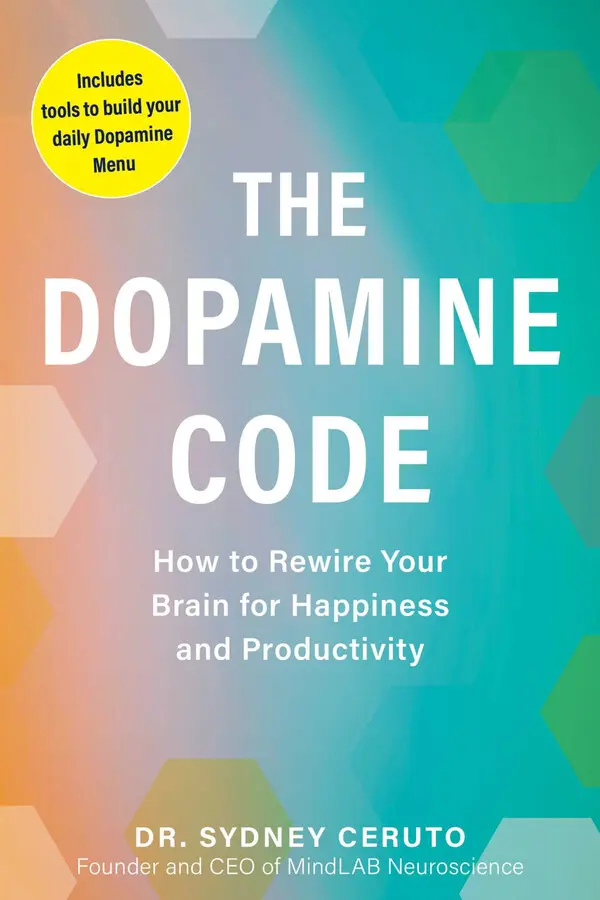
She is the author of The Dopamine Code: How to Rewire Your Brain for Happiness and Productivity (Simon & Schuster, June 2026), Rewire for Resilience: Heal Your Anxious Brain in 30 Days (MindLAB Press), and The Dopamine Code Workbook (Simon & Schuster, October 2026). A Neuroscience Advisor and the Founder & CEO of MindLAB Neuroscience, Dr. Ceruto is regularly featured in Forbes, USA Today, Newsweek, The Huffington Post, Business Insider, Fox Business, Associated Press, and CBS News.

References

Schultz, W., Dayan, P., & Montague, P. R. (1997). A neural substrate of prediction and reward. Science, 275(5306), 1593-1599. https://doi.org/10.1126/science.275.5306.1593

Berridge, K. C., & Robinson, T. E. (1998). What is the role of dopamine in reward: Hedonic impact, reward learning, or incentive salience? Brain Research Reviews, 28(3), 309-369. https://doi.org/10.1016/S0165-0173(98)00019-8

Volkow, N. D., Wise, R. A., & Baler, R. (2017). The dopamine motive system: Implications for drug and food addiction. Nature Reviews Neuroscience, 18(12), 741-752. https://doi.org/10.1038/nrn.2017.130

Success Stories

“Every close relationship I had eventually hit the same wall. I'd flood emotionally and shut down or explode, and nothing I'd tried gave me real control over it. Dr. Ceruto helped me see that I was dropping straight into fight-or-flight the moment real intimacy was on the line. She didn't give me coping tools. She helped me rebuild that default. The flooding eased because what set it off had changed.”

Simone V., Executive Director, Arts Nonprofit New York, NY

“Dr. Ceruto's neuroscience-based program transformed me from a struggling young founder on the brink of quitting to a self-aware, emotionally intelligent leader capable of building a cohesive team. Her techniques enhanced my decision-making and empowered me to foster a culture of empathy and collaboration, driving Liquid IV to remarkable success. The company I built after working with her was fundamentally different, because I was fundamentally different.”

Brandin C., CEO, Liquid IV Los Angeles, CA

“Dr. Ceruto’s remarkable ability to foster intimacy helped us reconnect on a profound level, transforming our pain into growth and reigniting the love that first brought us together. Her expertise and compassion guided us from the brink of separation to a stronger, more resilient partnership, giving us a second chance at love we never thought possible.”

Jake & Emily Chicago, IL

“I struggled with anxiety since I was 13. I simply could not control my thoughts, and no medication or therapy was helping. Since working with Sydney, I've gained a whole new perspective on what anxiety actually is and, most importantly, how to work with it. Her approach is unlike anything I've ever experienced, a must for anyone who wants to understand what drives their actions and emotions. At 28, I'm finally in a happy place with solid emotional management and real coping skills.”

Lydia G. Paris, FR

“When the demands of my career began negatively impacting my quality of life, I knew I needed help beyond my usual coping mechanisms. I landed on Dr. Ceruto’s name and couldn’t be happier. Her credentials are impeccable, but upon meeting her, all uneasiness dissipated immediately. She has an innate ability to navigate the particulars of your profession no matter how arcane it may be. By the middle of the first session, you’re talking to a highly intelligent and intuitive friend. She is simply that good.”

Norine D., Director of Strategy, Real Estate Group Newport Beach, CA

“Dr. Ceruto’s expert career guidance transformed me from a struggling mid-level manager facing potential job loss to a commendable performer in my field. Her transformative tools, coupled with direct text access for real-time advice, equipped me to combat procrastination, streamline mental organization, and master task prioritization, ultimately saving and elevating my career.”

Janine O., Sports Marketing + Partnerships, Jonesworks Eatontown, NJ

Common Questions About Dopamine Detox in New York City

Is a dopamine detox actually a real thing?

The phrase is popular, but the science behind it is simpler than the trend suggests. You cannot flush dopamine out of your brain like a toxin, and you would not want to, since it drives motivation for everything that matters. What you can do is recalibrate a reward system that has been trained to expect a constant stream of quick hits. That reset is the real work, and it is what I focus on.

How is this different from just using a screen-time app or blocker?

Blockers work from the outside by putting a barrier between you and the behavior, which can help for a stretch but leaves the underlying pull intact. Unlike conventional coaching, which builds habits and accountability from the outside in, Real-Time Neuroplasticity™ works at the level of the reward system itself, so the wanting eases instead of just being walled off. When the pull loses its charge, you need fewer rules to manage it.

What actually happens on the Strategy Call?

The Strategy Call is a phone conversation with Dr. Ceruto. We talk through where the pull shows up in your day, what you have already tried, and what you want your attention back for. By the end you will understand the mechanism driving the behavior and how the work would apply to your specific situation. It is a real conversation, not a script.

How fast will I notice a difference?

Most people feel a first shift sooner than they expect, often within the first few weeks, because we work with the pull while it is active rather than waiting for a habit to fade. Early on you might catch yourself pausing before a reach that used to be automatic. The deeper reset, the kind that holds without effort, builds over time as the reward system recalibrates.

Does this work if I am not in Manhattan?

Yes. The work is done by phone, so it reaches every corner of New York City and beyond, whether you are in Brooklyn, Queens, the Bronx, Staten Island, or upper Manhattan. The reward system that drives the pull is the same wherever you live. If you would prefer a neighborhood office, Dr. Ceruto also works from two Manhattan locations, linked above.

Why is the Strategy Call done by phone?

A phone call takes the camera out of the equation, so there is nothing to perform to and no screen to manage. People tend to settle in faster and speak more freely, which means the full hour goes to the actual conversation. Given that this work is about loosening the grip of screens, keeping the conversation on the phone fits the goal rather than working against it.

Do I have to give up my phone or social media completely?

No. The goal is not deprivation, and swearing off your phone rarely holds anyway. The aim is to reset your baseline so a quiet moment feels like enough again, and so you use your phone by choice instead of by reflex. Most people end up keeping the tools they value and losing the compulsive pull toward the ones that were only ever hooking them.

What if I have tried to cut back before and it never sticks?

That is the most common story I hear, and it is not a sign that something is wrong with you. Plans built on willpower fail because they fight the pull without changing what your brain expects. When we recalibrate the reward system itself, sticking to it stops requiring constant effort, because the wanting that used to sabotage you has quieted down.

How do I know if this is the right fit for me?

If you feel more run by your screens than in charge of them, and the usual advice has not moved the needle, this work is likely a fit. It helps whether the pull shows up as endless scrolling, constant tab-checking, or a reach you make a hundred times a day without noticing. The Strategy Call is the place to find out for certain, and you can schedule one by phone with Dr. Ceruto.

Also available in: Miami · Wall Street · Midtown Manhattan · Beverly Hills · Lisbon

Take Your Attention Back. Book a Strategy Call.

In a phone conversation with Dr. Sydney Ceruto, you will see exactly what is driving the pull and how the work would reset it for you. Schedule your Strategy Call and start getting your focus back.

Schedule Your Strategy Call
MindLAB Neuroscience strategy call setting

The Dopamine Code

Decode Your Drive

Why Your Brain Rewards the Wrong Things

Your brain's reward system runs every decision, every craving, every crash, and it was never designed for the life you're living. The Dopamine Code is Dr. Ceruto's framework for understanding the architecture behind what drives you, drains you, and keeps you locked in patterns that willpower alone will never fix.

Published by Simon & Schuster, The Dopamine Code is Dr. Ceruto's framework for building your own Dopamine Menu, a personalized system for motivation, focus, and enduring life satisfaction.

Order Now!

Available now

The Dopamine Code by Dr. Sydney Ceruto, Decode Your Drive
Locations
Secret Link