Key Takeaways
- Anger is a threat-assessment output, not a temperament: amygdala-detected threat perceived as active, controllable, blocked.
- The regulation circuit fails from prefrontal cortex depletion under sustained cognitive load, not weakness.
- Amygdala hijacks are not random: they follow threat categories sensitized by earlier experience.
- Recalibration targets three mechanisms: baseline amygdala reactivity, prefrontal inhibitory capacity, and the upstream threat-appraisal system.
- Cognitive reappraisal changes the amygdala’s upstream signal and reduces arousal; suppression only masks the output.
Why High-Capacity Individuals Are More Vulnerable to Anger Dysregulation, Not Less
High-capacity individuals experience anger dysregulation at elevated rates precisely because chronic cognitive load depletes the prefrontal cortex’s inhibitory control. Research on executive function shows that sustained high-performance demands measurably reduce emotional regulation capacity, producing sudden, disproportionate anger responses in otherwise composed people: a pattern unrelated to temperament and consistently misidentified in research literature.
What it has everything to do with is the relationship between the amygdala and the prefrontal cortex under conditions of sustained cognitive load, and the point at which that relationship breaks down. This connects directly to the Cognitive Architecture pillar.
What Happens in the Brain When You Get Angry?
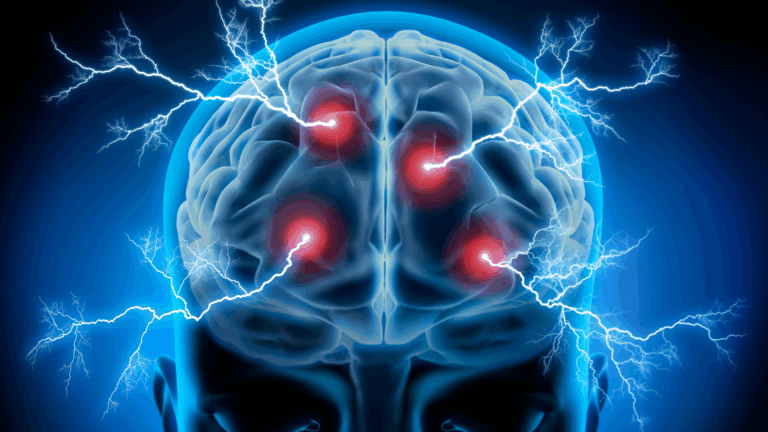
The amygdala produces threat assessment, not anger. Anger emerges as a downstream output when the amygdala determines a threat is active, controllable, and blocked. This distinction shifts the intervention target from anger suppression to amygdala reactivity reduction: a reframe supported by neuroimaging studies showing amygdala activation precedes conscious anger awareness.
Amygdala hijack follows predictable fault lines (status threats, competence challenges, perceived disrespect) because the amygdala fires where its threat model has been most precisely calibrated.
Amygdala hyperreactivity under cognitive load predicts anger dysregulation more strongly in individuals with high baseline executive function, challenging the assumption that high capacity confers automatic regulation advantages.
Repeated anger dysregulation episodes progressively weaken prefrontal-amygdala connectivity, creating a structural feedback loop that makes future regulation increasingly effortful.
When the amygdala detects a provocation (a blocked goal, a perceived injustice, a challenge to status or competence) it initiates a cascade. Stress hormones including cortisol and norepinephrine are released. Autonomic arousal increases. Attention narrows to the threat. These are not errors in the system. They are the threat-response system doing exactly what it evolved to do: mobilizing the organism to address a challenge. Research on stress hormones and amygdala activation confirms that these pathways operate on timescales far faster than conscious deliberation.
Neuroscientist James Gross at Stanford, whose work on emotional regulation has become a foundational reference for understanding how suppression and reappraisal differ mechanistically, demonstrated that neuroscientific ways to stop rage-bait responses involve not just amygdala activation but also a specific pattern of prefrontal underengagement. Neuroimaging of anger-prone individuals links this pattern to weakened prefrontal-amygdala regulation during provocation (Sci Rep, 2017), a reactive-aggression finding rather than one from Gross’s own reappraisal and suppression imaging. This is not a character defect. It is a circuit signature.
Your prefrontal cortex is not weak. It is depleted. The distinction matters because the intervention is different.
The prefrontal cortex is supposed to receive the amygdala’s alarm signal and evaluate it: Is this threat real? Is the magnitude of the response proportionate? What are the costs of acting on this activation? When that evaluation runs efficiently, the person experiences irritation and moves through it. When the prefrontal brake fails, or is simply overwhelmed, the amygdala’s signal runs to behavioral output without the moderating layer. The result is what clients often describe to me as “coming out of nowhere.”
Why the Regulation Circuit Fails Specifically Under High Cognitive Load
Prefrontal-amygdala regulation failure occurs disproportionately when the prefrontal cortex is already managing high cognitive demand. Research shows that working memory load reduces prefrontal inhibitory control over the amygdala by measurable degrees, making emotional dysregulation significantly more probable during complex problem-solving, deadline pressure, or multitasking: contexts the standard anger literature largely fails to address. This pattern is examined in the Emotional Regulation collection.
The prefrontal cortex draws on a shared pool of regulatory resources. Decision-making, working memory maintenance, sustained attention, suppression of competing impulses: all of these compete for the same underlying capacity. Research by Roy Baumeister and colleagues on cognitive depletion demonstrated that acts of self-control draw on a limited resource and that regulatory capacity declines measurably after sustained executive demands. While subsequent research has complicated the original “glucose depletion” model, the behavioral finding is robust: the prefrontal cortex is less effective at inhibiting emotional responses after it has been doing hard cognitive or regulatory work.
This is why the strategies for managing anger effectively eruption in a high-performing client almost never happens on an easy day. It happens after a six-hour negotiation, a difficult conversation with a family member, or a week of compounding decisions and interpersonal management. The person who navigated four hours of complex conflict with composure then responds to a minor logistical failure with complete loss of proportion. The external observer sees the minor logistical failure as the cause. The neuroscience points to what came before it.
The explanation provided to clients is that their prefrontal cortex is not weak. It is depleted. The distinction matters because the intervention is different. A depleted system needs conditions for recovery and load management, not additional self-regulation demands stacked on top of the existing depletion.
The Amygdala Hijack in Context: What Is Misunderstood About the Concept
Psychologist Daniel Goleman coined “amygdala hijack” to describe amygdala activation overriding prefrontal cortex function, producing emotional responses individuals cannot fully account for afterward. The concept holds neurological validity, but standard presentations misrepresent the mechanism by framing emotional override as involuntary possession rather than a learned, reinforced neural pathway: a professionally significant distinction that changes how practitioners approach intervention.
What professional observation reveals is that the hijack is rarely random. It tends to occur along predictable fault lines: specific threat categories that have been sensitized by earlier experience. Status threats. Competence challenges. Betrayal or demonstrated disloyalty. Perceived disrespect in high-stakes contexts. The amygdala is not firing randomly; it is firing where the threat model has been previously calibrated to be most sensitive.
Two people with objectively similar anger dysregulation may have completely different sensitization profiles. The behavioral presentations can look identical. The underlying circuit targets are different.
This is an important nuance because it means that understanding the anger pattern requires mapping the specific provocation categories, not just working on generic arousal reduction. Two people with objectively similar anger dysregulation may have completely different sensitization profiles: one may be almost entirely reactive to competence threats while another is primarily reactive to interpersonal exclusion. The behavioral presentations can look identical. The underlying circuit targets are different.
Professional observation consistently shows that clients who have experienced sustained environments of high consequence and high evaluation (and this includes competitive academic environments, demanding family systems, and any context where performing under scrutiny carried real costs) show the most concentrated sensitization around competence and status threats specifically. The amygdala has been shaped by repeated experiences where those threat categories carried real costs. How ego defense mechanisms convert threat perception into explosive anger output reveals the full architecture of why these triggers are so difficult to anticipate.
Can You Train Your Brain to Control Anger?
Humans can train their brains to control anger by targeting three distinct neural circuits simultaneously. Neuroimaging research shows that structured emotional regulation practice strengthens prefrontal cortex inhibitory control over amygdala reactivity, measurably reducing anger response intensity over weeks of consistent practice. The prefrontal-amygdala circuit governing emotional response remains measurably plastic throughout adulthood.
Reducing baseline amygdala reactivity is largely a function of physiological state management: sleep quality, cardiovascular recovery, and managing anger with scientific strategies cumulative cognitive load. Research from Matthew Walker’s lab at UC Berkeley on sleep and emotional brain reactivity found that one night of sleep deprivation produced a 60% increase in amygdala reactivity to aversive stimuli. A prefrontal cortex operating on inadequate sleep is working against a significantly amplified threat signal. For high-capacity individuals carrying demanding schedules, this is not a minor variable. It is frequently the primary one.
Improving prefrontal inhibitory capacity under load requires a different approach than traditional anger management typically offers. The goal is not to practice controlling anger in calm conditions: most high-performing clients can do that without difficulty. The goal is to build the capacity to engage prefrontal override specifically when arousal is already elevated and cognitive resources are already taxed. This is where Real-Time Neuroplasticity™ operates: in the live moment of activation, not in calm reflection afterward. Building prefrontal override capacity under conditions of genuine arousal is a practiced skill, not a personality attribute, and it responds to the same principles as any other skill acquisition: graded difficulty, deliberate repetition across varying conditions, and sufficient recovery between practice iterations.
The appraisal restructuring component is often where the most durable work happens. Neuroscientist Kevin Ochsner at Columbia has studied cognitive reappraisal extensively: the process of consciously reinterpreting the meaning of an emotional stimulus rather than suppressing the emotion it produces. His research demonstrates that reappraisal, unlike suppression, actually reduces amygdala activation rather than simply overriding its behavioral output. Suppression keeps the arousal running at full amplitude while blocking its expression. Reappraisal changes the signal upstream.
The practical implication: helping a client recognize that a competence challenge is not a threat to their actual competence, but rather a predictable feature of operating in environments where their performance is publicly assessed, changes what the amygdala receives as input. The event does not change. The classification of that event changes. And because the amygdala responds to its input classification, not to the objective event, changing the classification reduces the amplitude of the response.
The Long-Term Cost of Unmanaged Anger Dysregulation
There is a performance argument for addressing anger dysregulation that extends well beyond the interpersonal costs. Chronic anger activation carries a documented physiological burden. Sustained cortisol elevation, chronic sympathetic nervous system activation, and elevated baseline inflammatory markers are all associated with maintained anger states, and all carry cumulative physiological cost.
But the performance cost is equally real and often more motivating for the clients in this practice. An anger episode in a high-stakes context does not stay contained to that moment. It reshapes the relational environment the person operates in, reducing psychological safety in teams, triggering compensatory behavior in colleagues, and often producing a downstream tax on trust that requires substantial investment to recover. The person who responded disproportionately in a moment of depleted regulation is not only managing the aftermath of that specific event. They are managing the recalibrated threat assessment of everyone who witnessed it or heard about it. Why post-anger rumination extends the neurological cost of the original episode explains why the damage compounds long after the anger itself has passed.
Understanding the neuroscience of anger is not an academic exercise. For individuals operating at high capacity in demanding environments, it is a direct input to performance architecture. The circuit can be recalibrated. The threshold can be raised. The appraisal system can be restructured. But none of that happens through insight alone: it requires deliberate, structured work that takes the mechanism seriously rather than treating anger as a character problem to be overcome through willpower. Understanding the deeper relationship between the amygdala and emotional patterns across different presentations is part of what makes this work precise rather than generic.
Why do I get angry over small things?
Disproportionate anger responses to minor triggers are almost always a prefrontal depletion phenomenon, not a proportionality problem. The minor trigger is the last demand on a regulatory system that has been running at capacity. The anger is real, but the cause is not the trigger. It is the cumulative load that preceded it. The intervention is load management and recovery architecture, not anger suppression.
What is an amygdala hijack?
An amygdala hijack occurs when the amygdala’s threat-detection signal bypasses prefrontal evaluation and drives an emotional response before conscious reasoning can moderate it. The amygdala processes threat signals faster than the cortex completes conscious evaluation. Hijacks are not random: they follow predictable fault lines based on sensitized threat categories from earlier experience.
How do I stop reacting in anger?
Stopping the reaction in the moment is the wrong target: the amygdala has already fired. The intervention targets are upstream: reducing baseline amygdala reactivity through sleep and physiological state management, building prefrontal override capacity under genuine arousal conditions, and restructuring the threat-appraisal system so that fewer stimuli get classified as threats in the first place. Cognitive reappraisal changes the upstream signal. Suppression only masks the output.
Is anger a sign of a bigger problem?
Anger dysregulation in high-capacity individuals is typically a sign of chronic prefrontal depletion and sensitized threat-detection, not of a deeper psychological problem. It is a circuit operating under unsustainable load. However, anger patterns that are escalating, that produce genuine interpersonal harm, or that are accompanied by other dysregulation warrant professional evaluation to map the specific architecture driving the pattern.
Can anger damage your brain?
Chronic anger activation produces sustained cortisol elevation, which over time amplifies the catecholamine signaling that degrades prefrontal cortex function, and which expands amygdala reactivity and reduces hippocampal volume. This creates a feedback loop: the neural infrastructure needed to regulate anger is precisely the infrastructure that chronic anger degrades. The longer the pattern runs unaddressed, the less regulatory capacity remains to interrupt it.
How does the amygdala contribute to anger responses in the brain?
The amygdala acts as the brain’s threat detection center, triggering rapid fight-or-flight responses before the prefrontal cortex can apply rational evaluation. When this neural alarm system fires in response to perceived threats, it floods the body with stress hormones that manifest as the physical and emotional experience of anger.
What neuroscience strategies can help regulate amygdala-driven anger?
Techniques such as slow diaphragmatic breathing and cognitive reappraisal activate the prefrontal cortex, which sends inhibitory signals to calm the amygdala’s reactivity. Repeatedly practicing these strategies strengthens the neural pathways responsible for emotional regulation, making it easier to manage anger over time.
Can the brain’s anger response be durably rewired through neuroplasticity?
Neuroplasticity allows the brain to form new neural connections and weaken old reactive patterns, meaning consistent practice of regulation techniques can reshape how the amygdala responds to triggers. While the amygdala’s fundamental role remains intact, individuals can develop stronger prefrontal override capabilities that reduce impulsive anger reactions.
Why do some people experience more intense amygdala-driven anger than others?
Variations in amygdala sensitivity are influenced by genetics, early life experiences, and accumulated stress, all of which shape how readily this brain region activates in response to perceived threats. People with heightened amygdala reactivity may have a lower threshold for anger activation, but targeted neuroscience-based strategies can help recalibrate these responses.
References
- Gross, J. J. (2002). Emotion regulation: Affective, cognitive, and social consequences. Psychophysiology, 39(3), 281-291. https://doi.org/10.1017/S0048577201393198
- Ochsner, K. N., & Gross, J. J. (2005). The cognitive control of emotion. Trends in Cognitive Sciences, 9(5), 242-249. https://doi.org/10.1016/j.tics.2005.03.010
- Walker, M. P., & van der Helm, E. (2009). Overnight therapy? The role of sleep in emotional brain processing. Psychological Bulletin, 135(5), 731-748. https://doi.org/10.1037/a0016570
From Reading to Rewiring
High-capacity individuals are more vulnerable to anger dysregulation because sustained high performance chronically taxes prefrontal inhibitory resources. The dorsolateral prefrontal cortex suppresses amygdala-generated anger responses, but this suppression function degrades under cognitive overload and sleep debt. Research shows that executive function impairment reduces anger regulation capacity by measurable margins, making high-output individuals neurologically primed for dysregulation under pressure.
Schedule Your Strategy CallStrategy Call
If the pattern is familiar (composure that holds until it does not, reactions that surprise you in their intensity) the issue is not your character. It is a prefrontal-amygdala circuit operating under chronic load. A strategy session maps the specific triggers, the depletion pattern, and the recalibration plan.