
Key Takeaways
- Neuroplasticity is not a metaphor: brain training measurably increases cortical thickness, myelination, and synaptic strength
- Brain training follows Hebbian learning: neurons firing together wire together, only when novel, effortful, sustained
- Learning to juggle increased visual cortex gray matter density within 90 days, visible on MRI
- Long-term potentiation (LTP) requires repeated activation of one pathway: single sessions create no durable change
- Brain training integrating cognitive challenge, emotional engagement, and physical novelty produces the strongest neuroplastic response
The brain you have today is not the brain you are limited to. In over two decades of working with high-capacity individuals (executives, entrepreneurs, physicians, attorneys) I have watched targeted brain training produce structural changes that standard cognitive approaches could not achieve. This is not motivational language. It is observable neuroscience, the foundation of brain-based peak performance. Neuroplasticity, the brain’s capacity to reorganize its own architecture in response to experience, means that specific, repeated cognitive exercises physically alter the density of synaptic connections, the thickness of cortical regions, and the efficiency of neural communication pathways. The question is not whether brain training works. The question is whether the training you are doing targets the right circuits, at the right intensity, for long enough to produce lasting change.
How Neuroplasticity Actually Works at the Neural Level
Neuroplasticity describes the brain’s measurable capacity to rewire its own structure and function in response to experience. Synaptic strengthening can occur within minutes of repeated neural firing, while large-scale cortical reorganization unfolds over weeks. These changes operate across multiple scales simultaneously: from individual synaptic connections to entire cortical regions spanning millions of neurons.
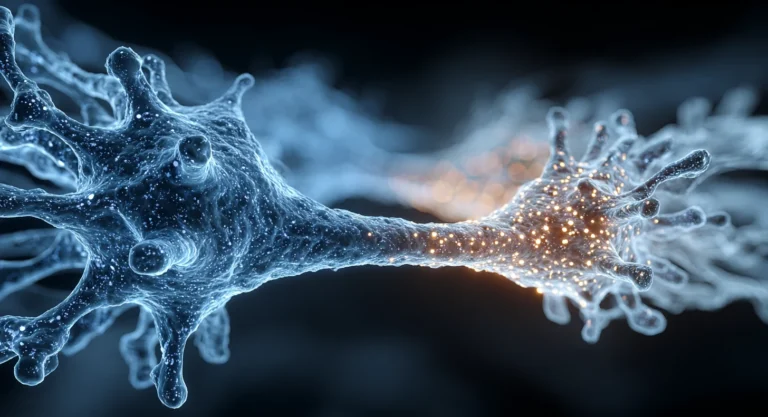
Long-term potentiation inserts additional AMPA receptor proteins into postsynaptic membranes, increasing synaptic sensitivity with each deliberate cognitive repetition.
Synaptic Plasticity and Hebbian Learning
Hebbian learning strengthens neural connections through repeated co-activation of the same synaptic pathways. Long-term potentiation (LTP) drives this process by inserting additional AMPA receptor proteins into the postsynaptic membrane, increasing synaptic sensitivity. Each deliberate repetition of a cognitive skill measurably thickens the relevant neural pathway, reducing the activation threshold for future use.
Research suggests that structured dual-task working-memory training produced greater hippocampal volume gains than passive cognitive engagement, underscoring the role of progressive difficulty in driving neuroplastic adaptation.
Sustained deliberate practice strengthens cortico-striatal pathways, and the skills built that way consolidate during sleep, illustrating the neural efficiency gains achievable through targeted brain training and skill acquisition.
Myelination: The Speed Factor
Myelination wraps neural axons in a fatty insulating sheath, increasing signal transmission speed by up to 100 times. Studies on musicians, athletes, and skilled professionals consistently show that expertise correlates with greater myelination in task-relevant pathways. Sustained practice over weeks or months drives this structural change; isolated sessions cannot replicate it.
Structural Cortical Changes
Structural neuroplasticity produces measurable cortical changes visible on MRI scans. London taxi drivers possess significantly larger hippocampi than matched controls, with volume correlating directly to navigation experience. Ninety days of juggling practice increases gray matter density in the mid-temporal area and posterior intraparietal sulcus.

What Neuroplasticity Brain Training Achieves That General Learning Does Not
All learning produces some degree of neuroplastic change. Reading this article is generating small modifications in your neural networks. But there is a meaningful distinction between passive exposure and targeted brain training: a distinction that determines whether the changes are transient or durable, narrow or broadly transferable.
Targeted brain training operates on three principles that general learning does not consistently meet. First, it must be effortful, pushing beyond the point of comfortable competence. The brain allocates resources for structural modification only when existing circuits are insufficient for the demand. A task that feels easy is being handled by existing architecture. A task that feels difficult is signaling the need for new construction. Second, it must be novel. Once a cognitive task becomes automatic, it shifts from prefrontal cortex-driven active processing to basal ganglia-mediated habit circuits. Automaticity is efficient but does not drive further plasticity. Third, it must be sustained. A supply-demand dynamic governs brain plasticity: structural change occurs when the demand for neural resources exceeds the brain’s current supply, and this mismatch must persist over time for architectural reorganization to occur.
The Evidence: Research Behind Neuroplasticity Training
Working Memory Training and Transfer Effects
Intensive dual n-back working memory training produced measurable transfer effects, improving fluid intelligence beyond the trained task itself. Transfer effects prove most robust when training spans multiple weeks and targets overlapping neural pathways across cognitive domains. This evidence suggests structured neuroplasticity training can strengthen broader reasoning abilities, not isolated skills.
The Commercial Brain Games Problem
Commercial brain games fail to improve real-world cognitive function because they strip away the mechanisms that drive neuroplasticity. Research confirms that the underlying cognitive training science is sound, but commercial products eliminate necessary difficulty progression, adequate session duration, and sustained engagement, producing only narrow transfer, where users improve at games, not cognition.
How I Apply Neuroplasticity Training With My Clients
Neuroplasticity training targets specific neural architecture rather than functioning as an isolated exercise. When clients show prefrontal cortex depletion from chronic emotional dysregulation, interventions focus on prefrontal strengthening through sustained attention tasks, complex decision-making under moderate time pressure, and working memory challenges calibrated to expand capacity without triggering cortisol-driven stress responses that undermine training gains.
What the research does not capture, but what I observe consistently, is the role of emotional engagement in driving neuroplastic change. The amygdala and broader limbic system function as a relevance detector: when something matters emotionally, the brain allocates substantially more resources to encoding and consolidation. Brain training that occurs in the context of real personal stakes produces faster and more durable results than identical cognitive exercises performed in an abstract or gamified context. This is why I integrate training into the actual challenges my clients face rather than prescribing separate “brain exercise” sessions disconnected from their lives.
A client came to me reporting that his cognitive sharpness, the rapid pattern recognition and creative problem-solving that had built his career, was declining. Standard medical evaluations found nothing wrong. What I identified was a combination of chronic stress-driven cortisol elevation amplifying the catecholamine signaling that suppresses prefrontal function and a lifestyle that had become so routine that novelty-dependent neuroplastic pathways were effectively dormant. The intervention combined targeted cognitive challenges integrated into his professional workflow with deliberate environmental novelty, not as self-help advice, but as a structured protocol designed to reactivate neuroplastic momentum in specific neural circuits. Within 60 days, his subjective experience and objective performance measures confirmed what the neuroscience predicts: the brain responds to targeted demand with targeted growth.
Building a Neuroplasticity Brain Training Practice for Lasting Change
Effective neuroplasticity training requires structure, progression, and consistency to produce lasting neural change. Research distinguishes practices that durably rewire neural pathways from those yielding only temporary improvement. Studies show that consistent, progressive cognitive training over 8–12 weeks strengthens synaptic connections measurably, while sporadic practice produces gains that fade within days of stopping.
Progressive Overload for the Brain
Brain training requires progressive cognitive load that scales with developing competence. Maintaining a gap between current capacity and demand drives neuroplasticity; fixed-difficulty training produces gains that plateau rapidly once neural architecture adapts. Targeting an effortful but non-frustrating level of difficulty, neither too easy nor overwhelming, sustains the adaptive pressure necessary for continued cognitive growth.
Multi-Domain Integration
Multi-domain training activates broader neural networks than single-domain exercise by engaging overlapping systems simultaneously. Learning a musical instrument integrates motor control, auditory processing, working memory, and emotional expression across multiple brain regions, producing some of the most robust neuroplastic effects in the literature. Combined cognitive-physical challenges amplify this effect beyond what isolated training achieves.
Recovery and Consolidation
Sleep consolidates neuroplastic change after training ends. During slow-wave sleep, the hippocampus replays newly learned experiences and transfers encoded patterns to cortical long-term storage. Sleep deprivation substantially impairs memory consolidation, so brain training protocols without adequate sleep fail to produce durable structural modification.
Consistency Over Intensity
Consistent, short practice sessions produce stronger neuroplastic outcomes than infrequent marathon sessions. Five 20-minute sessions distributed across one week generate more durable synaptic strengthening than a single two-hour session, because long-term potentiation consolidates most effectively during rest intervals between activations: the consolidation windows are where measurable structural neural change actually occurs.
This article explains the neuroscience underlying neuroplasticity and cognitive training approaches. For personalized neurological assessment and intervention, schedule a strategy call with Dr. Sydney Ceruto.
How long does it take for brain training to produce measurable neuroplastic changes?
Structural brain changes can occur in as few as 8-12 weeks of consistent training. Visible gray matter density changes appear after about 90 days of juggling practice. Functional improvements in speed and accuracy typically appear within 2-4 weeks. Lasting structural changes require sustained training over months, with adequate sleep for memory consolidation. Timeline varies based on training intensity, consistency, and whether it exceeds current processing capacity.
What types of brain training are most effective for neuroplasticity?
The most effective brain training combines novelty, progressive difficulty, and multi-domain engagement. Activities integrating cognitive, motor, and emotional processing (learning a musical instrument, navigating unfamiliar environments, complex interpersonal challenges) activate broader neural networks than single-domain exercises. Working memory training with progressive difficulty shows the strongest transfer effects in controlled research. Critically, training must remain effortful; once a task becomes automatic, it no longer drives the plasticity response.
Can brain training reverse age-related cognitive decline?
Brain training doesn’t reverse biological aging but can partially compensate for age-related neural changes by building redundant pathways and strengthening existing circuits. Hippocampal volume increases have been observed in adult taxi drivers, and targeted cognitive training improves processing speed, working memory, and executive function in older adults. Combining training with physical exercise, which promotes BDNF release and neurogenesis, produces the strongest outcomes.
What is the difference between brain training and general learning?
Targeted brain training differs from general learning in three ways: it deliberately exceeds current cognitive capacity to trigger architectural reorganization; it maintains progressive difficulty, preventing automaticity that shifts processing from prefrontal cortex to basal ganglia habit circuits; and it’s designed for transfer, strengthening neural circuits serving multiple cognitive functions. General learning may produce neuroplastic change without consistently reaching these thresholds.
How does neuroplasticity brain training differ from commercial brain games?
Commercial brain games prioritize engagement over neuroplastic conditions: sufficient difficulty, session duration, and sustained effortful processing. Research shows these platforms produce narrow transfer effects: users improve on specific games without meaningful real-world cognitive gains. Evidence-based brain training instead applies progressive overload, multi-domain integration, and sustained cognitive demand: the conditions that drive structural neural change rather than surface-level performance improvement.
References
- Draganski, B., Gaser, C., Busch, V., Schuierer, G., Bogdahn, U., & May, A. (2004). Neuroplasticity: Changes in grey matter induced by training. Nature, 427(6972), 311-312. https://doi.org/10.1038/427311a
- Maguire, E. A., Gadian, D. G., Johnsrude, I. S., Good, C. D., Ashburner, J., Frackowiak, R. S. J., & Frith, C. D. (2000). Navigation-related structural change in the hippocampi of taxi drivers. Proceedings of the National Academy of Sciences, 97(8), 4398-4403. https://doi.org/10.1073/pnas.070039597
- Jaeggi, S. M., Buschkuehl, M., Jonides, J., & Perrig, W. J. (2008). Improving fluid intelligence with training on working memory. Proceedings of the National Academy of Sciences, 105(19), 6829-6833. https://doi.org/10.1073/pnas.0801268105
From Reading to Rewiring
Understand the neuroscience. Apply it to your life. Work directly with Dr. Sydney Ceruto to build a personalized strategy.
One hour with Dr. Ceruto