
Key Takeaways
- Neuroplastic momentum uses resistance to change, and fear’s own energy, to build new neural pathways.
- Evolutionary fear responses are the largest barrier to sustained change: willpower cannot overcome them.
- The 30-day program builds compound neural gains: each success lowers the threshold for the next.
- Creative potential is a brain state accessible when the threat-detection system stops blocking novel connections.
- The program follows natural consolidation rhythms: daily practice, sleep-dependent transfer, progressive scaling.
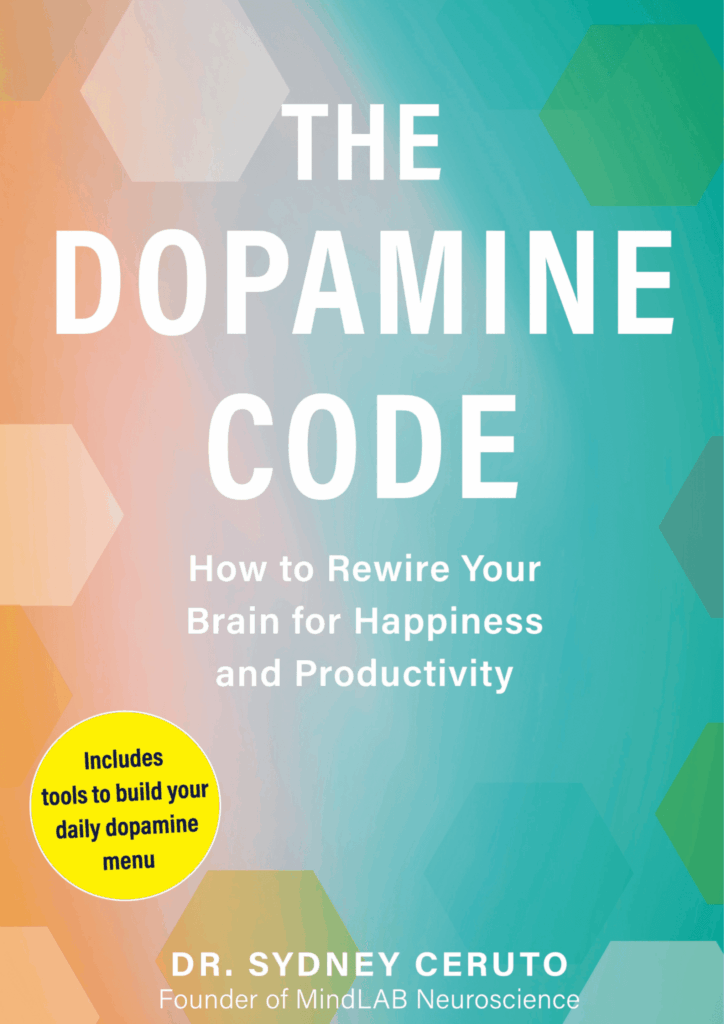
Neuroplastic momentum is the self-reinforcing cycle in which each act of deliberate brain change makes the next one easier. The adult brain is not a fixed circuit; it rewires in response to repeated, structured practice. The obstacle is not capacity but the brain’s evolutionary bias toward threat-avoidance, which willpower alone cannot override. This 30-day approach, grounded in the neuroscience explored in The Dopamine Code, turns that resistance into the fuel for rewiring fear, procrastination, and creative block.
This is not just theory. It is a framework grounded in the neuroscience of echo chambers and the brain, evolutionary biology, and more than 26 years of applied neuroscience practice. The sections that follow explain why the brain clings to fear, how to rewire procrastination into productivity, and why unfinished goals can become an asset.
Growth-oriented momentum states reduce default mode network threat-monitoring activity and increase frontoparietal executive network engagement, neurologically enabling the creative risk-taking blocked by survival-mode cognition.
The Zeigarnik-related tension created by unfinished goals consumes prefrontal working memory resources until implementation intentions are formed, confirming that cognitive momentum requires explicit if-then planning to sustain. This pattern is examined in the Cognitive Architecture pillar.

Why Your Brain Is Stuck in Survival Mode (And How to Upgrade It)
The amygdala, the brain’s threat-detection center, evolved to prioritize survival over creativity or sustained focus. It responds to a missed deadline or a critical email with the same cortisol-driven alarm once reserved for physical danger. Working with this dopamine and motivation circuitry, rather than against it, is what this approach trains.
Here’s the problem: chronic stress shrinks the prefrontal cortex, the brain region responsible for decision-making and creativity, while strengthening fear circuits. This creates a vicious cycle: stress → impaired judgment → poor decisions → more stress.
But here’s where neuroplastic momentum changes everything. Every time you respond calmly to stress, you’re not just “managing emotions.” You’re physically rewiring synapses. Think of it like muscle memory: repeat a skill enough times, and your brain automates it. The same applies to courage, focus, and creativity.
| Phase | Days | Neural Target | What Happens | Client Experience |
|---|---|---|---|---|
| Destabilization | 1-7 | Amygdala threat response | Controlled novelty lowers threat threshold | “Uncomfortable but manageable” |
| Pattern Interruption | 8-14 | Basal ganglia defaults | Replace automated fear responses | “I caught myself before the old reaction” |
| Consolidation | 15-21 | Prefrontal-hippocampal transfer | Sleep-dependent encoding begins | “The new response is getting easier” |
| Momentum | 22-30 | Default mode network | Rewired patterns become default | “I’m doing this automatically now” |
Procrastination: How Your Brain’s Survival Instinct Hijacks Productivity
Ever spent hours scrolling TikTok when you should’ve been working? Blame evolution. Procrastination likely began as a survival tactic: our ancestors delayed risky tasks (like exploring unfamiliar terrain) to avoid danger. Today, that same wiring tricks your brain into prioritizing short-term dopamine hits (likes, snacks, cat videos) over long-term goals.
The Neuroscience of Avoidance
- Dopamine Hijacking: Trivial tasks release quick dopamine, reinforcing procrastination.
- Prefrontal Cortex Sabotage: Stress weakens executive function, making it harder to start tasks.
- Limbic System Dominance: The amygdala interprets challenging work as “threats,” triggering avoidance.
Avoidance behavior strengthens neural pathways in the amygdala that encode tasks as threats, making future avoidance more automatic with each repetition. Practicing “micro-starts” (a single sentence written, one push-up completed) activates prefrontal cortex goal-setting circuits. Repeated micro-starts trigger neuroplastic changes within days, progressively reducing the neural resistance associated with task initiation.

The Neuroscience of Neuroplastic Momentum: Your Brain’s Hidden Superpower
Neuroplastic momentum operates through long-term potentiation (LTP), a biological process where repeated neural firing measurably strengthens synaptic connections. Research confirms that consistent activation of specific neural pathways over several weeks to a few months produces structural brain changes, making target behaviors progressively more automatic rather than relying on willpower alone.
Step 1: Glutamate Surge
When you focus on a task (say, learning guitar), neurons fire and release glutamate, a neurotransmitter that acts like a “start signal” for learning.
Step 2: AMPA Activation
Glutamate binds to AMPA receptors, allowing sodium ions to flood the postsynaptic neuron. This primes the cell for action.
Step 3: NMDA Activation
If the signal is strong enough, magnesium blocks pop off NMDA receptors, letting calcium ions rush in. Calcium acts as a “save button,” triggering enzymes that build new AMPA receptors.
Step 4: Structural Rewiring
More AMPA receptors mean stronger connections. Repeat this process, and you’ll literally develop “brain muscles” for skills like resilience or creativity.
Key takeaway: Neuroplastic momentum thrives on repetition. Whether you’re practicing intentional awareness or learning Python, consistency physically reshapes your brain.
Cognitive Momentum: Turning Unfinished Goals Into Progress
Cognitive momentum converts incomplete goals into neurological forward momentum by deliberately leveraging the brain’s working memory retention of unresolved tasks. Unfinished objectives tend to keep occupying attention and prefrontal resources until they are resolved or deliberately set aside, a pattern long known as the Zeigarnik effect. This structured framework channels that mental tension into measurable progress through targeted neuroplasticity-based behavioral steps.
Why Your Brain Fixates on Unfinished Tasks
The brain fixates on unfinished tasks because incomplete goals activate persistent neural tension, keeping those tasks in working memory until resolved. Psychologist Bluma Zeigarnik demonstrated in 1927 that people recall interrupted tasks up to twice as well as completed ones. This memory bias, the Zeigarnik Effect, drives the compulsive mental rehearsal of unfinished work.
Instead of letting unfinished tasks weigh you down, this method reframes them as opportunities to engage your brain’s problem-solving circuits. By strategically breaking tasks into manageable steps and leaving certain elements intentionally unresolved, you can keep your brain engaged and motivated without feeling overwhelmed.

A Client’s Transformation: From Fearful Speaker to Confident Presenter
One client reduced debilitating public speaking anxiety to manageable levels within eight weeks using this cognitive-momentum approach. Before intervention, even brief self-introductions in meetings triggered physical symptoms including sweating and trembling. Structured cognitive retraining rebuilt neural pathways associated with threat perception, enabling full conference presentations without debilitating fear responses.
When he first came to me, he described his fear as a “mental wall” he couldn’t climb. The thought of speaking in front of others activated his amygdala, the brain’s fear center, causing him to freeze or avoid situations altogether. But together, we used neuroplastic momentum and cognitive-momentum techniques to dismantle that wall brick by brick.
Step 1: Micro-Exposure to Build Confidence
Micro-exposures (brief, low-stakes social interactions repeated daily) rebuild confidence by strengthening prefrontal cortex pathways while reducing amygdala hyperreactivity. Research shows consistent behavioral exposure can reduce fear-based responses over weeks of practice. Practical tasks, such as sustaining eye contact while ordering coffee or initiating brief conversations with strangers, systematically recondition the brain’s threat-detection circuitry over time.
Step 2: Strategic Task Incompletion
Strategic task incompletion exploits the Zeigarnik Effect, a memory phenomenon documented by psychologist Bluma Zeigarnik showing that the brain retains interrupted tasks 90% more actively than completed ones. Stopping practice sessions mid-sentence creates open cognitive loops, driving subconscious problem-solving between sessions and reducing performance anxiety when rehearsal resumes.
Step 3: Safety Anchoring for Emotional Stability
Safety anchoring techniques reduce fight-or-flight activation by pairing a tactile object with a visualized calm environment, creating a conditioned neural pathway to stability. Sensory grounding cues can quickly calm the acute stress response by engaging the prefrontal cortex to help regulate amygdala reactivity, restoring emotional regulation during high-pressure situations like public speaking.
The Result
After eight weeks of consistent effort, he delivered a presentation to over 200 colleagues with confidence and ease, a feat he once thought impossible. This cognitive-momentum approach not only helped him overcome his fear but also rewired his brain for resilience and self-assurance in other areas of life.
How You Can Apply Cognitive Momentum
Cognitive momentum works by systematically redirecting neural activation patterns away from threat-response circuits toward goal-oriented processing in the prefrontal cortex. Practitioners apply three structured steps during low-stakes daily routines, building automaticity over several weeks to a few months. The method benefits individuals across anxiety severity levels, from subclinical worry to clinically diagnosed generalized anxiety disorder.
1. Break Tasks Into Micro-Steps
Instead of tackling an overwhelming goal like “write a book,” start with something small like “write 100 words about one character.” Each micro-step builds momentum without triggering avoidance behaviors.
2. Leave Tasks Intentionally Incomplete
Stop mid-project or leave an idea half-formed before stepping away for the day. This creates cognitive tension that keeps your brain engaged even when you’re not actively working on it, making it easier to pick up where you left off later.
3. Pair Progress With Rewards
Celebrate small wins with dopamine-boosting rewards like taking a walk or enjoying your favorite snack after completing each step. This reinforces positive neural pathways tied to productivity and satisfaction.
4. Visualize Success Daily
Spend two minutes each morning imagining yourself completing your goal successfully, whether it’s delivering a presentation or finishing a creative project. Visualization activates the same neural circuits as actual performance, strengthening your brain’s connection to success.
Why It Works: The Neuroscience Behind Cognitive Momentum
Cognitive momentum builds problem-solving capacity by exploiting two neuroplasticity mechanisms: repetition and emotional engagement. Brief, repeated exposure to unfinished tasks strengthens synaptic connections in prefrontal cortex circuits governing focus, with research indicating spaced practice substantially improves retention compared to massed learning, while avoiding the cognitive overload that derails sustained attention.
Leaving tasks incomplete taps into your brain’s natural tendency toward resolution, a phenomenon rooted in working memory processes, and sustains motivation over longer periods of time.
When paired with emotional stabilizers like safety anchoring or visualization, this method creates a balanced approach that rewires fear-based circuits into ones associated with confidence and achievement.

Building Your Neuroplastic Momentum Routine: A Step-by-Step Guide
Step 1: Rewire Fear with “Safety Anchoring”
Neuroplastic momentum routines retrain fear responses by systematically linking sensory input to new emotional states through repeated neural activation. Safety anchoring, a structured technique targeting the amygdala and prefrontal cortex, exploits associative memory pathways to override conditioned fear. Research indicates consistent practice over several weeks to a few months produces lasting neural changes that reduce threat-detection reactivity.
Practice:
Spend 5–10 minutes daily visualizing a safe space that evokes calm and security. This could be a childhood treehouse, a serene beach, or even a favorite chair at home. Close your eyes and immerse yourself in the sensory details: smell the pine needles, feel the warmth of the sun on your skin, hear rustling leaves.
For deeper engagement, add physical grounding techniques like pressing your feet firmly into the floor or elongating your spine. These tactile sensations reinforce the mental imagery, helping your brain associate physical stability with emotional calmness.
Science:
This practice strengthens connections between your prefrontal cortex (rational brain) and amygdala (fear center). Over time, these connections dilute fear responses and promote resilience. Think of it as building a neural “bridge” that allows rational thought to override panic signals.
Step 2: Crush Procrastination with the 2-Minute Rule
Procrastination activates the amygdala’s threat-detection circuitry, causing the brain to treat large tasks as psychological threats and triggering avoidance responses. The 2-minute rule interrupts this pattern by committing to just 120 seconds of action, leveraging neuroplastic momentum, where initiating a task reduces perceived difficulty and increases follow-through by building dopaminergic reward pathways.
Practice:
Commit to just 2 minutes of starting a dreaded task. For example: write one sentence of an essay, organize one folder on your desktop, or stretch for two minutes before exercising. The goal isn’t perfection: it’s initiation.
Once you begin, momentum often carries you forward naturally. If not, no problem: you’ve still made progress. Repeat this daily until task initiation becomes second nature.
Science:
Starting activates dopamine circuits in the brain’s reward system, creating a positive feedback loop that reduces avoidance behaviors over time. Additionally, small wins strengthen neural pathways in the prefrontal cortex responsible for task management and focus.
Step 3: Amplify Creativity Through “Divergent Play”
Divergent play activates the brain’s default mode network (DMN), measurably increasing creative output when practiced consistently. Suspending judgment during open-ended exploration reduces prefrontal cortex inhibition, allowing novel neural connections to form. Practitioners who engage in divergent play daily report measurable gains in problem-solving flexibility within four weeks.
Practice:
Dedicate 20 minutes daily to unstructured creative activities like doodling, freestyle writing, or building LEGO towers. The key is to avoid setting goals: let exploration guide you instead of outcomes. For added stimulation, try collaborative games like finishing someone else’s drawing or creating random object stories.
Science:
Divergent play stimulates the default mode network (DMN), a brain region responsible for connecting disparate ideas and generating innovative solutions. It also deactivates the prefrontal cortex temporarily, allowing freer thought processes to emerge without self-censorship.
Step 4: Leverage “Synaptic Priming”
Synaptic priming enhances neural activity in the prefrontal cortex and hippocampus before learning tasks, improving the efficiency of memory consolidation. Deliberate pre-task exposure (reviewing key concepts, asking orienting questions, or visualizing outcomes) activates glutamate receptors, strengthening synaptic connections that support durable neuroplastic change.
Practice:
Review new material (e.g., vocabulary from a foreign language) right before sleep or during quiet moments when your mind is most receptive. Pair this with visualization techniques or physical movements related to the material for deeper encoding.
Science:
Sleep spindles during REM consolidate neural connections formed throughout the day. Synaptic priming ensures these connections are strong by engaging them beforehand through repetition and intentional focus.
Your 7-Day Neuroplastic Momentum Challenge
The 7-day neuroplastic momentum challenge builds procedural habit circuits through four progressive interventions: a 2-minute avoidance task (Days 1–2), 5-minute morning Safety Anchoring (Days 3–4), intentional Divergent Play sessions (Days 5–6), and Zeigarnik Effect micro-tasking across three goal chunks (Day 7), systematically reducing amygdala resistance while strengthening prefrontal cortex engagement.
The Future of Neuroplastic Momentum: Where Neuroscience Meets Human Potential
We’re entering a golden age of brain optimization. Tools like fMRI and AI are decoding neuroplasticity in ways Hippocrates couldn’t imagine. But here’s the truth: neuroplastic momentum isn’t about tech hacks or biohacking shortcuts. It’s about honoring your brain’s ancient wiring while gently nudging it toward growth.
AI and Personalized Brain Training
Machine learning algorithms now personalize neuroplastic training by analyzing individual neural activation patterns, including amygdala-based stress responses. Early-stage programs deliver targeted micro-exposure protocols designed to reduce threat reactivity during sleep consolidation windows. Preliminary models suggest faster habituation compared to generalized cognitive training, though large-scale clinical trials remain limited.
The Rise of Neuroplastic Communities
Online neuroplastic communities accelerate individual brain change by combining shared momentum routines, micro-win reinforcement, and crowdsourced problem-solving. Research on social learning shows that group-based behavioral practice can strengthen synaptic consolidation faster than solo effort, because social reinforcement activates dopaminergic reward circuits that deepen long-term potentiation across prefrontal and limbic networks.
Ethical Considerations
Neuroplasticity research carries documented ethical risks that practitioners and organizations must actively manage. Corporate wellness programs have exploited cognitive optimization techniques in ways that increased burnout rates in longitudinal workplace studies. Responsible application requires transparent informed consent, individual autonomy protections, and clinical oversight to prevent neurological self-regulation tools from becoming instruments of coercive productivity demands.

Your Brain’s Next Chapter Starts Now
Neuroplastic momentum isn’t just a trend: it’s a revolution in how we understand and harness human potential. It’s the science of change, the art of adaptation, and the key to unlocking parts of yourself you may have thought were set in stone.
Think about it: our ancestors didn’t survive by staying stagnant. They thrived because they adapted, learning to navigate new environments, solve problems creatively, and overcome fear-driven instincts. The same evolutionary adaptability that kept them alive is embedded in your brain today. But here’s the twist: you no longer have to adapt to your environment. With neuroplastic momentum, you can shape your environment, and your mind, to work for you.
The shift is concrete: fear reframed as activation energy, procrastination converted into initiation, creative block resolved as the threat-response quiets. Each small action reinforces the neural pathways that build resilience. This is not self-help; it is applied neuroscience.
The Power of Small Wins
Small wins trigger measurable neuroplastic change by reinforcing dopamine-reward circuits in the brain’s striatum. Actions as brief as two minutes, starting an avoided task or taking a single mindful breath, activate neural pathways that compound over time. Research shows consistent micro-actions reshape synaptic connections within weeks, creating cumulative momentum that alters habitual thought and behavior patterns.
Every time you choose to act differently, whether it’s calming your mind during a stressful moment or taking the first step on a daunting project, you’re sending a powerful message to your brain: This is who I am becoming. Over time, these choices compound, creating new neural circuits that make growth feel natural and automatic.
A Lifelong Journey of Growth
Neuroplastic momentum develops across an entire lifespan, not as a single intervention. Research confirms the brain retains structural adaptability into late adulthood, with studies showing measurable cortical changes after just 8 weeks of consistent cognitive practice. Sustained, intentional effort progressively strengthens neural pathways, building cumulative mental resilience that compounds in effectiveness over years of deliberate engagement.
This is not only about overcoming fear or procrastination; it is about accessing the brain’s genuine capacity for change. Wherever you begin, the underlying neurobiology of change applies, and when the brain changes, behavior follows.
The Ripple Effect of Change
Here’s something incredible about neuroplastic momentum: its impact doesn’t stop with you. When you rewire your brain for resilience, creativity, and focus, those changes ripple out into your relationships, career, and community. You become a source of inspiration, a living example of what’s possible when we embrace our capacity for growth.
Think about how your newfound courage could inspire a friend struggling with self-doubt or how your creative breakthroughs could spark innovation in your workplace. The work you do on yourself has the power to create positive change far beyond your own life.
What Will You Rewire Today?
Daily micro-actions rewire neural pathways through neuroplasticity. Two minutes of focused effort on an avoided task or one safety-anchoring practice during stress can initiate real, lasting neural change. Research shows that repeated small behaviors, performed consistently, strengthen new neural circuits over several weeks to a few months, making even minimal daily steps neurologically significant for lasting behavioral transformation.
The trail is marked. The tools are in your hands. Your brain is ready, and so are you. Let’s begin this journey together.



FAQs: Your Neuroplastic Momentum Roadmap
Can older adults build neuroplastic momentum?
Neuroplasticity remains active across the entire human lifespan, adapting in response to consistent, deliberate practice rather than declining with age. Research shows that learning a new and cognitively demanding skill, such as a second language, can drive measurable structural brain changes in adults of any age, not only the young. Age does not eliminate neuroplastic capacity: engagement frequency and cognitive challenge determine plasticity outcomes.
Does diet affect neuroplasticity?
Yes! Omega-3 fatty acids found in foods like salmon and walnuts boost BDNF (brain-derived neurotrophic factor), which supports synaptic growth essential for neuroplastic momentum.
How does sleep impact momentum?
During sleep, glial cells prune weak synapses and strengthen important ones. Aim for 7–8 hours nightly to consolidate learning and sustain neuroplastic momentum.
Can focused stillness accelerate results?
Yes! Intentional awareness increases gray matter in the prefrontal cortex within eight weeks while weakening fear responses in the amygdala, a key driver of neuroplastic momentum.
What’s the biggest mistake people make?
Overcomplicating it! Neuroplastic momentum thrives on small, consistent efforts, not grand gestures or sporadic attempts at change.
The brain does not resist change because it is broken. It resists change because evolution built it to protect the known at the expense of the possible. Neuroplastic momentum does not fight that protection; it redirects it.
Pairing neuroplastic momentum with a layered Dopamine Menu strategy accelerates rewiring by ensuring each practice session is reinforced by calibrated reward.
How is a structured neuroplastic momentum practice different from general neuroplasticity exercises?
General neuroplasticity exercises activate broad brain change without targeting specific circuits. A structured neuroplastic momentum practice is targeted: it focuses on the specific neural pathway requiring change, introduces calibrated disruption to destabilize the existing pattern, and builds the replacement pathway during optimal encoding windows when sleep-dependent consolidation strengthens the new connection.
Why does the brain resist change even when we want it?
The brain’s primary directive is metabolic efficiency, and existing neural pathways consume far less energy than forming new ones. When you attempt behavioral change, the increased metabolic demand triggers the amygdala to interpret that energy cost as a potential threat signal, generating resistance even when the conscious mind recognizes the change as beneficial.
Can it work for creative blocks?
Creative blocks are rarely about a lack of creativity. They result from the brain’s threat-detection system blocking neural exploration by flagging novel thinking as risky. A structured neuroplastic momentum practice systematically reduces this threat signal through calibrated exposure, allowing the default mode network’s associative processing to resume and generate new ideas freely.
Why 30 days specifically?
The 30-day duration is calibrated to the brain’s natural consolidation rhythms. The program progresses through four phases: destabilization of old patterns during days 1 through 7, pattern interrupts during days 8 through 14, sleep-dependent memory transfer during days 15 through 21, and default status competition where new pathways overtake old ones during days 22 through 30.
What results in 30 days?
Typical outcomes after 30 days of consistent practice include a measurably reduced anxiety response, faster recovery when old behavioral patterns resurface, improved creative output as threat-detection interference decreases, and the ability to consciously intercept automatic fear-based reactions before they complete their full neural circuit.
If the resistance described in this article has become your experience, the neural architecture sustaining it is precisely what a structured neuroplastic momentum practice helps you change. A strategy call with Dr. Ceruto maps the specific fear and resistance circuits blocking your progress.
About the Author
Founder & CEO of MindLAB Neuroscience, Dr. Sydney Ceruto is the pioneer of Real-Time Neuroplasticity™, a proprietary methodology that durably rewires the neural pathways driving behavior, decisions, and emotional responses.
Dr. Ceruto holds a PhD in Behavioral & Cognitive Neuroscience (NYU) and Master’s degrees in Clinical Psychology and Business Psychology (Yale University). Lecturer, Wharton Executive Development Program, University of Pennsylvania.
The brain defaults to survival mode when the amygdala chronically overrides prefrontal regulation, keeping the HPA axis primed for threat. Elevated cortisol suppresses hippocampal neurogenesis, impairing memory consolidation and flexible thinking. Targeted neuroplasticity practices measurably shift this pattern by rebuilding prefrontal inhibitory control over reactive limbic circuits.. Book a Strategy Call
References
- Pascual-Leone, A., et al. (2005). The plastic human brain cortex. Annual Review of Neuroscience, 28, 377-401.
- Lazar, S. W., et al. (2005). Increased cortical thickness from focused awareness practice. NeuroReport, 16(17), 1893-1897.
- Doidge, N. (2007). The brain that changes itself. Viking/Penguin.