Explore the incredible potential of the prefrontal cortex for cognitive mastery and emotional well-being. Learn how executive functions and neuroplasticity...
Read article : Unlock the Power of Your Mind: Harnessing the Potential of the Prefrontal Cortex for Cognitive Mastery and Emotional Well-BeingAttention Span
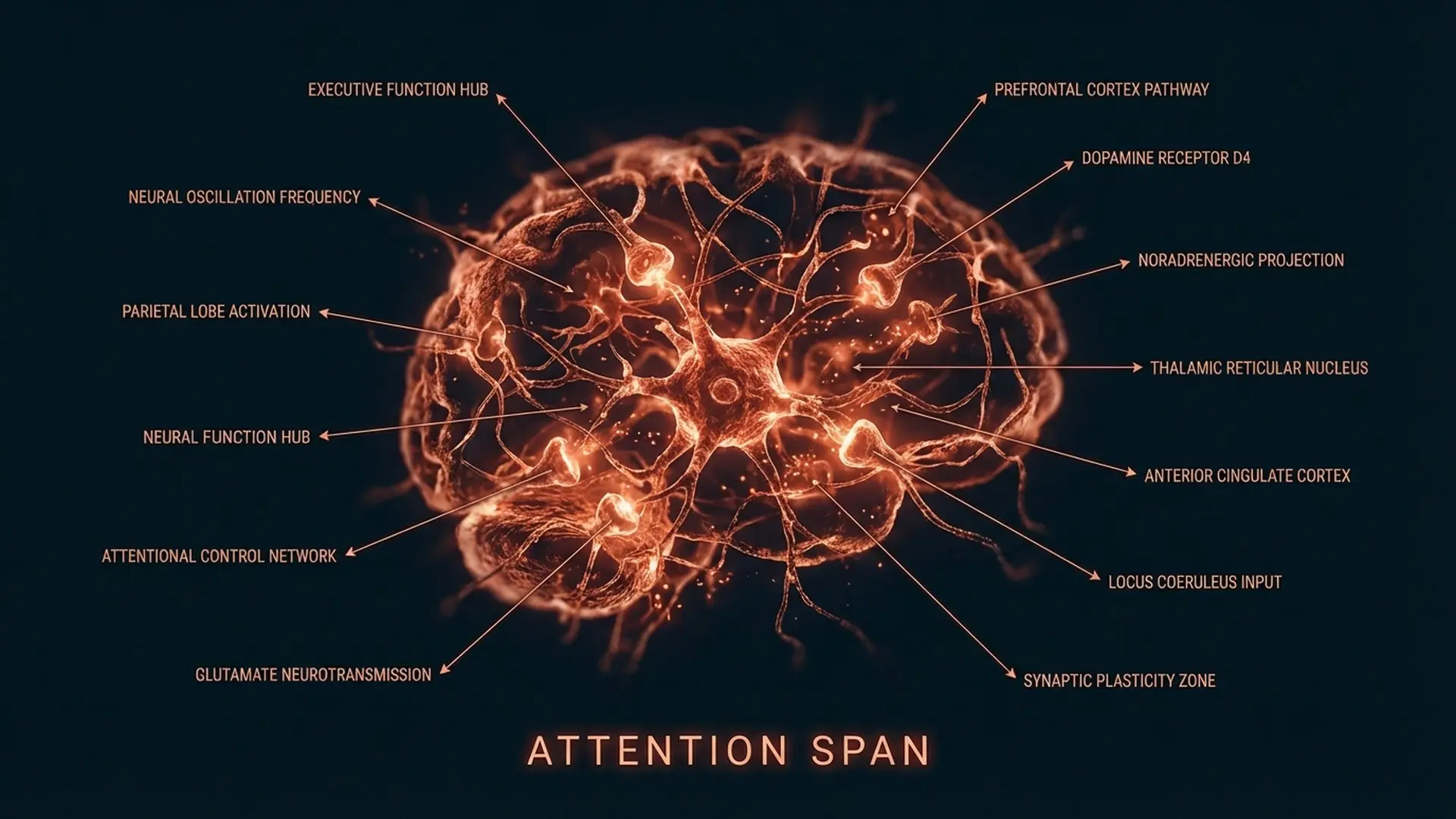
The capacity for sustained cognitive effort. We examine the neural bottleneck of working memory, the impact of "pop-out" stimuli, and protocols to rebuild duration and depth of focus.
27 articlesThe Neural Spotlight
Attention is not a single entity; it is a competition between two neural systems.
-
Top-Down Processing: Controlled by the Prefrontal Cortex (PFC), this is your “voluntary” attention used to focus on goals. It is energy-expensive and easily fatigued.
-
Bottom-Up Processing: Driven by the sensory cortices and the parietal lobe, this is “reflexive” attention. It responds to “salience”—things that are bright, loud, or moving. A shortened attention span is often just a strength imbalance: the bottom-up system is over-developed by modern media, overpowering a weakened top-down control system.
The Working Memory Bottleneck
Your attention span is inextricably linked to Working Memory. This is the brain’s “scratchpad,” holding information temporarily while you process it. Neuroscience shows this buffer is incredibly limited—modern estimates suggest we can only hold about 3 to 4 “chunks” of information at once.
-
The Flush: Every time you switch focus (check a phone, glance at an email), the brain must “flush” the working memory buffer to load the new context. This constant resetting prevents the consolidation of information into long-term memory, leading to a shallow understanding of complex topics.
Rebuilding Capacity
Attention is neuroplastic; it can be trained. The protocol for rebuilding span is Progressive Overload, similar to weight training.
-
Focused Attention Meditation (FAM): This is not about “clearing the mind”; it is a gym session for the brain. You focus on a single anchor (breath). When the mind wanders (bottom-up hijack), you voluntarily bring it back (top-down control). Each “return” is one repetition that strengthens the neural circuits of the PFC.
-
The 20-Minute Rule: To lengthen span, you must push past the initial urge to quit. The feeling of agitation at the 5-minute mark is the nervous system adjusting to low stimulation. Staying in that friction is what triggers the adaptation.

Latest Articles
A brain health coach helps individuals harness neuroscience to optimize cognitive function, manage stress, and improve decision-making. Learn how brain...
Read article : What a Brain Coach Does: Science-Backed Cognitive OptimizationDiscover how AI and neuroscience are revolutionizing cognitive enhancement and mental well-being. This groundbreaking partnership is transforming our understanding of...
Read article : 10 Ways AI and Neuroscience Are Boldly Advancing Cognitive OptimizationBrain-based learning is reshaping personal and professional development, drawing from neuroscience to empower adaptive thinking, creativity, resilience, and lasting career...
Read article : Brain Based Learning: A Neuroscience Guide to Professional GrowthYour genetic blueprint determines how your brain processes dopamine, the neurotransmitter driving motivation, focus, and reward. Understanding dopamine genetics personalized...
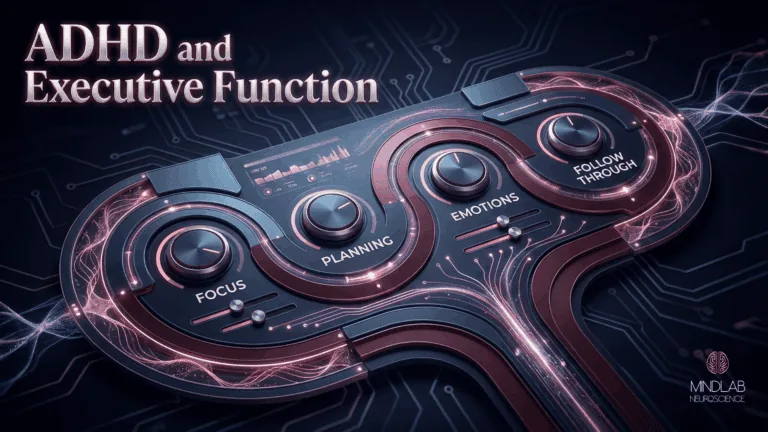
Read article : The Dopamine Genetics Connection: Personalized Neuroscience for Optimizing Your Unique BrainADHD & executive function challenges are not laziness or a lack of willpower. They are rooted in how your brain’s...
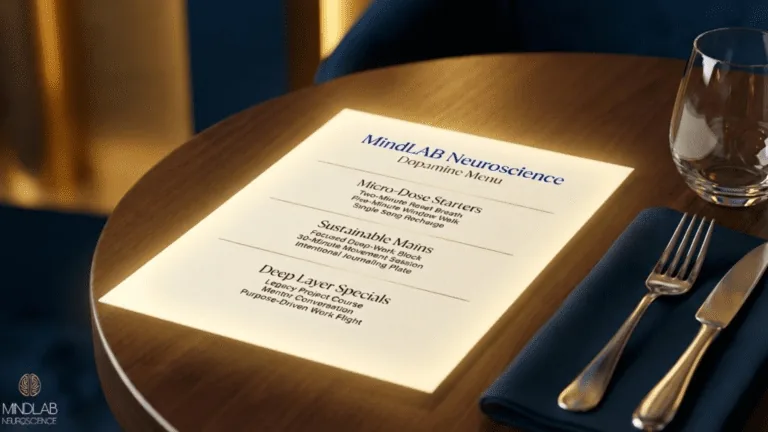
Read article : ADHD and Executive Function: Optimize Your Brain’s Control CenterDiscover how to design a dopamine menu that rewires your reward system and creates sustained happiness, not temporary highs. Clinical...
Read article : Build Your Dopamine Menu: Optimize Your Brain for Sustained HappinessTired of one-size-fits-all therapy that ignores how your brain actually works? Real-Time Neuroplasticity Coaching™ delivers personalized, neuroscience-based support for lasting...
Read article : Neurodivergent Coaching: Real-Time Neuroplasticity™Digital exhaustion is not a discipline problem. It is an attention, reward, and nervous system problem. This guide explains why...
Read article : Digital Exhaustion Neuroscience: The Analog Bag Reset for FocusRemote neuroscience coaching is not talk therapy on Zoom. It is real-time brain rewiring in the moments your nervous system...
Read article : Remote Neuroscience Coaching: How It Works and Who It’s ForDopamine scrolling can feel impossible to stop. Learn the brain loop behind it and practical neuroscience steps to end zombie...
Read article : Dopamine Scrolling: How to Stop the Swipe SpiralLearn what a real flow state is, how your brain builds it, and how to use neuroscience-based tools to access...
Read article : Flow State Neuroscience: A Complete Guide to Triggering Peak Performance