Real-Time Neuroplasticity Coaching by MindLAB Neuroscience teaches cognitive enhancement grounded in neuroplasticity. Learn how to think more clearly, focus longer,...
Read article : Cognitive Enhancement: Utilizing Real-Time NeuroplasticityAttention Span
The capacity for sustained cognitive effort. We examine the neural bottleneck of working memory, the impact of "pop-out" stimuli, and protocols to rebuild duration and depth of focus.
27 articlesThe Neural Spotlight
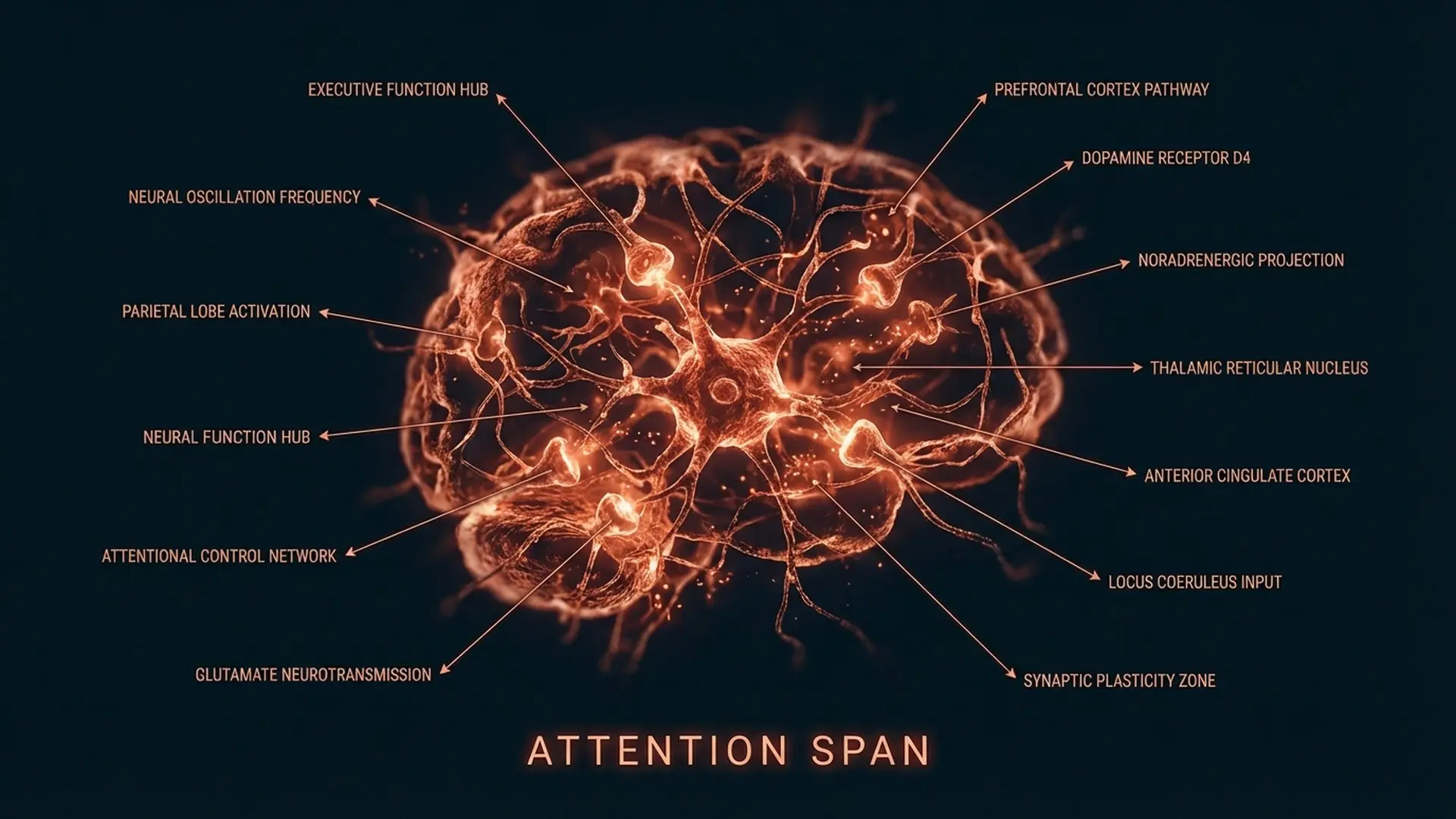
Attention is not a single entity; it is a competition between two neural systems.
-
Top-Down Processing: Controlled by the Prefrontal Cortex (PFC), this is your “voluntary” attention used to focus on goals. It is energy-expensive and easily fatigued.
-
Bottom-Up Processing: Driven by the sensory cortices and the parietal lobe, this is “reflexive” attention. It responds to “salience”—things that are bright, loud, or moving. A shortened attention span is often just a strength imbalance: the bottom-up system is over-developed by modern media, overpowering a weakened top-down control system.
The Working Memory Bottleneck
Your attention span is inextricably linked to Working Memory. This is the brain’s “scratchpad,” holding information temporarily while you process it. Neuroscience shows this buffer is incredibly limited—modern estimates suggest we can only hold about 3 to 4 “chunks” of information at once.
-
The Flush: Every time you switch focus (check a phone, glance at an email), the brain must “flush” the working memory buffer to load the new context. This constant resetting prevents the consolidation of information into long-term memory, leading to a shallow understanding of complex topics.
Rebuilding Capacity
Attention is neuroplastic; it can be trained. The protocol for rebuilding span is Progressive Overload, similar to weight training.
-
Focused Attention Meditation (FAM): This is not about “clearing the mind”; it is a gym session for the brain. You focus on a single anchor (breath). When the mind wanders (bottom-up hijack), you voluntarily bring it back (top-down control). Each “return” is one repetition that strengthens the neural circuits of the PFC.
-
The 20-Minute Rule: To lengthen span, you must push past the initial urge to quit. The feeling of agitation at the 5-minute mark is the nervous system adjusting to low stimulation. Staying in that friction is what triggers the adaptation.

Latest Articles
Discover how to focus by harnessing neuroplasticity to rewire your brain. Learn practical tools, daily habits, and a 30-day plan...
Read article : How to Optimize Focus Using Neuroplasticity: Strategies for ADHD BrainsADHD, focus, and executive function problems are not character flaws. They live in your brain’s control networks. This guide shows...
Read article : ADHD; Focus & Executive Function: A Neuroscience GuideExplore the fascinating neuroscience of working memory and learn how your brain's complex neural networks enable you to temporarily hold...
Read article : Working Memory: The Neuroscience Behind Brain FunctionThe brain you have today is not the brain you are limited to. In over two decades of working with...
Read article : Neuroplasticity Brain Training: Optimizing Your Brain’s Full PotentialYouTube Shorts are addictive by design. This article explores the reward loops that hijack your brain’s dopamine system, explains the...
Read article : Hooked on YouTube Shorts: How Reward Loops Hijack Your BrainDiscover how dopamine-boosting foods can transform your brain health, focus, and productivity. Explore the neuroscience behind nutrition and dopamine, get...
Read article : Dopamine Boosting Foods for Brain Health: Unlocking Nutrition’s Secret to Motivation and FocusWhat if the secret to happiness, creativity, and peak performance was already inside your brain? Discover how the neuroscience of...
Read article : How to Enter Flow State: The Neuroscience of Peak PerformanceDopamine optimization offers a science-backed path to sustained motivation and sharper focus. Learn how a personalized dopamine menu can transform...
Read article : Dopamine Optimization: The Brain’s Secret to Motivation and AchievementUnlock the secrets of how the brain drives motivation and transform your approach to personal and professional growth. Dive into...
Read article : How the Brain Drives Motivation: Unlocking Your Potential with NeuroscienceDigital detox 2025 reveals how mindful technology use and neuroscience-backed strategies can restore focus, boost mental health, and transform your...
Read article : Unplug to Thrive: The Surprising Science and Life-Changing Benefits of a Digital Detox in 2025Unlock your brain’s full potential with neurofitness routines. This comprehensive guide reveals daily habits and advanced strategies to sharpen your...
Read article : Neurofitness Routines: Daily Habits for a Sharper Mind and Better Focus