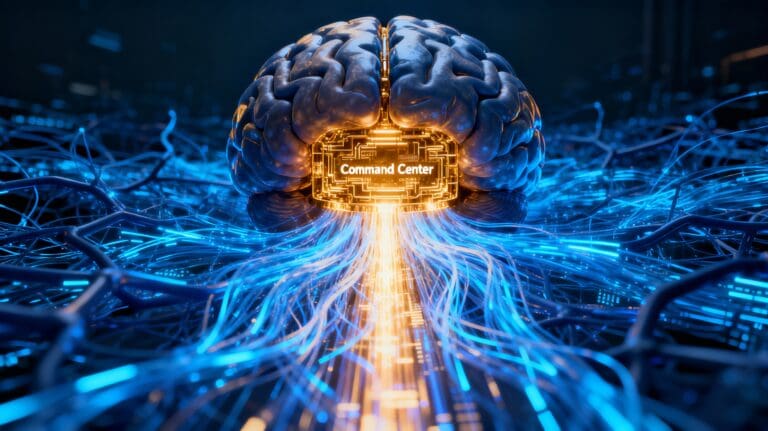
and the dopamine is flowing, this CEO enters a state of Hyperfocus—a flow state where time vanishes and productivity becomes exponential. This is your biological competitive advantage.
However, when the environment is mundane, your internal CEO leaves the building to chase new mergers, leaving the interns (your executive functions) unsupervised. This isn't a lack of attention; it is an abundance of processing power seeking a worthy target. We don't want to sedate the CEO; we want to build a better boardroom to support their vision.
Attention deficit and executive function challenges affect millions of individuals, including high-performing executives, entrepreneurs, and leaders who have never received a formal diagnosis. Whether the markers of ADHD emerged in childhood or became apparent only under the pressure of professional demands, the underlying neurobiology is the same. Studies confirm that understanding ADHD—not as a character flaw but as a distinct neurological profile—is the foundation of every strategy we deploy.
This is the shift from "surface-level coping" to Cognitive Architecture. This work sits within the broader discipline of Cognitive Architecture and neural design—the science of designing how your brain processes, prioritizes, and executes. We are going to harness your wiring to ensure that your executive functioning matches your intellectual horsepower.
The Neurobiology Behind Dopamine and Cognitive Wiring
To optimize your performance, we must move beyond the vague notion of "willpower" and examine the hardware running your system. Your brain is not broken; it is specialized. The neurobiological signature of the high-functioning ADHD mind—what I term the Divergent High-Performance Phenotype—is characterized by distinct variations in neural connectivity across key brain regions and neurotransmitter availability. We are dealing with a difference in physics, not a deficit in character.
Research into ADHD consistently shows that the condition involves differences in dopamine transmission, prefrontal cortex activation, and the coordination of executive functions including working memory, inhibitory control, impulse regulation, and cognitive flexibility. These are not symptoms of laziness or low intelligence. Recognizing these ADHD symptoms as neurobiological rather than character flaws is the first step toward genuine optimization. They are features of a brain built for a different operating environment. With the right support and the right strategies, every one of these executive functions can be optimized.
The Dopaminergic Supply Chain: Tonic vs. Phasic Firing
The primary driver of your unique cognitive profile lies in the transmission of dopamine and norepinephrine through specialized receptors. In the neurotypical brain, dopamine is released in a steady, baseline drip (tonic firing), allowing for sustained attention on mundane tasks. Your ADHD brain, however, operates on a phasic system.
Think of this as the difference between a commercial sedan and a high-performance jet. A sedan runs efficiently on standard fuel at 45 miles per hour. Your brain is a jet engine; it creates insufficient lift at low speeds (low stimulation), causing it to stall. However, when engaged by high-stakes challenges, novelty, or urgency, your ADHD brain releases a massive, phasic spike of dopamine. This is not a malfunction; it is a fuel injection system designed for velocity. You struggle with the mundane because your biology demands high-octane environments to function at peak capacity. This phasic firing pattern is central to the neuroscience of Dopamine and Motivation.
ADHD is associated with significant health implications when left unaddressed. Chronic dysregulation of dopamine pathways contributes to anxiety, emotional dysregulation, and decision fatigue. Supporting the dopaminergic system—through targeted protocols, deliberate lifestyle interventions, and neuro-associative conditioning—produces measurable mental health improvements that extend far beyond productivity.
Network Connectivity: The DMN-TPN Toggle
Neuroscience identifies two primary networks relevant to ADHD and executive functioning: the Task Positive Network (TPN), used for focused execution, and the Default Mode Network (DMN), responsible for imagination, future planning, and creativity. In a standard brain, these networks operate like a seesaw—when one goes up, the other goes down.
In the neurodivergent high-performer with ADHD, this "toggle switch" is often resistant. You may find it metabolically expensive to disengage the DMN (the visionary, creative mode) to engage the TPN for administrative details. However, once the TPN is fully engaged—usually triggered by that phasic dopamine spike—the DMN is suppressed so completely that you enter Hyperfocus. This is a state of pure neural efficiency where the cost of task-switching vanishes, and output becomes nonlinear. For a deeper look at how sustained concentration intersects with these networks, explore our coverage of Attention and Focus.
Executive dysfunction in this context is not a fixed condition. It reflects the ADHD brain's difficulty transitioning between these two networks under low-stimulation conditions. With the right environmental design and neuro-associative protocols, this
dysfunction gap closes substantially—and in many cases closes permanently.
Evolutionary Anomalies: The Hunter's Scan
Why does this ADHD wiring exist? Evolutionary psychology suggests that this is not a mutation, but a preservation of the "Hunter" gene pool. While the "Farmer" brain is wired for repetitive, linear crop maintenance, the "Hunter" brain is wired for scanning and sprinting. What is often labeled as "distractibility" in ADHD is actually Hyper-Awareness. Your brain does not filter out sensory input; it absorbs it to scan for threats or opportunities. In the C-suite, this translates to an uncanny ability to read a room, detect shifts in market sentiment before the data confirms them, and pivot strategies instantly. Your biology is optimized for crisis leadership and rapid innovation, not maintenance.
This is why standard ADHD education programs—designed around children learning to sit quietly and complete rote tasks—often feel irrelevant or even counterproductive to the adult high-performer. The disorder framing was built around classroom environments. Your environment is the boardroom, the negotiation table, and the strategic planning session. The protocols must match the arena. Research on the brain regions involved in cognitive regulation confirms that the adult ADHD phenotype requires fundamentally different intervention strategies than those developed for children in classroom settings.
The Metabolic Cost of Cognitive Control
It is crucial to understand that forcing a "Hunter" brain to perform "Farmer" tasks imposes a heavy metabolic tax. The frontal lobe—specifically the PFC, the CEO of the brain—requires significantly more glucose and oxygen to regulate attention on low-stimulation tasks for the neurodivergent ADHD mind. This explains the phenomenon of "decision fatigue" or sudden exhaustion after a day of administrative work, despite your high intellect. Our guide to overcoming decision fatigue in leaders details the neuroscience behind this depletion effect. We are not looking to force efficiency in low-value areas; we are looking to align your daily operations with your metabolic strengths.
Understanding the health cost of this metabolic mismatch changes how we approach ADHD support. Rather than demanding that an ADHD brain sustain functioning across high-friction tasks indefinitely, we architect the day so that the brain encounters those tasks in states of optimal neurochemical readiness. This is environmental design in service of biological reality. When we manage the neurochemical conditions proactively, high-performers can sustain high-level functioning across an entire workday rather than burning through their cognitive reserves by midafternoon.
Why Standard Interventions Fail the High-Performance Mind
If you are reading this, you have likely already exhausted the standard menu of clinical interventions for ADHD. You have sat on leather couches discussing your childhood, and perhaps you have experimented with pharmacology. Many high-performers encounter these obstacles in leadership long before they realize the root cause is neurological. Yet, the friction remains. This is not a failure of your effort; it is a failure of the model. Standard ADHD care is designed to bring the dysfunctional up to "average." It is wholly unequipped to take the exceptional to the optimal. The difficulty is not you—it is a system that treats an executive function disorder as a behavioral problem rather than an architectural one.
The support systems built around ADHD were largely designed with children in mind—developed in educational contexts, validated on pediatric populations and children, and measured against behavioral standards appropriate for a classroom, not a boardroom. Adult ADHD, and particularly high-functioning adult ADHD, is a different condition requiring a different solution architecture. The presentations that emerge in a fifty-year-old CEO are neurologically related to those in a seven-year-old child but functionally unrecognizable. Any serious intervention for ADHD must account for this distinction.
The Fallacy of "Top-Down" Behavioral Approaches
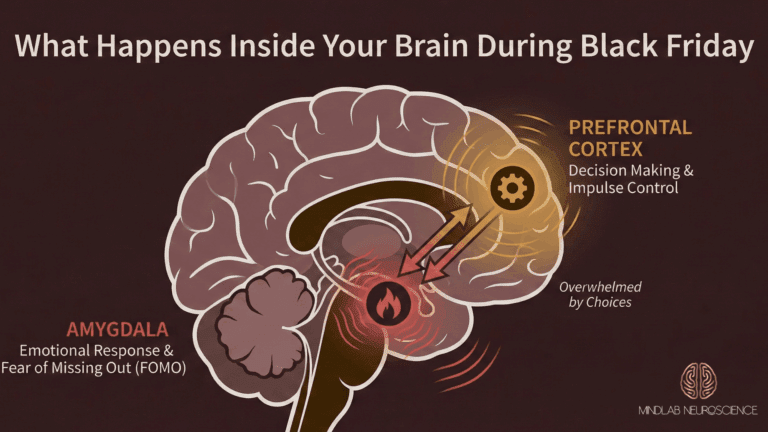
This conventional approach, particularly conventional behavioral approaches to ADHD, operates on a "Top-Down" mechanism. It assumes that if you can rationally analyze a behavior with your PFC, you can change it. For the neurodivergent high-performer with ADHD, this is a fundamental architectural error. We know that under stress or high cognitive load, your PFC—the logic center—temporarily decouples from the limbic system. Trying to "talk" your way out of cognitive impairment is like trying to update a computer's software while the hardware is overheating. You cannot use logic to override a neurobiological event. This conventional ADHD approach addresses the surface expression (the behavior) while ignoring the source (the neural firing pattern). You do not need more insight; you have plenty of insight. You need neural regulation.
Executive dysfunction in ADHD is not caused by a lack of self-awareness. ADHD adults tend to demonstrate exceptional self-awareness—they know precisely what they should be doing and exactly why they are not doing it. The gap is not cognitive; it is neurochemical. Addressing ADHD cognitive deficits through insight alone is the wrong tool for the job. Education about ADHD helps, but education alone does not rewire the neural circuits driving the behavior.
The Cost of Chemical Blunting
The other standard lever for ADHD is medication. While useful for some, for the creative entrepreneur or the visionary executive, reliance on stimulants often comes with an unacceptable "tax." ADHD medication is a blunt instrument designed to increase tonic dopamine levels, effectively forcing the "Hunter" brain to tolerate the "Farmer's" routine. The trade-off is often a phenomenon I call Cognitive Flattening. While you may gain the ability to sit through a three-hour compliance meeting, you often lose the lateral thinking, the rapid-fire association, and the intuitive leaps that define your genius. We are not interested in sedating the visionary to save the administrator. To blunt your neurodivergence is to blunt your competitive edge.
ADHD medication addresses a real neurochemical need—dopamine and norepinephrine availability—but it does so through a systemic receptor mechanism that lacks precision. The same chemical shift that improves focus on administrative tasks also flattens the phasic dopamine spikes that drive creative breakthroughs. For high-performers whose edge is inseparable from their ADHD architecture, this trade is often unacceptable. We work with the natural phasic system rather than overriding it.
The Mismatch of Scale
Most conventional ADHD programs are built for the general population—focusing on basic life skills like remembering keys or paying bills. Your ADHD challenges are not pedestrian; they are systemic and high-stakes. You are directing mergers, navigating volatility, and leading teams. You do not need a cheerleader to tell you to use a planner. You need a neuro-associative approach to ADHD that aligns your biological rhythms with your professional demands. We must bypass the conscious mind's resistance and work directly on the neural pathways, moving from a model of "coping with ADHD" to engineering a bespoke cognitive environment. We are not here to make you normal. We are here to make you efficient.
Scale matters in a second sense as well: the support systems available for children with ADHD—classroom accommodations, school environments with planning scaffolds, parental oversight—simply do not exist in adult professional life. The adult with ADHD must build their own scaffolding, without the institutional support that children receive. This is why adult ADHD, left unsupported, tends to compound over time rather than self-resolve. Symptoms that were tolerable in a guided educational environment become overwhelming in the fluid complexity of adult professional life.
Cognitive Domains Affected by Dopaminergic Dysregulation
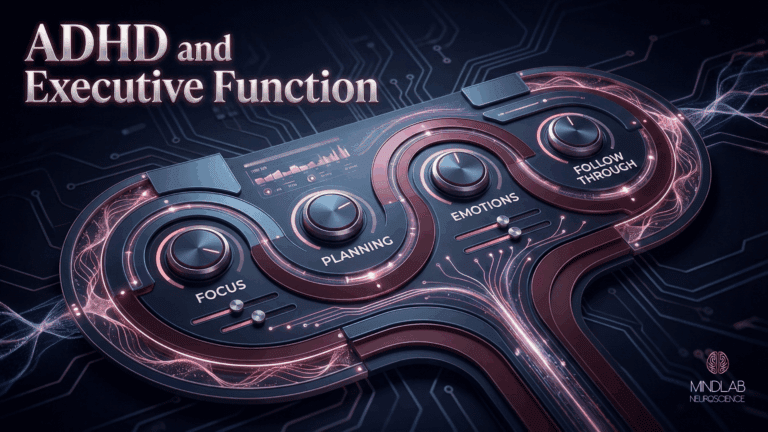
ADHD affects multiple cognitive domains simultaneously, which is why isolated interventions produce limited results. Understanding which specific functions are compromised—and how they interact—is essential for designing a comprehensive optimization strategy. The following domains represent the primary areas where individuals with ADHD experience measurable disruption:
- Working memory: the ability to hold and manipulate information in real time during complex decision-making
- Inhibitory control and impulse regulation: the neural brake system that prevents premature actions and reactive responses
- Cognitive flexibility: shifting between tasks, strategies, or mental sets without losing orientation or momentum
- Task initiation: overcoming the neurochemical inertia that delays the start of low-stimulation activities
- Sustained attention: maintaining focus on a single target when competing stimuli are present in the environment
- Emotional regulation: modulating affective responses so that frustration, excitement, or anxiety do not hijack planning and decision-making
- Self-monitoring: the capacity to observe your own cognitive and behavioral output in real time and correct course
- Time perception and planning: estimating durations accurately and sequencing actions toward future goals
- Organization and prioritization: sorting competing demands by genuine importance rather than emotional salience or recency
- Reward sensitivity: the dopaminergic system in individuals with ADHD overweights immediate rewards and underweights delayed outcomes, distorting cost-benefit calculations in executive decision-making
- Goal-directed persistence: sustaining effort toward long-horizon objectives when the frontal lobe receives insufficient tonic dopamine to maintain motivation across weeks or months
- Processing speed variability: individuals with ADHD often demonstrate inconsistent processing speed—rapid under high-stimulation conditions and sluggish during routine tasks
- Verbal and nonverbal working memory: the capacity to internalize speech (self-talk) and hold mental images, both of which are weakened when executive functioning is compromised
- Interference control: filtering irrelevant stimuli from the environment so that the frontal lobe can allocate resources to the primary task without degradation
- Response monitoring: detecting errors in real time and adjusting subsequent actions, a process that relies on intact communication between the PFC and anterior cingulate cortex
- Sequential task execution: breaking complex projects into ordered steps and completing them in the correct sequence without skipping or reordering, a common source of symptoms in adults with ADHD
- Prospective memory: remembering to execute planned future actions at the correct time—an executive function that children with ADHD and adults alike find disproportionately difficult
- Arousal regulation: calibrating the nervous system to match the cognitive demands of the current task, preventing both understimulation and hyperarousal from disrupting performance
- Social cognition and perspective-taking: reading interpersonal cues accurately under conditions of divided attention, a skill that deteriorates when executive functions are overtaxed
- Metacognition: the ability to evaluate your own thinking processes, identify when a strategy is failing, and deploy alternative approaches—a higher-order executive skill that ADHD consistently disrupts
Each of these domains relies on the brain's prefrontal cortex and its connections to subcortical regions. When dopamine availability is inconsistent—as it is in the ADHD phenotype—these functions do not fail entirely; they become unreliable. The high-performer experiences this as an unpredictable oscillation between brilliance and friction, between hyperfocus and paralysis. This variability, not a blanket deficit, is the hallmark of ADHD in individuals with high cognitive capacity.
Protocols for Bottom-Up Cognitive Optimization
We cannot wait for the world to become less stimulating, nor can we rely on willpower, which is a finite metabolic resource. Instead, we must deploy Bottom-Up Cognitive Restructuring specifically designed for the ADHD brain to address executive dysfunction. These are not "tips" but deliberate actions; they are neuro-hacks designed to manually override the Default Mode Network and force the Task Positive Network into engagement. We are bypassing the "mind" to hack the "machine."
Each of these protocols targets a specific layer of functioning—task initiation, cognitive flexibility, sustained focus, working memory, response suppression, impulse regulation, emotional regulation, and self-monitoring. Together, they constitute a complete support architecture for the high-functioning ADHD brain. The goal is not behavioral suppression—it is functional mastery.
Protocol 1: The Phasic Sprint (Overcoming Inertia)
The Mechanism: The neurodivergent ADHD brain creates high friction against starting mundane tasks because the anticipated dopamine reward is too low to trigger actions. Your brain remains in a low-energy, tonic state. To engage the engine, we must artificially induce a phasic dopamine spike.
The Execution: Do not commit to "working on the project." That is too abstract for your amygdala. Instead, set a timer for exactly 12 minutes. This creates a "micro-deadline"—an artificial crisis that mimics the urgency your ADHD brain thrives on. Tell yourself, "I am not finishing this; I am merely engaging for 12 minutes." This lowers the barrier to entry. Once the timer starts, the urgency triggers norepinephrine release. By minute 10, the frontal lobe and Task Positive Network are typically fully vascularized and online, and you will likely bypass the alarm and continue in a state of flow. We use the sprint to trick the system into ignition.
This protocol is particularly effective for adults with ADHD who experience task initiation symptoms as physical resistance rather than a motivational problem. The resistance is real—it is neurochemical, not psychological. The Phasic Sprint sidesteps ADHD-related cognitive dysfunction entirely by manufacturing the urgency signal that your dopamine system requires to activate. With consistent use, working memory load during initiation decreases substantially.
Protocol 2: Visual Gating (Eliminating Cognitive Noise)
The Mechanism: Your ADHD brain is an indiscriminate data sponge. It processes the movement in your peripheral vision with the same priority as the spreadsheet in front of you. This creates a "processing bottleneck" in the prefrontal region, leading to rapid fatigue.
The Execution: We must mechanically restrict sensory input to force focus. This is Visual Gating—a core processing strategy. When deep work is required, physically narrow your visual field. Use a hood, dim the ambient lights, or use "tunnel vision" blocking glasses. By obscuring peripheral visual data, you reduce the metabolic load on your brain's filtering mechanisms. When the ADHD brain has less data to filter out, it has more bandwidth to pour into the singular task at hand. You are effectively putting blinders on a racehorse to ensure it runs in a straight line.
For adults with ADHD who experience sensory overload as a driver of executive dysfunction, Visual Gating produces immediate, measurable improvements in sustained attention. The health benefit extends beyond productivity: reducing the chronic cognitive load imposed by an un-gated sensory environment also reduces cortisol output and lowers baseline anxiety. Supporting your nervous system health is a direct byproduct of this intervention.
Protocol 3: Interoceptive Grounding (The Circuit Breaker)
The Mechanism: High-performers with ADHD often experience "Amygdala Hijack"—a sudden surge of frustration or impulsivity when a plan goes off-track. This disconnects the rational PFC. Trying to "think" your way calm in this state is impossible because the logic center is offline.
The Execution: You must intervene via the body (bottom-up). When you feel the "spin" of overwhelm or reactivity, execute a Physiological Sigh: two sharp inhales through the nose (to fully inflate the alveoli) followed by one long, extended exhale through the mouth. This is not meditation; it is mechanics. This specific breathing pattern mechanically offloads carbon dioxide and triggers a baroreflex that forces the heart rate to slow. It sends a direct signal to the vagus nerve to disengage the sympathetic nervous system (fight/flight) and re-engage the frontal lobes. Do this three times to reboot your cognitive control immediately.
ADHD and the difficulty to regulate emotions are closely linked. Research on executive functions consistently identifies emotional regulation and inhibitory control as core deficit domains—one that receives far less focus in conventional education and support programs than attention or hyperactivity. The Interoceptive Grounding protocol directly targets this domain. By restoring prefrontal access within seconds, it prevents the cascade of impulsive decisions and relationship ruptures that characterize unaddressed emotional dysregulation in adults with ADHD.
Indicators of High-Functioning Neurodivergence in Adults
Many individuals with ADHD reach senior professional positions without ever receiving a formal diagnosis. Their hyperactivity may present as relentless drive rather than physical restlessness; their attention dysregulation may look like selective brilliance rather than a deficit. The following indicators are commonly observed in high-functioning adults whose ADHD has gone unrecognized:
- Oscillation between periods of extraordinary productivity (hyperfocus) and periods of near-total cognitive paralysis
- Chronic difficulty with time estimation—consistently underestimating how long tasks will take, leading to last-minute sprints
- A pattern of starting ambitious projects with intense energy and then losing momentum once novelty fades
- Emotional reactivity that seems disproportionate to the triggering event, followed by rapid recovery
- Exceptional performance under pressure or crisis conditions, paired with frustrating underperformance during routine operations
- A history of job changes, business pivots, or relationship disruptions driven by restlessness rather than rational dissatisfaction
- Difficulty delegating—not from distrust, but from an inability to tolerate the friction of explaining tasks to others
- Physical restlessness during low-stimulation activities: fidgeting, pacing, or compulsive device-checking
- An internal experience of mental "noise" or racing thoughts that accelerates during downtime rather than diminishing
- Reliance on external deadlines, crises, or accountability partners to activate basic task completion
- A tendency to hyperfocus on high-interest domains while neglecting lower-stimulation responsibilities such as administrative tasks, financial planning, or health maintenance
- Difficulty transitioning between tasks—experiencing a "residue" of the previous activity that impairs executive functioning on the next one
- A lifelong pattern of underperformance relative to measured intelligence, often described by teachers, managers, or partners as "not living up to potential"
- Sleep-onset difficulty driven by an overactive Default Mode Network that generates racing ideation precisely when external stimulation drops
- Impulsive verbal responses in meetings or conversations—interrupting, finishing others' sentences, or blurting observations before the appropriate moment
- An acute sensitivity to perceived criticism or rejection that produces an outsized emotional response, sometimes called rejection sensitive dysphoria
- Compensatory overwork: individuals with ADHD often invest significantly more hours than peers to produce equivalent output, masking the underlying executive dysfunction through sheer effort
- Difficulty with sustained reading—particularly dense or low-interest material—requiring multiple re-reads to retain content that others absorb in a single pass
- A strong preference for novelty in professional and personal life, with boredom triggering symptoms of restlessness, irritability, or impulsive decision-making
- Chronic lateness or time blindness that persists despite sincere intention and repeated planning efforts, reflecting a genuine neurological difficulty with temporal awareness
- Difficulty maintaining consistent routines or habits, even those that are clearly beneficial—exercise regimens, meal planning, medication schedules—because the frontal lobe fatigues from the repetitive executive demand
- A pattern of self-medication through caffeine, nicotine, high-risk activities, or other stimulants that temporarily boost dopamine and norepinephrine availability
- Heightened creativity and lateral thinking skills that coexist with difficulty executing linear, sequential processes—the hallmark paradox of ADHD in high-performers
- Sensory sensitivities—to noise, light, texture, or temperature—that consume executive bandwidth and reduce the cognitive resources available for primary tasks
- Episodes of emotional flooding or overwhelm triggered by cumulative minor stressors, reflecting depleted inhibitory control rather than a weaker function of emotional resilience
- Difficulty managing multiple simultaneous projects without dropping threads, missing deadlines, or losing track of commitments—a direct consequence of compromised working memory
- A subjective experience of mental effort being dramatically higher for routine administrative actions than for complex strategic thinking, reflecting the metabolic cost described by ADHD neuroscience
- Frequent misplacement of objects, missed appointments, or forgotten commitments that produce social and professional friction despite high intelligence and genuine concern
- A tendency to make impulsive financial decisions—large purchases, spontaneous investments, or unnecessary subscriptions—driven by dopamine-seeking behavior rather than rational planning
- Hyperactivity that has internalized with age: while children with ADHD display overt physical hyperactivity, adults often experience it as internal restlessness, mental agitation, or an inability to relax
- An inconsistent relationship with personal health—periods of intense fitness commitment alternating with complete disengagement—reflecting the all-or-nothing activation pattern of the phasic dopamine system
- A pattern of losing track of conversations mid-sentence—not from disinterest but from the Default Mode Network generating competing thoughts faster than the speaker can deliver information
- Difficulty sustaining attention during low-novelty social interactions, leading to a reputation for being "checked out" despite high interpersonal intelligence
- A tendency toward perfectionism in high-interest domains paired with avoidance of tasks where performance feels uncertain—a coping mechanism that masks underlying executive dysfunction
- Repeated cycles of overcommitment followed by withdrawal, as the dopamine spike from saying "yes" fades and the executive demand of follow-through becomes apparent
- Physical symptoms of cognitive overload including headaches, jaw tension, or gastrointestinal distress during sustained periods of executive demand without adequate recovery intervals
- A preference for crisis-mode operations where the external urgency provides the norepinephrine surge that routine conditions cannot, leading individuals to unconsciously manufacture emergencies
- Difficulty with proportional emotional responses—minor setbacks may trigger disproportionate frustration while genuine threats may be met with surprising calm, reflecting inconsistent limbic-prefrontal communication
- A history of exceptional standardized test performance paired with mediocre academic or professional follow-through, revealing intact cognitive capacity alongside compromised executive deployment
- Chronic difficulty completing administrative tasks—expense reports, insurance forms, tax preparation—despite full intellectual capacity, because these low-stimulation activities generate insufficient dopamine to sustain executive engagement
- An acute awareness of personal cognitive inconsistency that produces shame, self-criticism, or impostor syndrome—particularly in high-performers whose external success masks their internal executive friction
These indicators do not confirm a diagnosis, but they reveal a functional phenotype that professionals across every sector recognize in themselves. Whether a clinical label applies or not, the underlying neurobiology—dopamine availability, PFC activation, and network connectivity—operates according to the same principles. Individuals who recognize this pattern are often the most responsive to targeted cognitive optimization because their self-awareness is already intact; what they lack is the neural scaffolding to translate awareness into consistent actions.
How Neuroscience-Based Protocols Differ from Conventional Approaches
The distinction between conventional coping strategies and neuroscience-based executive optimization is not one of degree—it is one of kind. Conventional approaches ask you to manage symptoms through willpower, behavioral reminders, or pharmacological blunting. Neuroscience-based protocols target the source: the dopaminergic firing patterns, the network connectivity, and the metabolic conditions that govern how the ADHD brain actually operates.
Where conventional methods rely on top-down willpower to override impulses, neuroscience-based protocols use bottom-up physiological interventions to restore impulse regulation before the reaction reaches conscious awareness. Conventional care treats all individuals with ADHD identically regardless of cognitive capacity; our approach calibrates protocols to the specific executive functioning profile revealed by the phenotype. Conventional programs measure success by symptom reduction on standardized checklists designed for children, whereas we measure success by real-world executive output—decisions made, projects completed, relationships stabilized.
Conventional models address hyperactivity and distractibility as primary targets, while neuroscience-based work addresses the underlying dopaminergic dysregulation that produces hyperactivity and distractibility as secondary symptoms. Conventional education about ADHD builds awareness but installs no executable protocols—and education without neural rewiring produces insight without change. Conventional approaches deploy the same behavioral strategies across all age groups; our methodology distinguishes sharply between the presentations in children and the distinct challenges facing adults with ADHD in high-stakes professional environments.
Where conventional methods aim to bring executive functioning up to a normative baseline, we aim to optimize functioning to match the individual's actual intellectual and professional capacity. Conventional care requires ongoing sessions to maintain behavioral gains; neuroscience-based protocols leverage Self-Directed Neuroplasticity so that the brain learns to self-regulate, producing a consistent increase in autonomous executive control over time. Conventional thinking frames ADHD exclusively as a disorder requiring remediation; we frame it as a neurological variant with distinct liabilities and distinct advantages, optimizing both.
Conventional practice focuses on managing the symptoms of cognitive dysfunction in isolation. Our approach addresses the interconnected system of executive functions—working memory, inhibitory control, planning, emotional regulation—as an integrated architecture. Conventional care overlooks the health consequences of chronic executive strain; we directly target the mental health, cortisol, and autonomic dysregulation that accompany untreated ADHD in high-performers. Where conventional programs offer generic lifestyle advice, we architect the daily environment around the specific metabolic and dopaminergic needs of the ADHD brain, ensuring that executive skills are deployed under optimal neurochemical conditions.
Frequently Asked Questions
"I have never been formally identified with ADHD. Is this program relevant to me?"
Absolute assessment is less relevant than functional reality. In high-performance neuroscience, we look at the phenotype—the observable characteristics of your neural wiring. If you experience the oscillation between hyperfocus and paralysis, the craving for high-stakes stimulation, and the struggle with linear administration, you possess the Divergent High-Performance Phenotype. We address the architecture, not the label. You do not need a medical tag to optimize a machine that is clearly built for speed rather than comfort.
The distinction between "clinical ADHD" and "subclinical executive dysfunction" matters less than the functional profile. Symptoms of attention deficit hyperactivity disorder—attention dysregulation, hyperactivity, working memory gaps, and executive function deficits—exist on a continuum. Whether a formal ADHD diagnosis applies, the interventions that restore functioning are the same. The brain does not require a label to benefit from architecture that supports its actual operating conditions.
"Will optimizing my cognitive functioning kill my creativity or 'edge'?"
This is the most common fear among the elite. There is a pervasive myth that chaos is a prerequisite for genius. It is not. Chaos is simply the tax you are currently paying to access your genius. By strengthening your skills in planning, prioritization, and the "brakes" and "steering" of your PFC—we do not dampen the engine; we simply ensure you don't crash on the corners. Framework does not kill flow; it creates a container for it to exist without burnout. In fact, understanding your thinking dispositions and drivers of reasoning reveals that cognitive skills amplify creative output.
ADHD does not disappear when executive functions are strengthened. The underlying neurological architecture remains intact. What changes is your ability to deploy that architecture deliberately rather than being subject to it passively. The hyperfocus, the associative creativity, the pattern recognition—these are preserved. What is eliminated is the collateral damage: the missed deadlines, the dysregulated relationships, the health costs of chronic stress. ADHD challenges diminish not through suppression but through genuine neural optimization.
"I don't have time for weekly engagements. How is this program efficient?"
Standard conventional work is a "soft" intervention that requires years of conversation to yield behavioral shifts. Neuro-Optimization for ADHD is a "hard" skill acquisition model. We are not here to discuss your feelings about the past; we are here to install protocols for the present. This is akin to working with a performance specialist for your ADHD brain. The focus is on rapid implementation of cognitive strategies that yield immediate ROI. We respect your time by focusing strictly on the mechanics of output. Every session is organized around protocol installation and real-time application. Between sessions, clients practice the protocols in their actual work environments, which means the support extends well beyond our direct contact time. Education about ADHD accelerates the transfer of new behaviors from conscious effort to automatic functioning. This is high-performance cognitive functioning, not conventional coping.
"Is this a permanent fix for ADHD, or will I always need these protocols?"
The goal of Neuro-Optimization for ADHD is Self-Directed Neuroplasticity. Initially, you use these protocols as external scaffolding—manual overrides for your automatic systems. However, the brain follows the principle of "What fires together, wires together." By repeatedly forcing the Task Positive Network to engage through these bottom-up drills, you are physically thickening the dedicated pathways in the PFC. Over time, what requires conscious effort today becomes unconscious competence tomorrow. The brain is always learning—and with the right protocols, it learns to regulate itself. This is why ADHD support through Neural Recalibration™ produces durable results where conventional coping approaches produce temporary relief. ADHD touches every domain of functioning, but your relationship to the condition transforms. Functional difficulty decreases not because symptoms are suppressed but because the underlying neural infrastructure supporting executive functions has been genuinely rebuilt. The protocols eventually become redundant—because the brain has learned to generate the conditions the protocols were originally designed to create.
The Path Forward: From Liability to Leverage
For too long, you have likely viewed your ADHD mind as a liability to be handled—a wild horse that constantly threatens to buck you off. It is time to invert that narrative. The global economy is shifting. The "Farmer" brain—steady, repetitive, risk-averse—is being replaced by automation and algorithms. The future belongs to the "Hunter." It belongs to the mind that can synthesize disparate information instantly, the mind that thrives in volatility, and the mind that can hyperfocus on a vision until it manifests in reality. Your ADHD is not a disorder to be ashamed of; it is a high-volatility asset class. It comes with higher risk, yes, but it also offers an exponentially higher yield. By mastering the neurobiology of your cognitive wiring, you stop fighting your nature and start leveraging it through deliberate actions. The support you need is not behavioral coaching or band-aid fixes—it is a genuine upgrade to the cognitive architecture that governs how you process, prioritize, and execute. You are not broken. You are simply a Formula 1 car that has finally stopped trying to drive off-road.
Individuals with ADHD who receive the right kind of support—the kind designed for their actual neurological profile rather than a pediatric clinical model—consistently report transformations not just in professional functioning but in mental health, relationships, and overall daily functioning. Executive functioning that was chronically underperforming begins operating at a level commensurate with the individual's intellect. Children of parents who complete this work often report that their parent became a different person—more present, more regulated, more available. The benefits radiate outward.
Working memory expands. Emotional regulation stabilizes. The core symptoms of attention dysregulation and impulsivity diminish as neural pathways are rebuilt. ADHD symptoms and patterns that once produced daily friction begin to resolve. This is not a promise; it is a neurological prediction grounded in what we know about how the brain responds to targeted, bottom-up, neuroplasticity-based interventions. The question is not whether change is possible. The question is whether you are ready to stop coping and start engineering the mind.
About Dr. Sydney Ceruto
Founder & CEO of MindLAB Neuroscience, Dr. Sydney Ceruto is the pioneer of Real-Time Neuroplasticity™ — a proprietary methodology that permanently rewires the neural pathways driving behavior, decisions, and emotional responses. Dr. Ceruto holds a PhD in Behavioral & Cognitive Neuroscience (NYU) and two Master's degrees — Clinical Psychology and Business Psychology (Yale University). Lecturer, Wharton Executive Development Program — University of Pennsylvania.
and the dopamine is flowing, this CEO enters a state of Hyperfocus—a flow state where time vanishes and productivity becomes exponential. This is your biological competitive advantage.
This is the shift from "symptom coping" to Cognitive Architecture. This work sits within the broader discipline of Cognitive Architecture and neural design—the science of designing how your brain processes, prioritizes, and executes. We are going to harness your wiring to ensure that your executive function matches your intellectual horsepower.
The Neurobiology of Elite Cognitive Wiring
To optimize your performance, we must move beyond the vague notion of "willpower" and examine the hardware running your system. Your brain is not broken; it is specialized. The neurobiological signature of the high-functioning ADHD mind—what I term the
Divergent High-Performance Phenotype—is characterized by distinct variations in neural connectivity and neurotransmitter availability. We are dealing with a difference in
physics, not a deficit in character.
The Dopaminergic Supply Chain: Tonic vs. Phasic Firing
The primary driver of your unique cognitive profile lies in the transmission of dopamine and norepinephrine. In the neurotypical brain, dopamine is released in a steady, baseline drip (tonic firing), allowing for sustained attention on mundane tasks. Your brain, however, operates on a Phasic system.
In the neurodivergent high-performer, this "toggle switch" is often resistant. You may find it metabolically expensive to disengage the DMN (the visionary, creative mode) to engage the TPN for administrative details. However, once the TPN is fully engaged—usually triggered by that phasic dopamine spike—the DMN is suppressed so completely that you enter Hyperfocus. This is a state of pure neural efficiency where the cost of task-switching vanishes, and output becomes nonlinear. For a deeper look at how sustained concentration intersects with these networks, explore our coverage of Attention and Focus.
Evolutionary Anomalies: The Hunter's Scan
Why does this wiring exist? Evolutionary psychology suggests that this is not a mutation, but a preservation of the "Hunter" gene pool. While the "Farmer" brain is wired for repetitive, linear crop maintenance, the "Hunter" brain is wired for scanning and sprinting.
What is often labeled as "distractibility" is actually Hyper-Awareness. Your brain does not filter out sensory input; it absorbs it to scan for threats or opportunities. In the C-suite, this translates to an uncanny ability to read a room, detect shifts in market sentiment before the data confirms them, and pivot strategies instantly. Your biology is optimized for crisis leadership and rapid innovation, not maintenance.
The Metabolic Cost of Cognitive Regulation
It is crucial to understand that forcing a "Hunter" brain to perform "Farmer" tasks imposes a heavy metabolic tax. The Prefrontal Cortex (PFC)—the CEO of the brain—requires significantly more glucose and oxygen to regulate attention on low-stimulation tasks for the neurodivergent mind. This explains the phenomenon of "decision fatigue" or sudden exhaustion after a day of administrative work, despite your high intellect. Our guide to
overcoming decision fatigue in leaders details the neuroscience behind this depletion effect. We are not looking to force efficiency in low-value areas; we are looking to align your daily operations with your metabolic strengths.
Why Standard Interventions Fail the High-Performance Mind
If you are reading this, you have likely already exhausted the standard menu of clinical interventions. You have sat on leather couches discussing your childhood, and perhaps you have experimented with pharmacology. Many high-performers encounter these
obstacles in leadership long before they realize the root cause is neurological. Yet, the friction remains. This is not a failure of your effort; it is a failure of the model. Standard care is designed to bring the dysfunctional up to "average." It is wholly unequipped to take the exceptional to the optimal.
The Fallacy of "Top-Down" Conventional Approaches
This conventional approach, particularly conventional behavioral approaches, operates on a "Top-Down" mechanism. It assumes that if you can rationally analyze a behavior with your Prefrontal Cortex (PFC), you can change it. For the neurodivergent high-performer, this is a fundamental architectural error. We know that under stress or high cognitive load, your PFC—the logic center—temporarily decouples from the limbic system. Trying to "talk" your way out of executive dysfunction is like trying to update a computer's software while the hardware is overheating. You cannot use logic to override a neurobiological event. This conventional approach addresses the
symptom (the behavior) while ignoring the
source (the neural firing pattern). You do not need more insight; you have plenty of insight. You need neural regulation.
The Cost of Chemical Blunting
The other standard lever is medication. While useful for some, for the creative entrepreneur or the visionary executive, reliance on stimulants often comes with an unacceptable "tax." Medication is a blunt instrument designed to increase tonic dopamine levels, effectively forcing the "Hunter" brain to tolerate the "Farmer's" routine. The trade-off is often a phenomenon I call Cognitive Flattening. While you may gain the ability to sit through a three-hour compliance meeting, you often lose the lateral thinking, the rapid-fire association, and the intuitive leaps that define your genius. We are not interested in sedating the visionary to save the administrator. To blunt your neurodivergence is to blunt your competitive edge.
The Mismatch of Scale
Most conventional programs are built for the general population—focusing on basic life skills like remembering keys or paying bills. Your challenges are not pedestrian; they are systemic and high-stakes. You are directing mergers, navigating volatility, and leading teams.
The Execution: Do not commit to "working on the project." That is too abstract for your amygdala. Instead, set a timer for exactly 12 minutes. This creates a "micro-deadline"—an artificial crisis that mimics the urgency your brain thrives on. Tell yourself, "I am not finishing this; I am merely engaging for 12 minutes." This lowers the barrier to entry. Once the timer starts, the urgency triggers norepinephrine release. By minute 10, the Task Positive Network is typically fully vascularized and online, and you will likely bypass the alarm and continue in a state of flow. We use the sprint to trick the system into ignition.
Protocol 2: Visual Gating (Eliminating Cognitive Noise)
The Mechanism: Your brain is an indiscriminate data sponge. It processes the movement in your peripheral vision with the same priority as the spreadsheet in front of you. This creates a "processing bottleneck" in the frontal lobe, leading to rapid fatigue.
The Execution: We must mechanically restrict sensory input to force focus. This is Visual Gating. When deep work is required, physically narrow your visual field. Use a hood, dim the ambient lights, or use "tunnel vision" blocking glasses. By obscuring peripheral visual data, you reduce the metabolic load on your brain's filtering mechanisms. When the brain has less data to filter out, it has more bandwidth to pour into the singular task at hand. You are effectively putting blinders on a racehorse to ensure it runs in a straight line.
Protocol 3: Interoceptive Grounding (The Circuit Breaker)
The Mechanism: High-performers often experience "Amygdala Hijack"—a sudden surge of frustration or impulsivity when a plan goes off-track. This disconnects the rational PFC. Trying to "think" your way calm in this state is impossible because the logic center is offline.
The Execution: You must intervene via the body (bottom-up). When you feel the "spin" of overwhelm or reactivity, execute a Physiological Sigh: two sharp inhales through the nose (to fully inflate the alveoli) followed by one long, extended exhale through the mouth. This is not meditation; it is mechanics. This specific breathing pattern mechanically offloads carbon dioxide and triggers a baroreflex that forces the heart rate to slow. It sends a direct signal to the vagus nerve to disengage the sympathetic nervous system (fight/flight) and re-engage the frontal lobes. Do this three times to reboot your cognitive control immediately.
Frequently Asked Questions
"I have never been formally identified with ADHD. Is this program relevant to me?"
Absolute assessment is less relevant than functional reality. In high-performance neuroscience, we look at the
phenotype—the observable characteristics of your neural wiring. If you experience the oscillation between hyperfocus and paralysis, the craving for high-stakes stimulation, and the struggle with linear administration, you possess the Divergent High-Performance Phenotype. We address the architecture, not the label. You do not need a medical tag to optimize a machine that is clearly built for speed rather than comfort.
"Will optimizing my cognitive functioning kill my creativity or 'edge'?"
This is the most common fear among the elite. There is a pervasive myth that chaos is a prerequisite for genius. It is not. Chaos is simply the tax you are currently paying to access your genius. By strengthening your skills—specifically the "brakes" and "steering" of your Prefrontal Cortex—we do not dampen the engine; we simply ensure you don't crash on the corners. Cognitive skills do not kill flow; they create a container for it to exist without burnout. In fact, understanding your thinking dispositions and drivers of reasoning reveals that these skills amplify creative output.
"I don't have time for weekly engagements. How is this efficient?"
Standard conventional work is a "soft" intervention that requires years of conversation to yield behavioral shifts. Neuro-Optimization is a "hard" skill acquisition model. We are not here to discuss your feelings about the past; we are here to install protocols for the present. This is akin to working with a performance specialist for your brain. The focus is on rapid implementation of cognitive strategies that yield immediate ROI. We respect your time by focusing strictly on the mechanics of output.
"Is this a permanent fix, or will I always need these protocols?"
The goal of Neuro-Optimization is Self-Directed Neuroplasticity. Initially, you use these protocols as external scaffolding—manual overrides for your automatic systems. However, the brain follows the principle of "What fires together, wires together." By repeatedly forcing the Task Positive Network to engage through these bottom-up drills, you are physically thickening the neural pathways in the PFC. Over time, what requires conscious effort today becomes unconscious competence tomorrow.
The Path Forward
For too long, you have likely viewed your mind as a liability to be handled—a wild horse that constantly threatens to buck you off. It is time to invert that narrative. Your ADHD is not a disorder; it is a high-volatility asset class. It comes with higher risk, yes, but it also offers an exponentially higher yield. By mastering the neurobiology of your cognitive wiring, you stop fighting your nature and start leveraging it. You are not broken. You are simply a Formula 1 car that has finally stopped trying to drive off-road.