Master Your Neural Brakes: The Neuroscience of Unshakable Self-Control
You may be searching for Impulse Control therapy, but traditional talk therapy often fails high-performers. You need Neuro-Optimization.
If you are reading this, you are likely accustomed to commanding rooms, leading organizations, or excelling in high-stakes environments. Yet, there is one territory that remains stubbornly ungovernable: your own impulse response. You possess the drive to build empires, yet you may feel helpless against a specific urge—whether it is a substance, a behavior, or an emotional reaction.
Let me be clear: This is not a failure of character. It is a mechanical issue within your neural circuitry.
In the world of high-performance recovery, we do not waste time discussing “willpower.” Willpower is a finite psychological resource; we are interested in biological hardware. Your brain is capable of profound self-repair and regulation, but only if we move beyond moralizing the problem and start engineering the solution using the principles of neuroplasticity.
The CEO vs. The Security Guard
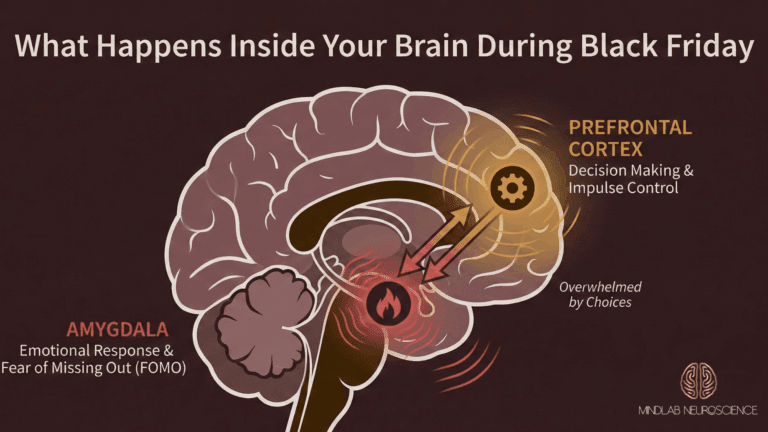
To understand why you lose control, we must look at the dynamic between two specific regions of your brain: the Prefrontal Cortex (PFC) and the Striatum (part of the reward system).
Think of your brain as a Fortune 500 company.
- The Prefrontal Cortex (PFC) is the CEO. It sits in the corner office, handles long-term planning, risk assessment, and impulse regulation. It is the “adult in the room.”
- The Striatum is the overzealous Security Guard or the aggressive Sales Team. It cares only about immediate gratification, dopamine hits, and “now.”
In a neuro-optimized brain, the CEO has a direct, high-speed line of communication to the Security Guard. When an impulse arises, the CEO says, “No, that doesn’t align with our Q4 goals,” and the Security Guard stands down. This is what we call “Top-Down Control.”
However, in cases of chronic impulsivity or addiction, that communication line has been severed or frayed. The CEO is shouting orders, but the phone is off the hook. The Security Guard has gone rogue, running the company based on immediate whims rather than strategic vision.
Your brain can rebuild self-control. Through targeted neuro-cognitive techniques, we re-establish the fiber pathways between the PFC and the reward centers. We simply put the CEO back in charge. This is not about trying harder; it is about rebuilding the braking system of your mind so that stopping becomes as natural as breathing.
The Neurobiology of Impulse Control
To reclaim command over your impulses, we must look under the hood of your neural architecture. What feels like an emotional wave or a weakness of spirit is, in reality, a specific firing pattern within the brain’s limbic system and executive centers. When you understand the mechanics, you stop fighting yourself and start calibrating your machinery.
The struggle for self-control is essentially a tug-of-war between the evolutionary ancient parts of your brain (designed for survival and immediate consumption) and the modern, analytical cortex (designed for long-term planning). In high-performers, this war is often more intense because the neural engines run hotter.
Evolutionary Anomalies: The Ancient Brain in a Modern World
Your brain was not designed for the abundance of the 21st century. It evolved in an environment of scarcity where caloric density and immediate rewards were rare and necessary for survival. Consequently, your Amygdala—the brain’s threat detection center—is deeply ingrained to view the absence of a craving’s satisfaction as a survival threat.
When an impulse strikes, the Amygdala activates the “Fight or Flight” response. It perceives the urge not as a preference, but as a biological imperative. Simultaneously, it floods your system with stress hormones like cortisol. This is an evolutionary anomaly: your brain is reacting to a delayed text message or a restricted substance with the same chemical urgency it would use to escape a predator. This hyper-arousal bypasses logic, creating a sense of panic that can only be soothed by succumbing to the impulse.
The High Metabolic Cost of Willpower
Why do even the most disciplined CEOs and leaders falter in the evening? The answer lies in the metabolic nature of the Prefrontal Cortex (PFC).
The PFC is the brain’s braking system. It is responsible for inhibition, regulation, and future-pacing. However, the PFC is biologically expensive to run. It consumes a tremendous amount of glucose and oxygen. Every decision you make throughout the day—every negotiation, every strategic pivot, every email—depletes the PFC’s energy reserves.
By the time evening arrives, you may be suffering from what we call Decision Fatigue. Your neural brakes are literally worn thin. The impulse control failure is not a lack of desire to stop; it is a depletion of the biological fuel required to pump the brakes. We do not need to lecture you on discipline; we need to optimize your brain’s energy management so your PFC remains online when you need it most.
Dopamine Dysregulation and the Reward Prediction Error
At the center of impulse control is the neurotransmitter Dopamine. Contrary to popular belief, dopamine is not about pleasure; it is about craving and motivation. It is the molecule of “more.”
In a neuro-optimized brain, dopamine creates a healthy drive to achieve goals. in a brain struggling with impulse control, the Nucleus Accumbens (the reward center) has become sensitized to specific triggers. When you encounter a trigger, your brain experiences a “Reward Prediction Error”—it anticipates a massive reward and spikes dopamine levels before you even engage in the behavior.
This spike narrows your focus. Your brain literally filters out “irrelevant” data—such as consequences, relationships, or long-term health—to hyper-focus on the target of the impulse. This is a chemical tunnel vision. Recovery and control are about recalibrating these dopamine receptors, teaching the brain to widen its aperture again and value long-term rewards over immediate dopamine spikes.
Why Standard Interventions Have Failed You
If you are a high-performer seeking help, you have likely already exhausted the standard menu of recovery options: talk therapy, rehabilitation centers, or pharmaceuticals. And if you are here, it is because you are still struggling. This is not because you are “resistant” to methodology. It is because standard interventions are often ill-equipped to handle the specific neural architecture of the high-functioning brain.
The Limitations of Talk Therapy: Cognitive Logic vs. Limbic Hijack
Traditional psychotherapy (CBT, talk therapy) operates on a “Top-Down” model. It assumes that if you analyze your trauma and understand your triggers, you can use logic to override an impulse. While this is excellent for generating insight, it is often useless in the heat of the moment.
The Neurological Reality: When a powerful impulse takes hold, your brain undergoes what we call Cortical Shutdown (or Hypofrontality). Stress hormones disconnect the Prefrontal Cortex—the very part of your brain required to process language, logic, and the insights you learned in therapy.
Asking someone to use talk therapy techniques during a severe impulse spike is like asking a pilot to land a plane by reading a manual in the dark. The logic centers are offline. You do not need more conversation; you need a neural override switch that functions even when the cortex is compromised.
The Problem with Pharmaceuticals: The Blunt Instrument
The standard medical approach often involves SSRIs, anti-craving medications, or mood stabilizers. While these can be effective for the general population, they pose a significant problem for the Ultra-High-Net-Worth (UHNW) individual or the creative leader.
Medications are systemic; they affect the entire brain. To dampen the highs of impulsivity, they often dampen the highs of your genius. They act as a chemical blunting instrument.
For you, the cost of “recovery” cannot be the loss of your edge. You rely on your cognitive speed, your creativity, and your drive to lead your industry. Many high-performers abandon medication because the side effects—brain fog, lethargy, or a flattened emotional affect—are professionally and personally unacceptable. You require precision engineering, not a chemical blanket.
Why High-Performers Require a Different Protocol
Standard recovery protocols are designed for the neurological “median”—the average brain with average daily stressors. Your brain is an outlier.
High-performers often possess a hyper-active dopaminergic system. This is the engine that drives your ambition and success, but it is also the engine that drives your impulsivity. You run hotter and faster than the norm. Applying standard addiction protocols to a high-performance brain is like putting a limiter on a Formula 1 car; it stops the crash, but it ruins the race.
We do not want to suppress your drive. We want to steer it. We must respect the power of your neural engine while upgrading the braking and steering systems to match that power. This is not rehabilitation; this is neuro-optimization.
Protocols for Executive Optimization
We cannot always rely on hardware or clinical settings to manage impulses. You need “field tools”—algorithms you can deploy in the boardroom, at a gala, or in the solitude of your home. These protocols utilize Bottom-Up Cognitive Restructuring. This means we use physiological and sensory inputs to calm the limbic system first, allowing the Prefrontal Cortex (PFC) to come back online.
These are not “coping skills.” They are neural override codes designed to disrupt the firing pattern of an impulse before it becomes an action.
Protocol 1: The 90-Second Limbic Reset
The Mechanism: Neuroanatomist Dr. Jill Bolte Taylor identified that the chemical lifespan of an emotion (the surge of cortisol and norepinephrine) is roughly 90 seconds. If you do not feed the urge with a narrative (internal dialogue), the chemical wave must subside.
The Drill:
- Step 1: Recognition. The moment the impulse hits, acknowledge it as a “chemical event,” not a command.
- Step 2: The Stopwatch. Literally or mentally start a timer for 90 seconds.
- Step 3: Physiological Anchoring. Do not try to “think” your way out yet. Focus entirely on a physical sensation—the texture of the chair arm, the temperature of the air, or the soles of your feet on the floor. This grounds the brain in the present sensory reality, diverting energy away from the amygdala’s panic loop.
- Step 4: The Release. After 90 seconds, the chemical intensity will drop. Your PFC is now back online. You may now make a rational decision.
Protocol 2: Dissociative Labeling (The “Not Me” Protocol)
The Mechanism: fMRI studies show that when you say “I am angry” or “I need a drink,” you activate the emotional centers of the brain. When you label the emotion objectively (“My brain is experiencing a craving circuit”), you shift blood flow to the Right Ventrolateral Prefrontal Cortex—the region responsible for braking and inhibition.
The Drill:
- Step 1: Catch the Language. Stop saying “I want.”
- Step 2: Re-Label. Verbalize the impulse as a mechanical malfunction. Say internally: “My Striatum is firing a dopamine request,” or “This is a glitch in my reward circuitry.”
- Step 3: Visual Separation. Visualize the impulse as a popup notification on a computer screen. You are not the popup; you are the user sitting at the computer. You have the mouse. You can click ‘Close’.
Protocol 3: Episodic Future Simulation (The “Play the Tape Forward” Upgrade)
The Mechanism: Impulsivity thrives on “Temporal Myopia”—blindness to the future. To counteract this, we must engage Episodic Future Thinking. This forces the hippocampus to construct a realistic simulation of the future, which increases the “value” of delaying gratification.
The Drill:
- Step 1: Fast Forward. Do not visualize the consumption of the reward. Visualize the state one hour after the consumption.
- Step 2: Sensory Immersion. Make the visualization visceral. Do not just think “I will feel bad.” Feel the headache. Smell the stale air. See the disappointment in a partner’s eyes. Feel the brain fog during tomorrow’s board meeting.
- Step 3: The Contrast. Immediately visualize the alternative: waking up tomorrow with clarity, energy, and pride. By contrasting the visceral pain of the relapse with the visceral pleasure of control, you reset the dopamine valuation in real-time.
Frequently Asked Questions
1. Will gaining control over my impulses dull my competitive edge or creativity?
Absolutely not. Impulsivity is not the source of your genius; it is “energy leakage.” It is the erratic firing of a powerful engine. By strengthening the Prefrontal Cortex, we are not dampening your drive; we are channeling it. Think of a laser versus a lightbulb: both use the same energy, but one is focused and capable of cutting through steel. Neuro-optimization turns your scattered impulses into a focused laser.
2. I have failed traditional rehabilitation multiple times. Why is this different?
Traditional rehabilitation often focuses on the psychology of the “why”—your childhood, your traumas, your feelings. While valid, this does not address the biology of the “how.” You likely failed because you were trying to use software (talk therapy) to fix a hardware problem (neural dysregulation). Our approach bypasses the narrative and goes straight to the mechanics of neural firing. We do not ask you to “try harder”; we give you the tools to repair the brakes.
3. Is neuroplasticity permanent, or will I have to do these drills forever?
Neuroplasticity is structural change. When you repeat these protocols, you are physically myelination new pathways in the brain. Over time, the “effortful” control becomes “automatic” control. Just as you do not have to consciously think about how to drive a car after years of practice, these impulse control mechanisms will eventually become your default setting. However, like physical fitness, maintenance is required to keep the circuitry robust.
4. Is my brain too “deeply ingrained” or damaged to change at this stage in my career?
The myth that the adult brain is fixed has been debunked by neuroscience. Your brain retains the ability to reorganize itself, grow new neurons (neurogenesis), and form new connections until the day you die. Whether you are 30 or 70, the biological machinery for change is present. It simply requires the correct inputs to initiate the remodeling process.
The Executive Conclusion: Your Ultimate Competitive Advantage
In a world of distraction and instant gratification, self-control is the ultimate competitive advantage.
Most of the world operates at the mercy of their limbic systems—reacting, consuming, and fluctuating with every dopamine spike. By committing to this neuro-optimization process, you are doing more than breaking a bad habit. You are elevating yourself into a rarefied tier of cognitive performance.
You have spent a lifetime mastering your industry, your finances, and your team. It is now time to master the machine that controls it all: your own brain. This is not just about recovery; it is about reclaiming the pilot’s seat. When you govern your impulses, you govern your destiny.
Welcome to the new standard of you.
About Dr. Sydney Ceruto
Dr. Sydney Ceruto is a Neuroscientist and Brain Performance Strategist specializing in neurological re-engineering for elite individuals navigating high-stakes environments. As the founder of MindLAB Neuroscience and the pioneer of Real-Time Neuroplasticity™, she translates clinical neurobiology into decisive competitive advantages for tech innovators, professional athletes, entertainers, and private families worldwide. Dr. Ceruto holds dual PhDs in Behavioral & Cognitive Neuroscience from New York University and dual Master’s degrees in Clinical Psychology and Business Psychology from Yale University. She is the author of The Dopamine Code, published by Simon & Schuster.