Key Takeaways
- Notifications hijack the nucleus accumbens through variable-ratio reinforcement: checking feels compulsive, not chosen.
- Context-switching taxes the prefrontal cortex metabolically, depleting focus, judgment, and emotional control by mid-afternoon.
- “Detox” alone fails: the problem is a recalibrated dopamine baseline. Restoring sensitivity makes rewards register.
- The fastest leverage is environmental design, not discipline: removing a trigger beats resisting it.
- Bounded technology use rebuilds prefrontal regulation without leaving threat and craving circuits switched on.
The phone in your hand is not competing with your willpower: it is competing with your dopamine system, and it was engineered to win. Every notification arrives on an unpredictable schedule, the exact reinforcement pattern that conditions a brain most powerfully. What feels like a focus problem is usually a reward-circuit problem rooted in the brain’s cognitive architecture, and that distinction changes everything about how you fix it.
The people who reach me are rarely careless about their attention. They are disciplined, accomplished, and genuinely confused about why their focus has collapsed. They can run a board meeting but can’t read ten pages without reaching for their phone. The reason is not a character flaw. It is that the device has quietly rewired what their brain treats as rewarding, and that rewiring is exactly what a structured reset is designed to undo.

Why Your Brain Treats Your Phone Like a Slot Machine
Your brain is drawn to novelty and social signals because, for most of human history, both were tied to survival. A new face, a change in the environment, a sign of belonging: each one earned a small dopamine signal through the nucleus accumbens to mark it as worth pursuing. The classic work on dopamine showed that this chemical does not simply encode pleasure; it encodes prediction: the gap between what you expected and what you got. Unpredictable rewards produce the largest signal of all.
The notification is not the reward. The uncertainty about whether there will be a reward is the reward, and uncertainty is the one thing your phone manufactures endlessly.
This is why a feed that sometimes delivers something good and often delivers nothing is more compelling than one that always delivers. The intermittent payoff is the precise design principle behind a slot machine, and product teams understand the parallel completely. Each unpredictable like, message, or headline trains the loop a little tighter, until the hand reaches for the phone before any conscious decision is made. What the engagement metrics never capture is the cost on the other side of that loop: a brain that now needs a higher dose of stimulation to feel normal.

The Hidden Tax on Your Prefrontal Cortex
Every time attention jumps from a document to a notification and back, a fragment of focus stays behind on the interrupted task. That residue does not clear instantly. The prefrontal cortex (the region responsible for sustained attention, deliberate decisions, and impulse control) has to re-establish context each time, and that re-establishment burns glucose. Stack a few hundred of those switches across a morning and the circuit is genuinely depleted, not metaphorically tired.
This is the mechanism behind a pattern I see constantly: a sharp, capable person whose judgment quietly degrades as the day goes on. By mid-afternoon they are more reactive, more easily irritated, and far more likely to reach for the phone again, because the very circuit that would veto the impulse is the one running on empty. The brain doesn’t just react to screen time; it adapts its own wiring to expect constant input, which is why unplugging feels not merely boring but genuinely uncomfortable at first.
Screen fatigue then shows up in the body (the eye strain, the shallow restlessness, the trouble settling) and in the slow fading of pleasure from anything that isn’t a screen. A walk feels flat. A conversation feels slow. This is not weakness of will. It is a reward system that has been recalibrated upward, and it is the precise thing a deliberate reset is built to bring back down. Reclaiming that capacity has direct payoffs for both demanding professional and personal life.
What I See in High Performers Who Can’t Unplug
Paola, a marketing executive in her late thirties, came to me describing her days as “living in a fog.” Her mornings started with the phone before her feet hit the floor; her evenings ended with reels until her eyes burned. She was not unmotivated: she was saturated. Her sleep was shallow, her ideas had stopped arriving, and she could not remember the last meal she’d eaten without a screen in her hand. Even at dinner with her children, half of her attention stayed in the device.
The first thing we did was not to take anything away. We mapped the loop. Most people assume they reach for the phone out of habit; in practice, almost every reach is triggered by a feeling: a flicker of boredom, a spike of uncertainty, a moment of low mood. Paola reached for her phone whenever a task felt ambiguous. The device wasn’t the disease; it was her brain’s fastest available exit from discomfort. Once she could see the trigger, the impulse stopped feeling like part of her and started looking like the automatic reflex it actually was.
From there the changes were small and deliberate: the phone charged across the room overnight, the first waking hour reserved for something analog, the dinner table declared a device-free zone. Within a few weeks her sleep deepened, her focus returned, and, the detail she found most surprising, quiet stopped feeling like a problem to solve. She had not added willpower. She had removed the triggers and given her reward system room to recalibrate.

Why a “Detox” Alone Isn’t the Fix
A weekend away from screens feels wonderful and changes almost nothing. The reason is that the problem isn’t the screen: it’s the baseline. When the reward system has been tuned to expect constant, high-intensity input, a brief withdrawal just resets the craving clock; the moment the phone returns, the loop re-engages. This is why the “dopamine fast” trend overpromises. You cannot fast your way out of a recalibrated set point; you have to lower it and then keep it there long enough for the change to consolidate.
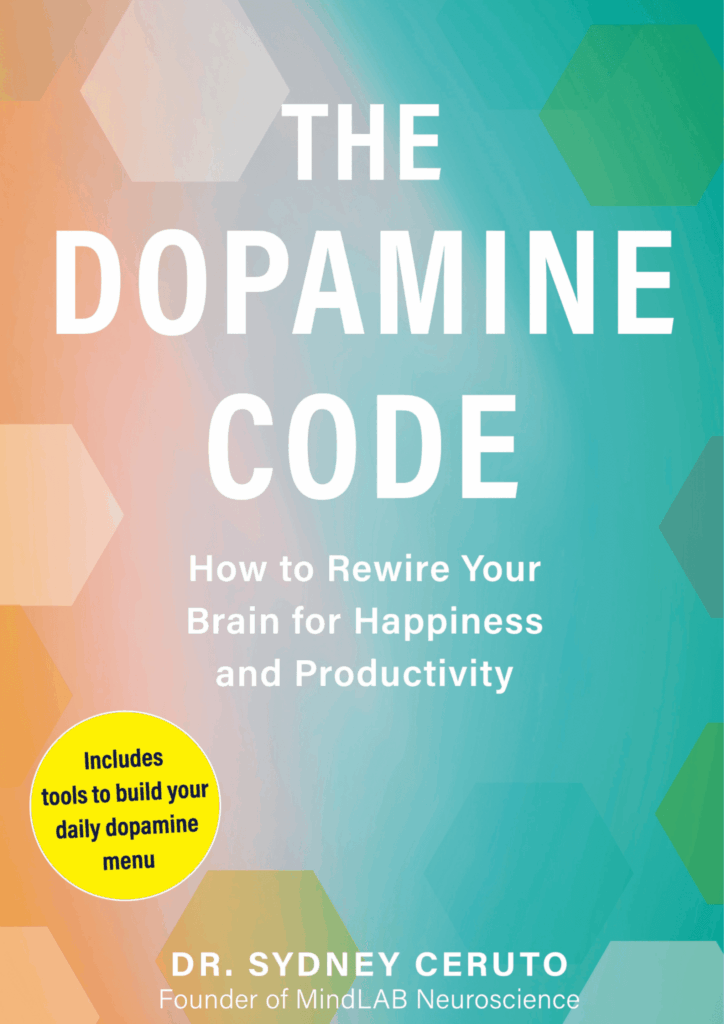
The work I do with clients targets that baseline directly. The core of Real-Time Neuroplasticity™ is to catch the reach-for-the-phone impulse as it happens: interrupting the trigger-to-tap sequence in real time rather than reviewing it afterward, so a different response gets encoded in its place. Each interrupted reach is a small act of rewiring. Repeated consistently, the new pathway becomes the default, the craving signal quiets, and ordinary rewards (a real conversation, a finished chapter, an unhurried meal) start registering at full strength again. That return of natural reward is the actual goal, and it tends to compound the same way the original dopamine recalibration techniques describe. The full architecture of how the brain builds and resets that reward set point is the subject of The Dopamine Code.

Design the Environment So Willpower Isn’t the Variable
Here is the principle that makes the difference: it is neurologically far cheaper to remove a trigger than to resist it once it has fired. Willpower draws on the same depletable prefrontal resource the day has already taxed. Environmental design doesn’t. So the most effective changes are the ones that take the decision out of the moment entirely.
Notice the trigger, not the habit
For a few days, every time you reach for the phone, name the feeling that preceded it: bored, anxious, uncertain, lonely. You are not trying to stop yet. You are making an automatic loop visible, which is the prerequisite for changing it. This is the same first step I walk every client through, and it works precisely because the brain’s avoidance reflex loses its grip the moment you can see it operating.
Build the boundary into the environment
Charge the phone in another room. Turn off every notification that isn’t a person who needs you. Protect the two windows that matter most to your nervous system: the first 60 minutes after waking and the last 90 before sleep, when screen light most disrupts cortisol and melatonin. These are structural decisions made once, not battles fought hourly.
Replace, don’t just remove
A vacuum gets filled by the nearest available reward, so decide in advance what fills it: a walk, a notebook, a real conversation. The aim is to give your reward system offline experiences worth registering, which is exactly how the natural baseline rebuilds. Pairing this with deliberate recovery practices, the kind that support overnight neural restoration, accelerates the reset.

Why Intentional Tech Use Actually Works
The goal is not abstinence. Technology is genuinely useful, and a permanent war against it is neither realistic nor necessary. The goal is to return the device to the status of a tool: something you pick up on purpose and put down on purpose. Every time you choose deliberately when to engage rather than letting the impulse choose for you, you are exercising the prefrontal regulation that screen-driven use erodes. Repetition strengthens that circuit the same way training strengthens any other.
Over time, intentional use does more than reduce screen hours. It restores the capacity to sit with a hard problem, to be fully present in a conversation, to let your mind wander productively instead of filling every gap with input. That restored bandwidth is where creativity, judgment, and genuine connection live, and it is the real return on the effort, far more than any number on a screen-time report. The same deliberate practice builds the broader cognitive flexibility that protects performance under pressure.

Small, Consistent Steps Win
Lasting change does not require a dramatic overhaul. Consolidating a new pathway depends on consistency, not intensity, which is good news, because it means you can start with one boundary and let it hold before adding another. Turn off notifications during meals this week. Add a device-free first hour next week. Anticipate the hard moments, the boredom and the reflexive reach, and decide your alternative before they arrive.
Accountability helps the wiring stick. Telling a trusted friend or colleague what you’re doing, or making the change alongside someone, gives the new pattern an external anchor while it is still fragile. Each small win (a book finished instead of a feed scrolled, an afternoon outdoors without checking) is a pathway reinforced. The compounding is real, and within a few weeks most people feel focus, mood, and presence move together in the same direction. The deeper mechanics of reclaiming attention and sustained focus follow exactly this logic, and they reshape how you work, not just how you scroll.
What does a digital detox do to your brain?
A digital detox allows your brain’s dopamine reward system to recalibrate after chronic overstimulation. Constant notifications trigger rapid dopamine micro-releases that desensitize receptors over time, producing restlessness and compulsive checking. When digital stimulation is removed, receptor sensitivity gradually restores over days to weeks. Simultaneously, your prefrontal cortex regains sustained attention capacity that fragmented screen use erodes.
Why is it so hard to put your phone down?
Your brain’s reward circuitry has been conditioned by variable-ratio reinforcement: the same mechanism that makes slot machines compelling. Each notification or message delivers an unpredictable dopamine signal through the nucleus accumbens, and your brain learns to anticipate these rewards constantly. App designers engineer this deliberately using infinite scroll and intermittent social validation. The anterior cingulate cortex generates an error signal when expected rewards are absent, producing anxiety when you’re separated from your device.
How long does it take for a digital detox to work?
Neurological benefits emerge in stages. Benefits tend to emerge in stages: stress-related arousal eases within the first few days, sleep often improves over the following week or two as circadian signaling steadies, and sustained-attention capacity continues to rebuild over the weeks that follow. Gradual, structured reduction works better than abrupt elimination. Gradual, structured reduction works better than abrupt elimination, which can trigger withdrawal-like restlessness.
Can screen time cause brain fog and anxiety?
Excessive screen time directly impairs cognitive clarity through several mechanisms. Rapid context-switching between apps forces your prefrontal cortex into continuous partial attention, depleting glucose and increasing adenosine: the neurochemical that produces mental fatigue. Constant low-grade arousal from incoming information keeps your amygdala in heightened vigilance, elevating baseline cortisol. Over time, this chronic stress exposure impairs memory consolidation. The resulting cognitive haze and persistent unease are neurological consequences of sustained overstimulation.
What are the best ways to start a digital detox?
Begin with environmental design rather than relying on willpower alone. Remove notification access for non-essential apps to reduce trigger frequency. Establish device-free zones aligned with your circadian rhythm, particularly the first 60 minutes after waking and the last 90 minutes before sleep, when screen exposure most disrupts cortisol and melatonin. Replace scrolling with activities that engage restorative neural networks, such as walking or unstructured thinking time.
If your focus has collapsed and ordinary willpower hasn’t fixed it, the issue is usually the underlying reward circuit, not your discipline, and that is precisely the kind of pattern that responds to targeted neurological work. To map your own trigger loop and build a reset that actually holds, schedule a strategy call with Dr. Sydney Ceruto.
References
- Schultz, W., Dayan, P., & Montague, P. R. (1997). A neural substrate of prediction and reward. Science, 275(5306), 1593–1599. https://pubmed.ncbi.nlm.nih.gov/9054347/