PHP Warning: Undefined array key “HTTP_HOST” in phar:///usr/local/bin/wp/vendor/wp-cli/wp-cli/php/WP_CLI/Runner.php(1334) : eval()’d code on line 70
Your sense of self is not a feeling. It is a measurable pattern of neural activity concentrated in the medial prefrontal cortex and default mode network — and when that pattern conflicts with the identity you perform daily, the resulting cognitive dissonance drives anxiety, decision paralysis, and chronic dissatisfaction. In my practice, I have spent over two decades working with individuals who describe themselves as “successful but hollow,” and the neuroscience behind that experience is both precise and actionable.
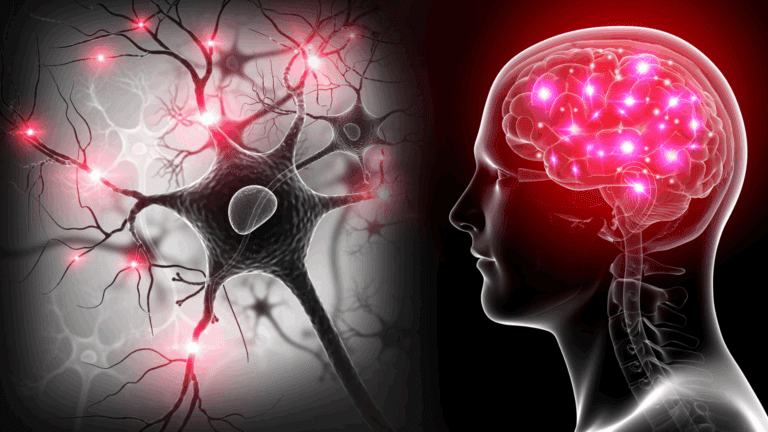
The medial prefrontal cortex (mPFC) maintains what researchers call a self-referential processing network — a continuously updated model of who you are. When your behavior aligns with this internal model, the mPFC fires coherently with the ventromedial prefrontal cortex, producing what we subjectively experience as authenticity. When behavior diverges from the model, anterior cingulate cortex conflict-detection circuits activate, generating a measurable stress response. Understanding this architecture changes how we approach the question of “finding yourself.”
Key Takeaway
Authentic self-experience is not philosophical — it is the measurable result of coherent firing between the medial prefrontal cortex and the default mode network. When behavior diverges from this internal model, the anterior cingulate cortex generates chronic conflict signals that manifest as the burnout, dissatisfaction, and identity confusion that high-achievers frequently describe without understanding the neurological source.
What Is Self-Referential Processing and Why Does It Matter?
Self-referential processing is the brain’s continuous evaluation of stimuli through the lens of personal relevance. Kelley and colleagues demonstrated in a landmark 2002 fMRI study that the mPFC activates significantly more when people evaluate traits as self-descriptive versus other-descriptive. This is not abstract philosophy — it is a distinct neural computation.
What most people miss is the consequence. When your mPFC model of self diverges from your daily behavior — when you spend years performing a role that contradicts your internal wiring — the anterior cingulate cortex registers constant low-grade conflict. I consistently observe this in clients who have optimized their external lives while neglecting the neural architecture underneath. They arrive describing vague dissatisfaction. The imaging literature tells us exactly what is happening: their brains are running two competing identity models simultaneously, and the metabolic cost is enormous.
Northoff and Bermpohl’s 2004 research in Trends in Cognitive Sciences mapped this self-referential system across cortical midline structures and found that disruption of coherent self-processing correlates with depersonalization, identity confusion, and emotional blunting — indicators my clients often describe without recognizing their neurological origin.
How Does the Default Mode Network Construct Your Identity?
The default mode network (DMN) — spanning the mPFC, posterior cingulate cortex, and angular gyrus — activates during rest and mind-wandering. But its function is far more consequential than daydreaming. The DMN is your brain’s autobiography department. It continuously weaves past experiences, present self-concept, and future projections into a coherent narrative.
Buckner, Andrews-Hanna, and Schacter published foundational work in 2008 showing that the DMN constructs mental simulations of future scenarios anchored to self-concept. When your self-concept is accurate, these simulations guide effective decision-making. When your self-concept is distorted — built on inherited expectations, social performance, or outdated survival strategies — the DMN generates projections that feel compelling but lead nowhere productive.
In my practice, I have seen this pattern hundreds of times. A client operates from a self-model that was adaptive at age twenty-two but catastrophically misaligned at forty-five. The DMN keeps generating life plans based on the outdated model, and every plan feels subtly wrong. The problem is never motivation. The problem is the source code running underneath.
Why Does Cognitive Dissonance Between Identity and Behavior Feel So Costly?
Leon Festinger’s cognitive dissonance theory — a core driver of deeply held limiting beliefs — has been validated at the neural level. Van Veen and colleagues showed in a 2009 study that holding contradictory self-relevant beliefs activates the dorsal anterior cingulate cortex — the same region that processes physical pain. The brain does not distinguish between a broken bone and a broken self-concept. Both register as threats requiring immediate resolution.
This explains why inauthenticity is not merely uncomfortable. It is physiologically expensive. Chronic identity-behavior mismatch elevates cortisol, suppresses immune function, and degrades the prefrontal executive circuits needed for clear thinking. What the research does not capture is how insidiously this process operates. Most of my clients have no conscious awareness that they are maintaining two competing identity models. They attribute their exhaustion to workload, their anxiety to external pressures, their dissatisfaction to having chosen the wrong goals. The actual mechanism is simpler and more fixable: their mPFC self-model and their daily behavioral output are running different software.
Can the Brain Actually Rewire Its Self-Concept?
Yes — and the mechanism is well-documented. Self-concept is encoded in synaptic connection patterns, not hardwired circuitry. Davidson and McEwen’s 2012 work demonstrated that sustained behavioral change — not insight alone, but repeated new action — physically alters prefrontal connectivity patterns within weeks. The brain’s self-model updates when it receives consistent new data that contradicts the existing model.
The critical insight from my clinical work is timing. Self-concept plasticity is not uniform. It peaks during what I call recalibration windows — periods when existing identity structures are already destabilized by life transitions, relationship shifts, or the accumulated weight of misalignment. These windows are not crises to survive. They are opportunities for precise intervention.
The standard clinical approach encourages patients to “explore” during these windows. Exploration without direction simply reinforces the DMN’s existing narrative loops. What actually works is targeted disruption of the specific self-referential patterns that are generating the mismatch, followed by deliberate installation of new behavioral patterns that update the mPFC model. This is the core of neuroscience-based identity recalibration — not reflection, but directed neural remodeling.
What Role Does Social Identity Play in Neural Self-Construction?
Humans do not build self-concepts in isolation. Lieberman’s social cognitive neuroscience research has demonstrated that the mPFC processes social feedback and integrates it into the self-model with remarkable speed. A single powerful social interaction can shift self-referential processing patterns measurably.
This creates a vulnerability. When your social environment consistently reinforces an inauthentic identity — when your professional role, family system, or peer group rewards the performed self — your mPFC gradually incorporates that performance into its baseline model. The performed identity becomes neurologically “real.” I consistently observe this in individuals embedded in high-stakes relational environments where their value is tied to a specific role. Dismantling that role feels existentially threatening because, at the neural level, it is. The brain has fused performed identity with survival.
Breaking this fusion requires more than awareness. It requires creating conditions where the mPFC receives new self-relevant data from sources outside the existing social reinforcement loop — new environments, new behavioral experiments, new relational dynamics that activate the self-referential system without triggering the old performance circuits.
How Emotional Regulation Connects to Authentic Self-Expression
Gross and John’s research on emotional suppression established that habitually concealing authentic emotional responses — a core feature of performed identity — degrades both prefrontal executive function and interpersonal connection quality. Suppression consumes cognitive resources that would otherwise be available for decision-making, creativity, and genuine engagement. The metabolic cost is approximately 30% of available working memory capacity during active suppression episodes.
When I work with clients navigating identity recalibration, the emotional regulation dimension is often the first to shift. As the mPFC model updates, the need for suppression decreases. Clients report this as “feeling lighter” or “thinking more clearly,” but the mechanism is straightforward: freed prefrontal bandwidth. They are not becoming different people. They are becoming computationally more efficient by eliminating the constant background processing required to maintain a false self.
The Neuroplasticity Timeline for Identity Change
Lazar and colleagues at Harvard demonstrated through longitudinal MRI that measurable cortical changes in self-referential processing regions can occur in as few as eight weeks of consistent new behavioral input. This is not a metaphor. Cortical thickness, white matter connectivity, and functional activation patterns all show detectable shifts within this timeframe.
The practical implication is that identity is not fixed. But it is also not infinitely malleable in every direction simultaneously. Effective targeted neural recalibration targets specific circuits in a specific sequence. The mPFC self-model, the DMN narrative system, the ACC conflict-detection threshold, and the emotional regulation circuits each have different plasticity windows and different input requirements. Attempting to change everything at once triggers a defensive consolidation response — the brain doubling down on existing patterns to manage the threat of too much simultaneous change.
This is why most self-help approaches to “finding your authentic self” produce temporary enthusiasm followed by regression. They target the narrative layer without addressing the underlying neural architecture. Lasting identity recalibration requires working at the circuit level, in the right sequence, during the right windows.
This article explores the neuroscience of self-concept formation and identity. It is intended for educational purposes and does not constitute medical advice. If you are experiencing persistent identity confusion, depersonalization, or emotional distress, please consult a qualified healthcare professional.
Frequently Asked Questions
What brain regions are responsible for your sense of self?
The medial prefrontal cortex is the primary hub for self-referential processing, continuously evaluating whether experiences, traits, and stimuli are personally relevant. It works in concert with the default mode network — including the posterior cingulate cortex and angular gyrus — which constructs the autobiographical narrative that forms your identity over time.
Why does living inauthentically feel so exhausting?
When your behavior contradicts your brain’s internal self-model, the anterior cingulate cortex activates a persistent conflict signal that elevates cortisol and consumes prefrontal resources. This is the same neural circuit that processes physical pain. Chronic inauthenticity creates a measurable metabolic burden equivalent to running two competing operating systems simultaneously.
Can your brain actually change its self-concept in adulthood?
Yes. Longitudinal MRI studies demonstrate measurable changes in cortical thickness and connectivity within self-referential processing regions after as few as eight weeks of consistent new behavioral input. Self-concept is encoded in synaptic patterns, not fixed architecture, making it responsive to targeted intervention throughout the lifespan.
What is the default mode network’s role in identity?
The default mode network constructs your autobiographical self-narrative by integrating past experiences, current self-concept, and future projections during rest and mind-wandering. When this network operates from an outdated or distorted self-model, it generates life plans and decisions that feel compelling but are fundamentally misaligned with who you actually are.
Why do most self-help approaches to authenticity fail long-term?
Most approaches target the narrative layer — changing how you think about yourself — without addressing the underlying neural circuits that maintain the existing self-model. Lasting change requires working at the circuit level in a specific sequence, targeting the mPFC self-model, DMN narrative loops, and emotional regulation systems during their respective plasticity windows.
From Reading to Rewiring
Understand the neuroscience. Apply it to your life. Work directly with Dr. Ceruto to build a personalized strategy.
Self-Esteem & Identity — MindLAB Locations
References
- Kelley, W.M., Macrae, C.N., Wyland, C.L., Caglar, S., Inati, S., & Heatherton, T.F., 2002. Finding the Self? An Event-Related fMRI Study. Journal of Cognitive Neuroscience, 14(5), 785-794. https://pubmed.ncbi.nlm.nih.gov/12167262/
- Buckner, R.L., Andrews-Hanna, J.R., & Schacter, D.L., 2008. The Brain’s Default Network: Anatomy, Function, and Relevance to Disease. Annals of the New York Academy of Sciences, 1124(1), 1-38. https://pubmed.ncbi.nlm.nih.gov/18400922/
- Davidson, R.J. & McEwen, B.S., 2012. Social Influences on Neuroplasticity: Stress and Interventions to Promote Well-Being. Nature Neuroscience, 15(5), 689-695. https://pubmed.ncbi.nlm.nih.gov/22534579/
This article is part of our Identity & Neural Flexibility collection. Explore the full series for deeper insights into identity & neural flexibility.