Key Points
- Westchester's overlapping social contexts remove the anonymity that allows relationship patterns to stay hidden, forcing the same dynamics into view across every community interaction.
- Parenting activates and intensifies the same neural architecture governing all relationships, raising the stakes and visibility of patterns that existed before children arrived.
- Communication strategies and conscious effort collapse under pressure when the underlying neural circuitry remains unchanged. Durable results require architectural rewiring.
- Children's relational architecture forms in response to what they observe. Changing a parent's neural patterns shifts the environment shaping the next generation.
- Real-Time Neuroplasticity™ changes the circuitry governing all relational contexts simultaneously because the same architecture drives your marriage, friendships, and community connections.
| Marker | Traditional Approach | Neuroscience-Based Approach | Why It Matters |
|---|---|---|---|
| Primary Focus | Relationship Pattern Analysis | Marriage Counseling | Parenting Programs |
| Target | Neural circuits driving all relational patterns | The dynamic between two partners | Parent-child interaction techniques |
| Methodology | Real-Time Neuroplasticity™ | Guided conversation between partners | Behavioral strategies and scripts |
| Durability of Change | Durable neural rewiring | Dependent on both partners' effort | Requires consistent application |
| Scope | All relationship domains simultaneously | One partnership | Parent-child only |
| Speed of Results | Shifts within weeks | Months of joint sessions | Gradual behavioral adjustment |
How Westchester’s Community Structure Exposes Relationship Patterns
Westchester County creates an environment where relationship patterns cannot hide. In Scarsdale, Bronxville, Chappaqua, and Rye, daily life revolves around family, school communities, and a social fabric woven tightly enough that the same relational dynamics surface repeatedly in overlapping contexts. The person who struggles with emotional availability at home encounters the same pattern at the school fundraiser, the neighborhood dinner, and the weekend gathering. There is no anonymity to absorb the friction. Every interaction takes place within a community that remembers the last one, creating a continuous feedback loop that makes patterns impossible to ignore or explain away as situational.
The specific pressure of Westchester’s family-focused communities intensifies these dynamics considerably. In towns like Larchmont, Pelham, and Ardsley, couples navigate shared parenting, joint social calendars, and the performance of family cohesion within close-knit circles where everyone observes everyone. The neural circuits that govern how you manage conflict, express needs, or withdraw under stress are on constant display. Patterns that might go unnoticed in a larger, more anonymous city become defining features of how your community perceives you and your family. The controlling parent, the disengaged spouse, the person who avoids conflict at all costs: these become identities within the community because the same circuitry produces the same behavior in every shared context.
For many Westchester residents, the relational patterns predate the move to the county entirely. The decision to settle in Bedford, Mount Kisco, or Hastings-on-Hudson often coincides with a life stage where family formation amplifies existing neural architecture rather than creating new dynamics. Someone who always defaulted to control under stress now manages that pattern with children watching and absorbing the circuitry. A person whose architecture suppresses conflict to maintain harmony now navigates that dynamic within a marriage observed by an entire social circle. The stakes increase while the underlying circuits remain unchanged, creating pressure that communication strategies and date nights cannot relieve because the architecture producing the pattern operates beneath the level of conscious effort.
The academic intensity of Westchester’s top school districts (Edgemont, Briarcliff Manor, Pleasantville) introduces another dimension. When parenting becomes the primary relational arena, the neural architecture governing the marriage receives less exercise. Couples who once connected as partners gradually shift into co-management teams, their interactions dominated by logistics, scheduling, and performance tracking of children’s activities. The circuitry for romantic intimacy and emotional partnership weakens from disuse while the architecture for project-management-style engagement strengthens. By the time the children reach high school, many couples discover that the relational architecture between them has atrophied so severely that they function as effective colleagues but distant partners.
Dr. Sydney Ceruto’s Real-Time Neuroplasticity™ identifies these specific circuits and rewires them at the source. The work is not about learning communication skills or negotiating better compromises. It durably changes the neural architecture that produces the pattern, which shifts every relational context simultaneously because the same circuitry governs all of them. The way you show up with your spouse, your children, your community, and your closest friends changes when the architecture driving those interactions changes.


Dr. Sydney Ceruto, PhD, Neuroscientist & Author, MindLAB Neuroscience
Dr. Ceruto holds a PhD in Behavioral & Cognitive Neuroscience from NYU and Master’s degrees in Clinical Psychology and Business Psychology from Yale University. She lectures at the Wharton Executive Development Program at the University of Pennsylvania and has been an Executive Contributor to the Forbes Coaching Council since 2019. Dr. Ceruto is the author of The Dopamine Code (Simon & Schuster, June 2026). She founded MindLAB Neuroscience in 2000 and has spent over 26 years leading it, pioneering Real-Time Neuroplasticity™, a methodology that durably rewires the neural pathways driving behavior, decisions, and emotional responses.
Frequently Asked Questions About Relationship Pattern Analysis
What is Relationship Pattern Analysis?
It identifies the recurring neural circuits that produce the same relational dynamics with different people and across different contexts. The process maps the underlying architecture and targets it for durable rewiring.
Why do my relationship patterns seem more visible in Westchester?
Westchester's close-knit communities and overlapping social contexts provide fewer places to compartmentalize. The same neural architecture activates at home, at school events, and in social gatherings, making patterns that larger cities allow you to disperse across separate circles impossible to ignore.
Can parenting amplify existing relationship patterns?
Significantly. Parenting activates the same neural architecture that governs your other relationships while adding the intensity of responsibility and the visibility of family life. Patterns around control, conflict avoidance, or emotional withdrawal become more pronounced and higher stakes.
What happens during the Strategy Call?
The Strategy Call is a focused phone conversation with Dr. Ceruto. She maps the neural mechanisms behind your specific relationship patterns and determines whether this approach is the right fit for your situation.
How is this different from marriage counseling?
Marriage counseling addresses the dynamic between two people. Relationship Pattern Analysis focuses on the neural architecture one person carries into every relationship. Changing your circuitry changes how you show up in the marriage and everywhere else.
My spouse and I have tried everything. Why hasn't anything worked?
Most approaches target conscious behavior, communication, or narrative understanding. If the neural architecture producing the pattern has not changed, the conscious strategies eventually collapse under pressure. Durable change requires rewiring at the circuit level.
Will my children benefit from changes in my relationship patterns?
Children's relational architecture is actively forming in response to what they observe. When a parent's neural patterns shift, the relational environment the child navigates shifts simultaneously. This is one of the most consequential downstream effects of the work.
How long does the process take in Westchester's community setting?
Initial shifts appear within the first several weeks. The community context in towns like Scarsdale and Rye actually accelerates feedback because you encounter relational triggers frequently. This provides natural reinforcement for new circuitry.
Is this relevant for friendships, not just marriage?
Absolutely. The same neural architecture governs how you form and maintain all close connections. Friendship patterns in Westchester's social circles are driven by the same circuits that shape your marriage, parenting, and extended family dynamics.
What are Dr. Ceruto's qualifications?
Dr. Ceruto holds a PhD in Behavioral and Cognitive Neuroscience from NYU, two Master's degrees from Yale, and has over 26 years of experience pioneering Real-Time Neuroplasticity™. She works extensively with families navigating the demands of high-expectation communities.
Also available in: Miami · Wall Street · Midtown Manhattan · Beverly Hills · Lisbon
Take the First Step
One hour with Dr. Sydney Ceruto. You leave knowing which neural pattern is actually driving this, and what to do about it.
Book a Strategy Call
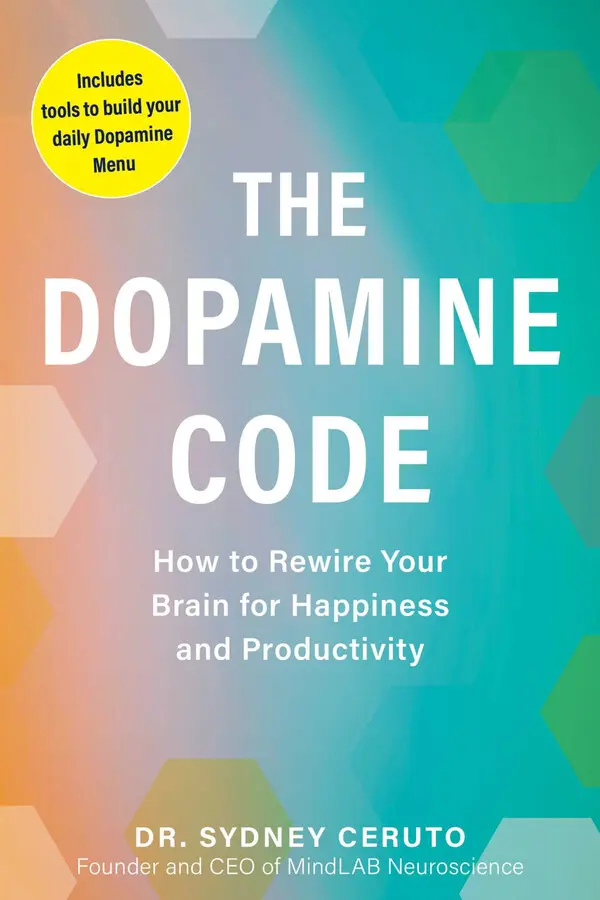
The Dopamine Code
Decode Your Drive
Why Your Brain Rewards the Wrong Things
Your brain's reward system runs every decision, every craving, every crash, and it was never designed for the life you're living. The Dopamine Code is Dr. Ceruto's framework for understanding the architecture behind what drives you, drains you, and keeps you locked in patterns that willpower alone will never fix.
Published by Simon & Schuster, The Dopamine Code is Dr. Ceruto's framework for building your own Dopamine Menu, a personalized system for motivation, focus, and enduring life satisfaction.
Order Now!Available now