
Key Takeaways
- “The Secret” has no neurological basis: the brain does not emit outcome-attracting frequencies.
- What IS real: visualization activates the same motor and prefrontal circuits as physical action.
- The reticular activating system (RAS) changes what the brain notices once intention is clear.
- Effective manifestation is neurologically calibrated goal-setting: visualization + emotional engagement + action.
- Magical manifestation thinking can prevent action and create learned helplessness.
ð§ Audio Version
Where Science Meets Results
Neuroscience reframes manifestation as a measurable brain process, not wishful thinking. Goal-directed visualization activates the prefrontal cortex and reticular activating system, filtering sensory input toward desired outcomes. Research by Pascual-Leone established that mental rehearsal produces structural neural changes comparable to physical practice, with fMRI research confirming shared activation patterns across imagined and executed actions.
Manifestation isn’t magic. It’s neuroscience. Your brain is literally designed to turn internal representations into external reality, and understanding the neuroscience of manifestation changes everything about how you approach your goals.
When you understand the neuroscience of manifestation, you stop waiting for the universe to deliver. Instead, you recognize that your nervous system is wired to guide you toward what you vividly imagine. This isn’t about the law of attraction or cosmic ordering. It’s about how your reticular activating system filters information, how your sensory cortex processes imagery, and how your dopamine system drives behavior toward anticipated rewards.
The bridge between thought and reality isn’t mystical. It’s neurological, and the neuroscience of manifestation explains exactly how this works.
| Claim | Verdict | What Actually Happens | Alternative |
|---|---|---|---|
| “Think positive, attract positive” | False | RAS notices confirming evidence (selection bias) | Set specific intentions to prime filters |
| “Visualize and it manifests” | Partial | Visualization activates motor cortex = priming | Visualize process AND outcome; follow with action |
| “Energy vibration attracts” | False | Emotional state affects social behavior | Regulate emotional state deliberately |
| “Write it down, universe delivers” | Partial | Writing activates encoding circuit | Write specific goals with deadlines |
| “Let go and trust” | Partial | Reducing outcome anxiety improves performance | Act first, then release attachment |
What Manifestation Actually Is
Manifestation is the deliberate encoding of a desired future state across the brain’s sensory, emotional, and motor systems, creating a neural blueprint the brain treats as a predictive target to fulfill. This process activates the default mode network, motor cortex, and limbic system simultaneously, moving beyond positive thinking into measurable, applied neurological rewiring.
Your brain is a prediction machine. Every moment, it generates predictions about what should happen next. These predictions shape your attention, behavior, and perception. The principles of the neuroscience of manifestation show that when you engage multiple sensory systems in imagining a future state, you’re not daydreaming; you’re updating your brain’s predictive models. Your brain doesn’t distinguish between a vividly imagined experience and a real one when multiple senses are engaged. This is why the neuroscience of manifestation works: you’re literally training your brain to expect and recognize your desired future.
Manifestation operates through four key mechanisms grounded in neuroscience. First, your sensory cortex doesn’t distinguish sharply between imagined and actual experiences. When you imagine the feel of your fingers typing, the smell of fresh coffee, or hearing a publisher’s voice, your sensory cortex activates in nearly identical patterns as actual experience. This strengthens neural pathways. The more vividly you engage your senses through the neuroscience of manifestation, the stronger these pathways become, making your desired outcomes feel increasingly real to your nervous system.
Second, your reticular activating system, a network of neurons in your brainstem, filters the millions of sensory bits you encounter daily. This system is tuned to notice what your brain considers important. When you repeatedly imagine something, you train this system to see opportunities related to that goal. This mechanism is why people who practice the neuroscience of manifestation suddenly “notice” opportunities that were always there. Your brain’s filtering system has been recalibrated to prioritize what matters to you. Without this deliberate training through the neuroscience of manifestation, your brain filters for threats and problems instead of possibilities.
Third, your motor planning systems engage. Your premotor cortex doesn’t just plan movements; it plans action sequences. This priming makes you faster and more fluid when you actually perform those actions. Athletes have known these facts for decades, which is why they use mental rehearsal. The neuroscience of manifestation applies this same principle to any goal: when your motor systems are primed through repeated sensory imagination, your execution becomes smoother and more confident.
Fourth, your dopamine system activates. Dopamine is released not only when you achieve rewards but also in anticipation of them. The neuroscience of manifestation leverages this neural system to drive motivation toward your imagined future. When you vividly imagine success, dopamine is released in your brain right now, not just when you achieve the goal. This means you’re literally experiencing motivation in the present moment through the neuroscience of manifestation, which sustains effort and persistence over the long term.
None of this is magic. All of it operates according to the neuroscience of manifestation principles, biological laws that have always governed how your brain works. The only difference is that most people use these principles unconsciously, stumbling toward results by accident. When you understand and deliberately apply the neuroscience of manifestation, you accelerate your trajectory dramatically.
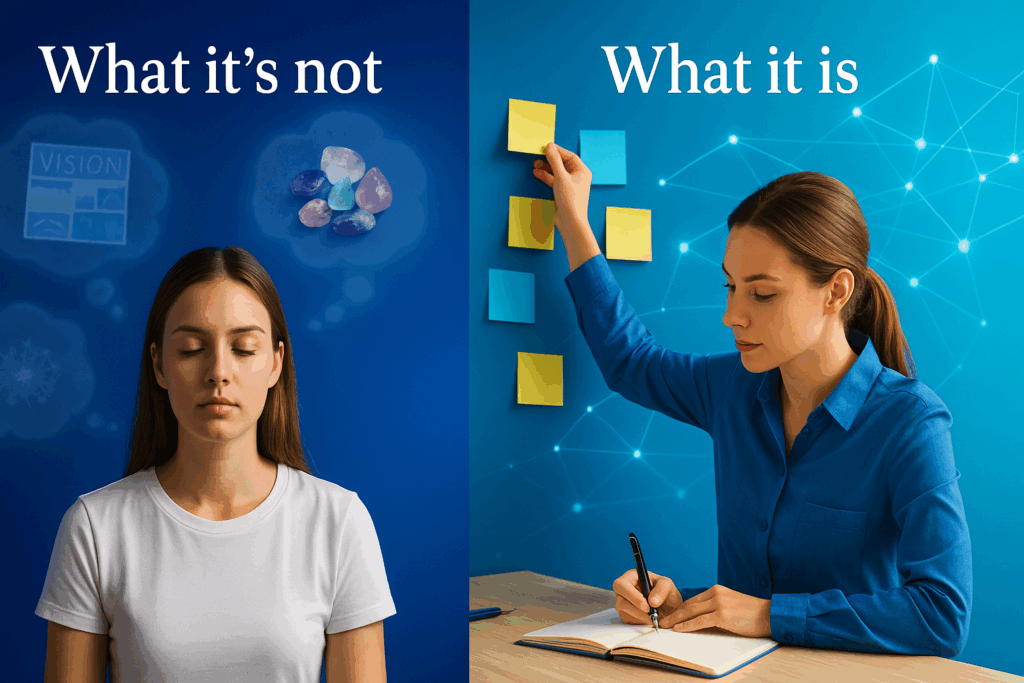
What Manifestation Is Not
Manifestation is not passive positive thinking or affirmation repetition. Neuroscience identifies manifestation as a deliberate, action-driven process requiring specificity, obstacle planning, and measurable strategy. The brain operates as a predictive system, processing concrete behavioral inputs, not wishful optimism, to generate outcomes. Manifestation cannot control external events or other people’s actions.
Popular culture, particularly “The Secret,” frames manifestation as a cosmic law of attraction where the universe responds to vibration and belief. This misses the actual mechanism entirely. The universe doesn’t respond to your thoughts: your brain does. Your brain then generates behaviors and attention patterns that move you toward your imagined future. Neuroscience shows that manifestation is about training your nervous system, not commanding the cosmos. The shift from cosmic thinking to biological thinking is revolutionary because it puts the power squarely in your hands rather than in some nebulous universal force.
The neuroscience of manifestation shows that vague desires don’t work. Abstract “success” barely activates your sensory cortex. You need specificity. Specific imagery, the smell of your workspace, the exact feel of accomplishment in your body, the sound of voices congratulating you, and the texture of the chair in your new office engage your entire sensory system. This specificity is what makes the neuroscience of manifestation powerful. Vagueness keeps manifestation trapped in fantasy. Specificity makes it neurology. When you engage multiple senses with precise detail, you’re not daydreaming; you’re creating a neural blueprint your brain recognizes as a legitimate target. Without this specificity, manifestation remains wishful thinking, and wishful thinking never changed anyone’s trajectory.
Similarly, manifestation isn’t a substitute for skill development. If you want to become a professional tennis player, the neuroscience of manifestation can’t replace thousands of hours of practice. What it does is prepare your nervous system to use those hours more effectively. A tennis player who practices the neuroscience of manifestation while training will develop muscle memory faster, recover from setbacks more quickly, and perform better under pressure than one who simply practices mechanically.
The practice still matters. The hours still matter. But the neuroscience of manifestation multiplies their impact by ensuring your nervous system is calibrated to execute what your body has been trained to do. Understanding this distinction separates those who see real results from those who become disillusioned with manifestation as a concept.
Debunking “The Secret”
“The Secret” misrepresented manifestation by framing it as cosmic attraction, claiming the universe responds to personal vibrations and beliefs. Neuroscience refutes this mechanism entirely. No peer-reviewed evidence supports vibrational attraction, and studies show positive thinking alone produces zero measurable behavioral or neurological change without corresponding goal-directed action and cognitive restructuring strategies.
Neuroscience reveals a different story. Your brain does respond to what you repeatedly imagine. But the mechanism isn’t mystical attraction: it’s neurological. The neuroscience of manifestation shows that your brain updates predictive models, your reticular activating system filters for opportunities, your motor systems prepare for action, and your dopaminergic system drives behavior.
“The Secret” also missed action. The book implied you could think your way to results without taking different actions. The neuroscience of manifestation works because it changes which actions you take. When your reticular activating system is tuned to notice opportunities, you spot them. When your motor systems are primed, you perform more fluidly. Results come from this interaction between updated internal models and behavior grounded in the neuroscience of manifestation.
Another flaw: “The Secret” focused only on visualization. But the neuroscience of manifestation involves all five senses. When you engage only vision, you activate only part of your sensory cortex. The multisensory approach, grounded in the neuroscience of manifestation, is profoundly more effective.
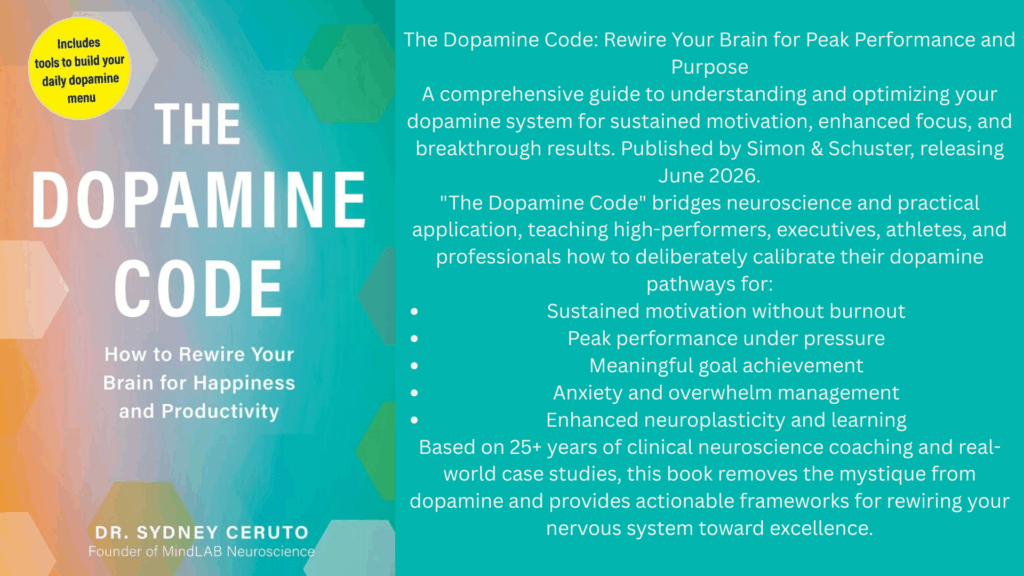
My Personal Manifestation Journey: Writing “The Dopamine Code”
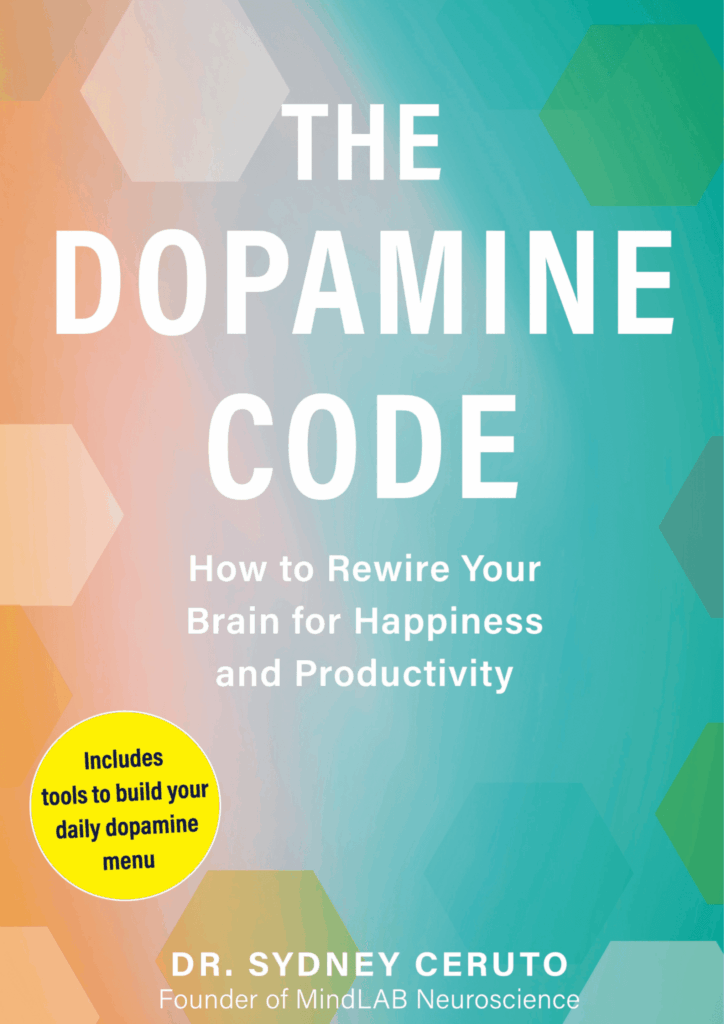
Dr. Sydney Ceruto spent years guiding clients through neuroplasticity-based interventions before a recurring idea crystallized into a concrete goal: writing The Dopamine Code, a comprehensive book on dopamine optimization designed to reach millions of readers through major publishers and mainstream bookstore distribution, transforming research insights into widely accessible neuroscience education.
My desire wasn’t vague. I deliberately practiced the neuroscience of manifestation. I engaged all my senses in imagining it happening.
I imagined receiving a publisher’s call. Specific. I heard the exact tone of voice. I felt tension in my shoulders. I pictured the particular room. I felt emotion in my chest, validation, and excitement. I repeated these thoughts, not as daydreaming but as a deliberate sensory practice grounded in the neuroscience of manifestation.
I imagined sitting in a Madrid café, working on my manuscript. I could smell the fresh coffee’s rich aroma. I felt the cup’s warmth. I heard ambient sounds, cups clinking, and Spanish conversations. I saw light illuminating my screen. I felt the texture of the wooden table. The result was deliberate activation of the sensory cortex through the neuroscience of manifestation.
I imagined my fingers on the keyboard, the specific feel of my hands moving across the keys, typing ‘dopamine research.’ I felt keys clicking, resistance, and rhythm. I felt the flow state while writing something essential. I felt my back against the chair, my feet on the floor, and my entire body engaged in this practice.
I engaged emotionally, too. I imagined completion, capturing dopamine science in an accessible language. I imagined holding the actual book, its weight, texture, and page smell.
This wasn’t a one-time practice. I returned repeatedly using the neuroscience of manifestation methodology. I practiced deliberately, not obsessively. I engaged these senses while taking concrete actions: developing ideas, building a platform, networking in publishing, and studying how to write for broad audiences.
Then it happened. A publisher reached out. Simon & Schuster contract followed. “The Dopamine Code” was published in June 2026. The specificity of sensory practice informed by the neuroscience of manifestation, combined with concrete actions, created the conditions for reality. In my neuroscience-based practice at MindLAB, the individuals I work with who achieve the most dramatic results are those who engage all five senses in their manifestation practice, not just visual imagery.
Did manifestation cause the publisher to reach out? No. They reached out because I’d built expertise and a platform while actively working in this space. But did the manifestation practice influence my decisions, sharpen my focus, maintain my motivation during proposal development, and prime me to recognize opportunity? Absolutely. The neuroscience of manifestation changed my behavior, and my behavior created the result.

How Professional Athletes Use Sensory Manifestation
Professional athletes operate where mental performance equals physical skill. A tennis player with perfect technique collapses under pressure if their nervous system activates wrong patterns. A basketball player practicing thousands of shots misses when the focus fragments in the final moments. A golfer with flawless mechanics performs poorly without nervous system calibration.
Sensory-based manifestation helps athletes at every level, particularly during transitions to higher competition. When athletes move from junior to professional ranks, opponents are equally skilled. Pressure intensifies. Mental demands accelerate. Many struggle not because technique deteriorates but because nervous systems haven’t been calibrated for new pressure. Manifestation techniques transform this mental liability into an asset by deliberately preparing the nervous system for high-pressure performance before it’s demanded.
I work with tennis, golf, basketball, swimming, and soccer athletes using the same principle: help them use sensory systems to create vivid high-performance internal models. The neuroscience of manifestation enables them to access rehearsed patterns under pressure.
First, I help athletes identify specific high-performance states they need. For tennis players: powerful, confident forehands during tight matches. For golfers: calm focus for crucial putts. For basketball: flow state on hot-shooting nights. We get specific about what the state feels like physically.
Second, we engage all senses. We go beyond mere visualization. We engage auditory systems, listening to the ball off the racket, the crowd, and the sport’s rhythm. Proprioceptive systems are used to sense precise body positioning, balance, and muscle engagement. The vestibular system is responsible for detecting the direction of movement. When applicable, the olfactory systems also play a role. The emotional systems are accountable for experiencing feelings of confidence, calmness, and focus.
Third, we practice sensory engagement repeatedly. We integrate it into training routines. Athletes practice strokes, then immediately experience the sensation of performing perfectly under pressure. They’re building neural pathways connecting physical skill with a high-performance mental state.
Fourth, we develop anchors or triggers. Physical anchors: specific breathing or movement. Mental anchors: focus word or image. Under pressure, when nervous systems activate anxiety, anchors help athletes access rehearsed high-performance states rather than collapsing into fear.
What is remarkable is how quickly this method works when the neuroscience of manifestation is applied correctly. Athletes see performance shifts within weeks because we’re not teaching new physical skills. We’re recalibrating nervous systems to access patterns already present.

Case Study: Carlos, Professional Tennis
Carlos was a tennis prodigy. Throughout his junior career, he excelled exponentially. He was renowned for his powerful, fierce forehand. He was tall and athletic, and his work ethic set him apart from other serious competitors. He trained relentlessly and ranked highly in junior tennis. Everything pointed to a prosperous professional career.
Then he turned pro. Everything fell apart. His technique did not falter; his forehand remained powerful, and his serve was strong. But confidence plummeted. In junior competition, he’d been the best. In professional competition, facing equally skilled opponents triggered psychological crises. Every professional court activated anxiety rather than confidence. He doubted himself. He’d break under pressure. He’d play conservatively when aggressive. He’d lose matches he had the skill to win.
His manager reached out. They wanted understanding and help for Carlos to transition psychologically to professional tennis.
When Carlos first came, he described professional matches as feeling “not like himself.” Body stiff. Mind scattered. He couldn’t access the practice court with confidence. He’d play conservatively, hitting defensively instead of attacking. Against professional opponents, this passive approach fails. He’d lose sets and matches he had the skill to win.
I explained what was happening from a neuroscience perspective. His junior career created strong neural patterns of dominance and superiority. In junior tennis, he was usually the best player on the court. His nervous system learned to operate from a foundation of confidence. When turning pro, he suddenly faced opponents of equal or superior skill. His brain’s predictive system recalibrated. Now his nervous system defaulted to caution and self-doubt. Not a character flaw or permanent limitation, the nervous system is adapting to new information, but in performance-undermining ways.
I suggested sensory-based manifestation to recalibrate his nervous system for professional competition. We’d create vivid, high-performance, professional internal tennis models. We’d engage all senses. We’d rehearse repeatedly. Then, under pressure in matches, he’d access neural templates.
We started identifying specific high-performance states Carlos needed. For forehands, we focused on creating vivid models of potent, confident strokes, not just the physical mechanics he already had, but the whole sensory and emotional stroke experience under pressure.
We spent court time together. Crucial. We didn’t just discuss the concepts; we practiced them using the neuroscience of manifestation framework. I had him hit forehands while deliberately engaging sensory systems. I asked him to feel specific leg and core tension powering shots. The timing of weight transfer is crucial. Grip pressure. The point of contact is vital. The precise sound of the racquetball being struck is crucial. Follow-through relaxation.
Then I’d have him close his eyes and recreate the sensory experience. He’d feel in the ready position. Breath coming in. He would launch an explosive ground push. Core rotation. Arm extending. Contact point. Perfect sound. Follow-through. Then hit actual balls, integrating sensory practice into physical practice.
We did such exercises repeatedly. Over days and weeks, we built strong neural connections between physical skill and high-performance sensory state. When Carlos hit powerful forehands, his entire nervous system engaged, recognizing success.
The real test was pressure. We specifically worked on serves, since serving puts the most pressure. We practiced the same sensory engagement: baseline body feeling, breath, perfect serve visualization, leg-driving feeling, arm-extending sense, arc top contact point, follow-through satisfaction, and ace sound.
I attended several matches, observing nervous system anxiety activation. Such behavior typically occurs at key moments, such as when the player is down a break, tied in the third set, or serving to hold. At these moments, I’d see him tighten. Stiff movements. Decreased aggression. Conservative patterns are activating.
We worked on anchors and on accessing high-performance states during these moments. Specific breathing pattern (nose breath in, controlled mouth exhale) he’d use between points, recalibrating the nervous system. Specific focus word: “flow.” When the nervous system activated anxiety, he’d take an anchor breath and say the word, signaling the nervous system to access rehearsed patterns rather than anxiety patterns.
After three months of intensive work, changes were significant. Carlos’s professional match confidence improved substantially. His forehand, once a liability due to his fear of using it aggressively, became an asset again. He began attacking more. Win percentage improved. More importantly, subjective experience changed. He reported feeling more like himself on professional courts. He wasn’t facing different opponents; his nervous system was just calibrated differently.
Within six months, Carlos moved up the rankings, consistently competitive at a higher level. He was not suddenly ranked in the top 50; he was still a developing professional athlete building his career. But he’d overcome mental barriers holding him back. The manifestation work, combined with continued technical training, recalibrated the nervous system for professional competition.
Key lesson: sensory-based manifestation isn’t just for visualization enthusiasts or self-help believers. It’s a practical tool for athletes facing real performance challenges. When technical skill surpasses the nervous system’s performance capacity under pressure, manifestation fills the gap.
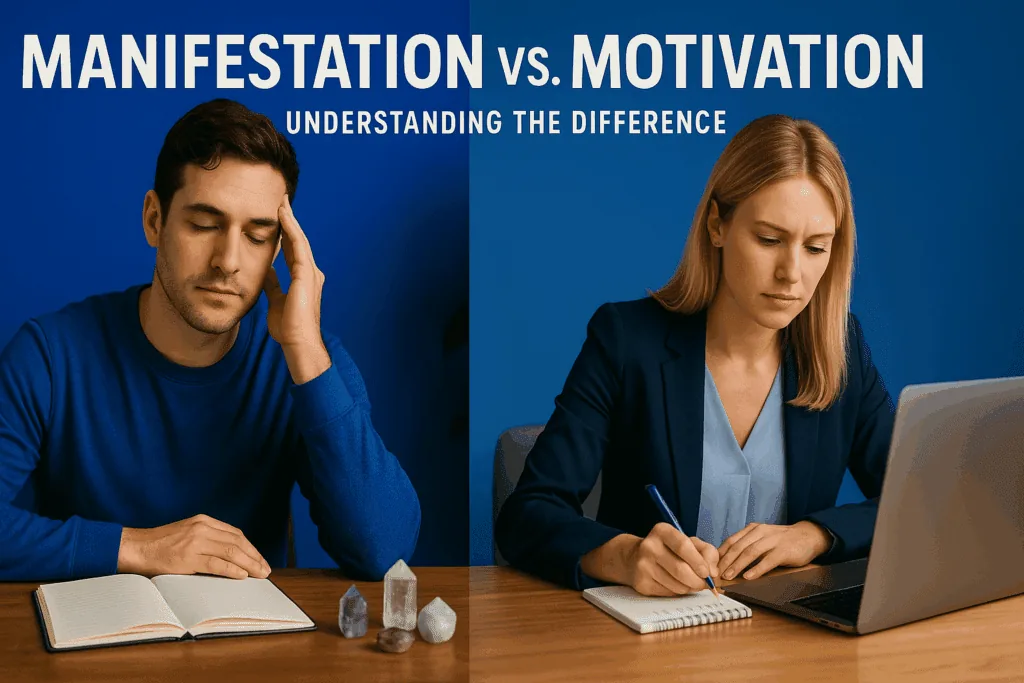
Manifestation vs. Motivation: Understanding the Difference
Many confuse manifestation with motivation, but they’re fundamentally different brain processes. Motivation is action-driven toward goals. It’s powered by dopamine, reward circuits, prefrontal cortex decisions about effort versus payoff, and the anterior cingulate, which evaluates worth. Motivation asks, “Should I do this? Is this worth the effort?”
Manifestation is neural preparation, which makes motivated action more effective. When motivated, your brain decides particular goals are valuable. Dopamine signals move you toward them. The prefrontal cortex creates plans and strategies. Motor systems prepare actions. But motivation alone doesn’t update the brain’s predictive models or train the reticular activating system to filter specific opportunities. This is where manifestation becomes critical.
Manifestation operates differently. Through sensory-rich imagination informed by the neuroscience of manifestation, manifestation updates the brain’s internal models of how success feels and looks. It primes sensory cortices, motor planning areas, and attention systems. When practicing this approach, you’re not deciding something’s worth pursuing; you’re training your nervous system to recognize and respond to pathways leading toward outcomes. You’re creating neural templates that make motivated actions more precise, efficient, and successful.
Consider the practice difference. If motivated to become a better public speaker, you’d seek out speaking opportunities, practice delivery, and push yourself to take the stage despite nervousness. That’s motivation driving behavior. Adding a manifestation grounded in the neuroscience of manifestation, you’d engage all your senses, imagining yourself speaking successfully. Feel relaxed and confident in your body on stage. Hear the voice projecting clearly. See engaged, responsive audiences. Feel message delivery satisfaction. This sensory practice doesn’t replace actual speaking; it enhances it by preparing the nervous system for experiences you’re pursuing.
Neuroscience reveals that motivation and manifestation work synergistically. Motivation provides energy and drive. Manifestation provides a neural roadmap. When Carlos struggled with professional tennis, he wasn’t lacking motivation: he desperately wanted success. What he lacked was neural calibration from manifestation practice. Once we added sensory-based manifestation to existing motivation, performance transformed. His motivation hadn’t changed: his nervous system’s preparation had changed.
Using Manifestation in Your Professional Career
Manifestation techniques reshape professional outcomes by recalibrating the brain’s reticular activating system, which filters the roughly 11 million bits of sensory data the nervous system processes every second. Professionals who apply structured visualization and intention-setting report spotting career opportunities more consistently, because neural priming directs attention toward goal-relevant stimuli others unconsciously ignore.
I’ve worked with executives, entrepreneurs, and high-performing professionals across industries. The pattern is consistent: those who deliberately practice the neuroscience of manifestation accelerate advancement significantly. This is achieved not through wishful thinking, but through deliberate nervous system preparation for the roles they aspire to inhabit.
Consider a manager aspiring to director-level leadership. Technical competence gets you to management. But director-level performance requires different neural calibration. You must navigate board-level conversations. You must make decisions with incomplete information under pressure. You must inspire teams through uncertainty. If you haven’t adjusted your nervous system to meet these demands, you risk collapsing under pressure or failing to seize opportunities when they arise.
The neuroscience of manifestation allows you to prepare your nervous system before you get promoted. Imagine specific high-stakes scenarios: presenting to executive leadership, making a critical decision that affects hundreds of people, and navigating political dynamics while staying grounded in your values. Engage all your senses. Feel the conference room temperature, hear the tone of voices, sense your body’s calm confidence, and feel the satisfaction of a respected contribution. This isn’t visualization fantasy; it’s deliberate motor planning and sensory cortex activation, preparing your nervous system for performance you haven’t yet executed.
I worked with a sales director who wanted to transition into the VP of sales role. What I observe in every executive I support is that the gap between their current performance and their next level is rarely about skill: it is about nervous system calibration. She was competent, but her nervous system was calibrated for tactical execution rather than strategic vision. We practiced the neuroscience of manifestation specifically around board presentations, strategic planning sessions, and high-stakes negotiations with enterprise clients. Within six months of consistent practice, she was promoted. Her numbers didn’t suddenly change. But her presence did. Her decision-making sharpened. Her confidence projected differently. Her nervous system was finally calibrated for the role.
Entrepreneurs experience these conditions acutely. You start your business operating in survival mode, tactical, reactive, and anxious about cash flow. But at scale, you need to operate on a vision, with delegation and strategic patience. Your nervous system must shift. The neuroscience of manifestation accelerates this. Repeatedly imagine yourself leading a scaled operation: managing teams, making six-figure decisions calmly, speaking as an industry authority, and building something meaningful. Your reticular activating system recalibrates. You start noticing partnership opportunities and talent you previously missed. Your motor systems prepare for authority and vision you haven’t yet inhabited.
The critical mistake professionals make is thinking that hard work alone drives advancement. It doesn’t. Hard work combined with nervous system calibration, informed by the neuroscience of manifestation, creates breakthrough results. You’re not replacing effort. You’re multiplying its effectiveness by preparing your nervous system to recognize and execute at the level you’re pursuing.
Start identifying what your next level demands. What does success feel like in your body? What conversations do you need to navigate? What decisions do you need to make? Then engage deliberately and repeatedly. Your nervous system will begin filtering for opportunities aligned with that vision. Your performance will sharpen because your body and nervous system are prepared.
The question for your career isn’t whether you work diligently enough. It’s whether you’ve deliberately calibrated your nervous system for the role you’re pursuing. That’s what the neuroscience of manifestation delivers.

Common Manifestation Mistakes That Hold You Back
Manifestation fails most often because people misunderstand how the nervous system encodes behavioral change, not because they lack belief or positive thinking. Neural rewiring requires specific conditions (including repetition, emotional salience, and timing) that most approaches ignore. Neuroscientific research identifies at least three common errors that directly block the brain changes driving goal-directed behavior.
The first common mistake is vagueness. You practice manifestation by imagining specific sensory details related to abstract concepts like “success,” “happiness,” or “wealth.” The sensory cortex doesn’t activate strongly in response to abstract ideas. It activates specific sensory details. When imagining “success,” the brain does not have a clear neural pattern for encoding it. When imagining a specific book cover texture, an exact applause sound, or a particular feeling of confidence in the chest during negotiation, the entire sensory system engages powerfully. Specificity makes manifestation neurologically effective. Without it, you’re daydreaming, not training your nervous system.
The second mistake is passive visualization. We view manifestation as mental movies that are watched rather than as embodied experiences. They see themselves achieving things from a third-person perspective, as if watching their success like a film. Thinking activates the visual cortex but neglects the powerful embodied practice of first-person experience. Imagining from a first-person perspective, feeling sensations, hearing sounds, and seeing through your own eyes, activates far more sensory and motor systems. The brain regards first-person imagination closer to experience, creating stronger neural patterns.
The third mistake is inconsistency. Manifestation works through repetition. Neural pathways strengthen through repeated activation. Some people practice once or twice, do not see immediate results, and then abandon the process. But the reticular activating system needs repeated input to recalibrate. Motor planning systems need repeated practice encoding patterns. Sensory cortices need multiple activations to strengthen neural pathways. Manifestation is not a one-time event; it is an ongoing practice. Most athletes practice sensory manifestation informed by the neuroscience of manifestation three to five times weekly for weeks before seeing measurable performance shifts.
The fourth mistake is neglecting action. Manifestation primes nervous systems but doesn’t replace behavior. Some people focus too much on internal practice without taking external action. Many people vividly imagine success but do not apply for opportunities, practice skills, or position themselves in situations where success can occur. Manifestation alters how actions are perceived and enhances performance, but actual actions are still necessary. The reticular activating system filters opportunities, but you must act on them when you notice them. Moreover, systems require optimal performance, and you must actively engage in order to achieve this optimal performance.
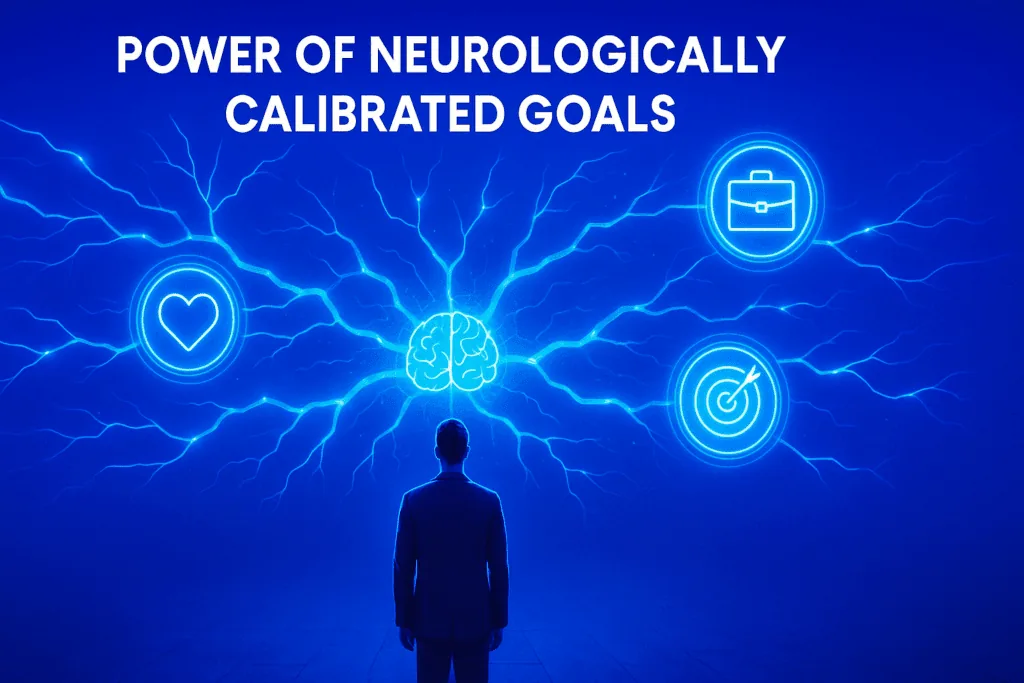
The Power of Neurologically Calibrated Goals
Neurologically calibrated goals harness the brain’s predictive modeling systems to drive measurable behavioral change. Deliberately engaging sensory, emotional, and motor systems during future visualization updates internal brain models, recalibrates the reticular activating system toward goal-relevant opportunities, and primes motor circuits for action. Dopamine release reinforces motivation, making targeted neural engagement a scientifically grounded, not mystical, process.
This explains why manifestation works: it involves building neuroscience-based practice careers, publishing books with major publishers, helping athletes overcome professional mental barriers, and working across various contexts and individuals. We are not defying physics or commanding universes. We’re leveraging how brains are fundamentally wired through applied neuroscience.
Next time, dismissing manifestation as wishful thinking or embracing cosmic law, consider this: it’s applied neuroscience. A deliberate nervous system shapes attention, motivation, and behavior toward vividly imagined outcomes. That’s powerful without mysticism. That’s practical enough for transforming results.
The Choice Is Yours
Every moment you delay is a moment when your nervous system isn’t being recalibrated toward what you want. The neuroscience of manifestation isn’t permission to sit and daydream. It’s a call to action, recognition that your brain has been built for something more potent than most people realize.
For nearly three decades, I’ve watched people achieve extraordinary things. It’s not because they’re exceptional or fortunate. They succeeded because they understood one critical truth: what you vividly imagine repeatedly becomes the template your brain uses to recognize opportunity and execute action. That’s not mysticism. That’s the neuroscience of manifestation working exactly as your nervous system was designed.
My clients have built seven-figure positions at top companies or launched startups. Athletes have overcome mental barriers that plagued them for years. People have published books, launched companies, and healed relationships. These accomplishments have not been achieved through cosmic ordering. These accomplishments have been achieved through deliberate nervous system calibration, utilizing the principles underlying the neuroscience of manifestation.
You don’t need permission. You don’t need to believe in something you don’t understand. You need specificity. Sensory engagement. Repetition. Action. That’s it.
Start today. Choose one outcome. Engage all five senses by vividly, repeatedly, and deliberately imagining your desired outcome and take aligned action. Watch what happens. You, the reticular activating system, will start filtering for opportunities. Your motor systems will be primed for fluid performance. Your dopamine will drive you forward.
The neuroscience of manifestation isn’t new. Your brain has always worked this way. You’ve just been using it unconsciously, manifesting by default rather than by design. It’s time to take control.
This is applied neuroscience. It is practical power. The result is your nervous system finally working for you instead of against you.
The question isn’t whether manifestation is real. What would you like to envision into existence intentionally?
Manifestation is not magic: it is attentional engineering. When you set a clear intention, your reticular activating system changes what you notice. The mechanism is real. The mysticism is unnecessary.
Manifestation draws on the same reward circuitry that drives compulsive engagement elsewhere. For the canonical breakdown of that mechanism, see the neuroscience of variable-reward loops.
Neuroplastic momentum provides the mechanism for turning intention into lasting action, building the neural architecture where the desired behavior becomes the path of least resistance.
Does manifestation actually work?
The mechanism behind manifestation is real and involves RAS priming, motor visualization, and emotional engagement working together to reshape attention and behavior. The popular explanation based on vibrational attraction has no neuroscience support. Effective manifestation combines vivid sensory intention-setting with concrete action, training the reticular activating system to filter for goal-relevant opportunities while priming motor circuits for execution.
What is wrong with “The Secret” approach?
The approach claims thoughts alone produce outcomes, yet no peer-reviewed neuroscience evidence supports vibrational attraction as a mechanism. The primary danger is passivity: believers may avoid concrete action while waiting for the universe to deliver results. When desired outcomes fail to materialize, practitioners often experience self-blame and learned helplessness rather than adjusting strategy. Neuroscience-based manifestation requires deliberate action alongside sensory visualization.
How does visualization work in the brain?
During vivid visualization, the brain activates the same motor cortex, prefrontal planning regions, and cerebellar timing systems at reduced intensity compared with physical execution. This activation strengthens synaptic connections along rehearsed pathways, functioning as literal neural practice. Repeated visualization sessions compound these effects, building motor readiness and perceptual sensitivity that transfer directly to real-world performance situations.
What are neurologically calibrated goals?
Neurologically calibrated goals are specific enough to activate the prefrontal cortex, emotionally engaging enough to generate dopamine release, and broken into proximal sub-goals that provide frequent reward signals. These goals are paired with process visualization rather than outcome-only imagery. This multi-system engagement aligns cognitive planning, emotional drive, and motor readiness, creating a neural architecture where the brain actively filters for and responds to goal-relevant opportunities. This pattern is examined in the Cognitive Architecture pillar.
Can manifestation replace hard work?
No. Visualization primes neural pathways but does not replace the behavioral repetition required to strengthen them. The brain builds durable motor and cognitive patterns only through actual practice and real-world execution. Manifestation functions as preparation, not substitution. Athletes and professionals who combine sensory-rich mental rehearsal with consistent physical training outperform those who rely on either approach alone, because both neural priming and action are necessary for lasting performance gains.
References
- Pascual-Leone, A., et al. (1995). Modulation of muscle responses during motor skill acquisition. J Neurophysiology, 74(3), 1037-1045. https://doi.org/10.1152/jn.1995.74.3.1037
- Dijksterhuis, A., & Aarts, H. (2010). Goals, attention, and consciousness. Annual Review of Psychology, 61, 467-490. https://doi.org/10.1146/annurev.psych.093008.100445
- Oettingen, G., & Reininger, K. M. (2016). The power of prospection: Mental contrasting and behavior change. SPPC, 10(11), 591-604. https://doi.org/10.1111/spc3.12271
From Reading to Rewiring
These questions address the most common concerns about the neuroscience of manifestation and what brain research actually supports. Each answer examines predictive coding, reticular activating system function, and the conditions under which directed mental attention produces measurable changes in perception, motivation, and behavior.
Schedule Your Strategy Call