The Executive Cost of Addiction
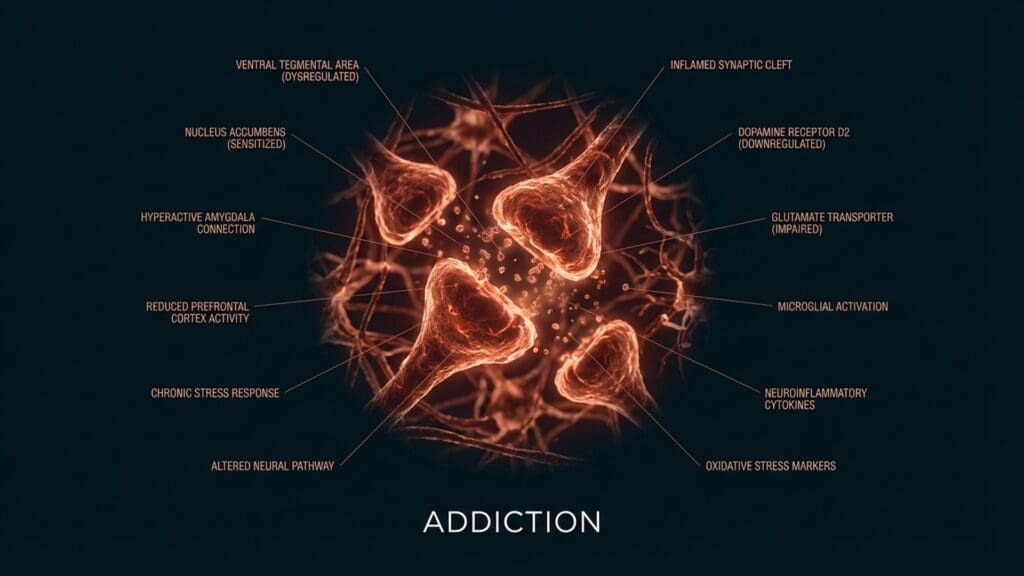
Dr. Sydney Ceruto’s extensive work with elite performers consistently demonstrates that the insidious progression of addiction directly compromises the neurobiological architecture essential for high-level executive function. This is not merely a psychological failing but a profound metabolic and neurological recalibration that redefines an individual’s operational capacity, often unbeknownst to them until significant degradation occurs. The strategic vision, a hallmark of effective leadership, is among the first casualties. Addiction hijacks the brain’s reward pathways, diverting critical neural resources away from the prefrontal cortex, the seat of complex decision-making, foresight, and impulse control. This fundamental biological shift means an executive’s capacity for long-term planning, risk assessment, and nuanced strategic thought becomes systematically eroded, prioritizing immediate gratification over sustainable growth or proactive problem-solving. This metabolic rerouting manifests as impaired judgment and reduced cognitive flexibility. The brain, now operating under a chronic stress response and an altered neurochemical landscape, struggles to adapt to novel challenges or process complex data. Evolutionary mechanisms designed for survival, typically focused on resource acquisition and threat avoidance, become pathologically distorted, fixated on the addictive substance or behavior, viewing it as a primary survival imperative at the expense of genuine environmental demands. Consequently, leadership integrity and team cohesion suffer. The executive’s ability to maintain consistent performance, foster trust, and inspire confidence diminishes as erratic behavior, reduced empathy, and compromised accountability become more prevalent. The energetic cost of maintaining the addictive cycle drains the system, leaving insufficient reserves for the sustained cognitive load required for peak performance and leadership. Ultimately, addiction transforms a high-capacity executive into a biologically compromised leader. It is a systemic breakdown where the very neural pathways designed for optimal function and adaptability are rewired, creating a powerful, self-perpetuating loop. This re-prioritization of neural resources fundamentally undermines an individual’s ability to lead, strategize, and execute with precision, reflecting a deep-seated biological imperative gone awry.
Evolutionary Origins: Why Addiction Exists
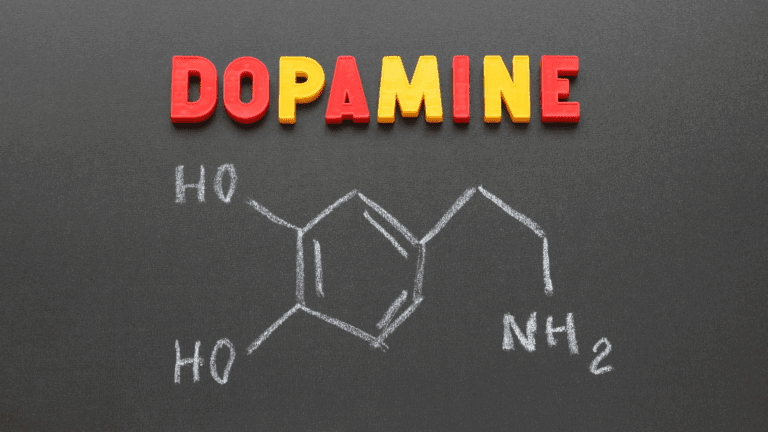
The neurobiological substrate for what we identify as addiction is not a design flaw but rather a highly conserved evolutionary mechanism, fundamentally optimized for survival. Our ancestors navigated environments of scarcity, where the consistent pursuit of vital resources—food, water, shelter, and mates—was paramount. The brain’s reward system, primarily driven by dopaminergic pathways, evolved to tag these life-sustaining behaviors with intrinsic value, thereby reinforcing their recurrence. When an ancestral human successfully acquired sustenance or secured a reproductive opportunity, a surge of dopamine signaled a critical win, imprinting that behavior as beneficial. This sophisticated learning apparatus ensured that behaviors crucial for individual survival and species propagation were prioritized and efficiently repeated. It was a finely tuned system for adaptive learning, guiding organisms towards beneficial stimuli and away from detrimental ones, ensuring behavioral plasticity and environmental adaptation. However, this ancient neurobiological architecture, forged in an epoch of natural scarcity and intermittent reinforcement, now confronts a modern environment characterized by unprecedented abundance and engineered potency. Our reward pathways, optimized for the slow, effortful acquisition of natural rewards, are overwhelmed by readily available supernormal stimuli. Hyper-palatable foods, potent psychoactive substances, and instant digital gratification are all recent evolutionary novelties. These modern stimuli hijack the very circuits designed for survival. The system, once calibrated for a signal-to-noise ratio inherent in natural rewards, becomes dysregulated by these artificially concentrated, high-frequency dopamine surges. It struggles to differentiate between adaptive needs and pathological urges, as the reinforcing power of these novel stimuli far exceeds what our primitive inhibitory mechanisms were designed to counteract. The result is a shift from goal-directed pursuit of adaptive rewards to compulsive, often self-destructive engagement with stimuli that offer potent, yet ultimately unfulfilling, reinforcement.
Rewiring Addiction with Real-Time Neuroplasticity™
The insidious grip of addiction is fundamentally a neurological hijacking, a maladaptive response where primitive survival circuits supersede advanced executive control. My methodology, Real-Time Neuroplasticity™, directly confronts this core dysfunction not through mere symptom suppression, but via targeted neural re-regulation. We are not simply managing cravings; we are systematically dismantling the pathological pathways that underpin the addictive response. The evolutionary imperative for reward and survival drives, when misdirected, establishes robust, self-perpetuating neural loops. These loops prioritize immediate gratification, overriding the prefrontal cortex’s capacity for long-term planning, impulse control, and consequence assessment. Our protocol focuses on identifying and then actively weakening these hyper-activated, pathological reward circuits while simultaneously strengthening the under-engaged networks responsible for inhibitory control, rational decision-making, and intrinsic motivation. Real-Time Neuroplasticity™ employs advanced neurofeedback and neuromodulation techniques to provide immediate, actionable data on an individual’s brain activity. This allows for precise, moment-to-moment training of specific neural firing patterns. Through this proprietary process, individuals learn to consciously—and then unconsciously—modulate their own brain states, effectively rerouting the neural architecture that sustains addictive behaviors. It is an active, participant-driven process of self-optimization at the cellular level. This rigorous neural retraining shifts the brain from a state of reactive impulsivity to one of proactive self-governance. We establish new, resilient synaptic connections that support sustained cognitive flexibility and emotional regulation, fundamentally altering the brain’s baseline response to triggers and stressors. The goal is to cultivate a robust neural landscape where healthy choice and intrinsic drive supersede the compulsive pursuit of the addictive substance or behavior. This re-establishes the individual’s inherent capacity for self-direction and peak performance, free from the evolutionary trap of hijacked reward systems.
About Dr. Sydney Ceruto
Dr. Sydney Ceruto stands as a preeminent figure in applied neuroscience and elite human performance. As the visionary founder of MindLAB Neuroscience, she has irrevocably shifted the paradigm of cognitive optimization. Dr. Ceruto is widely recognized as the pioneer of Real-Time Neuroplasticity™, a groundbreaking methodology that precisely recalibrates neural pathways for peak function and adaptive advantage. Her seminal work is encapsulated in her bestselling book, “The Dopamine Code,” published by Simon & Schuster, which dissects the neurochemical underpinnings of motivation and drive. Academically, Dr. Ceruto holds dual PhDs in Behavioral and Cognitive Neuroscience from New York University, complemented by dual Master’s degrees in Clinical Psychology and Business Psychology from Yale University. Her formidable expertise bridges the chasm between cutting-edge research and actionable performance strategies.
Selected Research on Addiction
- Volkow, N. D., Koob, G. F., & McLellan, A. T. (2016). Neurobiologic Advances from the Brain Disease Model of Addiction. New England Journal of Medicine, 374(4), 363-371.
- Everitt, B. J., & Robbins, T. W. (2005). Neural systems of drug addiction. Nature Reviews Neuroscience, 6(5), 367-378.
- Nestler, E. J. (2005). Is there a common molecular pathway for addiction? Nature Neuroscience, 8(11), 1445-1449.
- Robbins, T. W., & Everitt, B. J. (2007). Addiction as a neuropsychiatric disorder of learning and memory. Neuron, 56(6), 793-806.
- Kalivas, P. W., & O’Brien, C. (2008). Drug addiction as a pathology of synaptic plasticity. Neuron, 56(6), 807-817.
- Volkow, N. D., Wang, G. J., Fowler, J. S., Tomasi, D., & Telang, F. (2011). Addiction: decreased reward sensitivity and increased expectation sensitivity. Biological Psychiatry, 69(1), 147-152.