The same tools you use to achieve personal restoration can be used to upgrade yourself. Here’s why the learning trajectory...
Read article : From Addressing Past Challenges to Maximizing Potential: The Trajectory of Self-OptimizationGrit
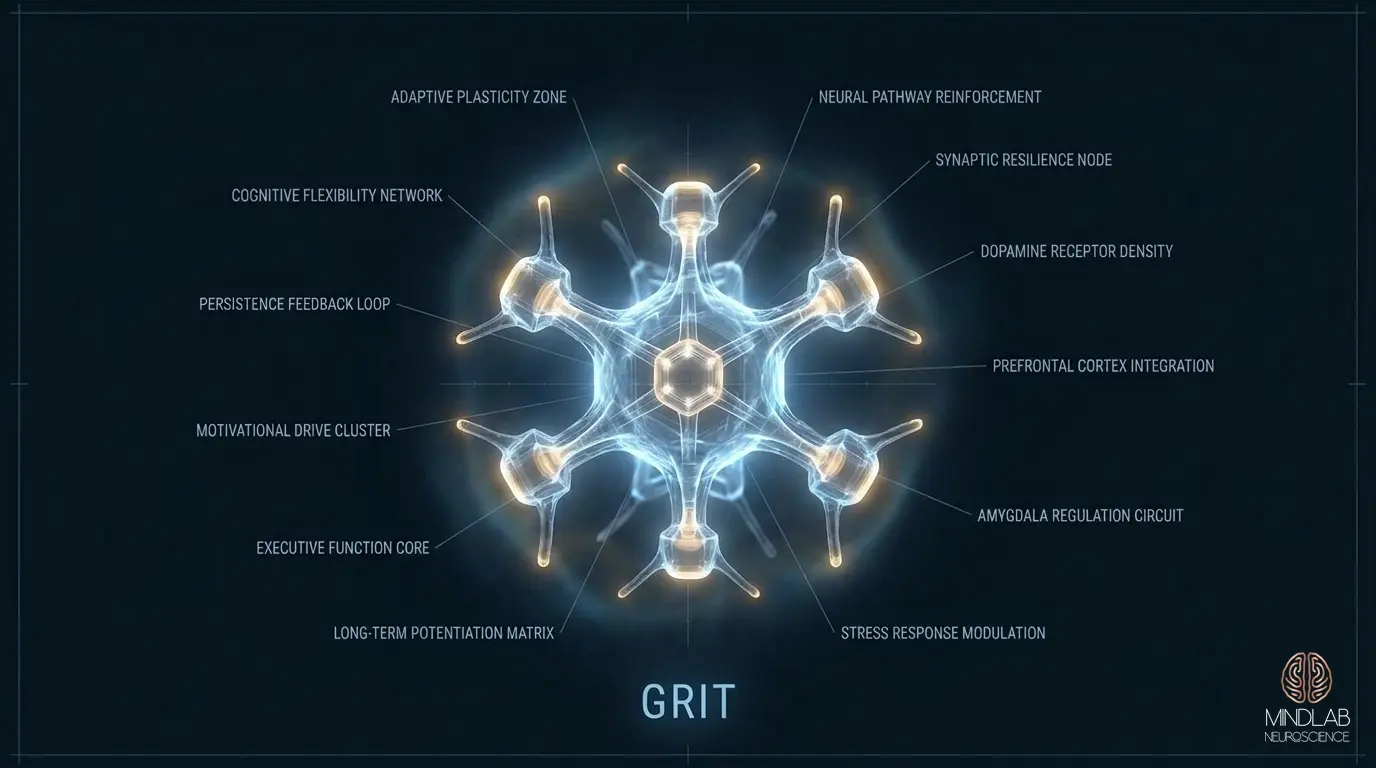
The neural intersection of passion and perseverance. We explore the role of the Anterior Midcingulate Cortex (aMCC) in voluntary suffering and the dopamine schedules required to maintain effort without immediate reward.
17 articlesThe Willpower Hub
Grit is often treated as a personality trait, but neuroscience locates it in a specific brain structure: the Anterior Midcingulate Cortex (aMCC). This region acts as a hub connecting the brain’s emotional centers (which say “this is hard”) with the motor cortex (which says “keep moving”). Recent studies indicate that the aMCC physically enlarges in people who consistently overcome resistance, while it atrophies in those who habitually avoid difficulty. It is effectively the neural seat of the “will to live.”
The Quitting Interface
At a chemical level, “giving up” is a mathematical calculation. The brain constantly monitors the ratio of Norepinephrine (which tracks effort and friction) to Dopamine (which tracks perceived progress).
-
The Tipping Point: When norepinephrine levels rise too high without a corresponding dopamine “win,” the brain engages the “Galanin” system, which inhibits motor output. This is the physical sensation of “I can’t go on.”
-
Grit as Regulation: High-grit individuals have a superior ability to self-regulate this ratio, either by buffering the norepinephrine (reframing pain) or manufacturing internal dopamine spikes (celebrating small wins).
Structural Hypertrophy
You can build grit just like a muscle, but the protocol is specific: you must engage in behavior that you do not want to do.
-
The “Suck” Factor: If you enjoy the hard work (e.g., a runner who loves running), it does not stimulate the aMCC. The growth signal is triggered only when there is high internal resistance and you override it.
-
Micro-Sufferings: Adding small, friction-heavy tasks to your day—like a cold shower or finishing a workout when you are tired—keeps the aMCC plastic and primed, making it easier to deploy willpower during high-stakes career or life challenges.

Latest Articles
Before reading my suggestions below, please understand that anything you’re feeling right now is completely normal. We are all facing the...
Read article : Optimizing Emotional Resilience: 5 Strategies for Mental WellnessEmotional resilience is not a fixed trait. It is trainable neural architecture, and Real-Time Neuroplasticity rewires the stress-response circuits that...
Read article : Mastering Emotional Resilience with Neuroscience-Based CoachingIn a world that often feels uncertain and challenging, courage is the beacon that guides us through the darkness. This...
Read article : The Neuroscience of Courage: How Your Brain Processes Bravery and Overcomes FearOvercoming obstacles in leadership requires resilience, adaptability, and a strong mindset. This blog explores neuroscience-backed strategies to help leaders navigate...
Read article : Overcoming Obstacles in Leadership: Resilience; Adaptability; and GrowthUnlock the neuroscience of mental toughness and discover how your brain builds true resilience, grit, and adaptability. Explore the latest...
Read article : Neuroscience of Mental Toughness: How Your Brain Builds Unbreakable ResilienceFear and anxiety often feel impossible to overcome—but what if the secret to conquering them lies in doing exactly what...
Read article : The Absurd Art of Outsmarting Your Own Fear with Paradoxical Intention TechniquesSelf-control and self-discipline are essential to achieving our highest goals. Explore neuroscience strategies to strengthen these skills and live a...
Read article : Self-Control: The Neural Architecture of DisciplinePursuing your dream activates the same neural circuits as physical pain. The neuroscience behind why ambition hurts and how resilience...
Read article : Pursuing Your Dream: The Neuroscience of Ambition, Setbacks, and ResiliencePsychological resilience is a trainable neural skill, not a fixed trait. A neuroscientist explains the brain architecture that sets how...
Read article : Psychological Resilience: The Neural Architecture of Lasting StrengthLeadership resilience is the brain's trained capacity to stay regulated under pressure, not a fixed trait. The neuroscience, and the...
Read article : Leadership Resilience: The Neuroscience of Staying Steady Under PressureEmbarking on the journey of self-discovery is akin to unlocking the treasure chest of your own potential. Within you lies...
Read article : Unleash Your Self-Discovery: Uncover Your True Calling With These 5 Steps