
Loneliness and inflammation run on the same switch: Cole's CTRA rewires immune cells to flood the body with IL-6 and...
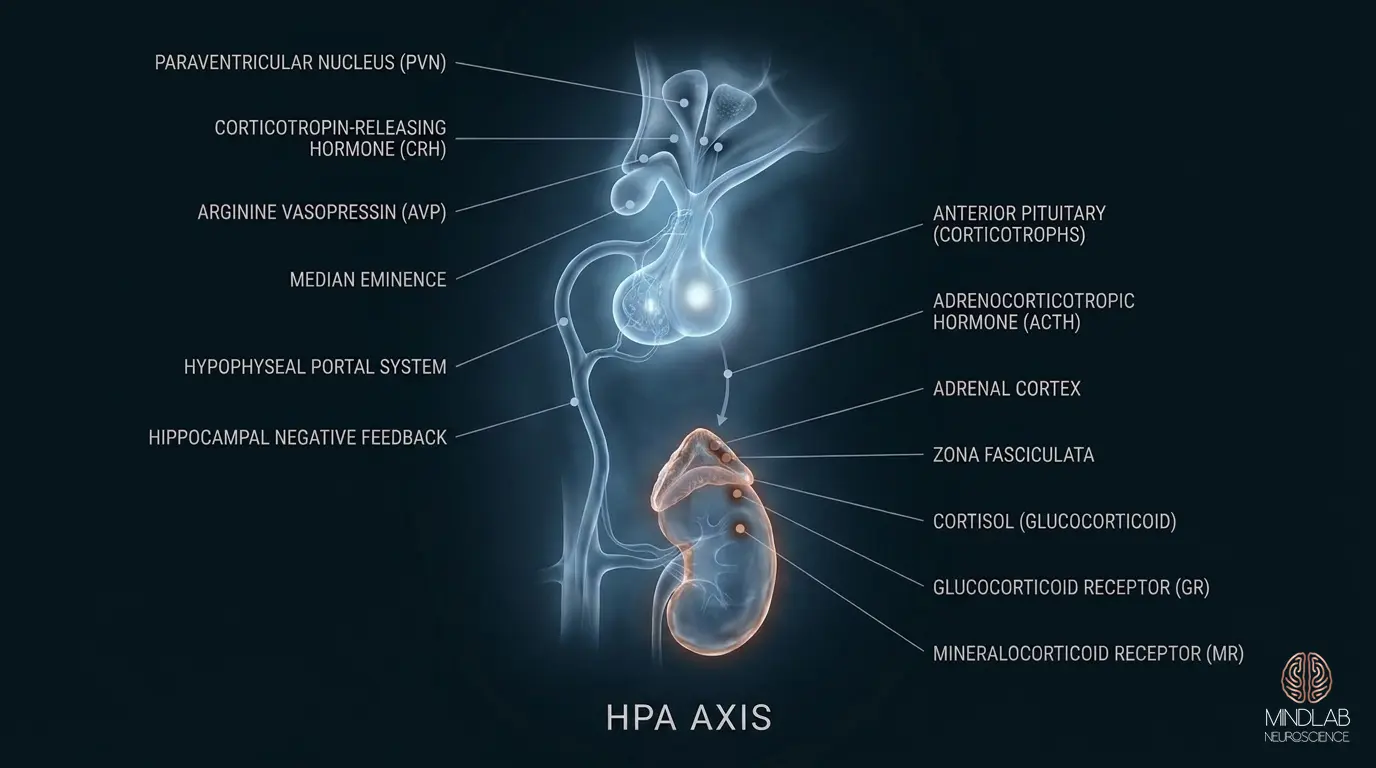
Read article : Loneliness and Inflammation | MindLAB NeuroscienceHPA Axis
11 articlesLatest Articles
Waking at 3am is the cortisol-melatonin crossover firing early — HPA hyperactivation drives a pre-dawn cortisol spike that fragments REM...
Read article : Why Do I Wake Up at 3am? | Dr. Sydney Ceruto — MindLABCan't sleep after a breakup? Your HPA axis flipped the cortisol rhythm and your locus coeruleus runs nocturnal threat-scanning at...
Read article : Can’t Sleep After Breakup | Dr. Sydney Ceruto — MindLABEpigenetic inheritance of family trauma is real — DNA methylation on NR3C1 and FKBP5 passes stress biology across generations, and...
Read article : Epigenetic Inheritance of Family Trauma | MindLABCortisol co-regulation in families explains why your nervous system still syncs with your parents — HPA axis, vagus nerve, and...
Read article : Cortisol Co-Regulation in Families | MindLAB NeuroscienceAnxious, avoidant, and disorganized brains grieve on different circuits — attachment style breakup recovery runs distinct timelines and risks.
Read article : Attachment Style Breakup Recovery | MindLABGoing no-contact triggers attachment-circuitry withdrawal and a three-phase brain recalibration. Dr. Sydney Ceruto maps the timeline.
Read article : The Neuroscience of Going No-Contact: What Leaving a High-Conflict Family Does to Your BrainDivorce brain fog is cortisol suppressing your prefrontal cortex and hippocampus during the months you most need clear legal and...
Read article : Divorce Brain Fog | Dr. Sydney Ceruto — MindLAB NeurosciencePTSD after infidelity involves the same tripartite neural disruption as combat PTSD: amygdala hyperactivation, hippocampal shrinkage, prefrontal drop.
Read article : PTSD After Infidelity: Brain Science | MindLAB NeuroscienceHypervigilance after infidelity is your amygdala recalculating threat probability, not a sign you're broken. The neuroscience of betrayal surveillance.
Read article : Hypervigilance After Infidelity: Why Your Brain Won’t Stop Scanning for DangerChronic conflict triggers sustained cortisol that shrinks the hippocampus and rewires white matter to hardwire threat circuits. Structural neuroscience.
Read article : Cortisol Cascade in Chronic Conflict: How Sustained Stress Hormones Physically Reshape the High-Conflict Brain