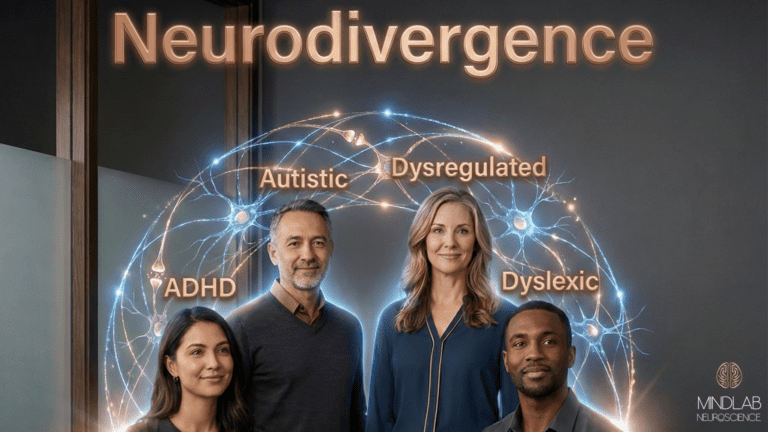
The spectrum of cognitive variability. We analyze distinct neural architectures—from ADHD to Autism—and the environmental protocols required to work with, rather than against, specific processing styles.
Executive Neuro-Brief
The Evolutionary Design
Nature does not make mistakes. It builds diversity for survival. In early human tribes, different brain types served specific roles. Some members needed to focus intensely to craft tools. Others needed hyper-awareness to spot predators in the grass. This biological variance was an asset, not a flaw. The brain developed unique wiring patterns to process sensory data differently. This ensured the group had a mix of specialists and generalists. It kept the tribe alive.
The Modern Analogy
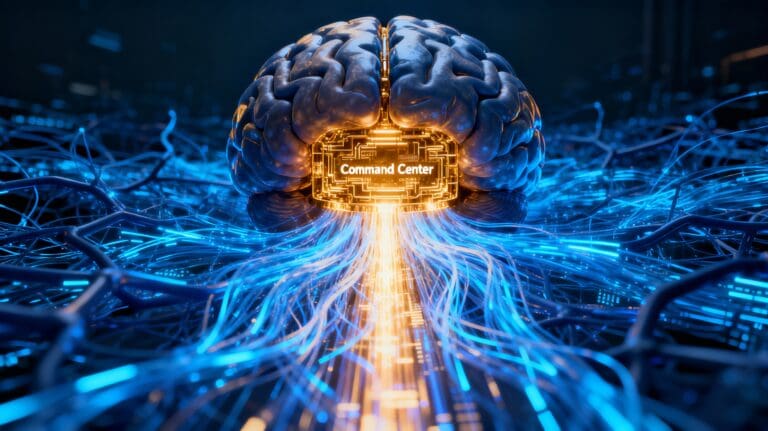
Think of your brain as a complex machine. Neurodivergence is like having a different operating system on your computer—most software still works, but you may run it in unique ways and often faster at certain tasks. The standard world is built for a common interface. You might be running a specialized code. Sometimes, standard programs lag or crash because they do not match your architecture. You might struggle with simple background tasks that others find easy. However, for high-demand data processing, your unique system often outperforms the standard model.
The Upgrade Protocol
Stop trying to force the wrong software onto your hard drive. You cannot emulate a standard operating system without overheating your processor. Instead, optimize your environment for your specific build. Identify the inputs that cause your system to freeze and remove them. Install custom tools that leverage your processing speed. When you stop fighting your native code and start programming for it, you unlock peak performance. Configure your daily routine to match your internal logic.
Unravel the complexities of Histrionic Personality Disorder (HPD) and its profound impact on relationships. This comprehensive guide explores the unique challenges faced by individuals with HPD, offering...
Understanding how ADHD and dopamine interact is the foundation for managing symptoms effectively. This comprehensive neuroscience-based guide reveals exactly how your brain processes chemical signals differently...
Our brain's perfectionism isn't permanent. Discover how neuroplasticity helps you embrace imperfections, rewire decades of high standards, and find freedom through growth.
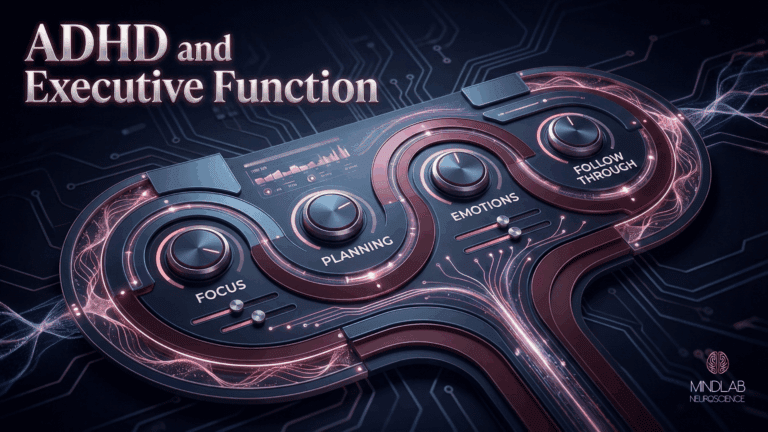
ADHD & executive function challenges are not laziness or a lack of willpower. They are rooted in how your brain’s control networks are wired. Here is how to understand and optimize them.
When feedback hits like a threat, RSD at work can hijack your day. Here’s a neuroscience-based reset to stay grounded and respond with clarity, fast, today.
Tired of one-size-fits-all therapy that ignores how your brain actually works? Real-Time Neuroplasticity Coaching™ delivers personalized, neuroscience-based support for lasting change.
Remote neuroscience coaching is not talk therapy on Zoom. It is real-time brain rewiring in the moments your nervous system is most changeable—so performance, calm, and relationships shift fast and la...
ADHD, focus, and executive function problems are not character flaws. They live in your brain’s control networks. This guide shows how to understand and rewire them using neuroscience.
When you live with ADHD and brain fog, even small tasks can feel impossibly complex. This guide explains why your brain can sometimes feel stuck, shares proven neuroscientific insights, and offers genuine...
If you have attention deficit hyperactivity disorder (ADHD), previously known as ADD, everything from paying the bills on time to keeping up with work, family, and social demands can seem overwhelming....
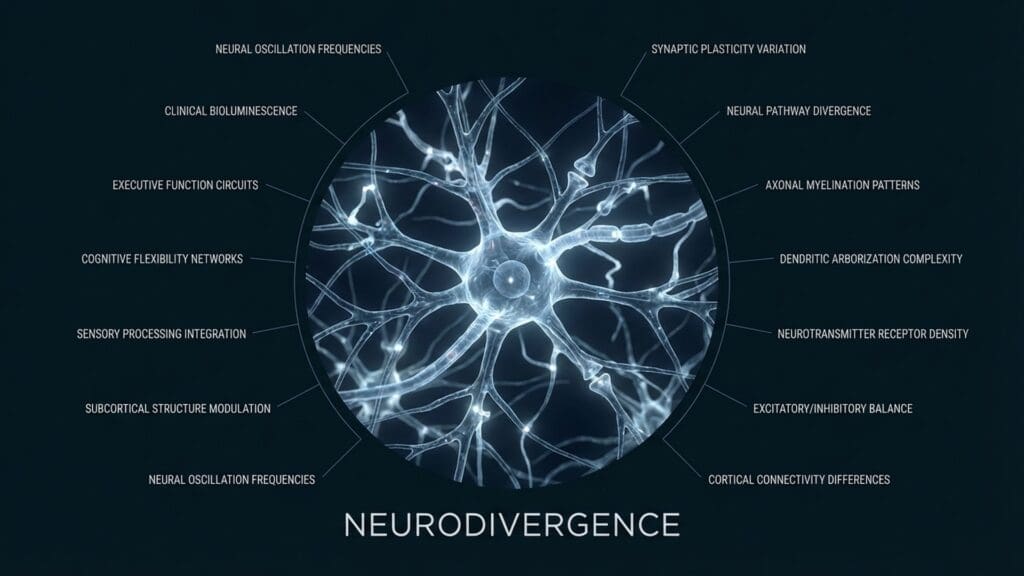
Neurodivergence is not a software bug; it is a variance in the hardware’s operating system. It represents distinct neural architectures often characterized by differences in synaptic pruning—the process where the brain eliminates weak connections. While a “neurotypical” brain prunes aggressively to prioritize efficiency and social conformity, many neurodivergent brains maintain higher levels of local hyper-connectivity. This results in enhanced pattern recognition and sensory sensitivity at the cost of executive filtering.
The Filtering Mechanism
A core distinction lies in “Sensory Gating.” The neurotypical brain is designed to inhibit background noise (ticking clocks, clothing texture) to focus on top-down goals.
Low Latent Inhibition: Many neurodivergent brains process information “bottom-up,” taking in raw data without filtering it first. This can lead to sensory overwhelm (overstimulation), but it also allows for the detection of details and associations that standard brains miss.
The Salience Network: The brain’s ability to switch between internal thought and external tasks is often dysregulated, leading to the “hyperfocus” state where attention is locked onto a high-dopamine interest to the exclusion of basic needs.
Engineering the Environment
Because the internal filter is permeable, the external environment must be engineered to act as the filter.
Body Doubling: For ADHD phenotypes, the presence of another person anchors the “Default Mode Network,” reducing internal chatter and facilitating task initiation.
Stimming as Regulation: Repetitive movement (stimming) is often misunderstood as distraction; mechanistically, it is a way to generate proprioceptive feedback that calms the nervous system and frees up working memory for processing.
The Intelligence Brief
Neuroscience-backed analysis on how your brain drives what you feel, what you choose, and what you can’t seem to change — direct from Dr. Ceruto.