Consultant in Beverly Hills

When Beverly Hills' highest-performing leaders need more than strategy decks and conventional advisory, they turn to the neuroscience of how decisions are actually made.

The Beverly Hills and Century City corridor houses a concentrated cluster of global strategy firms, boutique advisory practices, and executive service providers — yet none apply peer-reviewed neuroscience as a primary methodology. In a market dominated by institutional consulting firms like Bain, BCG, and L.E.K. that serve organizations but not individuals, and therapy-adjacent practitioners who blur the line between advisory and wellness, Dr. Sydney Ceruto occupies a distinct position: a PhD neuroscientist who works directly with senior leaders to restructure the cognitive architecture that drives strategic judgment, leadership effectiveness, and organizational outcomes.
Schedule a Strategy Call

Strategy Consulting

The executives who seek strategy guidance in Beverly Hills are not lacking information. They are operating with prefrontal circuits compromised by the chronic stress of high-stakes decision environments. Rustichini and colleagues (2022), published in Scientific Reports, found that brain response to strategic complexity correlates with cognitive skill — but only in subgroups with higher fluid intelligence, and only within a fronto-parietal network typically involved in single-agent problem-solving. Strategic sophistication is neurologically mediated. Malizia and colleagues (2022) in Frontiers in Psychology reviewed 23 neuroscience studies on managerial decisions and found that affective states have a driving role in strategic cognition — the reflexive and reflective systems of the mind are not in conflict but intertwined. Across clients, the executives who make the most consequential strategic errors are not unintelligent. Their prefrontal capacity is degraded by unmanaged affective states. I intervene at the neural level where strategy actually forms.

Learn more about Strategy Consulting in Beverly Hills →

Leadership Training

Neuroscience-informed leadership development measurably outperforms conventional programs. Frisina (2024) in Frontiers in Health Services Management documented that programs engaging the prefrontal cortex through interactive and experiential learning improve executive functions including decision-making and problem-solving. Crivelli and colleagues (2020) in Frontiers in Psychology demonstrated that executive functions — working memory, inhibitory control, cognitive flexibility — are the neural substrate of leadership self-regulation and that neuromanagement-based training directly improves leadership performance. Spence and colleagues (2023) found that 75% of 193 professionals showed gains on a validated BrainHealth Index following brain health strategy training, with effect sizes of d=0.53. I design leadership development around these findings, targeting the specific prefrontal circuits that govern leadership effectiveness rather than delivering generic competency models that ignore the brain entirely.

Learn more about Leadership Training in Beverly Hills →

Performance Improvement Consulting

Chronic stress causes measurable structural damage to the prefrontal cortex — the brain region providing top-down regulation of thought, action, and emotion. Arnsten and colleagues (2021) documented in Chronic Stress that uncontrollable stress produces loss of spines and dendrites in the PFC, directly undermining executive decision-making, working memory, and emotional regulation. This is not metaphorical. It is architectural degradation. Bhatnagar (2021) in Trends in Neurosciences synthesized evidence that resilience — a critical performance variable — is not a fixed trait but a trainable, neurobiologically malleable capacity dependent on hippocampal pattern separation and prefrontal cognitive control. For Beverly Hills professionals operating in the high-pressure environments of entertainment restructuring, venture capital cycles, and Century City litigation, performance improvement that does not address neural architecture is consulting theater. I address the PFC directly.

Learn more about Performance Improvement Consulting in Beverly Hills →

Organizational Development Consulting

Organizational behavior is not merely a management construct — it is a neurobiological phenomenon. Kotelba and Fox (2022) in Behavioral Sciences established that organizational neuroscience offers an interpretive framework connecting threat response, reward processing, and cognitive flexibility to organizational adaptive behavior. Frisanco and colleagues (2022) in Frontiers in Psychology argued that interpersonal dynamics — team dynamics, leader-follower relationships — must be placed at the core of organizational neuroscience for consulting interventions to be effective. Chang and colleagues (2020) conducted a meta-analysis in Frontiers in Human Neuroscience confirming that occupational factors produce measurable structural and functional brain changes. Brain connectivity literally shapes itself to meet occupational demands. This means organizational culture and work design directly alter brain performance — making organizational development a neuroscience intervention, not merely a management one.

Learn more about Organizational Development Consulting in Beverly Hills →

Corporate Training

The brain does not learn through passive instruction. Klintsova, Smith, and Milbocker (2023) in Brain Plasticity reviewed the 2017–2023 empirical literature and confirmed that active learning — not lecture-based formats — produces verifiable neuroplastic changes: altered gene expression, neurotransmitter release, and reprogrammed functional connectivity. Vandelli and colleagues (2024) used EEG neuroimaging with managers during group decision-making and found specific prefrontal and temporal parietal junction activations during creative collaborative tasks — validating interactive training formats at the neural level. For Silicon Beach startups and Century City firms that demand evidence-based approaches, I design corporate training programs that produce documented brain changes rather than temporary enthusiasm. The rate of neuroplastic alteration varies across the lifespan, and I calibrate program design to the cognitive profiles of mid-career and senior professionals accordingly.

Learn more about Corporate Training in Beverly Hills →

Executive Coaching

The emerging field of neuroleadership positions neuroscience-based work as the leading edge of executive development. Bratianu and Staneiu (2024) in MDPI Encyclopedia documented the transition from behavioral and competency-based approaches to brain-science-informed frameworks in knowledge-economy contexts. Frisina (2024) confirmed that integrating neuroscience into executive development programs significantly increases effectiveness by targeting prefrontal cortex engagement. Arnsten (2021) established that chronically stressed leaders experience measurable PFC degradation — meaning conventional accountability-based frameworks fail precisely when they are needed most, because the neural infrastructure for executing on commitments has been structurally compromised. In my practice, I work with the PFC directly — restoring the cognitive architecture that accountability frameworks assume is intact but that chronic Beverly Hills professional stress has often degraded.

Learn more about Executive Coaching in Beverly Hills →

Beverly Hills and Century City form the epicenter of one of the most competitive consulting markets in the United States — and one of the most neurologically demanding professional environments on the planet.

Century City’s corporate towers house the West Coast offices of Bain, BCG, and L.E.K. alongside specialized firms like Berkeley Research Group and NMS Consulting. These institutions serve organizations with engagement fees ranging from $250,000 to $5 million. They provide rigorous quantitative analysis and strategic frameworks — but they do not serve individual executives, and they do not address the cognitive architecture that determines how those executives process and implement strategic advice. This is the gap MindLAB Neuroscience fills.

The entertainment industry restructuring reshaping Beverly Hills’ professional landscape has created unprecedented consulting demand. Hollywood’s sound stage occupancy dropped from historical norms above 90% to 63% in 2024, per the Milken Institute’s 2025 report. Studios are restructuring C-suites, renegotiating talent relationships, and pivoting from growth to profitability. Entertainment executives navigating this disruption face a dual challenge: making high-stakes strategic decisions while simultaneously managing the neurological effects of sustained career uncertainty. Traditional consulting addresses the first challenge but ignores the second.

The Silicon Beach technology corridor — home to Snap, TikTok’s U.S. operations, Google’s LA offices, and hundreds of VC-backed startups — represents a buyer profile that is particularly receptive to evidence-based methodology. These are data-literate executives who distrust generic frameworks and demand peer-reviewed substance. Southern California venture capital activity hit $8.85 billion in 2025, and LA’s entertainment tech sector alone raised $2.4 billion across 190-plus deals. The founders and executives deploying this capital need advisory that operates at the level of cognition, not just strategy.

Century City’s legal and financial corridor — Latham & Watkins, Paul Hastings, Sidley Austin, and a concentration of private equity and family office operations — produces a professional class accustomed to premium advisory pricing and zero tolerance for approaches that lack evidentiary rigor. Beverly Hills’ therapy-saturated market has conditioned sophisticated buyers to distinguish between credential-based trust signals and generic wellness positioning. MindLAB Neuroscience’s foundation in peer-reviewed science, backed by Dr. Ceruto’s PhD from NYU and more than 26 years of applied neuroscience practice, meets this market’s standard of evidence.


Dr. Sydney Ceruto, PhD — Founder, MindLAB Neuroscience

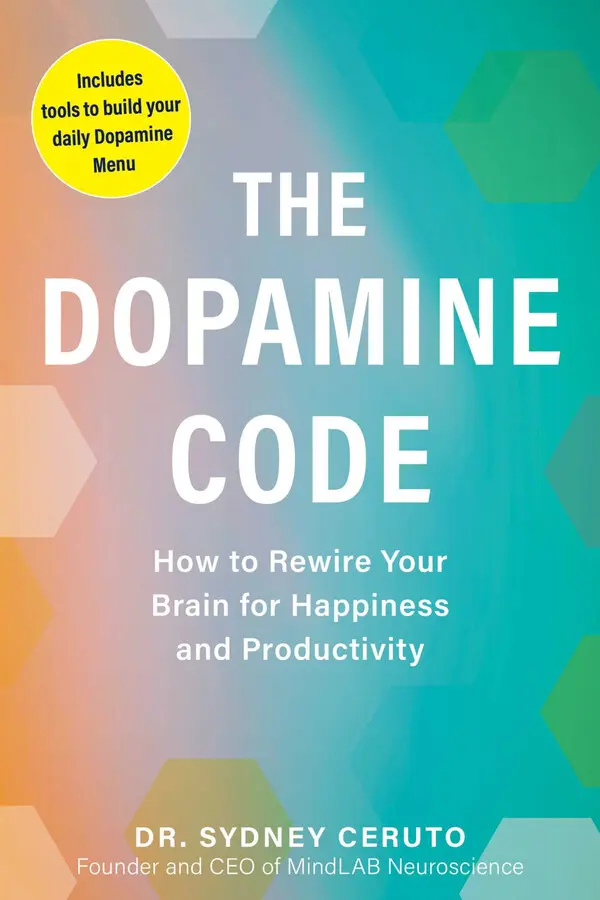
Dr. Sydney Ceruto holds a PhD in Behavioral & Cognitive Neuroscience from NYU and Master’s degrees in Clinical Psychology and Business Psychology from Yale University. She is a Lecturer in the Wharton Executive Development Program at the University of Pennsylvania, an Executive Contributor to Forbes Coaching Council, and an inductee in Marquis Who’s Who in America. Dr. Ceruto founded MindLAB Neuroscience in 2000 and has spent more than 26 years developing and refining her proprietary methodology, Real-Time Neuroplasticity™. She is the author of The Dopamine Code (Simon & Schuster, June 2026).

Frequently Asked Questions

I've worked with executive coaches in Beverly Hills before and nothing changed. How is neuroscience-based consulting different?
I work with the prefrontal and limbic circuits where behavioral and strategic outputs originate. Research published in Neuropsychopharmacology confirms that executive functions are neurologically mediated and trainable. When the neural architecture shifts, behavior changes durably. When it does not, even excellent strategic advice fails to convert into execution.
My studio just went through a major restructuring. Can a neuroscience-based approach help me lead a new division faster than traditional advisory?
Industry restructuring creates a specific neurological profile: chronic stress degrades prefrontal connectivity while simultaneously demanding the highest-quality strategic thinking. I address both simultaneously — restoring PFC function while developing the cognitive flexibility — the ability to shift thinking between concepts — required to lead through uncertainty. The brain does not wait for organizational charts to stabilize before it needs to perform.
Is MindLAB Neuroscience a therapy practice?
No. MindLAB Neuroscience is not therapy, and I am not a therapist. I am a neuroscientist who applies peer-reviewed brain science to restructure the neural patterns that drive professional performance and decision-making. The distinction is methodological: I work with neuroplasticity — the brain's ability to rewire itself — and cognitive architecture, not diagnostic or retrospective frameworks.
What's the science behind this approach? I'm skeptical of advisory that isn't backed by research.
Every element of my methodology is grounded in peer-reviewed neuroscience from journals including PNAS, Nature Communications, Neuropsychopharmacology, and Frontiers in Psychology. I cite specific researchers and findings because the science is the methodology. Real-Time Neuroplasticity — the brain's ability to rewire itself —™ applies documented mechanisms of neural restructuring — not proprietary theories disconnected from the research literature.
How long does it take to see measurable performance improvements?
The neuroscience of consolidation suggests that detectable changes in neural architecture occur within weeks under sustained, targeted engagement. My NeuroSync™ 90-day program is calibrated to this timeline — providing the intensive, structured exposure required for new neural pathways to stabilize and outcompete older patterns. Specific timelines depend on the complexity of the presenting pattern and the individual's neural profile.
Can you design a program for a Silicon Beach leadership team that's evidence-based, not motivational speaker content?
Yes. My corporate and team-based programs are designed around published neuroscience findings — including EEG evidence of prefrontal activation during collaborative decision-making and validated brain health training protocols that produced measurable cognitive gains in 75% of participants. Every program element maps to a documented neural mechanism.
What's the difference between your consulting approach and what a Beverly Hills therapist or conventional life coach provides?
The difference is foundational. I hold a PhD in Behavioral & Cognitive Neuroscience and apply Real-Time Neuroplasticity — the brain's ability to rewire itself —™ — intervening during live, high-stakes moments when neural circuits are active and therefore most amenable to restructuring. The investment reflects a fundamentally different methodology: one grounded in peer-reviewed neural mechanisms, delivered through an embedded partnership model, and producing structural changes that are neurologically consolidated rather than dependent on continued practice.

Ready to Perform at Your Highest Level?

In Beverly Hills' most demanding professional environments — from Century City boardrooms to Silicon Beach founder negotiations — the executives who outperform are the ones whose neural architecture has been built for the pressure.

Schedule a Strategy Call
MindLAB Neuroscience consultation room
Locations

The Intelligence Brief

Neuroscience-backed analysis on how your brain drives what you feel, what you choose, and what you can’t seem to change — direct from Dr. Ceruto.