The Cognitive Load No One Accounts For
“The executive who can think clearly about everyone else's career while being unable to resolve their own is not lacking self-awareness. Their prefrontal cortex applies different computational rules when the stakes are personal, and the higher the stakes, the more distorted the computation becomes.”
You manage risk across multiple dimensions simultaneously. Portfolios, personnel, counterparties, regulatory requirements, competitive positioning. Each requires sustained attention and rapid evaluation. By midday, the quality of those decisions has deteriorated. Not because you lack information. Not because you lack intelligence. Because the neural systems responsible for high-level executive function operate under biological constraints that no amount of experience or expertise can override.
This is not about working harder or thinking more clearly. The professionals who seek executive career advisory at this level are already among the most disciplined, analytically rigorous people in any professional environment. The problem is structural. The prefrontal cortex has finite processing capacity. When that capacity is consumed by the volume and intensity of decisions required in a high-stakes finance role, what remains for career-level strategic thinking is diminished executive function.
This produces a specific pattern. Daily performance remains strong because it operates on practiced neural pathways. But longer-term career decisions receive the depleted remnants of prefrontal capacity. The brain has been systematically drained by the time career-defining questions reach the decision architecture. The career stalls not because the professional lacks ambition, but because of this structural depletion.
The conventional response is to carve out time for reflection: weekends, vacations, off-site retreats. These are insufficient. Cognitive fatigue does not resolve through rest alone when the underlying neural architecture remains unchanged. The prefrontal systems need structural optimization, not just recovery.
The Neuroscience of Executive Function Under Load
The prefrontal cortex is the biological seat of executive performance. Understanding how it operates, and how it fails, under Wall Street’s professional conditions is foundational to any meaningful executive career advisory.
Comprehensive research synthesizes evidence establishing how the prefrontal cortex mediates executive function. The dorsolateral prefrontal cortex is the neural substrate for updating working memory (the brain’s short-term mental workspace), mental set shifting, and response inhibition. The anterior cingulate cortex detects response conflicts and transmits error-correction signals. This circuit is the biological engine of conflict monitoring in high-stakes decision environments.
Research has directly measured how cognitive fatigue affects decision-making circuitry. The findings are stark. Cognitive fatigue significantly reduces willingness to exert effort on demanding tasks. Participants in a fatigued state systematically chose lower-reward, lower-effort options. Prefrontal activity increased with progressive cognitive load as the brain attempted to maintain performance. Those reporting the highest fatigue had prefrontal systems that failed to recalibrate to reduced capacity.
The pattern that presents most often is a professional whose daily execution remains sharp, practiced decisions on familiar terrain, while career-level strategic thinking has quietly degraded. They may not recognize this as cognitive fatigue because the depleted decisions feel normal. The variability appears not in gross failure but in inconsistency: decisions that are sound on Tuesday are impulsive on Thursday. The professional attributes the difference to circumstance rather than neural state.
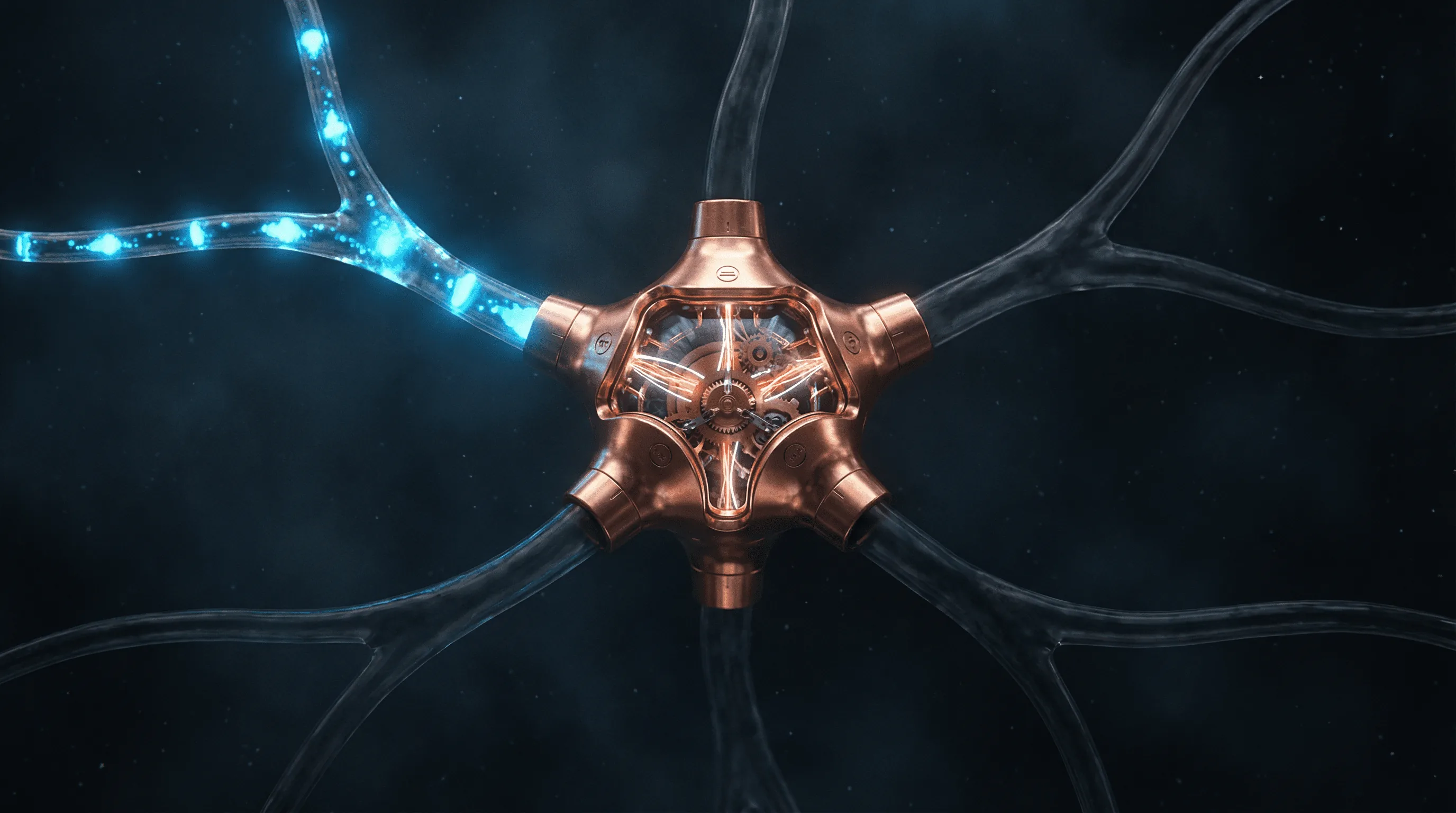
Research on cognitive flexibility under fatigue conditions has demonstrated that working memory-based cognitive flexibility is selectively vulnerable to fatigue effects. Tasks requiring both working memory maintenance and task switching compete for the same prefrontal resources. As time-on-task extends, the prefrontal cortex cannot maintain performance because simultaneity constraints produce opportunity cost accumulation. This is not weakness. It is the operating architecture of the most evolved brain region encountering a demand environment that exceeds its design parameters.
How Dr. Sydney Ceruto Approaches Executive Career Advisory
Dr. Ceruto’s methodology addresses executive career performance at the prefrontal network level where the constraints actually operate. Real-Time Neuroplasticity™ produces functional changes in the prefrontal and executive control networks through structural optimization of neural systems themselves.
In over two decades of applied neuroscience practice, the most reliable predictor of executive advisory impact is the client’s recognition that their career decisions are being made by a neurologically different version of themselves. This is a different version than the one making portfolio decisions at nine in the morning. The methodology begins with mapping the client’s cognitive load architecture. It identifies where prefrontal resources are being consumed and which decision categories receive depleted capacity. It also assesses how the conflict-monitoring circuit performs under the client’s specific professional demands.
From that map, the protocol addresses three dimensions simultaneously. First, optimizing the client’s cognitive load distribution to protect prefrontal resources for career-strategic decisions. Second, strengthening prefrontal recalibration capacity so that cognitive flexibility is maintained across sustained demand. Third, developing metacognitive awareness of the client’s own fatigability patterns. This is targeted prefrontal network optimization grounded in the specific neuroscience the research identifies.
For focused executive function work addressing a specific career decision, promotion trajectory, or leadership transition, the NeuroSync™ program provides targeted precision. The NeuroConcierge™ program serves professionals whose executive career needs span multiple domains. It provides comprehensive embedded partnership across the full scope of professional neural performance.
What to Expect
The process begins with a Strategy Call: a focused strategy conversation. This establishes the nature of the executive career challenge. It determines whether the challenge maps to the prefrontal mechanisms Dr. Ceruto’s methodology addresses.
Following the Strategy Call, a structured assessment maps the client’s cognitive load architecture, identifies patterns of prefrontal depletion, and establishes a baseline of executive function performance across the client’s specific decision environment. This assessment informs a protocol designed for the client’s neural profile and professional context.
The engagement is structured for sustained neuroplastic change. Prefrontal network optimization requires repeated activation and consolidation under controlled conditions. The timeline is personalized. Meaningful strategic and cognitive shifts typically emerge within three to six months of structured engagement. Career milestone outcomes often manifest within one annual performance cycle.
The Neural Architecture of Executive Development
The executives who seek career coaching have typically built careers through a combination of exceptional capability, disciplined effort, and well-developed strategic instincts. They have navigated the organizational and political complexity required to reach senior levels. They have built the track record that legitimizes executive authority. And they have arrived at a point where the competencies that produced their success are insufficient for what the next phase requires, and conventional development approaches are not producing the change they need.
This is a neural architecture problem. Executive performance at the highest levels requires a specific configuration of prefrontal-limbic integration that is not automatically developed through career progression. The prefrontal capacities required (sustained strategic integration across long time horizons, uncertainty tolerance during periods of organizational volatility, cognitive flexibility under competing demands, and the ability to regulate threat responses without suppressing the information they carry) are trainable and restructurable. But they require targeted neural intervention, not the accumulated experience of additional years in role.
The dopaminergic reward architecture is equally critical. Executives who have built their careers through a particular reward structure (the specific categories of achievement, recognition, and mastery-demonstration that their neural systems have been calibrated to find reinforcing) face a distinctive challenge when promotion or transition moves them into environments with fundamentally different reward landscapes. The board dynamics, the investor relationships, the enterprise-scale complexity, the ambiguity of outcomes at the strategic level: these produce different neurochemical signatures than the challenges that built the executive’s original reward architecture. Recalibrating the dopaminergic system to find the new landscape genuinely reinforcing, rather than simply accepting it intellectually, is a neural process that requires explicit intervention.
Why Traditional Approaches Fall Short
Executive coaching has evolved substantially over the past two decades, and the best practitioners bring genuine sophistication to the work. The fundamental limitation is not in the quality of the coaches or the depth of their frameworks. It is in the level at which the work operates. Behavioral and cognitive coaching addresses what executives think and do. It does not address the neural architecture that determines which thoughts arise under pressure, which behavioral repertoires are neurologically available in high-stakes contexts, and which reward signals sustain motivation across the ambiguous, long-horizon challenges of senior executive work.
Leadership development programs extend this limitation to group format. The curriculum is often genuinely valuable: expanded self-awareness, exposure to diverse leadership models, structured peer learning, and sometimes excellent facilitation. What the program format cannot deliver is the neural specificity required to reconfigure an individual executive’s particular circuit configuration: the specific regulatory imbalances, reward architecture mismatches, and prediction system biases that are limiting this particular person’s performance at this particular career stage.

The consequence is that executives invest significant time and resources in coaching and development that produces real insight and limited lasting behavioral change. The insight is genuine. The neural architecture is unchanged. And the behavioral patterns that coaching was intended to address reassert themselves with mechanical reliability in the conditions that produce them: the high-stakes, high-pressure, high-complexity conditions that define senior executive work.
How Neural Executive Career Coaching Works
My approach begins with a neural architecture assessment of the presenting development challenge. What are the specific circuit configurations limiting this executive’s performance? Where is the prefrontal-limbic regulatory balance out of calibration for the demands of their current role? What is the prediction system bias most systematically distorting their strategic thinking? What is the reward architecture mismatch between what their dopaminergic system finds reinforcing and what their current role actually delivers? These questions have answers at the neural level, and they determine the shape of the protocol.
From this assessment, I design an engagement that directly targets the identified circuit configurations. For prefrontal-limbic regulatory imbalances (the most common presentation in senior executives, typically manifesting as reactive decision patterns, difficulty holding ambiguity, or threat responses that narrow strategic thinking) the protocol targets the specific regulatory pathways that need to be recalibrated. For reward architecture mismatches, the work targets dopaminergic recalibration to the actual reward landscape of the current role. For prediction system biases, the work builds metacognitive monitoring of the specific filtering patterns most distorting strategic information processing.
The timeline here follows the pace of neural change, not a conventional coaching schedule. Lasting circuit-level change requires sustained, repeated intervention across a sufficient time horizon for new neural patterns to consolidate. The executives I work with at the NeuroConcierge™ level receive an embedded partnership: a sustained working relationship calibrated to the pace of genuine neural development.
What This Looks Like in Practice
Engagements here begin with a Strategy Call in which I map the presenting development challenge against its most likely neural substrates. The conversation examines the specific performance patterns that are most limiting, the career context driving the development need, and the neural mechanisms most likely responsible. From that conversation, I determine whether the presenting need is amenable to focused NeuroSync™ intervention or requires the sustained partnership of the NeuroConcierge™ engagement.
Executives at transition points (new C-suite roles, board positions, cross-industry moves, entrepreneurial exits followed by new ventures) receive particular attention to the neural recalibration required to perform optimally in the new environment. The prediction architecture built for a previous role does not automatically update to a new one. The reward calibration built for a previous career stage does not automatically transfer. The Dopamine Code provides executives with the scientific framework for understanding why these transitions are neurologically demanding and what the recalibration process actually requires, for those who want to engage with the underlying science.
For deeper context, explore neuroscience coaching for executive career growth.