Circadian Rhythm Optimization in Wall Street

The body's internal clock governs far more than sleep timing. When it falls out of alignment with daily demands, cognition, metabolism, and emotional regulation degrade in tandem.

The body’s internal clock governs far more than sleep timing. When it falls out of alignment with daily demands, cognition, metabolism, and emotional regulation — the ability to manage emotional responses — degrade in tandem.

Book a Strategy Call

Every cell in the human body runs on a 24-hour clock. This is not a metaphor — it is a molecular fact. The suprachiasmatic nucleus — a paired structure in the anterior hypothalamus — controls organ-level biological clocks throughout the body. It coordinates everything from hormone release and immune function to cognitive performance and emotional regulation on a precise 24-hour schedule.

The Problem: When the Clock Loses Its Signal

The suprachiasmatic nucleus receives its primary synchronization input from a specialized class of retinal cells called intrinsically photosensitive retinal ganglion cells. These cells form a dedicated neural highway — translating light-dark cycles into neurochemical signals — that entrains the molecular clock to exactly 24 hours each day.

When this light signal is absent, diminished, or mistimed, the clock drifts. The human circadian period is not precisely 24 hours but approximately 24.2 hours on average. Without daily light-based correction, the internal clock progressively delays relative to the external world. This drift produces circadian misalignment: a state in which the internal biological clock is running on a different schedule than the one behavior demands.

The consequences are not limited to feeling sleepy at the wrong time. Circadian misalignment impairs sustained attention, cognitive throughput, information processing, and visual-motor performance in a task-dependent manner. Critically, individuals experiencing circadian misalignment feel subjectively sleepier but fail to accurately assess their own cognitive decline — impaired self-assessment under time pressure.
Translucent copper and blue wave forms visualizing sleep cycle phases against deep navy background

Social jetlag represents the most common form of chronic circadian misalignment. Each hour of social jetlag is independently associated with measurably higher body mass index, waist circumference, triglycerides, and fasting insulin. These metabolic consequences occur regardless of sleep duration, sleep quality, diet, or exercise.

The Mechanism: What Happens When Clocks Desynchronize

The circadian system is hierarchical. The suprachiasmatic nucleus sits at the top, but peripheral oscillators in the liver, heart, immune system, and gut each maintain their own molecular clocks. Under normal conditions, the master clock entrains all peripheral clocks to a unified rhythm. When zeitgebers become inconsistent, peripheral clocks can decouple from the master clock and from each other. This produces internal desynchrony — organ systems operating on different circadian phases.

Internal desynchrony disrupts the temporal coordination that healthy physiology depends on. Cortisol release, which normally peaks in the early morning to support wakefulness and metabolic mobilization, may fire at inappropriate times. Melatonin onset — biological night’s hormonal signal — may be delayed or suppressed by evening light exposure. Core body temperature rhythms normally reach their minimum in the early morning and facilitate the deepest sleep stages. They may flatten or shift, degrading sleep architecture even when adequate time in bed is available.

The long-term health consequences of sustained circadian disruption are severe. Shift work — extreme chronic circadian misalignment — is classified as a Group 2A probable carcinogen by the International Agency for Research on Cancer. Epidemiological evidence documents elevated risks of breast cancer, prostate cancer, cardiovascular disease, and metabolic syndrome in populations experiencing chronic circadian disruption. Circadian dysfunction is increasingly understood as not merely a symptom of neurodegeneration but a mechanistic driver. Animal studies show that disruption of core clock gene function produces astrocyte inflammation, synaptic degeneration, and oxidative damage independently of sleep loss itself.

The Solution: Precision Circadian Realignment

Dr. Ceruto’s approach to circadian rhythm optimization identifies the specific points of misalignment in each individual’s circadian architecture. It designs targeted realignment protocols calibrated to their actual biological timing rather than an arbitrary external standard.

The methodology begins with establishing the individual’s circadian phase — their internal clock’s position relative to schedule. From this foundation, intervention strategies are designed around the three most potent zeitgebers in the hierarchy: light exposure timing, melatonin signaling, and meal timing.

Controlled clinical research demonstrates that a single daily 30-minute morning bright light exposure combined with low-dose afternoon melatonin and a gradually adjusted sleep schedule can produce a circadian phase advance of nearly two hours within three days. This represents a significant and rapid realignment — reconciling genetic timing preferences with schedule.

Mahogany desk with crystal brain sculpture and MindLAB journal in warm lamp light surrounded by leather-bound volumes in institutional Wall Street study

For individuals with advanced circadian disruption involving internal desynchrony between central and peripheral clocks, the approach extends to chrononutrition and structured physical activity timing to reinforce the desired phase position. The goal is not merely to shift sleep timing but to restore coherent, system-wide circadian coordination.

Why Circadian Rhythm Optimization Matters in Wall Street

Wall Street presents one of the most challenging circadian environments (relating to the body’s 24-hour biological clock) in any professional setting. This convergence of architectural, occupational, and cultural factors systematically degrades the light signals the biological clock depends on.

Lower Manhattan’s urban canyon architecture creates a specific and severe problem. Below Chambers Street, skyscrapers of 600-750 feet crowd both sides of narrow streets like Wall Street, Broad Street, Nassau Street, and Exchange Place, limiting direct sunlight at ground level to narrow windows around solar noon. For professionals arriving at their desks before 8:30 AM — the norm for pre-market tracking — natural light exposure during the commute is negligible for much of the year. The irregular street grid below 14th Street prevents even the brief solar alignment events visible from midtown avenues, creating a landscape where the primary zeitgeber for the human circadian system is architecturally blocked.

Inside the buildings, the problem intensifies. Trading floors at Goldman Sachs and JPMorgan Chase are designed as interior, windowless environments flooded with artificial light and multiple screens operating at peak brightness throughout the day. At Goldman Sachs’ 200 West Street headquarters, window-facing offices were reserved for elite partners. Managing directors were assigned interior offices with no natural light — a design choice with direct circadian implications for thousands of professionals. Workers in windowless offices sleep an average of 46 minutes less per night than those with window access, reflecting the degraded circadian input that artificial-only light environments produce.

The temporal demands of global finance impose additional circadian pressure. U.S. equity markets open at 9:30 AM Eastern, but European markets open at 2:00-3:00 AM Eastern and Asian markets begin trading at 7:00-8:00 PM Eastern. For professionals managing cross-border transactions, the sleep window is perpetually under assault from two directions simultaneously. This creates chronic circadian misalignment that no amount of sleep hygiene can resolve — the behavioral demands force wakefulness at times when the biological clock is signaling for sleep.

The few accessible natural light environments in Lower Manhattan offer genuine circadian anchoring potential for those who can access them during morning or midday hours. Dr. Ceruto’s protocols for individuals in this environment integrate these geographic resources into precision light-exposure timing strategies designed around the specific constraints of each person’s schedule and workspace.

Dr. Sydney Ceruto, PhD — Founder, MindLAB Neuroscience

Dr. Sydney Ceruto, PhD — Founder & CEO, MindLAB Neuroscience

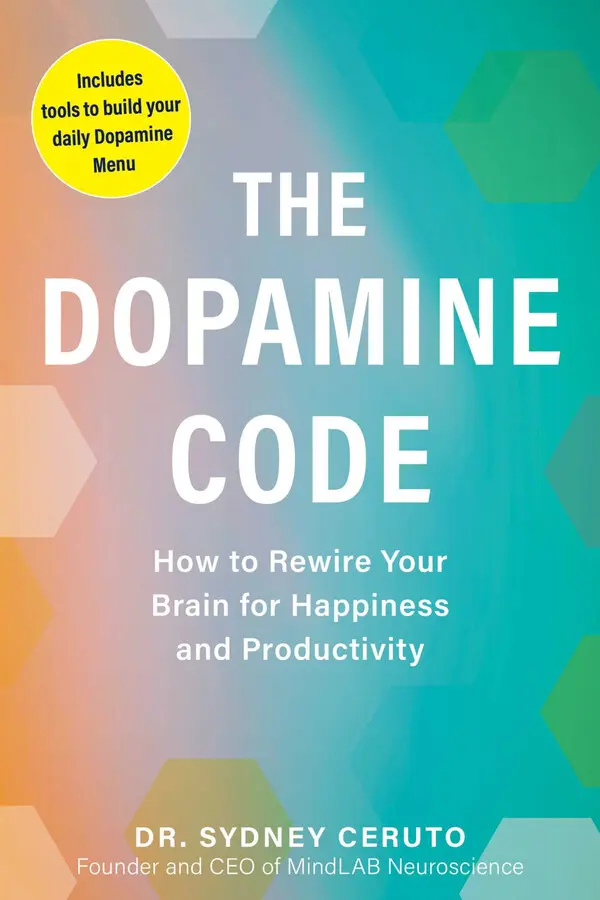
Dr. Ceruto holds a PhD in Behavioral & Cognitive Neuroscience from NYU and two Master’s degrees from Yale University. She lectures at the Wharton Executive Development Program at the University of Pennsylvania and has been an Executive Contributor to the Forbes Coaching Council since 2019. Dr. Ceruto is the author of The Dopamine Code (Simon & Schuster, June 2026). She founded MindLAB Neuroscience in 2000 and has spent over 26 years pioneering Real-Time Neuroplasticity™ — a methodology that permanently rewires the neural pathways driving behavior, decisions, and emotional responses.

References

Musiek, E. S., & Holtzman, D. M. (2016). Mechanisms linking circadian clocks, sleep, and neurodegeneration. Science, 354(6315), 1004-1008. https://doi.org/10.1126/science.aah4968

Chellappa, S. L., Morris, C. J., & Scheer, F. A. J. L. (2018). Daily circadian misalignment impairs human cognitive performance task-dependently. Scientific Reports, 8(1), 3041. https://doi.org/10.1038/s41598-018-20707-4

Wong, P. M., Hasler, B. P., Kamarck, T. W., Muldoon, M. F., & Manuck, S. B. (2015). Social jetlag, chronotype, and cardiometabolic risk. The Journal of Clinical Endocrinology & Metabolism, 100(12), 4612-4620. https://doi.org/10.1210/jc.2015-2923

Xie, L., Kang, H., Xu, Q., Chen, M. J., Liao, Y., Thiyagarajan, M., O’Donnell, J., Christensen, D. J., Nicholson, C., Iliff, J. J., Takano, T., Deane, R., & Nedergaard, M. (2013). Sleep drives metabolite clearance from the adult brain. Science, 342(6156), 373-377. https://doi.org/10.1126/science.1241224

Success Stories

“Endocrinologists, sleep clinics, functional medicine — every specialist cleared me, and no one could tell me why I was exhausted every single day. Dr. Ceruto identified that my HPA axis was locked in a low-grade stress activation I couldn't feel consciously. Once that pattern was disrupted at the neurological level, my energy came back in a way that felt completely foreign. I'd forgotten what it was like to not be tired.”

Danielle K., Chief Marketing Officer Luxury Retail Beverly Hills, CA

“Four hours a night for over two years — that was my ceiling. Supplements, sleep protocols, medication — nothing touched it because nothing addressed why my brain wouldn't shut down. Dr. Ceruto identified the cortisol loop that was keeping my nervous system locked in a hypervigilant state and dismantled it. I sleep now. Not because I learned tricks — because the pattern driving the insomnia no longer exists.”

Adrian M., Portfolio Manager Citadel New York, NY

“My kids had been sleeping through the night for three years, but my brain hadn't caught up. I was still waking every ninety minutes like clockwork — no amount of sleep hygiene or supplements touched it. Dr. Ceruto identified the hypervigilance loop that had hardwired itself during those early years and dismantled it at the source. My brain finally learned the threat was over. I sleep through the night now without effort.”

Catherine L., General Counsel Private Equity Greenwich, CT

“My body had simply stopped knowing when to sleep. Crossing time zones weekly for over two years had broken something fundamental, and every protocol, supplement, and device I tried couldn't hold longer than a few days. Dr. Ceruto identified the disruption at the level of my suprachiasmatic nucleus and recalibrated the signaling pattern driving the dysfunction. Within weeks, my circadian rhythm locked back in. I sleep now. Consistently. Regardless of where I land.”

Jonathan K., VP of Global Operations Maersk

“Every system, every supplement, every productivity method I tried collapsed within weeks — and nothing held because nothing addressed why my attention kept fragmenting. Dr. Ceruto identified the dopamine regulation pattern that was hijacking my prefrontal cortex every time I needed sustained focus. She didn't give me another workaround. She restructured the architecture underneath. My brain holds now. That's not something I ever thought I'd be able to say.”

Derek S., VP of Product Design Snap Inc. Beverly Hills, CA

“I knew the scrolling was a problem, but I didn't understand why I couldn't stop — or why it left me feeling hollow every time. Dr. Ceruto identified the dopamine-comparison loop that had fused my sense of worth to a feed. Years of trying to set boundaries with my phone hadn't worked because the problem was never the phone. Once the loop broke, the compulsion just stopped. My relationships started recovering almost immediately.”

Anika L., Head of Brand Direct-to-Consumer Los Angeles, CA

Frequently Asked Questions About Circadian Rhythm Optimization in Wall Street

What is circadian rhythm optimization?

Circadian (relating to the body's 24-hour biological clock) rhythm optimization restores alignment between the body's internal biological clocks and the demands of daily life. The brain's master clock coordinates hormone release, cognitive performance, metabolism, and immune function on a 24-hour cycle. When this timing falls out of sync with an individual's schedule — through irregular light, sleep, or timezone demands — cognition and health degrade. Optimization identifies the specific misalignment and designs targeted correction protocols.

How does circadian misalignment affect cognitive performance?

Circadian (relating to the body's 24-hour biological clock) misalignment impairs sustained attention, cognitive throughput, information processing speed, and decision-making quality in task-dependent patterns. Critically, individuals experiencing misalignment often fail to accurately assess their own decline — feel sleepier, performance unchanged — creating a dangerous metacognitive blindspot. This creates particular risks in any environment requiring consequential decisions.

Who benefits from circadian rhythm optimization?

Anyone whose daily schedule chronically conflicts with their biological timing — particularly individuals navigating irregular hours, cross-timezone obligations, or environments with limited natural light. This includes those with persistent patterns of feeling alert at the wrong times and fatigued when they need to perform. The approach is especially relevant for people whose sleep quality remains poor despite adequate time in bed.

What does the process look like?

The process begins with a Strategy Call with Dr. Ceruto, conducted by phone, at a fee of $250. This initial conversation maps the individual’s circadian timing relative (relating to the body's 24-hour biological clock) to their schedule demands and identifies the specific points of misalignment. Program structure and investment details are discussed during the Strategy Call.

How quickly can circadian rhythms be shifted?

Measurable phase shifts can occur within days when the correct zeitgeber protocol is applied. Clinical research demonstrates nearly two hours of circadian (relating to the body's 24-hour biological clock) phase advancement within three days using targeted morning light and timed melatonin. Full stabilization — realigning peripheral clocks with central pacemaker — typically requires a longer period of consistent protocol adherence.

Take the First Step Toward Circadian Rhythm Optimization

The Strategy Call is a focused conversation with Dr. Ceruto that maps the specific neural mechanisms driving your concerns and determines the right path forward.

Book a Strategy Call
MindLAB Neuroscience consultation room
Locations

The Intelligence Brief

Neuroscience-backed analysis on how your brain drives what you feel, what you choose, and what you can’t seem to change — direct from Dr. Ceruto.