Overthinking & Rumination in Wall Street

Rumination is not deep thinking. It is a neural loop — the brain's reflection system running without an off-switch, consuming cognitive resources without producing resolution.

Rumination — repetitive, stuck-loop negative thinking — is not deep thinking. It is a neural loop — the brain’s reflection system running without an off-switch, consuming cognitive resources without producing resolution.

Book a Strategy Call

Chronic overthinking persists because the brain has become locked in a self-reinforcing circuit that converts normal reflective processing into an inescapable loop. Understanding why this happens at the neural level is the first step toward dismantling it.

The Problem: A Brain That Cannot Stop Replaying

The central signature of chronic rumination is hyperactivation of the default mode network — the brain’s self-referential processing system — combined with a failure of the circuits responsible for redirecting attention. In a healthy brain, the default mode network activates during periods of rest and internal reflection, then deactivates when attention is needed for external tasks. In chronic ruminators, this deactivation fails. The self-referential system continues running during moments that demand focused, outward-directed cognition.

Neuroimaging confirms that individuals who ruminate chronically show elevated functional connectivity between the default mode network and the subgenual prefrontal cortex — a region at the anatomical convergence of the limbic system and the brain’s self-referential machinery. This coupling converts normal reflection into a closed loop: the subgenual prefrontal cortex continuously tags self-referential content as emotionally significant, preventing the brain from reclassifying the thought as resolved or irrelevant. The loop sustains itself because the content always feels urgent, even when it is not.

Simultaneously, the salience network loses its capacity to interrupt the cycle. The salience network normally functions as a circuit breaker, detecting when internal focus has become unproductive and triggering a transition to task-directed processing. In chronic rumination, this switching function degrades. The circuit breaker stops firing.

Dense luminous neural threads condensing into single focused copper beam of clarity in deep navy void

The dorsolateral prefrontal cortex — the brain’s primary executive control region — attempts to compensate. It activates effortfully to suppress the ruminative loop, but this effort is metabolically costly and ultimately unsuccessful. The result is a resource-depletion trap: the executive system burns cognitive fuel trying to contain the loop, leaving fewer resources for actual thinking, decision-making, and productive work.

The Mechanism: Why Intelligent People Are More Vulnerable

Rumination is fundamentally a verbal-linguistic phenomenon. Unlike adaptive problem-solving, which recruits visual, spatial, and action-planning systems, ruminative thought operates as an internal verbal monologue, recycling the same conceptual content without generating new outputs.

Research demonstrates that verbal intelligence is a unique positive predictor of both worry and rumination severity, even after controlling for mood and anxiety. The verbally intelligent mind is, structurally, the more ruminative mind. The same prefrontal-default mode network circuits that support complex reasoning, future planning, and counterfactual thinking are the circuits that sustain ruminative loops. Greater cognitive capacity does not protect against rumination — it provides more powerful machinery to sustain it.

The cognitive costs are measurable and progressive. High ruminators demonstrate significantly poorer performance across executive function measures, with the most pronounced deficit in cognitive shifting it degrades attentional capacity over time.

Sleep is a primary casualty. Approximately 73% of chronic ruminators report that they are most likely to ruminate late at night or in bed, and over half report ruminating for 20 minutes or longer per occasion. The bedroom becomes a conditioned trigger for the ruminative loop, and the resulting sleep disruption further impairs the prefrontal systems that would otherwise help contain it.

The Solution: Targeting the Neural Architecture of Rumination

Dr. Ceruto’s methodology addresses rumination at the level of the neural systems that perpetuate it, rather than managing symptoms at the behavioral surface.

The approach begins with identifying which specific circuit dysfunction is driving the individual’s rumination pattern. Default mode network hyperconnectivity, salience network switching failure, subgenual prefrontal cortex hypercoupling, and executive resource depletion each require different intervention strategies. A protocol targeting someone whose primary driver is salience network dysfunction will differ fundamentally from one addressing default mode network-subgenual coupling or prefrontal depletion.

For default mode network-dominant patterns, the work involves systematic downregulation of resting-state hyperconnectivity through structured attentional training protocols that rebuild the brain’s capacity to disengage from self-referential processing. For salience network dysfunction, the methodology restores the switching mechanism by retraining the brain to detect when internal focus has become unproductive and to redirect accordingly. For executive depletion, the approach prioritizes cognitive resource restoration before engaging suppression-based strategies.

Mahogany desk with crystal brain sculpture and MindLAB journal in warm lamp light surrounded by leather-bound volumes in institutional Wall Street study

The goal is not to eliminate self-reflection but to restore the brain’s capacity to enter and exit reflective states voluntarily, transforming rumination from an automatic trap into a controllable process.

Why Overthinking & Rumination Matters in Wall Street

Lower Manhattan’s professional environment creates a near-perfect incubation chamber for chronic rumination — combining the specific neurological triggers that transform occasional overthinking into an entrenched neural pattern.

The Financial District concentrates an unparalleled density of high-stakes cognitive work within a 1.5-square-mile radius. Goldman Sachs at 200 West Street, Citigroup at 388 Greenwich Street, JPMorgan Chase, and the Federal Reserve Bank of New York at 33 Liberty Street represent a fraction of the institutions generating the sustained cognitive load. These institutions feed ruminative circuits. The nature of financial work activates precisely the self-referential processing systems that drive rumination.

Post-market replay is a defining feature of the Wall Street cognitive experience. Traders and portfolio managers mentally re-examine every significant decision of the day — positions taken, opportunities missed, timing errors. This is not productive analysis. It is involuntary replay driven by the brain’s threat-detection circuitry, and it does not end at market close. A large financial loss triggers elevated cortisol that keeps the stress response active for days and weeks, creating a vicious cycle where ongoing uncertainty maintains the hormonal conditions that sustain the loop.

The culture compounds the neurology. Industry data show that 81.7% of finance workers have considered quitting due to burnout — the highest rate surveyed. Goldman Sachs first-year analysts rated their mental health at 2.8 out of 10, down from 8.8 before starting the role. The annual bonus cycle adds months of anticipatory rumination from October through February, with compensation decisions made behind closed doors based on criteria that professionals spend months trying to predict and interpret.

The geographic compression amplifies the problem. Community Board 1 houses nearly 100,000 residents in the same 1.5-square-mile footprint where 198,500 securities workers operate daily. Many finance professionals live within blocks of their offices, eliminating the geographic transition that would otherwise provide the brain a natural exit from work-related processing. The ruminative loop follows them from the trading floor to their apartment and back.

Dr. Sydney Ceruto, PhD — Founder, MindLAB Neuroscience

Dr. Sydney Ceruto, PhD — Founder & CEO, MindLAB Neuroscience

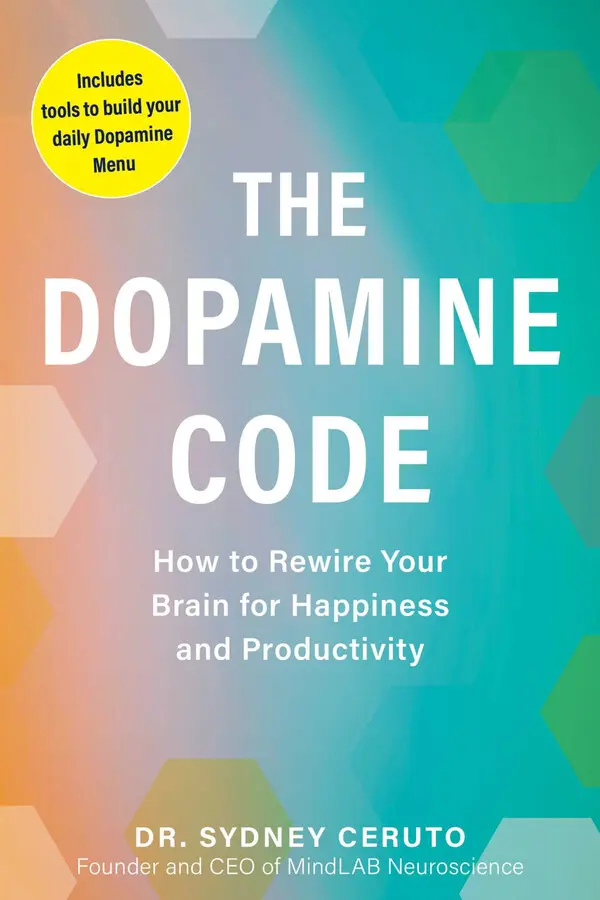
Dr. Ceruto holds a PhD in Behavioral & Cognitive Neuroscience from NYU and two Master’s degrees from Yale University. She lectures at the Wharton Executive Development Program at the University of Pennsylvania and has been an Executive Contributor to the Forbes Coaching Council since 2019. Dr. Ceruto is the author of The Dopamine Code (Simon & Schuster, June 2026). She founded MindLAB Neuroscience in 2000 and has spent over 26 years pioneering Real-Time Neuroplasticity™ — a methodology that permanently rewires the neural pathways driving behavior, decisions, and emotional responses.

References

Hamilton, J. P., Farmer, M., Fogelman, P., & Gotlib, I. H. (2015). Depressive rumination, the default-mode network, and the dark matter of clinical neuroscience. Biological Psychiatry, 78(4), 224-230. https://doi.org/10.1016/j.biopsych.2015.02.020

Kim, J., Andrews-Hanna, J. R., Eisenbarth, H., Lux, H. J., Lee, E., Lindquist, M. A., Losin, E. A. R., Wager, T. D., & Woo, C.-W. (2023). A dorsomedial prefrontal cortex-based dynamic functional connectivity model of rumination. Nature Communications, 14, 3692. https://doi.org/10.1038/s41467-023-39142-9

Ehring, T. (2021). Thinking too much: Rumination and psychopathology. World Psychiatry, 20(3), 441-442. https://doi.org/10.1002/wps.20910

Success Stories

“After the concussion, my processing speed collapsed — I couldn't hold complex information the way I used to, and no one could explain why the fog wasn't lifting. Dr. Ceruto mapped the damaged pathways and built compensatory networks around them. My brain doesn't work the way it did before the injury. It works differently — and in some ways, more efficiently than it ever did.”

Owen P., Founder & CEO Sports Performance Scottsdale, AZ

“When the inheritance came, it didn't feel like a gift — it felt like a grenade in every family relationship I had. I couldn't make a single financial decision without a flood of guilt and second-guessing. Years of talking through it hadn't changed anything. Dr. Ceruto identified the neural loop connecting money to fear of family rejection and dismantled it. The paralysis didn't fade — it stopped.”

Vivienne R., CFO Family Office Palm Beach, FL

“The way I was processing decisions under pressure had a cost I couldn't see — until Dr. Ceruto mapped it. She identified the neural pattern driving my reactivity in high-stakes situations and restructured it at the root. I don't just perform better under pressure now. I think differently under pressure. That's not something any executive coach or performance program ever came close to delivering.”

Rob Winston, Chief Operating Officer Goldman Sachs Manhattan, NY

“My phone was the first thing I touched in the morning and the last thing I put down at night — and every app blocker, digital detox protocol, and willpower-based system I tried lasted less than a week. Dr. Ceruto identified the variable-ratio reinforcement loop that had hijacked my attention circuits and dismantled it at the neurological level. My phone is still in my pocket. The compulsion to reach for it isn't. That's a fundamentally different kind of fix.”

Tomás R., COO Logistics & Supply Chain Lisbon, PT

“I'd optimized everything — diet, fitness, sleep — but my cognitive sharpness was quietly declining and no one could explain why. Dr. Ceruto identified the synaptic density patterns that were thinning and built a protocol to reverse the trajectory. This wasn't prevention in theory. My neuroplasticity reserve is measurably stronger now than it was three years ago. Nothing I'd tried before even addressed the right problem.”

Henrique L., Head of Strategic Planning Galp Lisbon, PT

“Color-coded calendars, alarms, accountability partners — I'd built an entire scaffolding system just to stay functional, and none of it addressed why my brain couldn't sequence and prioritize on its own. Dr. Ceruto identified the specific prefrontal pattern that was misfiring and restructured it. I don't need the scaffolding anymore. My brain actually does what I need it to do.”

Jordan K., VP of Product Enterprise SaaS San Francisco, CA

Frequently Asked Questions About Overthinking & Rumination in Wall Street

What is neuroscience-based rumination support?

Neuroscience-based rumination — repetitive, stuck-loop negative thinking — support identifies the specific brain circuits perpetuating an individual's overthinking pattern and targets intervention at the neural system level. This is distinct from general mindfulness or talk-based approaches, which address surface behavior without altering the underlying circuit dynamics.

Why does rumination feel productive even when it is not?

The brain’s self-referential processing system tags ruminative content as emotionally significant and unresolved, creating a persistent sense of urgency. The subgenual prefrontal cortex — the brain's executive control center — continuously signals that the thought requires attention, while the salience network fails to reclassify it as non-urgent. The result is that the loop feels like problem-solving — but neuroimaging confirms it operates in an abstract, verbal mode that recycles content without generating actionable output.

Who is this approach designed for?

This approach serves anyone whose overthinking has become chronic, involuntary, and resistant to conventional efforts — particularly individuals whose cognitive demands create the sustained activation patterns that feed ruminative circuits. Professionals operating in high-stakes decision environments, where post-event replay and anticipatory analysis are occupational habits, are especially susceptible to the neural entrenchment this methodology addresses.

What happens during the initial engagement?

The process begins with a Strategy Call with Dr. Ceruto, conducted by phone, at a fee of $250. This conversation maps the specific neural pattern driving the rumination — identifying whether the primary mechanism is default mode network dominance, salience network dysfunction, or executive depletion — and determines the most effective intervention pathway. Program structure and investment details are discussed during the Strategy Call.

How long does it take to see results?

Reductions in ruminative frequency and the ability to disengage from thought loops often emerge within the first weeks of targeted protocol work. Deeper architectural changes, including restoration of salience network switching, normalization of default mode network resting-state connectivity, and rebuilding of executive attentional capacity, develop progressively as the brain's self-referential circuits are recalibrated through sustained engagement.

Take the First Step Beyond Overthinking

The Strategy Call is a focused conversation with Dr. Ceruto that maps the specific neural mechanisms driving your concerns and determines the right path forward.

Book a Strategy Call
MindLAB Neuroscience consultation room
Locations

The Intelligence Brief

Neuroscience-backed analysis on how your brain drives what you feel, what you choose, and what you can’t seem to change — direct from Dr. Ceruto.