




Racing Thoughts in Wall Street

Racing thoughts are not a sign of an active mind. They are the product of a dysregulated thalamic filter — the brain's cognitive gatekeeper overwhelmed, flooding the cortex with unprocessed content faster than it can be evaluated.

Racing thoughts are not a sign of an active mind. They are the product of a dysregulated thalamic filter — the brain’s cognitive gatekeeper overwhelmed, flooding the cortex with unprocessed content faster than it can be evaluated.

Book a Strategy Call

Racing thoughts persist because the brain’s information-filtering system has lost the inhibitory control required to regulate the speed and volume of cognitive content reaching conscious awareness. Understanding this system at the circuit level is the first step toward restoring it.

The Problem: A Filter That Has Become an Amplifier

The thalamocortical loop governs the flow of information to conscious awareness. Every thought, sensation, and memory that reaches cortical processing passes through thalamic relay nuclei (related to the brain’s sensory relay station), which are regulated by the thalamic reticular nucleus — a thin shell of inhibitory neurons surrounding the thalamus that functions as the brain’s primary cognitive filter.

Under normal conditions, the thalamic reticular nucleus selectively inhibits off-target thalamic nuclei while releasing on-target ones, creating an attentional spotlight that suppresses irrelevant content and amplifies what matters. In racing thought states, this filtering function collapses. The thalamic reticular nucleus uses GABA — the brain’s primary inhibitory neurotransmitter — to maintain control over thalamic relay neurons. When GABAergic tone in the thalamic reticular nucleus declines — through chronic stress, sleep deprivation, or sustained arousal — the filter opens. Thalamic relay neurons fire freely, projecting unfiltered, unsorted content to the prefrontal cortex at a rate that exceeds its evaluative capacity.

The collapse is compounded by a paradoxical mechanism: under conditions of elevated neural activity, neurons in the thalamic reticular nucleus can switch from inhibitory to excitatory modes due to reduced capacity for rapid chloride extrusion. The filter does not merely weaken — it becomes an amplifier, actively accelerating information flow precisely when regulation is most needed.

Dense luminous neural threads condensing into single focused copper beam of clarity in deep navy void

The Mechanism: Why Thoughts Outpace the Brain’s Editor

The locus coeruleus — the brain’s primary arousal and cognitive tempo regulator — controls how fast the entire system runs through norepinephrine release to virtually every region of the cortex. At moderate firing levels, norepinephrine optimizes signal-to-noise ratio, enabling focused, efficient thinking. At chronically elevated levels norepinephrine amplifies both relevant and irrelevant cognitive content indiscriminately. Whatever is already looping in the mind is preferentially amplified by arousal rather than dampened.

The prefrontal cortex functions as the brain’s executive editor the chronic state for many high-arousal professionals too many thoughts, too fast, none completing before the next arrives.

Research confirms a clear distinction between productive fast thinking and pathological racing thoughts. In productive states, the prefrontal cortex acts as an executive director establishing racing thoughts as a distinct clinical driver independent of mood disorders.

The Solution: Restoring the Brain’s Cognitive Filter

Dr. Ceruto’s methodology addresses racing thoughts at the level of the thalamocortical system producing them, rather than attempting to manage symptoms through behavioral suppression.

The approach begins with identifying which specific mechanisms are driving the individual’s racing thought pattern. Thalamic reticular nucleus GABAergic failure, locus coeruleus hyperactivation, prefrontal executive depletion, and autonomic nervous system — the body’s automatic regulation system — imbalance each require different intervention strategies. A protocol targeting someone whose primary driver is thalamic filter dysfunction will differ fundamentally from one addressing locus coeruleus overdrive or prefrontal catecholamine saturation.

For thalamocortical dysregulation, the work involves restoring GABAergic inhibitory tone in the thalamic reticular nucleus — rebuilding the filter’s capacity to selectively gate information flow to the cortex. For arousal-dominant patterns, the methodology targets locus coeruleus firing rate, reducing norepinephrine output to the range where signal-to-noise discrimination is optimized rather than degraded. For prefrontal executive failure, the approach restores the catecholamine balance required for the prefrontal cortex to function as director rather than passenger.

The goal is not to slow thinking but to restore the brain’s capacity to regulate cognitive tempo — ensuring that thought speed serves purpose rather than overwhelming it.

Mahogany desk with crystal brain sculpture and MindLAB journal in warm lamp light surrounded by leather-bound volumes in institutional Wall Street study

Why Racing Thoughts Matters in Wall Street

Wall Street’s professional environment creates the precise neurochemical conditions that produce racing thoughts — sustained arousal, chronic threat monitoring, and insufficient recovery time for the brain’s inhibitory systems to reset.

The Financial District operates as a continuous decision-pressure environment with no structural relief. Markets are open 9:30 AM to 4:00 PM, but pre-market and after-market trading extends this window further, and global markets mean overnight developments in Asia and Europe require attention before the U.S. open. The New York Stock Exchange at 11 Wall Street processes 1.54 billion shares valued at $80.6 billion daily. Every professional operating within this system experiences a cognitive tempo set by the market’s own velocity.

The neurochemistry of trading directly feeds racing thought circuits. Market volatility events trigger catecholamine surges that shift the locus coeruleus into high tonic firing emotional reactions overwhelming rational processing, every emergency becoming habitual, and the inability to separate clear thinking from reactive responding.

The culture normalizes the very conditions that entrench the pattern. First-year analysts report sleeping five hours per night while working 95-plus hours per week. NREM slow-wave sleep is systematically curtailed. When slow-wave sleep is insufficient, the thalamic reticular nucleus cannot reset its inhibitory capacity, and the filter remains compromised the following day. Sleep deprivation and racing thoughts form a bidirectional loop: racing thoughts prevent sleep onset, and insufficient sleep degrades the very inhibitory systems that would contain them.

The annual bonus cycle adds a predictable 4-5 month overlay of intensified threat monitoring from October through February. Compensation decisions are made behind closed doors, generating months of anticipatory cognitive acceleration as professionals attempt to predict, influence, and interpret outcomes they cannot control. The cognitive process of anticipating and post-rationalizing these decisions represents a sustained racing-thought trigger layered on top of the baseline market-driven arousal.

Dr. Sydney Ceruto, PhD — Founder, MindLAB Neuroscience

Dr. Sydney Ceruto, PhD — Founder & CEO, MindLAB Neuroscience

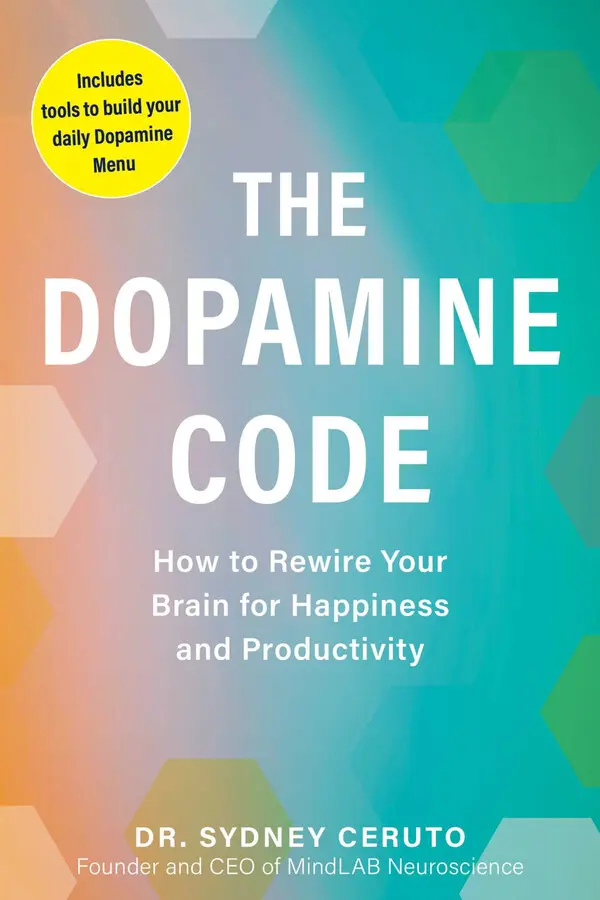
Dr. Ceruto holds a PhD in Behavioral & Cognitive Neuroscience from NYU and two Master’s degrees from Yale University. She lectures at the Wharton Executive Development Program at the University of Pennsylvania and has been an Executive Contributor to the Forbes Coaching Council since 2019. Dr. Ceruto is the author of The Dopamine Code (Simon & Schuster, June 2026). She founded MindLAB Neuroscience in 2000 and has spent over 26 years pioneering Real-Time Neuroplasticity™ — a methodology that permanently rewires the neural pathways driving behavior, decisions, and emotional responses.

References

Piguet, C., Dayer, A., Kosel, M., Desseilles, M., Vuilleumier, P., & Bertschy, G. (2010). Phenomenology of racing and crowded thoughts in mood disorders: A theoretical reappraisal. Journal of Affective Disorders, 121(3), 189-198. https://doi.org/10.1016/j.jad.2009.05.006

Ferguson, B. R., & Gao, W. J. (2018). Thalamic control of cognition and social behavior via regulation of gamma-aminobutyric acidergic signaling and excitation/inhibition balance in the medial prefrontal cortex. Biological Psychiatry, 83(8), 657-669. https://doi.org/10.1016/j.biopsych.2017.11.033

Ross, J. A., & Van Bockstaele, E. J. (2021). The locus coeruleus-norepinephrine system in stress and arousal: Unraveling historical, current, and future perspectives. Frontiers in Psychiatry, 11, 601519. https://doi.org/10.3389/fpsyt.2020.601519

Success Stories

“After the concussion, my processing speed collapsed — I couldn't hold complex information the way I used to, and no one could explain why the fog wasn't lifting. Dr. Ceruto mapped the damaged pathways and built compensatory networks around them. My brain doesn't work the way it did before the injury. It works differently — and in some ways, more efficiently than it ever did.”

Owen P., Founder & CEO Sports Performance Scottsdale, AZ

“I'd optimized everything — diet, fitness, sleep — but my cognitive sharpness was quietly declining and no one could explain why. Dr. Ceruto identified the synaptic density patterns that were thinning and built a protocol to reverse the trajectory. This wasn't prevention in theory. My neuroplasticity reserve is measurably stronger now than it was three years ago. Nothing I'd tried before even addressed the right problem.”

Henrique L., Head of Strategic Planning Galp Lisbon, PT

“When the inheritance came, it didn't feel like a gift — it felt like a grenade in every family relationship I had. I couldn't make a single financial decision without a flood of guilt and second-guessing. Years of talking through it hadn't changed anything. Dr. Ceruto identified the neural loop connecting money to fear of family rejection and dismantled it. The paralysis didn't fade — it stopped.”

Vivienne R., CFO Family Office Palm Beach, FL

“My phone was the first thing I touched in the morning and the last thing I put down at night — and every app blocker, digital detox protocol, and willpower-based system I tried lasted less than a week. Dr. Ceruto identified the variable-ratio reinforcement loop that had hijacked my attention circuits and dismantled it at the neurological level. My phone is still in my pocket. The compulsion to reach for it isn't. That's a fundamentally different kind of fix.”

Tomás R., COO Logistics & Supply Chain Lisbon, PT

“Color-coded calendars, alarms, accountability partners — I'd built an entire scaffolding system just to stay functional, and none of it addressed why my brain couldn't sequence and prioritize on its own. Dr. Ceruto identified the specific prefrontal pattern that was misfiring and restructured it. I don't need the scaffolding anymore. My brain actually does what I need it to do.”

Jordan K., VP of Product Enterprise SaaS San Francisco, CA

“The way I was processing decisions under pressure had a cost I couldn't see — until Dr. Ceruto mapped it. She identified the neural pattern driving my reactivity in high-stakes situations and restructured it at the root. I don't just perform better under pressure now. I think differently under pressure. That's not something any executive coach or performance program ever came close to delivering.”

Rob Winston, Chief Operating Officer Goldman Sachs Manhattan, NY

Frequently Asked Questions About Racing Thoughts in Wall Street

What is neuroscience-based racing thoughts support?

Neuroscience-based racing thoughts support identifies the specific neural mechanism producing the uncontrolled acceleration of cognitive content — whether thalamic filter dysfunction, locus coeruleus hyperactivation, prefrontal executive failure, or autonomic imbalance — and targets intervention at that system. This is distinct from relaxation-based approaches that address surface symptoms without restoring the brain’s information-filtering architecture.

Why can't racing thoughts be stopped by willpower alone?

Racing thoughts originate in subcortical systems — the thalamic reticular nucleus and locus coeruleus — that operate below the level of conscious control. The prefrontal cortex, which mediates willpower, is itself compromised by the same catecholamine excess that produces the racing. Attempting to suppress racing thoughts with a depleted prefrontal cortex is metabolically costly and typically unsuccessful, often intensifying the loop by adding frustration-driven arousal to the existing activation.

Who benefits from this approach?

This approach serves anyone whose thought speed has become uncontrollable and distressing — particularly individuals whose professional environments create sustained arousal states that chronically elevate locus coeruleus — the brain's alertness center — firing and degrade thalamic filtering. Professionals operating in high-velocity decision environments, where cognitive tempo is externally driven by market activity, regulatory deadlines, or continuous information flow, are especially vulnerable to the thalamocortical dysregulation — the breakdown of normal control systems — this methodology addresses.

What does the process involve?

The process begins with a Strategy Call with Dr. Ceruto, conducted by phone, at a fee of $250. This conversation maps the specific neural pattern driving the racing thoughts — identifying whether the primary mechanism is GABAergic filter failure, arousal system overdrive, or prefrontal depletion — and determines the most effective intervention pathway. Program structure and investment details are discussed during the Strategy Call.

How long does it take to regain control over thought speed?

Reductions in the intensity and intrusiveness of racing thoughts often emerge within the first weeks of targeted protocol work, as acute arousal contributors are addressed. Deeper restoration — rebuilding thalamic reticular nucleus inhibitory capacity, normalizing locus coeruleus firing patterns, and recalibrating prefrontal catecholamine balance — develops progressively as the brain’s filtering architecture is systematically repaired through sustained engagement.

Take the First Step Beyond Racing Thoughts

The Strategy Call is a focused conversation with Dr. Ceruto that maps the specific neural mechanisms driving your concerns and determines the right path forward.

Book a Strategy Call
MindLAB Neuroscience consultation room
Locations

The Intelligence Brief

Neuroscience-backed analysis on how your brain drives what you feel, what you choose, and what you can’t seem to change — direct from Dr. Ceruto.