Dopamine & Motivation on Wall Street

When the reward system that powered your career stops delivering, no amount of discipline compensates. Dr. Sydney Ceruto fixes the mechanism itself.

Dopamine is the molecular currency of motivation. It determines whether you pursue a goal, sustain effort toward it, and experience satisfaction when you arrive. When this system is functioning correctly, desire translates into action and action translates into reward. When it is dysregulated, the entire chain breaks, and what breaks first is almost never obvious to the person living inside it.

Book Your Consultation
ForbesUSA TodayHuffPostNewsweekAssociated PressCosmopolitanBusiness InsiderForbesUSA TodayHuffPostNewsweekAssociated PressCosmopolitanBusiness Insider

Reward System Reset

The brain’s reward valuation system has recalibrated its baseline upward: things that once produced genuine satisfaction no longer register. Dr. Ceruto identifies the specific reward architecture maintaining the pattern and restores the system’s capacity to respond to the inputs that actually matter.

Learn more about Reward System Reset in Wall Street →

Motivation Coaching

Motivation is not willpower: it is a dopamine-driven anticipatory signal that tells the brain a goal is worth pursuing. When that signal breaks down, the gap between intention and action becomes structural. Dr. Ceruto works at the level of the motivation architecture itself.

Learn more about Motivation Coaching in Wall Street →

Achievement Anhedonia

The promotion arrives, the goal is reached, the milestone is hit, and the expected satisfaction does not follow. The reward system has learned to code anticipation as rewarding while progressively devaluing arrival. Dr. Ceruto addresses the architecture that makes achievement feel empty.

Learn more about Achievement Anhedonia in Wall Street →

Dopamine Detox Coaching

Chronic exposure to high-dopamine inputs has downregulated the receptor system, requiring increasingly intense stimulation to produce the same signal. A true dopamine detox is not willpower: it is a structured protocol for allowing the system to recalibrate toward baseline sensitivity.

Learn more about Dopamine Detox Coaching in Wall Street →

Digital Overstimulation

Digital platforms exploit the dopamine system’s prediction and reward architecture through variable-ratio reinforcement: the same mechanism behind slot machines. The brain adapts by downregulating sensitivity, degrading the capacity to derive reward from lower-intensity experiences.

Learn more about Digital Overstimulation in Wall Street →

Procrastination & Avoidance

Procrastination is not laziness: it is the brain’s cost-benefit system consistently overweighting effort and underweighting reward. The dopamine signal that should make future reward feel present and motivating is absent, making the immediate discomfort of starting outweigh the distant benefit of finishing.

Learn more about Procrastination & Avoidance in Wall Street →

Pleasure-Pain Rebalancing

The brain’s opponent-process system maintains a pleasure-pain balance, and chronic overstimulation has tipped it toward sustained discomfort as the baseline state. The stimulating input is needed just to feel normal. Dr. Ceruto works at the level of the balance mechanism itself.

Learn more about Pleasure-Pain Rebalancing in Wall Street →

Why Wall Street Breaks the Reward System

The financial industry operates on a dopamine cycle that is engineered to be unsustainable. Bonus season delivers massive reward spikes that the brain calibrates against for the rest of the year. Trading floors create moment-to-moment dopamine fluctuations tied to profit and loss that condition the reward system to require constant stimulation. The gap between a winning quarter and the emotional flatness that follows is not a personality flaw: it is neurochemistry responding exactly as it was conditioned to.

The compression between FiDi office towers and TriBeCa residences means there is no geographic buffer between the environment that overstimulates the reward system and the one that demands you be present for your family. Professionals who spend twelve hours in a dopamine-saturated performance environment cannot simply switch off that circuitry when they walk through the front door. The brain does not have a commute long enough to recalibrate.

What makes Wall Street particularly damaging to the dopamine system is that the rewards are real and the stakes are legitimate. This is not a case of artificial stimulation: it is genuine achievement operating at a frequency that gradually desensitizes the very circuits that made the achievement possible. The people who reach the highest levels of financial performance are often the ones whose reward systems have been most thoroughly depleted by the process of getting there.

Dr. Ceruto works with individuals across the financial district who have reached a point where performance continues but satisfaction has disappeared. Her methodology restores dopamine regulation at the neurological level, rebuilding the capacity to experience reward from the accomplishments that objectively warrant it.


Dr. Sydney Ceruto, PhD, Neuroscientist & Author, MindLAB Neuroscience

Dr. Sydney Ceruto, PhD, Neuroscientist & Author, MindLAB Neuroscience

Dr. Ceruto holds a PhD in Behavioral & Cognitive Neuroscience from NYU and Master’s degrees in Clinical Psychology and Business Psychology from Yale University. She lectures at the Wharton Executive Development Program at the University of Pennsylvania and has been an Executive Contributor to the Forbes Coaching Council since 2019. Dr. Ceruto is the author of The Dopamine Code (Simon & Schuster, June 2026). She founded MindLAB Neuroscience in 2000 and has spent over 26 years leading it, pioneering Real-Time Neuroplasticity™, a methodology that durably rewires the neural pathways driving behavior, decisions, and emotional responses.

References

Schultz, W. (2016). Dopamine reward prediction-error signalling: A two-component response. Nature Reviews Neuroscience, 17(3), 183–195. https://doi.org/10.1038/nrn.2015.26

Salamone, J. D., & Correa, M. (2012). The mysterious motivational functions of mesolimbic dopamine. Neuron, 76(3), 470–485. https://doi.org/10.1016/j.neuron.2012.10.021

Hare, T. A., Camerer, C. F., & Rangel, A. (2009). Self-control in decision-making involves modulation of the vmPFC valuation system. Science, 324(5927), 646–648. https://doi.org/10.1126/science.1168450

Success Stories

“I just finished the comprehensive program with Dr. Ceruto and felt compelled to leave a review in hopes of steering someone in need toward MindLAB. This was truly an eye-opening experience. I learned so much about myself that I didn’t know existed. Dr. Ceruto was kind, compassionate, and generous with her time. When I needed extra encouragement, she was just a text or call away, no matter the day or time. Her knowledge of how our brain works, combined with that availability, was a game-changer.”

Dee, General Manager, Real Estate Group Zurich, CH

“Closing one deal was never enough, I'd already be chasing the next before the ink dried, and I told myself that was just ambition. Dr. Ceruto named the escalating standard driving it, a pattern that meant nothing would ever feel like enough. We rebuilt the baseline instead of trying to manage the chase. I still close deals. I just don't need the next one to feel whole.”

Connor B., Managing Partner, Boutique Law Firm Toronto, ON

“Before I completed the NeuroSync™ program, I struggled with fatigue, brain fog, and low motivation, even though I loved my role as CMO. Other coaching never addressed the root cause. Working with Dr. Ceruto at MindLab Neuroscience, I used the NeuroSync™ dopamine program to work through what was behind all that and follow a personalized plan. Within weeks, my focus and energy soared, and I led my team with new confidence. NeuroSync™ didn’t just sharpen my focus, it reignited my passion for my career.”

Jessica T., Chief Marketing Officer, Financial Services Firm Denver, CO

“Falling asleep was never the problem, staying asleep was. I'd wake at 3am every night with my mind fully alert for no reason I could find. What Dr. Ceruto and I landed on was that my body had locked into waking at that hour, on a schedule of its own. Once we addressed that pattern directly, I started sleeping through the night for the first time in over a decade.”

Toby H., Senior Portfolio Manager, Hedge Fund

“I struggled with anxiety since I was 13. I simply could not control my thoughts, and no medication or therapy was helping. Since working with Sydney, I've gained a whole new perspective on what anxiety actually is and, most importantly, how to work with it. Her approach is unlike anything I've ever experienced, a must for anyone who wants to understand what drives their actions and emotions. At 28, I'm finally in a happy place with solid emotional management and real coping skills.”

Lydia G. Paris, FR

“I came to Dr. Ceruto thinking I needed help with my career, but she quickly recognized that the real roadblocks were the relationships I was choosing and how I dealt with conflict. With her support, I finally left unhealthy situations I’d struggled to end for years. She helped me identify deep-seated patterns I didn’t realize were holding me back. I never feel rushed, and she follows up with detailed written insights I reflect on for weeks. She uncovered major blockers I would never have spotted alone.”

Rachel L., Meta New York, NY

Frequently Asked Questions About Dopamine and Motivation Optimization

Is dopamine really the brain's motivation chemical, or is that an oversimplification?

Dopamine's role is more precise than popular culture suggests. It is not the pleasure chemical: it is the prediction and motivation chemical. Dopamine neurons fire in response to rewards that exceed prediction, encoding the brain's assessment of which actions and pursuits are worth investing effort in. When this system is miscalibrated, motivation becomes unreliable, not because you lack drive, but because the brain's computation of what deserves drive has become inaccurate.

Can my dopamine system be recalibrated without medication?

Yes. The dopaminergic pathways governing motivation, reward prediction, and temporal discounting respond to targeted neural intervention that leverages neuroplasticity. While medication modulates dopamine availability chemically, Dr. Ceruto's approach restructures the circuits that process and deploy dopamine, producing architectural changes in how the motivation system computes priorities rather than simply providing more neurochemical fuel to unchanged circuits.

Why does my motivation come in intense bursts followed by periods of complete inaction?

Burst-and-crash motivation patterns reflect dopamine system calibration that responds to novelty and urgency rather than planned importance. The brain's reward system provides abundant dopamine for novel, exciting, or crisis-driven activities while generating insufficient drive for sustained, routine execution. This is an architecture pattern, not a discipline failure: the brain is allocating motivation according to its current calibration, not according to your conscious priorities.

How does Dr. Ceruto map my specific dopamine system function?

The process maps your motivation patterns against the known dopaminergic mechanisms: reward prediction accuracy, temporal discounting rate, novelty-seeking calibration, and the relationship between your motivation architecture and your conscious goals. This identifies whether the challenge is insufficient baseline dopamine tone, miscalibrated reward prediction, excessive temporal discounting, or reward system hijacking by maladaptive stimuli.

Can dopamine optimization improve procrastination?

Procrastination is one of the most direct outputs of dopaminergic temporal discounting: the brain assigns disproportionate value to immediate comfort relative to future outcomes. When the temporal discounting rate is recalibrated, the brain's valuation of future rewards increases relative to immediate comfort, producing natural forward momentum toward planned goals without the effortful willpower that conventional anti-procrastination strategies require.

How does screen and social media use affect the dopamine system?

High-frequency digital stimulation (social media notifications, content feeds, messaging apps) provides rapid, variable dopamine hits that recalibrate the reward system toward constant micro-stimulation. Over time, this raises the threshold for what the dopamine system considers rewarding, making sustained effort on lower-stimulation tasks increasingly difficult. Dr. Ceruto addresses this recalibration by restructuring the reward system's sensitivity parameters.

What is the connection between dopamine and The Dopamine Code by Dr. Ceruto?

The Dopamine Code (Simon & Schuster, June 2026) presents the neuroscience of dopamine and motivation in a format accessible to a general audience. The book explores how the dopamine system shapes behavior, decision-making, and life satisfaction, and introduces frameworks for understanding your own neurochemical patterns. Dr. Ceruto's work applies these principles at the individual neural architecture level with precision that a book format cannot provide.

What does the consultation cover for motivation challenges?

The consultation maps your specific dopaminergic architecture, identifying whether the motivation challenge traces to reward prediction errors, temporal discounting miscalibration, novelty-dependence, or reward system hijacking. You leave with a neurological understanding of why your motivation operates the way it does and which specific mechanisms can be targeted for recalibration.

Take the First Step

A one-hour consultation with Dr. Sydney Ceruto. You leave knowing which neural pattern is actually driving this, and what to do about it.

Book Your Consultation
Two navy leather armchairs face a marble table with a glass brain sculpture in a dark wood-paneled room under a copper lamp

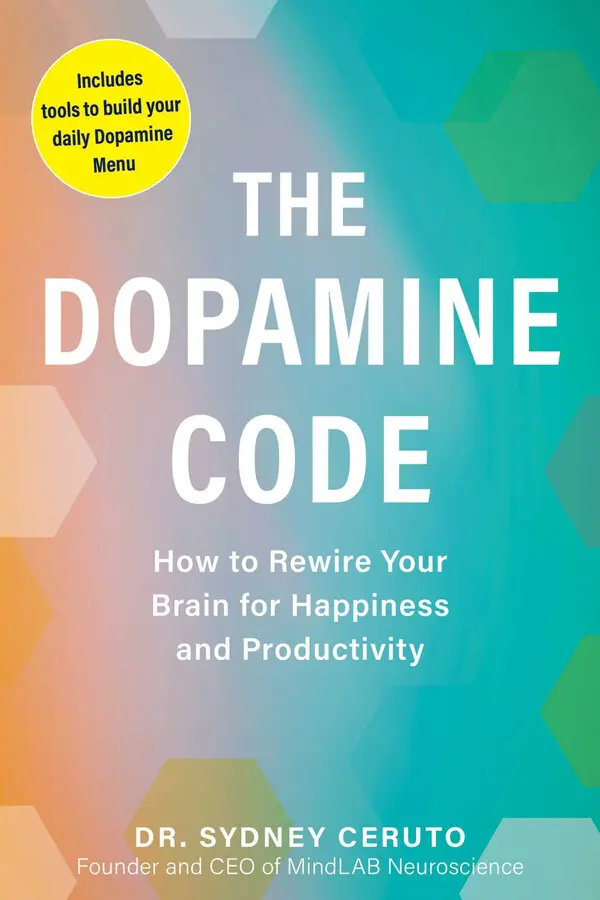
The Dopamine Code

Decode Your Drive

Why Your Brain Rewards the Wrong Things

Your brain's reward system runs every decision, every craving, every crash, and it was never designed for the life you're living. The Dopamine Code is Dr. Ceruto's framework for understanding the architecture behind what drives you, drains you, and keeps you locked in patterns that willpower alone will never fix.

Published by Simon & Schuster, The Dopamine Code is Dr. Ceruto's framework for building your own Dopamine Menu, a personalized system for motivation, focus, and enduring life satisfaction.

Order Now!

Available now

The Dopamine Code by Dr. Sydney Ceruto, Decode Your Drive
Locations
Secret Link