Dopamine & Motivation in Lisbon

When relocation was supposed to fix everything but the emptiness followed you, the problem is wired into your neurology. Dr. Sydney Ceruto addresses it there.

Dopamine is the molecular currency of motivation. It determines whether you pursue a goal, sustain effort toward it, and experience satisfaction when you arrive. When this system is functioning correctly, desire translates into action and action translates into reward. When it is dysregulated, the entire chain breaks, and what breaks first is almost never obvious to the person living inside it.

Book a Strategy Call
ForbesUSA TodayHuffPostNewsweekAssociated PressCosmopolitanBusiness InsiderForbesUSA TodayHuffPostNewsweekAssociated PressCosmopolitanBusiness Insider

Reward System Reset

The brain’s reward valuation system has recalibrated its baseline upward: things that once produced genuine satisfaction no longer register. Dr. Ceruto identifies the specific reward architecture maintaining the pattern and restores the system’s capacity to respond to the inputs that actually matter.

Learn more about Reward System Reset in Lisbon →

Motivation Coaching

Motivation is not willpower: it is a dopamine-driven anticipatory signal that tells the brain a goal is worth pursuing. When that signal breaks down, the gap between intention and action becomes structural. Dr. Ceruto works at the level of the motivation architecture itself.

Learn more about Motivation Coaching in Lisbon →

Achievement Anhedonia

The promotion arrives, the goal is reached, the milestone is hit, and the expected satisfaction does not follow. The reward system has learned to code anticipation as rewarding while progressively devaluing arrival. Dr. Ceruto addresses the architecture that makes achievement feel empty.

Learn more about Achievement Anhedonia in Lisbon →

Dopamine Detox Coaching

Chronic exposure to high-dopamine inputs has downregulated the receptor system, requiring increasingly intense stimulation to produce the same signal. A true dopamine detox is not willpower: it is a structured protocol for allowing the system to recalibrate toward baseline sensitivity.

Learn more about Dopamine Detox Coaching in Lisbon →

Digital Overstimulation

Digital platforms exploit the dopamine system’s prediction and reward architecture through variable-ratio reinforcement: the same mechanism behind slot machines. The brain adapts by downregulating sensitivity, degrading the capacity to derive reward from lower-intensity experiences.

Learn more about Digital Overstimulation in Lisbon →

Procrastination & Avoidance

Procrastination is not laziness: it is the brain’s cost-benefit system consistently overweighting effort and underweighting reward. The dopamine signal that should make future reward feel present and motivating is absent, making the immediate discomfort of starting outweigh the distant benefit of finishing.

Learn more about Procrastination & Avoidance in Lisbon →

Pleasure-Pain Rebalancing

The brain’s opponent-process system maintains a pleasure-pain balance, and chronic overstimulation has tipped it toward sustained discomfort as the baseline state. The stimulating input is needed just to feel normal. Dr. Ceruto works at the level of the balance mechanism itself.

Learn more about Pleasure-Pain Rebalancing in Lisbon →

Why Lisbon Exposes Dopamine Dysfunction Others Hide

Lisbon has become one of Europe’s primary destinations for professionals who believed a change of environment would restore what years of overwork depleted. The Web Summit ecosystem, the growing startup district in Parque das Nacoes, and the digital nomad infrastructure across Principe Real and Santos have attracted a population of high-performers who relocated expecting that slower pace and better quality of life would solve what felt like burnout. For many, the opposite happened. The reduced external stimulation revealed a dopamine system that had been masked by the very intensity they were escaping.

The expatriate experience in Lisbon creates a specific neurological vulnerability. Geographic distance from established support systems, professional networks, and cultural familiarity removes the environmental scaffolding that was compensating for underlying reward-system dysfunction. When the Alfama sunsets and Cascais weekends stop delivering the emotional response they produced in the first months, the realization arrives that the problem was never the city you left: it was the neural architecture you brought with you.

The cost-of-living transition that draws many professionals to Lisbon introduces its own reward-system disruption. Financial pressure decreases, but the brain does not automatically recalibrate its reward thresholds downward. The dopamine system that was conditioned by years of high-stakes professional environments continues operating on those settings even when the external demands have changed. The result is a persistent feeling of purposelessness that has nothing to do with purpose and everything to do with neurochemistry.

Dr. Ceruto works with individuals in Lisbon and across Portugal who have discovered that relocation did not deliver the internal shift they were seeking. Her methodology addresses the dopamine regulation patterns that travel with you regardless of geography, restoring the capacity for sustained motivation and genuine satisfaction in the life you have actually chosen.


Dr. Sydney Ceruto, PhD, Neuroscientist & Author, MindLAB Neuroscience

Dr. Sydney Ceruto, PhD, Neuroscientist & Author, MindLAB Neuroscience

Dr. Ceruto holds a PhD in Behavioral & Cognitive Neuroscience from NYU and Master’s degrees in Clinical Psychology and Business Psychology from Yale University. She lectures at the Wharton Executive Development Program at the University of Pennsylvania and has been an Executive Contributor to the Forbes Coaching Council since 2019. Dr. Ceruto is the author of The Dopamine Code (Simon & Schuster, June 2026). She founded MindLAB Neuroscience in 2000 and has spent over 26 years leading it, pioneering Real-Time Neuroplasticity™, a methodology that durably rewires the neural pathways driving behavior, decisions, and emotional responses.

References

Schultz, W. (2016). Dopamine reward prediction-error signalling: A two-component response. Nature Reviews Neuroscience, 17(3), 183–195. https://doi.org/10.1038/nrn.2015.26

Salamone, J. D., & Correa, M. (2012). The mysterious motivational functions of mesolimbic dopamine. Neuron, 76(3), 470–485. https://doi.org/10.1016/j.neuron.2012.10.021

Hare, T. A., Camerer, C. F., & Rangel, A. (2009). Self-control in decision-making involves modulation of the vmPFC valuation system. Science, 324(5927), 646–648. https://doi.org/10.1126/science.1168450

Success Stories

“I told myself I just needed less sleep than most people, until the fatigue caught up with everything else in my life. Dr. Ceruto looked at how long my sleep had been breaking down, and she worked with me to rebuild it. I wake up rested now, which I genuinely didn't think was possible for me anymore.”

Ingrid L., Senior Consultant, Management Consulting

“For a long stretch I functioned fine on the outside while feeling almost nothing underneath it, and I assumed that was just what adulthood felt like. Dr. Ceruto had me see the flatness as something that had developed, not a personality trait, and worked with me to change it. Life has color again in a way I'd forgotten was possible.”

Adaeze O. Lisbon, PT

“When Jack and I first came to Dr. Ceruto, our marriage was in shambles and our children were suffering. Two therapists had already failed us. From our first session, I knew Dr. Ceruto was different. Her ability to connect with each of us individually and as a couple was astounding. She helped us uncover the root causes of our conflicts and taught us how to communicate effectively through neuroscience-based techniques. What amazed me most was how she worked with our children. She helped them express their feelings and taught Jack and me how to truly listen. Her round-the-clock support during critical moments prevented us from falling back into old patterns. Today, our home is filled with laughter and love. Jack and I have rediscovered our connection, and our children are thriving. Dr. Ceruto’s exceptional skills and dedication transformed our family from battlefield to bliss our family’s transformation became our lived reality.”

Jack & Danielle D. Austin, TX

“I have suffered from chronic anxiety and depression my entire adult life. I began seeing her and learned not only why I was anxious and sad, but how, through simple behavior changes, I could finally stop these feelings for good. That was 8 years ago and I still learn something new and helpful each visit.”

Erick W. Singapore

“A car alarm, a raised voice, even certain kinds of silence could put me on edge for hours, and I'd stopped questioning why. Dr. Ceruto took on the constant alertness rooted in an earlier period of my life and worked through it directly rather than just teaching me to manage it. The edge is gone. I didn't realize how much of my day it had been quietly running.”

Anouk T. London, UK

“Refreshing the same three apps for hours felt like productivity, not a problem, until I realized I couldn't go twenty minutes without checking something. Every screen-time limit I set got overridden within a day. Dr. Ceruto walked me through the reward pattern that had trained my attention to chase novelty over depth. Once that habit was broken, the pull to check simply wasn't there to override anymore.”

Priyanka V., Head of Product, Health Tech Austin, TX

Frequently Asked Questions About Dopamine and Motivation Optimization

Is dopamine really the brain's motivation chemical, or is that an oversimplification?

Dopamine's role is more precise than popular culture suggests. It is not the pleasure chemical: it is the prediction and motivation chemical. Dopamine neurons fire in response to rewards that exceed prediction, encoding the brain's assessment of which actions and pursuits are worth investing effort in. When this system is miscalibrated, motivation becomes unreliable, not because you lack drive, but because the brain's computation of what deserves drive has become inaccurate.

Can my dopamine system be recalibrated without medication?

Yes. The dopaminergic pathways governing motivation, reward prediction, and temporal discounting respond to targeted neural intervention that leverages neuroplasticity. While medication modulates dopamine availability chemically, Dr. Ceruto's approach restructures the circuits that process and deploy dopamine, producing architectural changes in how the motivation system computes priorities rather than simply providing more neurochemical fuel to unchanged circuits.

Why does my motivation come in intense bursts followed by periods of complete inaction?

Burst-and-crash motivation patterns reflect dopamine system calibration that responds to novelty and urgency rather than planned importance. The brain's reward system provides abundant dopamine for novel, exciting, or crisis-driven activities while generating insufficient drive for sustained, routine execution. This is an architecture pattern, not a discipline failure: the brain is allocating motivation according to its current calibration, not according to your conscious priorities.

How does Dr. Ceruto assess my specific dopamine system function?

The assessment maps your motivation patterns against the known dopaminergic mechanisms: reward prediction accuracy, temporal discounting rate, novelty-seeking calibration, and the relationship between your motivation architecture and your conscious goals. This identifies whether the challenge is insufficient baseline dopamine tone, miscalibrated reward prediction, excessive temporal discounting, or reward system hijacking by maladaptive stimuli.

Can dopamine optimization improve procrastination?

Procrastination is one of the most direct outputs of dopaminergic temporal discounting: the brain assigns disproportionate value to immediate comfort relative to future outcomes. When the temporal discounting rate is recalibrated, the brain's valuation of future rewards increases relative to immediate comfort, producing natural forward momentum toward planned goals without the effortful willpower that conventional anti-procrastination strategies require.

How does screen and social media use affect the dopamine system?

High-frequency digital stimulation (social media notifications, content feeds, messaging apps) provides rapid, variable dopamine hits that recalibrate the reward system toward constant micro-stimulation. Over time, this raises the threshold for what the dopamine system considers rewarding, making sustained effort on lower-stimulation tasks increasingly difficult. Dr. Ceruto addresses this recalibration by restructuring the reward system's sensitivity parameters.

What is the connection between dopamine and The Dopamine Code by Dr. Ceruto?

The Dopamine Code (Simon & Schuster, June 2026) presents the neuroscience of dopamine and motivation in a format accessible to a general audience. The book explores how the dopamine system shapes behavior, decision-making, and life satisfaction, and introduces frameworks for understanding your own neurochemical patterns. Dr. Ceruto's work applies these principles at the individual neural architecture level with precision that a book format cannot provide.

What does the Strategy Call cover for motivation challenges?

The Strategy Call maps your specific dopaminergic architecture, identifying whether the motivation challenge traces to reward prediction errors, temporal discounting miscalibration, novelty-dependence, or reward system hijacking. You leave with a neurological understanding of why your motivation operates the way it does and which specific mechanisms can be targeted for recalibration.

Take the First Step

One hour with Dr. Sydney Ceruto. You leave knowing which neural pattern is actually driving this, and what to do about it.

Book a Strategy Call
MindLAB Neuroscience strategy call setting

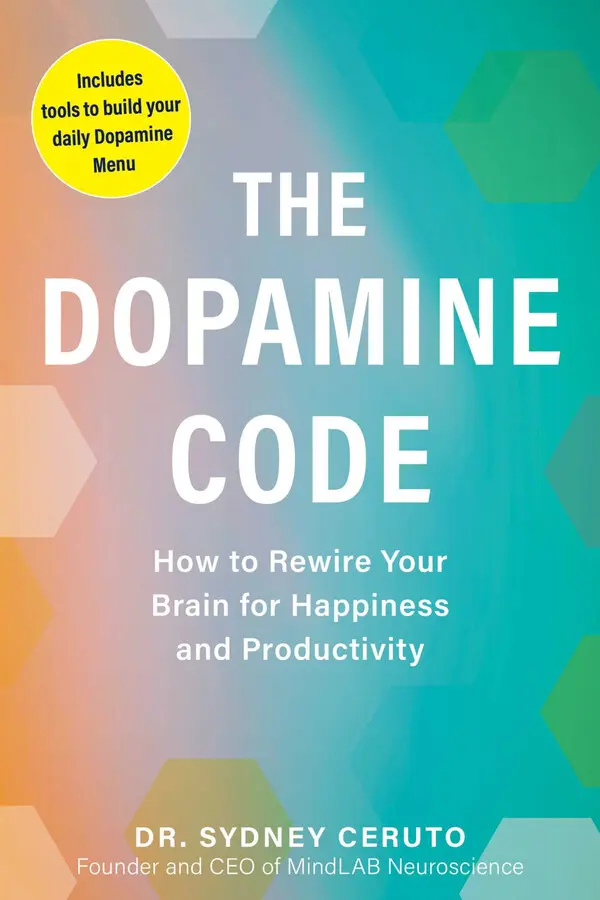
The Dopamine Code

Decode Your Drive

Why Your Brain Rewards the Wrong Things

Your brain's reward system runs every decision, every craving, every crash, and it was never designed for the life you're living. The Dopamine Code is Dr. Ceruto's framework for understanding the architecture behind what drives you, drains you, and keeps you locked in patterns that willpower alone will never fix.

Published by Simon & Schuster, The Dopamine Code is Dr. Ceruto's framework for building your own Dopamine Menu, a personalized system for motivation, focus, and enduring life satisfaction.

Order Now!

Available now

The Dopamine Code by Dr. Sydney Ceruto, Decode Your Drive
Locations