Self-Esteem & Self-Worth in Miami

Miami's comparison culture runs on visible status. When your brain's self-worth circuits are calibrated to an ever-moving standard, no achievement registers as enough.

Low self-esteem is not a character flaw or a gap in confidence waiting to be filled. It is a pattern — a learned way your brain has organized information about who you are and what you deserve, reinforced over years through specific neural circuits that govern self-perception and self-valuation. When those circuits are locked in a negative configuration, the evidence doesn't matter. Accomplishments don't register. Praise slides off. The inner verdict was written long before the results came in.

At MindLAB Neuroscience, I work at the level where self-worth actually lives: the brain's self-referential processing networks and reward architecture. This is not about affirmations or "building confidence." It is about restructuring the neural framework through which you evaluate yourself — so that your brain stops generating a distorted picture of who you are and begins producing an accurate one.

Book a Strategy Call

Why Telling Yourself You’re Worthy Doesn’t Work

Most people who struggle with low self-esteem have been told, at some point, to simply think more positively about themselves. Repeat the affirmation. Make a list of your strengths. Remember your accomplishments. The advice is well-meaning — and it almost never works, because it targets the narrative layer of the mind while leaving the neural infrastructure untouched.

Self-worth is not stored in your thoughts. It is encoded in your brain’s self-referential processing circuits — a network anchored in the medial prefrontal cortex — the region responsible for how the brain models, evaluates, and narrates the self. When this network runs a consistent negative self-model, it acts as a filter on incoming experience. Good feedback gets discounted as an exception. Criticism confirms what the brain already believes. The model self-perpetuates, not because you are flawed, but because that is how prediction-based neural systems work. They conserve energy by confirming existing models rather than constantly revising them.

This is the core mechanism behind chronic low self-esteem: the brain is not being irrational. It is being efficient — and that efficiency is working against you.

The Architecture of Self-Valuation

Self-worth is constructed through feedback loops. The brain generates a prediction about how you will be received — socially, professionally, relationally — and then measures incoming signals against that prediction. Over time, this process builds a valuation model: an implicit, constantly updated estimate of your worth in a given context.

When these valuation circuits are calibrated correctly, positive experience updates the model upward. Recognition lands. Achievement registers. The feedback loop is responsive. But when the model is set below baseline — through early relational experiences, chronic stress, sustained social comparison, or environments that consistently returned negative feedback — the circuit becomes resistant to revision. The prediction of low worth generates behavior that tends to confirm it: avoiding opportunities, minimizing accomplishments, withdrawing from relationships that might reveal the gap between how you are seen and how you see yourself.

This is not weakness. It is prediction error — the brain defending a model it has invested heavily in building, even when that model is producing suffering.

What Change Actually Requires

Restructuring a deeply embedded self-valuation model requires working at the level of the circuits that built it — not the thoughts that reflect it. The medial prefrontal cortex is neuroplastic throughout life. It rewires in response to sustained, specific experience. But the keyword is sustained — change at this level does not happen through insight alone, or through a single powerful conversation, or even through years of talking about the problem.

It happens through the repeated interruption of the prediction-confirmation loop. When the brain is guided to generate a different prediction — and then receives experience that confirms it — the valuation model begins to shift. Slowly at first. Then with increasing momentum, because the same efficiency that locked in the old model now accelerates the new one.

My work is precisely structured to create those interruptions. I focus on how your specific neural architecture is maintaining the low self-worth model: what inputs it is selectively attending to, what signals it is discounting, where the prediction error is occurring, and how your behavioral patterns are feeding the loop. The intervention is targeted. It is not generic. Because low self-esteem in someone navigating a high-pressure family system looks entirely different from low self-esteem in someone whose identity was built around performance that has now become unstable — and the neural work is different in each case.

The Dopamine Connection

Self-worth is also deeply intertwined with the brain’s reward system — the dopamine architecture that assigns value to experiences, relationships, and outcomes. When the self-valuation model runs negative, the reward system often reflects it: effort feels pointless, anticipation is replaced by dread, and the motivational gradient that makes growth feel worth pursuing goes flat.

This is not depression, though it can coexist with it. It is a reward calibration problem — the brain has learned not to anticipate positive outcomes for the self, and so it stops generating the dopamine signals that make pursuing them feel worthwhile. The result is a kind of motivational paralysis that looks like laziness or apathy from the outside, and feels like resignation from the inside.

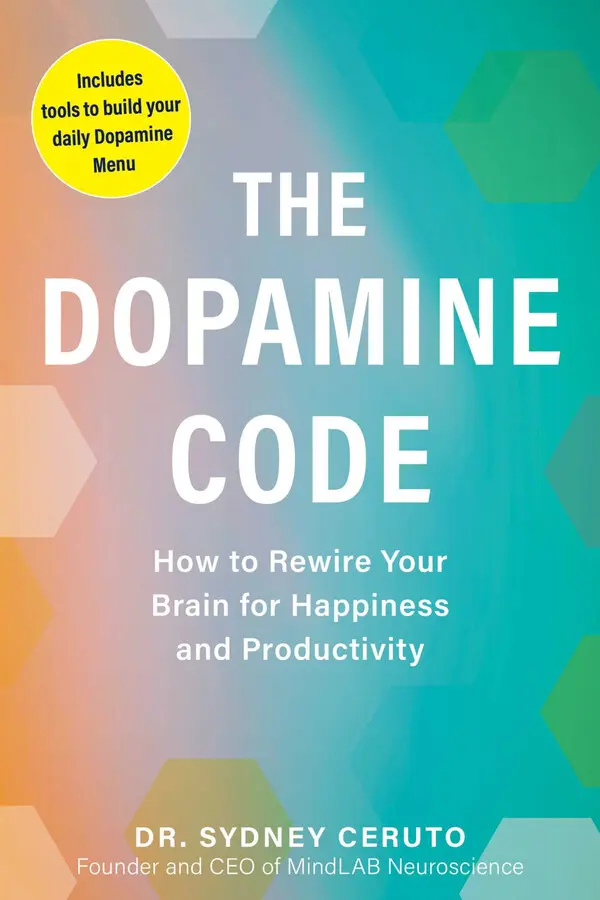
For a complete framework on understanding and resetting your dopamine reward system, I cover the full science in my forthcoming book The Dopamine Code (Simon & Schuster, June 2026). Learn more.

Who This Work Is For

The people who come to me with self-esteem and self-worth concerns are not people who have failed. They are people who have built entire lives — careers, relationships, external markers of success — and still wake up every morning with a quiet conviction that they are not enough, that they are one mistake away from exposure, that the positive things in their lives are precarious in ways the negative ones never are.

They are navigating high-stakes decisions with a brain that keeps undermining them. Managing family systems where their worth was never modeled clearly. Holding together demanding responsibilities while running an internal monologue that would disqualify them from the very roles they are successfully performing. The external picture and the internal experience are radically misaligned — and that misalignment is exhausting in ways that are hard to explain to people who have not lived it.

Marble console with crystal brain sculpture and MindLAB journal in warm Miami evening light with tropical hardwood and copper accents

If this resonates, you are not broken. You are operating with a neural architecture that was built for a different environment than the one you are now in. That architecture can be restructured. The work is rigorous, precise, and grounded in the same science that governs every other aspect of brain function. There is nothing soft about it — and the results are not soft either.

Why Self-Esteem & Self-Worth Matters in Miami

Self-Esteem & Self-Worth in Miami

Miami has built one of the most demanding social-comparison environments in the world — and done it quietly, without ever advertising itself that way. The city runs on visible prosperity. What you wear, where you are seen, how your body looks, which neighborhood your address signals, which table you are seated at — these are not superficial concerns here. They function as a real-time calibration system, a continuous ambient assessment of where you stand relative to everyone around you.

The result, for many people living and working in Miami, is a state of chronic self-evaluation that is nearly impossible to turn off. The standard is not fixed. It moves. In Brickell’s financial corridors, where Latin American capital and international banking intersect, worth is denominated in deal flow and proximity to influence. In Wynwood, where a neighborhood that once held warehouses now holds tech leases — Amazon’s 75,000-square-foot Wynwood presence, Palantir’s 2026 relocation — the metric shifts: your idea, your aesthetic, your signal within a scene that is itself mid-transformation. In Coral Gables, University of Miami culture creates an influencer-adjacent social hierarchy where visibility is its own form of currency. In South Beach, the fitness and beauty industrial complex has produced what Washington Post documented in late 2025 as turf wars over identity real estate — who gets to represent what, who is seen with whom, whose image carries authority.

None of these environments were designed to support a stable sense of self-worth. They were designed to generate aspiration — which requires, structurally, that many people feel they have not yet arrived.

Miami’s demographic complexity adds another layer. Approximately 70% of Miami-Dade residents identify as Hispanic or Latino — but that category contains Cuban-American establishment families, Venezuelan and Argentine newcomers navigating post-migration identity, Anglo and tech transplants who moved from cities with entirely different social languages. There is no single metric for belonging here. There are multiple simultaneous status systems, each with their own rules, and most people are operating in at least two of them at once. The internal cost of that constant code-switching — of never being quite sure which version of yourself is performing adequately in which context — registers in the brain’s self-valuation circuits as chronic low-grade threat.

The migration of New York wealth following the elimination of state income tax has added another destabilizing element: a mismatch between the understated old-money signals transplants bring and Miami’s native visible-wealth language. People who were entirely confident in their previous social context arrive in Miami and find their calibration system no longer works. That disorientation often surfaces as self-doubt that has no obvious explanation — because the explanation is architectural, not personal.

My work in Miami addresses the specific neural dynamics these environments produce. The self-referential processing circuits that govern self-worth do not distinguish between a genuine threat and an ambient social comparison. They register both as information about where you stand. When that information is relentlessly comparative and unstable, the brain’s valuation model defaults to low — not because you are not enough, but because the input environment has been engineered to ensure that enough is always just out of reach. Restructuring that model requires precision work at the circuit level. That is exactly what I do.

Dr. Sydney Ceruto, PhD — Founder, MindLAB Neuroscience

Dr. Sydney Ceruto, PhD — Founder & CEO, MindLAB Neuroscience

Dr. Ceruto holds a PhD in Behavioral & Cognitive Neuroscience from NYU and two Master’s degrees from Yale University. She lectures at the Wharton Executive Development Program at the University of Pennsylvania and has been an Executive Contributor to the Forbes Coaching Council since 2019. Dr. Ceruto is the author of The Dopamine Code (Simon & Schuster, June 2026). She founded MindLAB Neuroscience in 2000 and has spent over 26 years pioneering Real-Time Neuroplasticity™ — a methodology that permanently rewires the neural pathways driving behavior, decisions, and emotional responses.

References

Northoff, G., Heinzel, A., de Greck, M., Bermpohl, F., Dobrowolny, H., & Panksepp, J. (2006). Self-referential processing in our brain — A meta-analysis of imaging studies on the self. NeuroImage, 31(1), 440–457. https://doi.org/10.1016/j.neuroimage.2005.12.002

Chavez, R. S., & Heatherton, T. F. (2015). Multimodal frontostriatal connectivity underlies individual differences in self-esteem. Social Cognitive and Affective Neuroscience, 10(3), 364–370. https://doi.org/10.1093/scan/nsu063

Eisenberger, N. I., Inagaki, T. K., Muscatell, K. A., Haltom, K. E. B., & Leary, M. R. (2011). The neural sociometer: Brain mechanisms underlying state self-esteem. Journal of Cognitive Neuroscience, 23(11), 3448–3455. https://doi.org/10.1162/jocn_a_00031

Krusemark, E. A., Campbell, W. K., & Clementz, B. A. (2008). Attributions, deception, and event related potentials: An investigation of the self-serving bias. Psychophysiology, 45(4), 511–515. https://doi.org/10.1111/j.1469-8986.2008.00659.x

Success Stories

“Dr. Ceruto's methodology took me from a founder on the verge of quitting to a leader capable of building the team and culture that drove Liquid IV's success. Her ability to restructure how I make decisions and lead under pressure changed the trajectory of the entire company. I don't say that lightly. The company I built after working with her was fundamentally different from the company I was building before — because I was fundamentally different.”

Brandin C. — Tech Founder Los Angeles, CA

“I knew the scrolling was a problem, but I didn't understand why I couldn't stop — or why it left me feeling hollow every time. Dr. Ceruto identified the dopamine-comparison loop that had fused my sense of worth to a feed. Years of trying to set boundaries with my phone hadn't worked because the problem was never the phone. Once the loop broke, the compulsion just stopped. My relationships started recovering almost immediately.”

Anika L. — Creative Director Los Angeles, CA

“When my youngest left for college, I didn't just feel sad — I felt erased. My entire sense of self had been wired to caregiving for two decades, and I didn't know who I was without it. Years of talk-based approaches hadn't touched it. Dr. Ceruto mapped the identity circuitry that had fused with the role and restructured it. I didn't find a new purpose — I found the one that had been underneath the whole time.”

Diane L. — Nonprofit Director Chicago, IL

“Ninety-hour weeks felt like discipline — the inability to stop felt like a competitive advantage. Nothing I tried touched it because nothing identified what was actually driving it. Dr. Ceruto mapped the dopamine loop that had fused my sense of identity to output. Once that circuit was visible, she dismantled it. I still work at a high level. I just don't need it to know who I am anymore.”

Jason M. — Private Equity New York, NY

“My kids had been sleeping through the night for three years, but my brain hadn't caught up. I was still waking every ninety minutes like clockwork — no amount of sleep hygiene or supplements touched it. Dr. Ceruto identified the hypervigilance loop that had hardwired itself during those early years and dismantled it at the source. My brain finally learned the threat was over. I sleep through the night now without effort.”

Catherine L. — Board Director Greenwich, CT

“The way I was processing decisions under pressure had a cost I couldn't see — until Dr. Ceruto mapped it. She identified the neural pattern driving my reactivity in high-stakes situations and restructured it at the root. I don't just perform better under pressure now. I think differently under pressure. That's not something any executive coach or performance program ever came close to delivering.”

Rob W. — Portfolio Manager Manhattan, NY

Frequently Asked Questions About Self-Esteem & Self-Worth

What is the difference between self-esteem and self-worth?

Self-esteem typically refers to how you evaluate yourself in specific domains — your competence, your performance, your standing in a group. It tends to fluctuate with outcomes. Self-worth is the deeper, more foundational sense that you have intrinsic value independent of what you achieve or how others respond to you. In neurological terms, self-esteem is more closely tied to the brain's performance-feedback circuits, while self-worth is encoded in the self-referential processing network — the architecture that constructs and maintains your core self-model. When self-worth is low, strong self-esteem in specific domains provides little real protection. The foundational valuation is what needs restructuring.

Can low self-worth be changed as an adult, or is it fixed by childhood experience?

The brain retains neuroplasticity — the capacity to reorganize and restructure — throughout adult life. The self-referential processing circuits that encode your self-model are not frozen in childhood. They are experience-dependent, which means they built in response to specific inputs, and they can be restructured through sustained, targeted work. What does not change through intention alone is the efficiency with which the brain defends existing models. That is why insight, affirmations, and talk-based approaches have limited reach for deeply embedded self-worth patterns. The restructuring needs to happen at the level of the neural architecture itself, not the narrative layer built on top of it.

How does the brain maintain low self-worth even when the evidence points the other way?

The brain's prediction systems are conservative by design. Once a self-model is established — once the brain has built a working model of how much you are worth in a given context — it filters incoming information to confirm that model rather than revise it. Positive feedback gets processed as an exception or as luck. Negative feedback confirms the existing prediction. This is not a cognitive distortion in the clinical sense. It is the normal operation of a prediction-based system that has learned an inaccurate baseline. The fix is not more positive thinking. It is a sustained interruption of the prediction-confirmation loop through targeted neural restructuring.

What does a Strategy Call involve, and is it right for me?

A Strategy Call is a one-hour phone consultation — not a virtual session, not an in-person meeting. It is a precision conversation: I assess your specific neural patterns, the environmental factors shaping your self-worth, and whether my methodology is the right fit for your situation. The fee is $250. This does not apply toward any program investment. The call is designed to give you a clear, honest picture of what the work would involve and what outcomes are realistic for your particular case. If it is not the right fit, I will tell you that directly.

Why don't positive experiences seem to improve how I feel about myself?

When the brain's self-valuation model is set below baseline, it processes positive experience through a filter that discounts its relevance to the self. This is a predictable function of how the self-referential processing network operates: it is not designed to update on individual data points. It updates on patterns — on sustained, repeated experience that is specific enough to challenge the existing model rather than be absorbed into it. A single success, a single compliment, even a year of external validation often fails to move the model because the brain has already explained it away before the information reaches the circuits that would need to integrate it.

How is this different from working with a therapist or taking medication?

My work is not a mental health practice and I do not prescribe medication — those are separate domains with different tools and different regulatory frameworks. What I do is applied neuroscience: working directly with the neural systems that govern self-perception, self-valuation, and reward architecture to produce structural change. The approach is not talk-based in the traditional sense. It is not oriented toward processing the past or managing symptoms. It is oriented toward restructuring the neural circuits that are currently producing the problem — with precision, with mechanism-level understanding, and with a clear target for what change looks like at the brain level.

Is the work suitable for someone who is generally high-functioning but privately struggles with self-worth?

This describes the majority of the people I work with. The public-private gap — appearing capable, composed, and accomplished while privately running a self-worth model that is significantly more negative than the external picture suggests — is one of the most common presentations I see. The gap itself creates its own burden: the energy required to maintain the external performance while managing the internal narrative is significant, and it compounds over time. The work is well-suited to high-functioning individuals precisely because the neural architecture is intact and capable. The problem is not capacity. It is calibration.

How long does it take to see real change in self-worth?

The honest answer is: it depends on how deeply the self-worth model is embedded, how much the current environment is actively reinforcing it, and how willing you are to engage with a process that requires sustained effort rather than periodic insight. Neural restructuring at the level of the self-referential processing network is not a quick intervention. Most people begin to notice meaningful shifts within weeks — not because the work is complete, but because even partial restructuring changes how the brain filters incoming experience. Lasting change at the architecture level typically requires months of committed engagement. I am transparent about this from the first conversation.

I've tried other approaches before. Why would this be different?

Most approaches to low self-worth target the symptom layer — the thoughts, the behavioral patterns, the emotional responses — without reaching the neural infrastructure that generates them. They can produce real but temporary relief: the thinking shifts, but the underlying model reverts because nothing changed at the level where the model lives. My work goes to the source. That does not make it easier or faster, but it does make it more durable. The change holds because the architecture changed — not because you found a better way to manage a circuit that is still running the same program underneath.

How do I take the first step?

The entry point is a Strategy Call — a one-hour phone consultation at a fee of $250. Before that call happens, I review what you share about your situation to ensure I can offer something genuinely useful. I do not take every inquiry. The call is not a sales conversation. It is a diagnostic conversation: precise, honest, and oriented entirely toward whether the work is right for your specific neural architecture and circumstances. If it is, we will know by the end of the hour.

Also available in: Wall Street · Midtown Manhattan · Beverly Hills · Lisbon

Take the First Step

The Strategy Call is a focused conversation with Dr. Ceruto that maps the specific neural mechanisms driving your concerns and determines the right path forward.

Book a Strategy Call
MindLAB Neuroscience consultation room
Locations

The Intelligence Brief

Neuroscience-backed analysis on how your brain drives what you feel, what you choose, and what you can’t seem to change — direct from Dr. Ceruto.