Digital Overstimulation in Midtown Manhattan

Midtown's media and advertising industries produce the attention-capture mechanisms that recalibrate everyone else's dopamine systems — and they are not immune to what they build.

The screen pulls harder than anything else. Focus fragments. Simple pleasures stop registering.

Digital overstimulation has recalibrated the brain's reward architecture.

Book a Strategy Call

Key Points

  1. The work of addressing digital overstimulation at the neural architecture level is not about willpower, screen time limits, or notification settings.
  2. The dopamine system's prediction circuits have been trained to generate strong approach signals toward digital stimulation even when the conscious mind is not interested in consuming it.
  3. This is the core of what I mean when I describe digital overstimulation as a neural recalibration problem rather than a behavioral habit.
  4. When platforms route that signal through an unpredictable intermittent schedule, the combination of dopamine anticipation and social significance produces a reinforcement loop that individual restraint is poorly equipped to counter.
  5. This is a clear indicator that behavior is being driven by the wanting system rather than the liking system — the dopamine architecture that generates approach behavior toward stimuli regardless of whether approach produces satisfaction.
  6. The prefrontal system's inhibitory resources are not infinite, and they are not restored by intention.
  7. The wanting circuit and the liking circuit are neurologically distinct, and digital platforms are optimized for wanting, not liking.

Why You Can’t Stop Even When You Want To

“You tell yourself you are done scrolling and find, thirty minutes later, that you are still scrolling.”

The most confusing feature of digital overstimulation is that the behavior continues even when you have clearly decided to stop. You put the phone down and pick it up forty seconds later without choosing to. You close the app and open it again before the screen has fully dimmed. You tell yourself you are done scrolling and find, thirty minutes later, that you are still scrolling. This is not weakness of character. It is the predictable output of a reward system that has been trained to override voluntary control.

Digital platforms are not accidentally compelling. They are engineered to exploit the dopamine system’s prediction and reward architecture with a precision that no naturally occurring stimulus approaches. Variable-ratio reinforcement schedules — the same mechanism that drives slot machine behavior — underlie infinite scroll, notification badges, and social media engagement metrics. The reward is intermittent and unpredictable, which is precisely the reinforcement pattern that produces the most persistent behavior and the greatest resistance to extinction. The brain does not stop checking because the reward might be there this time. It has learned that the only way to find out is to check.

The prediction circuit driving this behavior sits in the dopamine system’s anticipatory architecture. This is the system that generates wanting rather than liking, that drives approach behavior toward potential reward regardless of whether the reward actually materializes. This is why scrolling continues even when it isn’t enjoyable. The wanting circuit and the liking circuit are neurologically distinct, and digital platforms are optimized for wanting, not liking. You are being pulled by a system that has decoupled anticipation from satisfaction. That decoupling has been running long enough to reshape the baseline calibration of the reward architecture.

The behavioral pattern this produces has a recognizable texture. There is the micro-loop of checking without remembering having decided to check. There is the hollow quality of scrolling that is neither enjoyable nor easy to stop. There is the vague dissatisfaction that follows even after getting the notification or the post that was theoretically the object of the search. The loop is not producing what the person is looking for, but the prediction architecture is not updated by this information. It was trained on intermittent reward, and intermittent reward means that the absence of reward on this check does not reduce the anticipated probability of reward on the next one. The system is working exactly as it was designed to work — which is the part that no amount of personal resolve changes.

What Chronic High-Stimulation Input Does to the Reward System

The brain’s reward system is adaptive by design. When it receives input of a consistent type and intensity, it adjusts its sensitivity to that input — calibrating the response to match the environment’s typical reward load. Under conditions of moderate, varied stimulation, this calibration maintains functional reward sensitivity. Everyday experiences register as meaningful, low-intensity pleasures remain accessible, and the motivation system can sustain engagement with effortful tasks that produce delayed reward.

Under conditions of chronic high-stimulation digital input, this adaptation works against the person experiencing it. The reward system’s receptor sensitivity downregulates — the same mechanism that produces tolerance in any repeated, high-intensity stimulus context. What previously registered as rewarding now requires higher input to produce the same signal. The phone that once created a noticeable dopamine response begins to require more checking, more scrolling, more novelty to generate what it previously delivered. Meanwhile, the experiences that never competed on a digital intensity level — a conversation, a book, time outside, a task requiring sustained attention — produce reward signals the downregulated system can no longer reliably detect. They feel flat. Not because they are less valuable, but because the system calibrated to receive them has moved its baseline upward.

This is the core of what I mean when I describe digital overstimulation as a neural recalibration problem rather than a behavioral habit. The behavior is a symptom. The underlying condition is a reward system whose sensitivity parameters have been systematically shifted by artificial stimulation that the evolutionary architecture was never designed to encounter. Changing the behavior without addressing the receptor sensitivity and the prediction circuitry that drives it produces the same outcome as any other surface-level intervention: temporary reduction followed by return to the recalibrated baseline.

The Attention Economy’s Specific Damage

Attention is the resource digital platforms are extracting, and the attention system is one of the casualties of chronic digital overstimulation. The prefrontal system — the brain’s architecture for sustained, directed attention and goal maintenance — is progressively degraded by the attentional fragmentation that high-frequency digital switching demands and rewards.

The difficulty concentrating on a single task for an extended period that most people now describe is not a generational cognitive decline or an attention disorder. It is the predictable consequence of training the brain, thousands of times per day, to switch attention in response to the notification signal — the sound, the badge, the vibration. Each switch is a small interruption of the sustained attention state. Each interruption requires a reorientation cost when returning to the original task. Over time, the brain learns that sustained focus is always being interrupted, and it begins to interrupt itself. It generates the urge to check, the restless need to switch, even in the absence of an external notification. The distraction is now internal, and it is available all the time.

The capacity to tolerate waiting for delayed reward — the attentional substrate of every meaningful long-term goal — is specifically degraded by constant digital stimulation. Reward is always available immediately at the cost of a few seconds and a thumb movement. This tolerance for delayed gratification is not a fixed personality trait. It is a trained capacity, and it can be trained down as effectively as it can be trained up. The digital environment has been training it down, continuously, in the direction of immediacy.

What this means practically is that the work people most want to do becomes increasingly difficult to access. The project that matters, the relationship that deserves presence, the personal goal that requires sustained effort over time — these do not become less desired. They become harder to reach because the neural architecture that supports engagement with them has been progressively hollowed out. The gap between what someone knows they want and what they can actually sustain attention toward is a symptom of this degradation. Motivation does not fail on its own. The platform-trained brain redirects it before it can arrive anywhere meaningful.

Variable-Ratio Reinforcement and the Slot Machine in Your Pocket

The slot machine metaphor for smartphones is not hyperbole — it is a precise description of the reinforcement architecture at work. Variable-ratio reinforcement schedules produce behavior that is extraordinarily resistant to extinction. The reward is unpredictable in its timing and magnitude, which keeps the prediction circuit in a state of perpetual anticipation. The occasional unexpected reward — a message that matters, a post that surprises, a notification that actually means something — does not just reinforce the behavior that produced it. It reinforces every instance of that behavior across the entire history of the pattern. This is why checking behavior does not extinguish even when the vast majority of checks produce nothing of significance. The one rewarding check retroactively reinforces the hundreds that produced nothing.

Infinite scroll was designed with this mechanism explicitly in mind. The absence of a natural stopping point removes every environmental cue that would allow the prediction circuit to disengage. Physical slot machines have a lever pull and a pause before the result. Digital feeds have eliminated that pause entirely. The next potential reward is always one thumb movement away — which is the same as saying the prediction circuit has no natural opportunity to deactivate. It remains perpetually primed.

Social engagement metrics — likes, reactions, share counts, comment notifications — operate on the same schedule but with a social dimension added. The reward is now intermittent social validation, which engages additional circuitry beyond the basic dopamine prediction system. The social reward signal is among the most powerful inputs the brain processes, because social connection and social standing are priorities the architecture treats as survival-relevant. When platforms route that signal through an unpredictable intermittent schedule, the combination of dopamine anticipation and social significance produces a reinforcement loop that individual restraint is poorly equipped to counter. The system was not built to resist this. The asymmetry between what individual restraint can accomplish and what platform architecture has been optimized to produce is not a fair contest.

The compulsive checking that results is not experienced as pleasurable by most people who engage in it. This is a clear indicator that behavior is being driven by the wanting system rather than the liking system — the dopamine architecture that generates approach behavior toward stimuli regardless of whether approach produces satisfaction. People who scroll for hours while describing themselves as bored, or who check a platform they openly dislike because they cannot stop, are describing the wanting-liking dissociation in precise experiential terms. The prediction circuit is generating approach behavior. The experience of arrival is consistently disappointing. But the prediction circuit is not updated by repeated disappointment the way a rational decision-making system would be. It is updated by the occasional reward, which keeps the entire pattern running indefinitely.

Why Willpower Fails Against Engineered Stimulation

When people describe themselves as failing at digital restraint, they are usually describing a self-blame narrative that misunderstands what they are actually up against. The prefrontal system — responsible for inhibitory control, goal-directed planning, and voluntary behavior regulation — is capable of overriding impulses from the dopamine prediction circuitry under ordinary conditions. But it is not operating against ordinary conditions. It is operating against behavioral architecture refined by years of data on exactly what produces the most persistent engagement, deployed at scale, optimized continuously in real time.

The capacity to resist a compelling stimulus degrades under conditions of fatigue, stress, cognitive load, and emotional activation. These are all conditions that characterize the daily reality of most people’s lives at the moments they most often reach for a device. The prefrontal system’s inhibitory resources are not infinite, and they are not restored by intention. They are depleted by use throughout the day and restored primarily through sleep. The moments when digital compulsion feels strongest — late evenings, after demanding cognitive work, during emotional distress — are precisely the moments when the inhibitory architecture available to resist it is at its lowest capacity.

Platform engagement optimization teams understand this depletion curve. Content recommendation systems learn which types of stimulation are most effective at which times of day for which users. The algorithm is not unaware that late-evening, dopamine-depleted scrolling is a particularly effective window. Treating the failure to stop as a personal deficit ignores the scale of the system that failure is measured against. This is not an argument against agency or personal responsibility. It is an accurate description of the conditions under which that agency is being asked to operate — because understanding those conditions is the first step in working with them rather than against them.

The Compounding Effect: How Digital Overstimulation Degrades Everything Else

The consequences of a chronically recalibrated reward system are not confined to the phone itself. The same downregulation that makes social media less satisfying over time also makes everything else less satisfying — because the reward system does not maintain separate sensitivity settings for different categories of experience. It operates from a single baseline. When that baseline has been elevated by years of high-intensity digital input, the entire range of naturally occurring reward is measured against an artificially inflated reference point.

Sleep is among the first casualties. The prediction circuits that digital stimulation keeps perpetually primed do not reliably deactivate when the phone is set down at night. The anticipatory arousal that scrolling produces — the constant low-grade suspense of what comes next — maintains neurological activation that is incompatible with the transition into sleep. The specific wavelength of screen light at night adds a physiological dimension to this, but the deeper disruption is neurological, not optical. A brain whose prediction circuitry has been kept at high activation for the preceding hours does not simply power down because the screen has been turned off.

Relationships carry a particular cost. The capacity for genuine present-moment attention — the kind that makes another person feel seen, that registers the subtle signals in a conversation — requires the same sustained attentional architecture that chronic digital fragmentation degrades. When someone feels less connected in their relationships despite being technically present, or finds themselves restless during conversations that would previously have held their attention, this is not a relationship problem. It is a reward system problem expressing itself in the relational context.

Creative capacity is also impaired in ways that feel puzzling to people who do not understand the mechanism. The generative states that produce original ideas — diffuse, unstructured mental wandering that allows disparate concepts to connect — require the brain to disengage from external stimulation and operate on its own associative processes. This is the cognitive mode that constant digital stimulation systematically eliminates. Boredom — the uncomfortable experience of an unoccupied mind — is not a problem to be solved by reaching for a phone. It is the precondition for certain kinds of creative and reflective processing that the brain can only access when external demand is absent. By eliminating every moment of unoccupied attention, constant digital stimulation eliminates the cognitive conditions that produce the most meaningful internal outputs.

Walnut credenza with crystal brain sculpture and MindLAB journal in diffused dusk light suggesting high-floor Midtown Manhattan private office

Physical sensation is affected as well. The reward system’s recalibration extends to the sensory dimension of experience. Food that was previously pleasurable becomes less so. Physical rest that previously felt restorative begins to feel insufficient. Sensory experiences that previously held attention — music, a meal, the physical environment — are increasingly filtered through a prediction circuit that finds them insufficiently novel. The numbing is not dramatic enough to be immediately recognized as a problem. It accumulates quietly, expressed as a general diminishment in the texture of daily life that is difficult to attribute to any specific cause because it touches everything.

What Recalibration Actually Requires

The work of addressing digital overstimulation at the neural architecture level is not about willpower, screen time limits, or notification settings. These are surface interventions that address the input without addressing the system that has adapted to it. Meaningful recalibration requires working at three levels simultaneously: receptor sensitivity, prediction circuitry, and attentional architecture.

Receptor sensitivity recalibration requires a period of genuinely reduced high-dopamine input — not elimination of digital use, but a systematic reduction in the variable-ratio reinforcement patterns that maintain downregulation. The goal is not digital abstinence. It is creating the conditions under which the reward system can begin to restore sensitivity. This process is not immediately comfortable. The restlessness, the difficulty sitting with unstructured time, and the low-grade dysphoria of an activity now feeling flat — these are predictable experiences of a reward system beginning to recalibrate from an artificially elevated baseline. They are not signs that something is wrong. They are signs that the system is adjusting.

Prediction circuitry recalibration addresses the anticipatory wanting that drives compulsive checking behavior. The dopamine system’s prediction circuits have been trained to generate strong approach signals toward digital stimulation even when the conscious mind is not interested in consuming it. Restructuring these prediction patterns requires targeted work at the level of the circuitry generating them — not the behavioral manifestation, but the anticipatory architecture underneath it. When the prediction circuit recalibrates, the pull diminishes — not through suppression, but because the system is no longer generating the same anticipatory signal toward the same stimuli.

Attentional architecture rebuilding involves restoring the prefrontal system’s capacity for sustained, directed attention — specifically the capacity to maintain engagement with effortful, low-immediate-reward tasks without requiring the fragmentation that has become the brain’s learned default. This is not a cognitive training exercise in the conventional sense. It is recalibration of the attentional regulation system itself, which requires consistency, precision, and time.

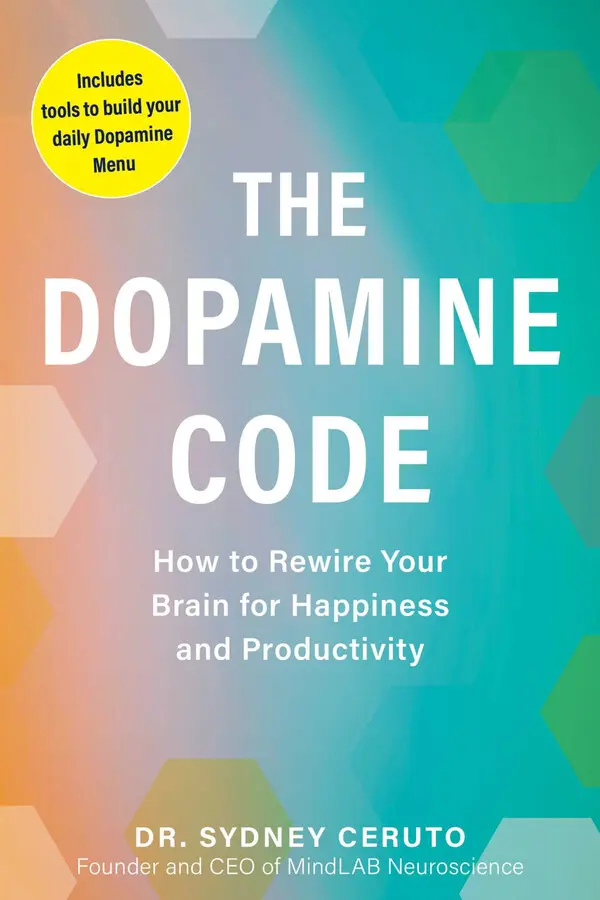
The outcome is not a life with less technology. It is a brain that has reestablished its capacity to choose its relationship with technology. A brain that can use digital platforms without being organized by them. A brain that can sit in silence without the silence feeling intolerable, and that can find genuine reward in the lower-intensity experiences that constitute most of actual life. For a complete framework on how technology hijacks the brain’s dopamine architecture, I cover the full science in my forthcoming book The Dopamine Code (Simon & Schuster, June 2026).

Marker What You Experience What's Happening Neurologically What We Restructure
You Can't Stop Even When You tell yourself you are done scrolling and find, thirty minutes later, that you are still scrolling. They are engineered to exploit the dopamine system's prediction and reward architecture with a precision that no naturally occurring stimulus approaches. The loop is not producing what the person is looking for, but the prediction architecture is not updated by this information.
Chronic High-Stimulation Input Does to Everyday experiences register as meaningful, low-intensity pleasures remain accessible, and the motivation system can sustain engagement with effortful tasks that produce delayed reward. What previously registered as rewarding now requires higher input to produce the same signal. Changing the behavior without addressing the receptor sensitivity and the prediction circuitry that drives it produces the same outcome as any other surface-level intervention: temporary reduction followed by return to the recalibrated baseline.
Attention Economy's Specific Damage Attention is the resource digital platforms are extracting, and the attention system is one of the casualties of chronic digital overstimulation. The prefrontal system — the brain's architecture for sustained, directed attention and goal maintenance — is progressively degraded by the attentional fragmentation that high-frequency digital switching demands and rewards. What this means practically is that the work people most want to do becomes increasingly difficult to access.
Variable-Ratio Reinforcement and the Slot Physical slot machines have a lever pull and a pause before the result. The reward is now intermittent social validation, which engages additional circuitry beyond the basic dopamine prediction system. But the prediction circuit is not updated by repeated disappointment the way a rational decision-making system would be.
Willpower Fails Against Engineered Stimulation When people describe themselves as failing at digital restraint, they are usually describing a self-blame narrative that misunderstands what they are actually up against. The prefrontal system — responsible for inhibitory control, goal-directed planning, and voluntary behavior regulation — is capable of overriding impulses from the dopamine prediction circuitry under ordinary conditions. The prefrontal system's inhibitory resources are not infinite, and they are not restored by intention.
Compounding Effect: How Digital Overstimulation Creative capacity is also impaired in ways that feel puzzling to people who do not understand the mechanism. A brain whose prediction circuitry has been kept at high activation for the preceding hours does not simply power down because the screen has been turned off. The consequences of a chronically recalibrated reward system are not confined to the phone itself.

Why Digital Overstimulation Matters in Midtown Manhattan

Digital Overstimulation in Midtown Manhattan

Midtown Manhattan’s media and advertising corridors occupy a specific position in the digital overstimulation landscape: they are industries whose professional product is attention capture. Operated by people whose own attention systems have been recalibrated by the same mechanisms they deploy professionally. The advertising professional who engineers engagement loops for client campaigns and checks their personal Instagram every eight minutes is not experiencing irony. They are experiencing the same variable-ratio reinforcement architecture they use in their work, applied to them with equal precision by the platforms they use every day. Understanding the mechanism professionally does not produce immunity to it neurologically.

The metrics obsession that defines digital media in Midtown produces a specific form of digital overstimulation organized around performance monitoring. Page views, engagement rates, newsletter open rates, social amplification. The numbers that the digital publishing industry uses to evaluate its own relevance have become objects of compulsive monitoring for the people who produce the content those numbers measure. The dopamine system’s prediction circuit generates approach signals toward the analytics dashboard for the same reason it generates them toward a social media feed: something significant might be there. The only way to know is to check. For people in digital media, checking the metrics is the job, and the compulsive checking looks from the outside identical to conscientious performance measurement. The reward system cannot tell the difference either.

Times Square’s sensory environment provides a geographic anchor for what digital overstimulation produces neurologically at scale. The advertising industry’s own output — the screens, the motion graphics, the competing audio environments, the designed stimulation density. Is a built representation of what happens when a reward architecture is engineered for maximum attention capture without regulatory restraint. Professionals who commute through this environment daily receive a continuous high-stimulation sensory input that the nervous system must suppress to function. That suppression effort is a daily attentional cost that compounds with the screen-based stimulation load of the workday itself.

Publishing’s digital metrics anxiety — organized around declining organic reach, AI-intercepted search traffic, and the structural uncertainty about whether digital readership can be rebuilt. Generates a digital overstimulation pattern that is emotionally layered in a way that pure compulsive checking is not. Checking traffic data when you are anxious about traffic data is not only a reward-system behavior. It is also an anxiety behavior, a reassurance-seeking behavior, and a professional monitoring behavior, all operating through the same checking mechanism. The prefrontal system cannot easily interrupt checking that is simultaneously professionally motivated, emotionally necessary, and reward-system driven. The pattern is overdetermined, and that overdetermination makes it more persistent and more difficult to address at the surface level.

The advertising industry’s creative departments experience a specific form of digital overstimulation related to constant reference consumption. The Pinterest boards, the design feeds, the industry award websites, the competitor campaign monitoring, the cultural trend tracking that is considered essential to staying creatively current. Research shows that the visual stimulus load from high-frequency creative reference consumption reshapes the attentional system’s capacity to generate internally rather than externally driven ideas. The brain that is continuously consuming reference material becomes better at recognizing and recombining existing stimuli and progressively less capable of the extended internal focus that generates genuinely original work. The consumption is professionally rationalized while the attentional architecture supporting original creative thought is quietly degraded.

My work with people in Midtown’s media and advertising corridors addresses the specific dopamine-architecture patterns these industries produce. Metrics monitoring compulsion, creative reference overconsumption, Times Square-level sensory suppression cost, and the overdetermined checking patterns that combine professional monitoring with anxiety and reward-seeking in a single behavioral loop. The recalibration these patterns require is specific to the neural architecture that produced them. That is where this work begins.

Dr. Sydney Ceruto, PhD — Founder, MindLAB Neuroscience

Dr. Sydney Ceruto, PhD — Founder & CEO, MindLAB Neuroscience

Dr. Ceruto holds a PhD in Behavioral & Cognitive Neuroscience from NYU and two Master’s degrees from Yale University. She lectures at the Wharton Executive Development Program at the University of Pennsylvania and has been an Executive Contributor to the Forbes Coaching Council since 2019. Dr. Ceruto is the author of The Dopamine Code (Simon & Schuster, June 2026). She founded MindLAB Neuroscience in 2000 and has spent over 26 years pioneering Real-Time Neuroplasticity™ — a methodology that permanently rewires the neural pathways driving behavior, decisions, and emotional responses.

References

Schultz, W. (2016). Dopamine reward prediction-error signalling: A two-component response. Nature Reviews Neuroscience, 17(3), 183–195. https://doi.org/10.1038/nrn.2015.26

Berridge, K. C., & Robinson, T. E. (2016). Liking, wanting, and the incentive-sensitization theory of addiction. American Psychologist, 71(8), 670–679. https://doi.org/10.1037/amp0000059

Ward, A. F., Duke, K., Gneezy, A., & Bos, M. W. (2017). Brain drain: The mere presence of one’s own smartphone reduces available cognitive capacity. Journal of the Association for Consumer Research, 2(2), 140–154. https://doi.org/10.1086/691462

Montag, C., & Diefenbach, S. (2018). Towards homo digitalis: Important research issues for psychology and the neurosciences at the dawn of the internet of things and the digital society. Sustainability, 10(2), 415. https://doi.org/10.3390/su10020415

Success Stories

“Slower processing, foggier recall, decisions that used to be instant taking longer than they should — I'd been accepting it all as inevitable decline for two years. Dr. Ceruto identified the prefrontal efficiency pattern that was degrading and restructured it at the neurological level. The sharpness didn't just come back. It came back faster and more precise than it was a decade ago. Nothing I'd tried before even addressed the right problem.”

Elliott W. — Wealth Advisor Atherton, CA

“Every close relationship I had eventually hit the same wall — I'd flood emotionally and shut down or explode, and nothing I'd tried gave me real control over it. Dr. Ceruto identified that my autonomic nervous system was defaulting to fight-or-flight the moment real intimacy was on the line. She didn't give me coping tools. She restructured the default. The flooding stopped because the trigger architecture changed.”

Simone V. — Publicist New York, NY

“After the concussion, my processing speed collapsed — I couldn't hold complex information the way I used to, and no one could explain why the fog wasn't lifting. Dr. Ceruto mapped the damaged pathways and built compensatory networks around them. My brain doesn't work the way it did before the injury. It works differently — and in some ways, more efficiently than it ever did.”

Owen P. — Orthopedic Surgeon Scottsdale, AZ

“Unfortunate consequences finally forced me to deal with my anger issues. I’d read several books and even sought out a notable anger specialist, but nothing was clicking. Then I found Sydney’s approach and was intrigued. Her insightfulness and warm manner helped me through a very low point in my life. Together we worked through all my pent-up anger and rage, and she gave me real tools to manage it going forward. I now work to help others learn how to control their own anger.”

Gina P. — Trial Attorney Naples, FL

“Dr. Ceruto's methodology took me from a founder on the verge of quitting to a leader capable of building the team and culture that drove Liquid IV's success. Her ability to restructure how I make decisions and lead under pressure changed the trajectory of the entire company. I don't say that lightly. The company I built after working with her was fundamentally different from the company I was building before — because I was fundamentally different.”

Brandin C. — Tech Founder Los Angeles, CA

“Dr. Ceruto restructured how I show up in high-stakes conversations. The blind spots I couldn't see for years became visible in our first sessions. I went from an overwhelmed Managing Director to a leader people actually want to follow. The change wasn't cosmetic — it was architectural. The way I process high-pressure interactions is fundamentally different now.”

Matteo R. — Investment Banker London, UK

Frequently Asked Questions About Digital Overstimulation

Why can't I stop checking my phone even when I consciously decide to stop?

Because the decision to stop and the system driving the checking behavior are operating in different parts of the brain. The prefrontal system — where the decision lives — and the dopamine prediction circuitry — where the approach signal toward the phone is generated — are neurologically distinct. The approach signal is faster than the decision, runs beneath conscious reasoning, and has been reinforced thousands of times. The phone has been trained into the reward system's prediction architecture as a high-priority target: something significant might be there, and the only way to know is to check. The conscious decision to stop does not automatically update that prediction signal. The signal keeps running, and the behavior follows the signal rather than the decision. This is not a failure of willpower. It is the predictable output of a prediction circuit that has been trained more consistently and more intensively than the decision to stop.

What does "reward system recalibration" mean in practical terms?

The brain's reward system adjusts its sensitivity to match the typical intensity of stimulation it receives. When that stimulation is consistently high — as it is under conditions of chronic digital input — the system downregulates receptor sensitivity to compensate. The practical consequence is that experiences which previously registered as rewarding begin to feel flat: a conversation, a book, time outside, a task requiring sustained attention. They are not producing less reward objectively. The system receiving them has moved its baseline upward and can no longer reliably detect the signal they produce. Simultaneously, the high-stimulation inputs that caused the downregulation require progressively more input to produce the same response. The person experiences this as increased need to check, scroll, and consume — and decreased capacity to find satisfaction in anything that competes on intensity with a phone screen. Recalibration means systematically restoring receptor sensitivity so that lower-intensity experiences can register again, and the prediction circuitry stops generating such strong approach signals toward artificial stimulation.

Is digital overstimulation different from screen addiction?

The term "addiction" carries clinical and behavioral implications that do not always map accurately onto what most people experiencing digital overstimulation are dealing with. What I work with is a reward-system recalibration problem: the dopamine architecture has been reshaped by artificially engineered reinforcement schedules to a point where voluntary control over digital behavior is significantly compromised and the capacity for non-digital reward has been degraded. This can be severe enough to meet addiction criteria, and it can also be significantly disruptive and neurologically meaningful at intensities below that threshold. The framing matters because "addiction" points toward abstinence as the goal, while reward-system recalibration points toward restoring the architecture's capacity to choose — which is a different and more realistic target for most people whose lives are professionally and socially embedded in digital technology.

Why does reducing screen time feel so uncomfortable, even when I want to use my phone less?

Because the discomfort you feel when you stop checking is a predictable feature of a reward system recalibrating upward from an artificially elevated baseline. The restlessness when stimulation stops, the low-grade dysphoria of unstructured time, the pull toward the phone that arrives almost immediately — these are the experiences of a dopamine system that has been trained to expect continuous high-stimulation input and is generating a signal in its absence. That signal is not evidence that something is wrong with stopping. It is evidence that the recalibration process is active. The discomfort is a neurobiological adjustment response, not a personal failing or a sign that reduction is harmful. It typically peaks in the early period of consistent reduction and diminishes as receptor sensitivity begins to restore. Understanding what the discomfort is — and is not — is a meaningful part of being able to move through it.

Can the brain actually restore its ability to focus after years of digital overstimulation?

Yes. The attentional degradation produced by chronic digital fragmentation is not permanent structural damage. It is a trained pattern: the brain has learned, through thousands of repetitions, to interrupt sustained focus in response to notification signals, and it has begun to generate that interruption internally even when no external signal is present. Trained patterns can be retrained. Neuroplasticity — the brain's capacity to reorganize its architecture in response to new experience — does not have a fixed expiration date, and the attentional system is not an exception. What the recalibration requires is consistency, precision, and time — work targeted at the level of the attentional regulation architecture itself, not behavioral strategies applied above it. The capacity to hold attention for extended periods, to tolerate the discomfort of delayed reward, to work without the constant pull toward digital switching — these are recoverable. The recalibration is real, and it requires real work at the neural level to undo.

How is this connected to the dopamine system specifically — isn't dopamine about pleasure?

Dopamine is widely understood as a pleasure signal, but that framing is incomplete. The dopamine system is primarily an anticipatory and prediction system — it drives wanting and approach behavior toward potential reward, not the experience of reward itself. This distinction is central to understanding digital overstimulation. Digital platforms are not primarily optimized to produce pleasure. They are optimized to produce wanting — to generate the anticipatory approach signal that drives the next click, the next scroll, the next check. The wanting circuit and the liking circuit are neurologically distinct, and platforms are engineered to exploit wanting specifically. This is why digital consumption so often continues even when it isn't enjoyable: the system generating the approach behavior is not the system that determines whether the experience is satisfying. The approach signal runs regardless. Understanding this architecture is central to understanding why reducing digital overstimulation requires working at the prediction and anticipation level of the dopamine system, not only the behavior level.

Does <em>The Dopamine Code</em> address digital overstimulation specifically?

Yes. Chapter 5 of The Dopamine Code addresses how digital platforms exploit the dopamine system's prediction and reward architecture — the variable-ratio reinforcement schedules that drive compulsive checking behavior, the receptor downregulation produced by chronic high-stimulation input, and the specific ways the brain's anticipatory circuitry is exploited by design choices that are invisible to the person experiencing them. The book provides the full scientific framework for what digital overstimulation is doing to the brain's reward architecture — not as an indictment of technology use, but as a precise account of the neural mechanisms involved and what genuine recalibration requires. The Dopamine Code is published by Simon & Schuster, releasing June 2026.

Is the Strategy Call conducted in person or over video?

The Strategy Call is a one-hour phone consultation — not a video session and not an in-person meeting. It is a precision assessment: I evaluate your specific digital overstimulation pattern, the neural architecture behind it, and whether my methodology is the right fit for your situation. The fee is $250, which does not apply toward any program investment. I review what you share before the call to ensure I can offer something genuinely useful. This is not a preliminary step toward a sales conversation — it is a direct assessment of fit, and I will tell you honestly whether my approach addresses what you are dealing with. If it does not, I will say so rather than proceed with work unlikely to produce what you need.

What is the difference between a digital detox and the work you do?

A digital detox addresses the input without addressing the system that has adapted to it. Removing the phone for a weekend, a week, or longer reduces the stimulation load temporarily and can produce a meaningful sense of relief — but it does not recalibrate the receptor sensitivity that was downregulated by chronic input, does not restructure the prediction circuitry that generates the approach signal toward digital stimulation, and does not rebuild the attentional architecture that was fragmented by constant switching. When the detox ends and digital use resumes, the recalibrated system encounters the same environment it was trained by, and the pattern restores. The goal of working at the neural architecture level is not to produce a period of reduced input. It is to permanently change the system that responds to input — its sensitivity parameters, its prediction patterns, and its attentional regulation capacity — so that the relationship with digital technology can be chosen rather than compelled.

How do I take the first step?

The entry point is a one-hour Strategy Call by phone, at a fee of $250. Before the call, I review what you share about your situation to confirm I can offer something specifically useful for your pattern. I do not take every inquiry — the call is a genuine assessment, not a formality. During the hour, I evaluate your specific digital overstimulation pattern, the history and architecture behind it, and whether my methodology is the right fit. If it is, you will have a clear picture of what the work involves and what outcomes are realistic. If my approach is not the right fit, I will tell you directly rather than proceed with work unlikely to produce what you need.

Also available in: Miami · Wall Street · Beverly Hills · Lisbon

Take the First Step

The Strategy Call is a focused conversation with Dr. Ceruto that maps the specific neural mechanisms driving your concerns and determines the right path forward.

Book a Strategy Call
MindLAB Neuroscience consultation room
Locations

The Intelligence Brief

Neuroscience-backed analysis on how your brain drives what you feel, what you choose, and what you can’t seem to change — direct from Dr. Ceruto.