Career Guidance Service in Westchester County

Navigate high-stakes career transitions in Westchester County's rapidly shifting professional landscape. Neuroscience-based career guidance rooted in real-time neuroplasticity methodology.

Westchester County's professional landscape is undergoing a marked transformation. The metro added 42,600 nonfarm jobs year-over-year as of mid-2025—a 2.5% growth rate that outpaces the national average of 1.1%. That acceleration has created a particular kind of professional anxiety: opportunity abundance paired with navigating instability. Across downtown Westchester County, Brickell, Coral Gables, and Wynwood, I consistently observe the same pattern: talented professionals who excel technically but struggle with the relational, identity, and strategic dimensions of their careers.

The neuroscience is instructive. Research by Kwon et al. (2023) in *eLife* identified midlife (ages 35–55) as a neurologically critical window for adaptation. The prefrontal cortex—the brain region that governs goal-directed behavior, working memory — the brain's short-term mental workspace —, and cognitive flexibility—shows measurable plasticity during this window, but only when the right conditions are present. Chronic stress, unclear identity, or misaligned career decisions activate the hypothalamic-pituitary-adrenal — the body's central stress-response system — (HPA) axis in ways that impair neuroplasticity itself. Put plainly: the pressure you feel isn't just psychological. It's a neurobiological signal that your current trajectory may not be supporting the neural flexibility you need to adapt.
Schedule a Strategy Call
ForbesUSA TodayHuffPostNewsweekAssociated PressCosmopolitanBusiness InsiderForbesUSA TodayHuffPostNewsweekAssociated PressCosmopolitanBusiness Insider

Career Counseling

Career Counseling in my practice is not career advice. It’s a structured process of discovery that bridges your current professional identity, your neurobiological strengths, and the actual market conditions you’re facing.

In my work with Westchester County professionals, I begin by mapping the gap between how you think about your career and how your brain actually processes professional decision-making. The ventromedial prefrontal cortex (vmPFC) encodes self-concept in terms of personal importance—this is research documented by Zarzeczny et al. in the Journal of Neuroscience. When you’re unclear about what matters most, that circuit misfires. You make decisions based on external signals (title, compensation, status) rather than internal alignment.

Career Counseling activates this circuit deliberately. We examine the situations and pressures you’ve navigated throughout your career—not just the titles you’ve held. We look for patterns in what energizes versus depletes your cognition. We identify the values that actually guide your decision-making, as opposed to the values you think should guide them. And we situate all of this within the real market dynamics of Westchester County’s professional landscape.

The result is a Personal Career Blueprint: a document that articulates your core professional identity, your strategic differentiators, and the specific career trajectory that aligns with both your neurobiological strengths and current market opportunity. For relocators and career-changers, this becomes your foundation for all subsequent work.


Learn more about Career Counseling in Westchester County →

Career Assessment

Career Assessment bridges psychometric evaluation and neuroscience. Standard career assessments—the Myers-Briggs Type Indicator, the Strong Interest Inventory—measure personality and interest. They’re useful, but incomplete.

My assessment methodology integrates three layers:

First, Vocational Neurocognitive Profiling. Sung et al. (2018) in Human Brain Mapping identified 19 distinct functional brain networks that correspond to 19 vocational aptitude categories. Their research found that career satisfaction and performance increase measurably when work activates the specific neural networks you’re neurologically optimized for. My assessment maps your strengths across those networks—not as abstract personality traits, but as measurable cognitive capacities.

Second, Relational & Identity Alignment. We assess how well your current professional identity aligns with how you operate in real time—in rooms, in negotiations, in leadership moments. Blankenship et al. (2024) in Frontiers in Human Neuroscience found that higher identity-brand alignment shifts cognitive processing from the amygdala (threat and pattern-matching) to the frontal lobe (strategic reasoning and authentic expression). The greater the alignment, the more your brain operates from strength rather than from defensive protection.

Third, Market Fit Analysis. We map your assessed strengths against the specific market conditions in Westchester County—the industries with highest growth, the companies and sectors that reward your particular cognitive profile, and the role types that activate your strongest neural networks.

This three-layer approach produces what I call a Neurological Career Match Report: a clear-eyed assessment of where your brain naturally excels, where your current positioning creates friction, and which career paths would activate the most efficient and powerful neural networks. For professionals relocating to Westchester County or navigating a career pivot, this becomes the basis for all positioning work.

Learn more about Career Assessment in Westchester County →

Career Transition Planning

Career transition activates the entire stress-response system. Ran et al. (2023/2024) in the International Journal of Environmental Research and Public Health documented that career transitions chronically elevate cortisol and suppress BDNF (brain-derived neurotrophic factor), the molecule essential for learning and neuroplasticity. The stress isn’t the problem; suppressed neuroplasticity is.

In my practice, Career Transition Planning is a structured program designed to manage that neurobiological reality. We begin by mapping the specific pressures you’re navigating—identity ambiguity, network discontinuity, financial uncertainty, relational disruption. Each pressure activates distinct neural systems. Unclear professional identity activates the default mode network. Relational rupture activates the social brain. Financial uncertainty activates threat-detection circuits. A transition program that addresses only one dimension will fail.

We structure the transition into three phases:

Phase One: Stabilization & Reconnection (Weeks 1–4). We establish a Personal Career Blueprint (see Career Counseling). We identify your non-negotiable values and constraints. We begin rebuilding or redirecting your professional network—particularly critical for Westchester County relocators. We establish cognitive and somatic practices that downregulate the stress response and support neuroplasticity.

Phase Two: Identity & Positioning Reconstruction (Weeks 5–12). We construct a coherent professional narrative that accounts for your transition (whether geographic, sectoral, or relational). We reposition your credentials, experience, and strengths in language that resonates in Westchester County’s market. We build your personal brand—online and in-person—so it serves your actual professional identity, not a defensive version of it.

Phase Three: Market Entry & Relational Activation (Weeks 13+). We execute a strategic outreach program that leverages your rebuilt network and clarified positioning. We conduct mock meetings and negotiations. We prepare you for the relational intelligence demands of Westchester County’s relationship-first professional culture.

Throughout, we track neurobiological markers of successful adaptation: emotional regulation, decision clarity, relational ease, and sustained motivation. Career transition planning isn’t complete until your nervous system has genuinely adapted—not just until you’ve accepted a new role.

Learn more about Career Transition Planning in Westchester County →

Executive Career Coaching

Executive Career Coaching addresses the leadership decisions, relational challenges, and identity pressures that senior professionals face. In Westchester County, this population is distinct: it includes C-suite executives who relocated for tax or growth advantages; founded or scaled companies; manage substantial teams or budgets; and face unique pressures around positioning, board relationships, and the next chapter.

Smith (2025) in Nursing Administration Quarterly documented that executive coaching directly supports neuroplasticity and emotional regulation in high-stress roles. The mechanism: coaching creates a deliberate space for metacognition—thinking about your own thinking—which activates the anterior cingulate cortex and strengthens connections between the prefrontal cortex and the amygdala. This creates measurably better decision-making under pressure.

My executive coaching methodology focuses on three core domains:

Domain One: Situational Clarity & Pressure Navigation. Most executives have substantial positional clarity but face confusion about specific, high-stakes situations: a difficult board conversation, a team restructuring, a compensation negotiation, or a strategic pivot. We examine the specific pressure in granular detail—the relational dynamics, the information gaps, the emotional reactions that are hijacking your strategic reasoning. We map the neural systems activated by that situation. We build a specific, rehearsed approach that allows you to remain in your prefrontal cortex (strategic reasoning) rather than defaulting to limbic reactivity.

Domain Two: Identity & Legacy Alignment. Many senior executives find themselves succeeding in roles that don’t actually align with what matters most—or they’re facing a transition (retirement, downshift, second act) that requires identity reconstruction. We clarify what you actually want from this chapter of your career, independent of external expectations. We address the gap between your professional persona and your authentic professional identity.

Domain Three: Team Leadership & Relational Leverage. Executives lead through their team and their relational networks. We examine how you activate (or suppress) the neural systems in others that create engaged, resilient, high-performing teams. This isn’t soft skills training. It’s applied neuroscience of team leadership.

For Westchester County executives navigating tax changes, market volatility, or the particular pressures of the tech and crypto sectors, this becomes a critical container for sustaining both performance and purpose.

Learn more about Executive Career Coaching in Westchester County →

Personal Branding

Personal Branding is one of the most misunderstood services in career guidance. Most professionals think it means “create a LinkedIn profile” or “build a polished online presence.” What we actually do is far more fundamental: we align how you’re known in the world with who you actually are, and we position that alignment strategically in the markets that matter to you.

Blankenship et al. (2024) in Frontiers in Human Neuroscience found that when professional identity and actual brand (how you’re known) are well-aligned, cognitive processing shifts from the amygdala to the frontal lobe. Misalignment keeps you in threat-detection mode. You’re constantly managing the gap between the persona and the person. That’s exhausting, and it suppresses authentic leadership.

In Westchester County’s market, I observe a particular pattern: professionals who are highly relational and effective in-person but whose online presence doesn’t reflect that reality. Or they have strong individual credentials but haven’t built a coherent professional narrative. Or they’ve relocated and haven’t yet established visibility in Westchester County-specific networks and communities.

My Personal Branding program includes:

Narrative Construction. We build a cohesive professional story that integrates your background, your values, your expertise, and your current positioning. For relocators, this story accounts for the transition. For founders, it situates your venture within your broader professional identity. For Latin American professionals, it positions your international background and credentials as advantage, not obstacle.

Digital Brand Development. We construct or reconstruct your LinkedIn presence, website, and relevant platforms (Twitter/X for tech professionals, etc.) so they authentically reflect your professional identity and the positioning we’ve developed. This isn’t generic optimization. It’s a deliberate expression of who you are and why you matter in your market.

In-Person Brand Activation. How you show up in meetings, in presentations, in one-on-one conversations—this is your brand in real time. We work on the relational and communication dimensions that create alignment between your digital brand and your in-person presence. In Westchester County’s relationship-first culture, this is essential.

Community & Network Positioning. We identify the specific professional communities, organizations, and networks where your brand should have presence. We develop a strategy for how you’ll show up in those communities authentically and strategically.

Strong personal branding doesn’t create artifice. It removes the noise and allows your actual professional identity to be clear and coherent in the markets that matter.

Learn more about Personal Branding in Westchester County →

Salary Negotiation Coaching

Salary negotiation is one of the highest-stakes moments in any career transition. For Westchester County professionals, it’s often more complex: relocators may have equity from prior ventures; tech and crypto professionals face token-heavy compensation structures; executives negotiate not just salary but board roles, severance, and deferred compensation. The financial stakes are substantial. So are the neurobiological stakes.

Trotschel et al. (2016) in PLOS ONE found that stress reappraisal—the ability to reframe a high-stakes negotiation as a problem-solving conversation rather than a threat—predicted salary outcomes with striking precision. Professionals trained in stress reappraisal in experimental conditions secured $50,486 median salaries versus $48,640 for control groups. Reinhard et al. (2024) in Scientific Reports demonstrated that stress reappraisal interventions show reliable, durable effects. Put simply: how your brain processes the negotiation—threat or challenge—directly predicts the outcome.

My Salary Negotiation Coaching program includes three core components:

Component One: Total Compensation Strategy. Before you ever enter a negotiation, we analyze the full scope of compensation: salary, bonus, equity, benefits, working conditions, role scope, and career architecture. For tech and crypto roles, this includes mapping token vesting schedules and liquidity events against your personal financial goals. For executives, it includes severance protection and board compensation. We identify your walk-away point, your target range, and your leverage—what the employer actually needs from you that they can’t easily replace.

Component Two: Negotiation Preparation & Reappraisal Training. We conduct multiple mock negotiations, each one raising the pressure incrementally. You practice staying in your prefrontal cortex—strategic reasoning, clear communication, curiosity—rather than defaulting to limbic reactivity (defensiveness, anxiety, aggression). We teach you stress reappraisal explicitly: how to reframe the negotiation as a joint problem-solving conversation where both parties are seeking alignment. Research shows this single reframe improves outcomes measurably.

Component Three: Relational Intelligence & Pressure Navigation. Negotiation is a relational dance. We examine the specific negotiator across the table—their incentives, constraints, and pressure points. We identify where your interests align (common ground) and where they diverge. We develop a specific communication strategy that maintains your authenticity and clarity while building connection and demonstrating understanding.

For Westchester County professionals, particularly those navigating the unique compensation structures of the tech sector or the relational intensity of founder and executive-level roles, this program becomes a container for securing not just higher compensation but compensation that actually aligns with your market value and your personal circumstances.

Learn more about Salary Negotiation Coaching in Westchester County →

Career Guidance Service in Westchester County

Westchester County produces career-transition challenges shaped by the particular financial and social architecture of its communities. The professional in Scarsdale contemplating a career change is not simply evaluating options — the prefrontal system is simultaneously modeling mortgage obligations, school-district dependency, community-standing implications, and spousal-dynamic effects. Dr. Ceruto’s career guidance work recognizes that in Westchester, career decisions are processed by neural systems under a structural load that most career frameworks do not account for. The brain evaluating a career pivot in Bronxville is solving a fundamentally different problem than the same brain would solve in a lower-stakes environment.

Dr. Ceruto identifies a specific pattern in Westchester career stagnation: the reward-effort architecture has reached a point where the current professional trajectory generates insufficient dopaminergic activation to sustain engagement, but the risk-assessment system — calibrated by years of high-stakes financial obligation — blocks the neural pathways that would enable exploration of alternatives. The individual experiences this as being stuck. At the neural level, it is a conflict between two legitimate brain systems, each performing its function correctly, arriving at incompatible outputs. Career guidance that operates only at the strategic or behavioral level cannot resolve a conflict that is architectural.

The Westchester career-guidance population includes a significant cohort of professionals in their late forties and fifties whose neural reward systems are signaling that the current trajectory has been neurochemically exhausted. The finance executive who built a career on deal-making intensity, the litigator who thrived on courtroom activation, the surgeon whose procedural focus was once effortless — each describes a version of the same pattern: the work that once generated strong dopaminergic response now requires willpower to sustain. Dr. Ceruto’s career guidance approach maps the individual’s current motivational neurobiology against their professional options, identifying which career directions align with how the brain’s reward and engagement systems are actually functioning now, not how they functioned a decade ago.

Dr. Sydney Ceruto, PhD — Founder, MindLAB Neuroscience

Dr. Sydney Ceruto holds a PhD in Behavioral & Cognitive Neuroscience from NYU and Master’s degrees in Clinical Psychology and Business Psychology from Yale University. She is a Lecturer in the Wharton Executive Development Program at the University of Pennsylvania, an Executive Contributor to Forbes Coaching Council, and an inductee in Marquis Who’s Who in America. Dr. Ceruto founded MindLAB Neuroscience in 2000 and has spent more than 26 years developing and refining her proprietary methodology, Real-Time Neuroplasticity™. She is the author of The Dopamine Code (Simon & Schuster, June 2026).

References

Schultz, W. (2016). Dopamine reward prediction-error signalling: a two-component response. Nature Reviews Neuroscience, 17(3), 183–195. https://doi.org/10.1038/nrn.2015.26

Diamond, A. (2013). Executive functions. Annual Review of Psychology, 64, 135–168. https://doi.org/10.1146/annurev-psych-113011-143750

Northoff, G., Heinzel, A., de Greck, M., Bermpohl, F., Dobrowolny, H., & Panksepp, J. (2006). Self-referential processing in our brain: a meta-analysis of imaging studies on the self. NeuroImage, 31(1), 440–457. https://doi.org/10.1016/j.neuroimage.2005.12.002

Success Stories

“What sets Dr. Ceruto’s dopamine work apart is the deep dive into how dopamine actually affects motivation and focus — not surface-level advice, but real science applied to your specific brain. The assessments were spot-on, and the strategies were tailored to my individual dopamine profile rather than a generic template. I noticed real improvements in my drive and mental clarity within weeks, not months. This is a must for anyone wanting to optimize their brain with real science rather than guesswork or generic programs.”

Maria P. — University Dean Monaco

“The dopamine optimization program is unlike anything I’ve tried before. The personalized assessments revealed insights about my brain I’d never considered, and the custom dopamine menu gave me practical, science-backed strategies that actually worked. My motivation and focus have never been higher — and what surprised me most is how sustainable it is, not just a temporary boost you lose after a few weeks. If you’ve tried other approaches and hit a wall, this is the one that finally delivers real, lasting results.”

Gloria F. — Physician Sydney, AU

“When I first started with Dr. Ceruto, I’d felt at a standstill for two years. Over several months, we worked through my cognitive distortions and I ultimately landed my dream job after years of rejections. She is both gentle and assertive — she tells it like it is, and you’re never second-guessing what she means. Most importantly, she takes a personal interest in my mental, emotional, and physical wellbeing. I have no doubt I’ll be in touch with Dr. Ceruto for years to come.”

Chelsea A. — Publicist Dublin, IE

“I struggled with anxiety since I was 13. I simply could not control my thoughts, and no medication or therapy was helping. Since working with Sydney, I’ve gained a whole new perspective on what anxiety actually is and — most importantly — how to control it. Her approach is unlike anything I’ve ever experienced, a must for anyone who wants to understand what drives their actions and emotions. At 28, I’m finally in a happy place with solid emotional management and real coping skills.”

Lydia G. — Gallerist Paris, FR

“I'd relocated internationally before, but this time my nervous system wouldn't settle. Everything unfamiliar registered as danger — new people, new routines, even the sound of a different language outside my window. Pushing through it only deepened the pattern. Dr. Ceruto identified that my nervous system was coding unfamiliarity itself as threat and restructured the response at its source. The world stopped feeling hostile. I stopped bracing.”

Katarina L. — Gallerist Zurich, CH

“Every few months I'd blow up my life in a different way — new venture, new relationship, new fixation — and call it ambition. Dr. Ceruto identified the reward prediction error that was running the cycle. My brain had learned to chase escalation because it was the only thing that overrode what I was actually avoiding. Once she restructured the dopamine loop at the root, the compulsion to escalate just stopped. I didn't lose my drive — I lost the desperation underneath it.”

Kofi A. — Brand Strategist London, UK

Frequently Asked Questions About Neuroscience-Based Career Direction

How can neuroscience help with career direction when standard career assessments have not provided clarity?

Standard assessments measure conscious preferences and behavioral traits — surface data that may not reflect the neural architecture actually driving career satisfaction. The brain's valuation system computes career direction through circuits that integrate emotion, identity, fear, and reward prediction below conscious awareness. When these circuits produce conflicting or biased signals, no amount of surface-level assessment produces genuine clarity. Dr. Ceruto works at the circuit level where career direction is actually computed.

Why do I feel stuck in my career despite having the skills and experience to make a change?

Career stuckness with adequate capability is one of the clearest indicators of neural architecture constraint. The default mode network maintains your professional identity as a fixed neural model, and the threat-detection system classifies career change as identity-level danger. These circuits generate resistance that manifests as procrastination, analysis paralysis, and the persistent inability to act on career decisions you have already made intellectually.

Can this approach help me understand why I keep ending up in the same type of unsatisfying role?

Repetitive career patterns reflect neural template matching — the brain's decision circuits contain encoded templates for professional identity, risk tolerance, and reward processing that guide career decisions below conscious awareness. These templates direct you toward neurologically familiar territory regardless of your conscious intentions. Restructuring the templates produces genuinely different career choices because the neural computation driving selection has changed.

How does this approach address career transition anxiety?

Career transition anxiety is generated by the amygdala classifying professional identity change as a survival-level threat — the same circuits that process physical danger. This is why career transitions feel disproportionately frightening relative to their objective risk. Dr. Ceruto recalibrates the threat classification so career decisions are processed with proportionate rather than survival-level risk assessment, allowing clarity to emerge naturally.

Is this approach appropriate for early-career professionals, or only for experienced executives?

The approach applies at any career stage because the neural architecture governing career decisions, professional identity, and risk tolerance is active throughout professional life. Early-career professionals benefit from career-brain alignment before decades of miscalibrated decisions compound. Experienced professionals benefit from restructuring neural patterns that have accumulated over decades of career investment.

How does this work address the financial fears associated with career change?

Financial fears during career change are processed through the brain's loss-aversion circuits, which assign approximately twice the emotional weight to potential loss as to equivalent gain. This biological bias systematically overstates career change risk and understates the cost of remaining in an unsatisfying role. Dr. Ceruto recalibrates the loss-aversion architecture so financial evaluation of career options is proportionate rather than fear-distorted.

What can I expect from the Strategy Call regarding career direction?

The Strategy Call maps the neural systems governing your career decision-making — identifying which circuits are producing the confusion, paralysis, or repetitive patterns you are experiencing. It assesses the relationship between your professional identity architecture, your reward system calibration, and your threat-response patterns. You will leave with a clear understanding of what is driving your career challenges at the neurological level.

How long does it take to achieve career clarity through this approach?

Career clarity emerges as the neural circuits generating confusion are recalibrated — typically within weeks of targeted work. However, the depth of the clarity deepens as identity architecture updates and threat-response patterns recalibrate over subsequent months. The initial clarity comes relatively quickly; the full integration of a new career direction into the brain's identity model is a deeper process.

Ready to Perform at Your Highest Level?

Navigate high-stakes career transitions in Miami's rapidly shifting professional landscape and unlock your neurobiological potential for sustained success.

Schedule a Strategy Call
MindLAB Neuroscience consultation room

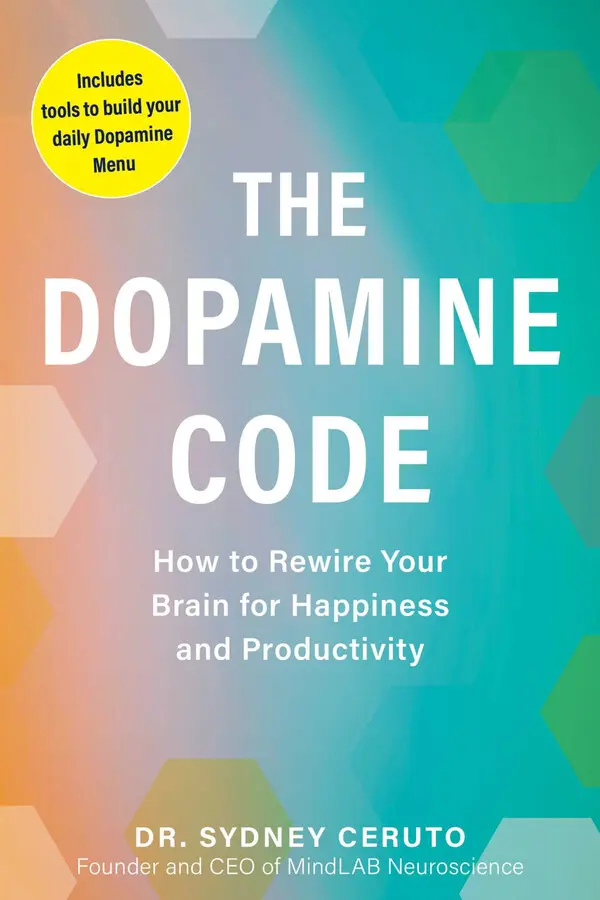
The Dopamine Code

Decode Your Drive

Why Your Brain Rewards the Wrong Things

Your brain's reward system runs every decision, every craving, every crash — and it was never designed for the life you're living. The Dopamine Code is Dr. Ceruto's framework for understanding the architecture behind what drives you, drains you, and keeps you locked in patterns that willpower alone will never fix.

Published by Simon & Schuster, The Dopamine Code is Dr. Ceruto's framework for building your own Dopamine Menu — a personalized system for motivation, focus, and enduring life satisfaction.

Order Now

Ships June 9, 2026

The Dopamine Code by Dr. Sydney Ceruto — Decode Your Drive
Locations

The Intelligence Brief

Neuroscience-backed analysis on how your brain drives what you feel, what you choose, and what you can’t seem to change — direct from Dr. Ceruto.