
Career Fit Analysis in Westchester County

Your career identity lives in neural architecture, not a personality quiz. A precise read means mapping the brain systems that encode who you are professionally, and who you could become.

Career Fit Analysis at MindLAB Neuroscience goes beyond questionnaires and trait inventories. Dr. Sydney Ceruto's methodology maps the neural systems responsible for how you construct professional identity, envision future roles, and evaluate career alignment at a biological level most assessment tools cannot reach.

Book Your Consultation
ForbesUSA TodayHuffPostNewsweekAssociated PressCosmopolitanBusiness InsiderForbesUSA TodayHuffPostNewsweekAssociated PressCosmopolitanBusiness Insider

Key Points

  1. Standard career assessments measure behavioral preferences and personality traits, not the neural architecture that determines how someone actually performs under the demands of a specific role.
  2. The brain's valuation system assigns weight to career options through dopaminergic circuits that can be biased by fear, social pressure, or outdated reward patterns.
  3. Career satisfaction depends on alignment between role demands and individual neural architecture: a match that personality inventories are not designed to evaluate.
  4. The prefrontal cortex processes career identity through the same self-referential circuits that govern personal identity, meaning career decisions carry emotional weight far beyond their logical content.
  5. To be accurate, Career Fit Analysis requires understanding the neural architecture driving decision patterns, not just cataloging interests, strengths, and personality type.

The Assessment Gap

“Psychometric instruments capture what you consciously believe about yourself at the moment you answer. They cannot access the deeper neural systems that encode your professional identity, govern how vividly you can imagine a different future, or determine whether a new direction will feel authentically yours.”

You have taken the tests. You have filled out the inventories. You may have completed an MBTI, a StrengthsFinder, a Holland code assessment, or a Hogan profile. Each one produced a tidy summary. Each one told you something about yourself you already knew. And none of them changed anything.

This is the experience that brings most professionals to MindLAB Neuroscience. Not ignorance about their strengths or values, but a persistent gap between what the results say and what actually shifts in their career trajectory. The reports sit in a drawer. The career decisions remain unmade. The feeling of misalignment persists.

The problem is not the tests themselves. Psychometric instruments measure real dimensions of preference, personality, and aptitude. The problem is where they stop. A self-report questionnaire captures what you consciously believe about yourself at the moment you answer. It cannot access the deeper neural systems that encode your professional identity, govern how vividly you can imagine a different future, or determine whether a new direction will feel authentically yours.

What I see repeatedly in this work is professionals who score high on every metric of competence and potential, yet remain locked in roles that drain them. The instruments confirm capability. The brain architecture tells a different story about identity.

For professionals navigating high-stakes career decisions, an assessment that stops at the surface produces expensive misdirection. The real work begins where the questionnaires end.

The Neuroscience of Career Identity

Career identity is not a preference. It is a neural construction. The brain does not passively catalog your interests and skills. It actively builds a model of who you are professionally and uses that model to filter every career decision you encounter.

When people construct meaning from their personal history, the brain recruits a specific region in the medial prefrontal cortex: the brain’s self-concept center. This region activates specifically when a person builds a narrative connecting their past experiences to their present identity. People with greater self-reflection tendencies show increased activity here, suggesting that the intensity of this identity-construction process varies measurably between individuals. This is where your career narrative lives: the integrated story of who you have been, who you believe you are, and what professional future feels like yours.

Traditional career assessments cannot access this layer. They measure outputs of the system (reported preferences, behavioral tendencies) without examining the system itself. A professional who scores as a strong fit for entrepreneurship on a psychometric instrument but whose brain encodes “corporate professional” as the core identity will experience persistent internal resistance to making the move. No matter how compelling the assessment results appear on paper.

A second critical dimension involves the brain’s capacity to simulate future selves. The brain’s self-referential network divides into two functional halves during self-projection tasks. One half activates when reflecting on who you are now. The other, anchored in the hippocampus (the brain’s memory-formation center), activates when imagining who you could become. When this future-projection capacity weakens (a common consequence of chronic stress, identity ambiguity, or cognitive overload) career decisions default to inertia.

The pattern that presents most often is a professional who knows intellectually that change is needed but cannot generate a vivid, credible picture of themselves in a different role. This is not a motivation problem. It is a neural architecture problem.
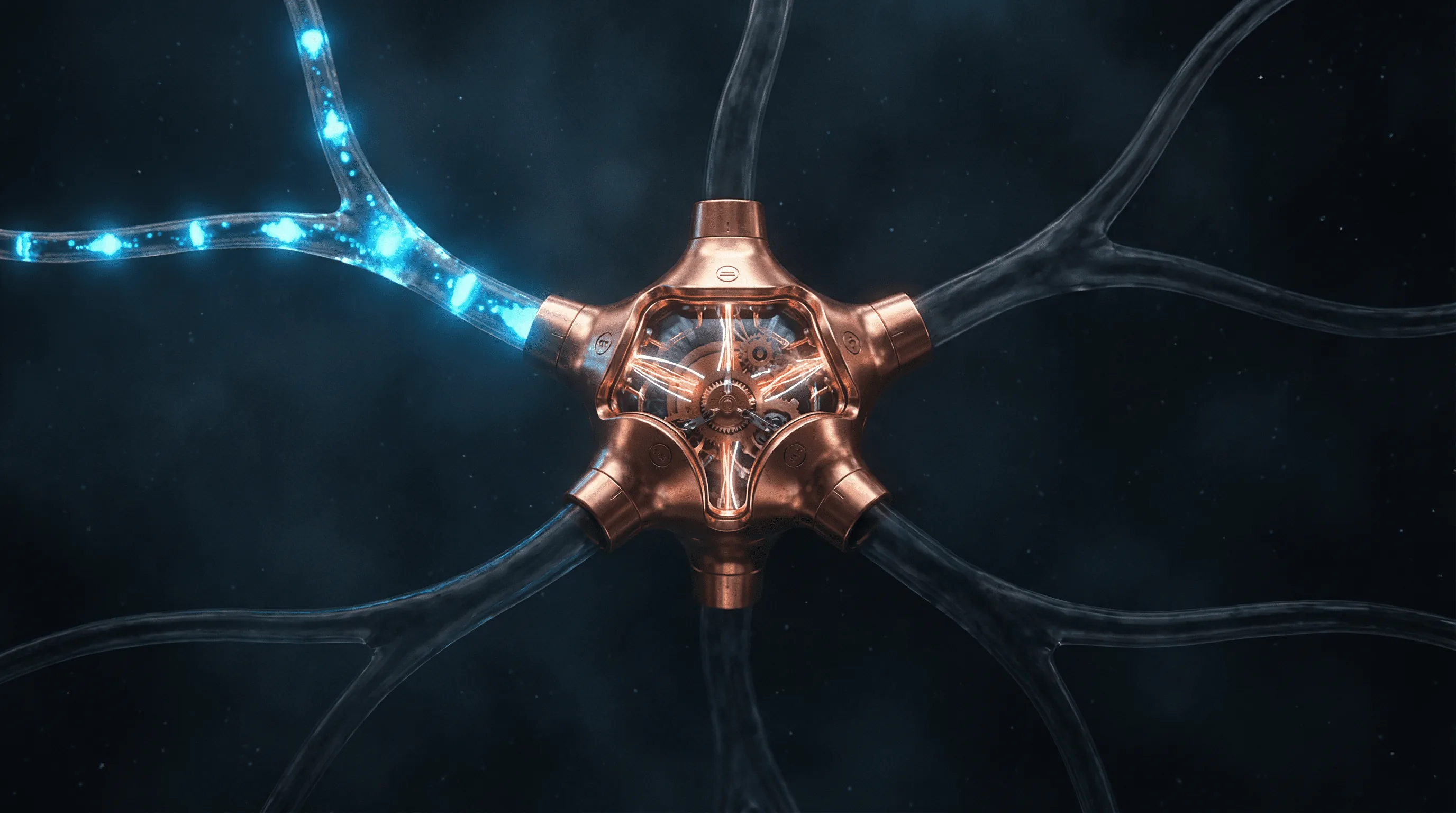
Career counseling and career assessment, copper neural crossroads with selected pathway representing professional direction

Research tracking participants over time has found that the brain’s self-concept center is both a marker of readiness for identity change and a trainable system. The brain’s capacity to update its professional self-concept responds to targeted intervention. This is the biological basis for why Career Fit Analysis, done at this level, produces lasting change rather than temporary inspiration.

How Dr. Ceruto Approaches Career Fit Analysis

Dr. Ceruto’s methodology, Real-Time Neuroplasticity™ (the brain’s ability to rewire itself), begins where conventional assessment ends. Rather than cataloging surface preferences, the process identifies the neural architecture underlying how you construct your professional identity. It maps how stable or fluid that construction currently is and what specific patterns maintain alignment or misalignment with your career direction.

The work engages the brain’s self-concept encoding system directly. For a professional questioning whether their current trajectory reflects who they actually are, or who they were trained to become, this distinction matters profoundly. A standard assessment tells you what you value today. Dr. Ceruto’s methodology reveals how your brain represents you, how readily that representation can update, and what kinds of structured intervention will create durable change rather than temporary motivation.

This is particularly relevant for professionals navigating complex career decisions in high-pressure environments. When the stakes are significant (when a wrong move costs years, not months) the precision of the read determines the quality of the decision. The NeuroSync™ program addresses focused, single-issue career alignment. The NeuroConcierge™ program provides comprehensive partnership for professionals whose career identity intersects with multiple life domains demanding simultaneous attention.

In over two decades of practice, the most reliable predictor of the read’s quality is depth. Depth of the instrument. Depth of the practitioner’s understanding of the neural systems involved. Depth of the connection between what the read reveals and what the professional does with that information.

What to Expect

Engagement begins with a consultation: a focused conversation where Dr. Ceruto evaluates whether the engagement is appropriate for your situation and what the process would involve. This is not a sales conversation. It is a precision instrument in itself.

The work follows a structured arc. It begins with looking at the career question you bring. Then it maps the neural patterns maintaining your current career identity. It identifies where identity architecture and career direction diverge. And it produces a personalized protocol designed to create measurable shifts in how you construct your professional self-concept.

Every read is individualized. There are no standardized batteries applied uniformly. The methodology adapts to the specific neural landscape each professional presents. What remains consistent is the standard of precision. Every finding is grounded in the neuroscience of self-referential processing. Every recommendation targets a specific neural mechanism. And every outcome is designed to produce change that persists long after the engagement concludes.

References

D’Argembeau, A., Cassol, H., Phillips, C., Balteau, E., Salmon, E., & Van der Linden, M. (2014). Brains creating stories of selves: The neural basis of autobiographical reasoning. Social Cognitive and Affective Neuroscience, 9(3), 313–319. https://doi.org/10.1093/scan/nss114

Xu, X., Yuan, H., & Lei, X. (2016). Activation and connectivity within the default mode network contribute independently to future-oriented thought. Scientific Reports, 6, 21001. https://doi.org/10.1038/srep21001

Van der Aar, L. P. E., Peters, S., & Crone, E. A. (2018). The development of self-views across adolescence: Investigating self-descriptions with and without social comparison using a novel experimental paradigm. Cognitive Development, 48, 256–270. https://doi.org/10.1016/j.cogdev.2018.10.001

The Neural Architecture of Career Fit

Career assessment, as most professionals encounter it, is a measurement exercise. Instruments evaluate interest clusters, personality dimensions, and aptitude domains, and match the resulting profile against an occupational database. The output is a ranked list of careers for which the individual shows statistical compatibility. This is genuinely useful as a starting point. It is insufficient as a guide for the decisions that actually matter (the decisions about whether to stay or leave, advance or pivot, invest in depth or move to adjacent territory) because it does not address the neural architecture that determines whether any given career environment will produce sustained engagement, meaningful challenge, and the reward signal that the brain requires to sustain long-term performance.

Rosewood desk with a crystal brain sculpture on a copper stand, navy leather folios, a copper pen and a MindLAB journal

Dopaminergic architecture is the missing variable. The brain’s reward system does not respond to what an individual has been told they are good at, or what a profile instrument predicts they will prefer. It responds to specific categories of challenge, uncertainty, and outcome that have been encoded through experience as reward-generating. Two individuals with nearly identical interest profiles can experience radically different levels of engagement in the same role, because their dopaminergic reward circuits are calibrated to different challenge dimensions. The person whose reward system responds to social complexity will burn out in a role optimized for technical depth, and vice versa, regardless of what their assessment profile predicts.

Predictive coding is equally relevant. The brain continuously generates predictions about future experience based on past pattern recognition, and allocates attention and motivation resources accordingly. A professional whose brain predicts that a career path will generate the specific type of challenge their neural architecture finds rewarding will sustain effort across obstacles, setbacks, and periods of slow progress. A professional whose brain predicts an increasingly poor match between their neural architecture and their career environment will experience progressive disengagement that no amount of strategic career management can prevent, because the prediction is being generated below the threshold of conscious awareness.

Why Traditional Approaches Fall Short

Standard career assessment frameworks were developed before modern neuroscience had mapped the specific neural mechanisms that determine sustained engagement. They are built on self-report data (what individuals consciously prefer, consciously value, and consciously identify as their strengths) filtered through statistical models trained on population-level correlations. These tools have real predictive power at the population level. At the individual level, they miss the neural specificity that determines whether a given career environment will actually sustain engagement for this particular brain.

The practical consequence is that professionals who follow well-designed career assessments into roles that match their profile on every measured dimension still find themselves, five or ten years in, experiencing a version of career malaise that the assessment predicted they should not be experiencing. The interest match is real. The values alignment is genuine. The aptitude fit is confirmed by performance metrics. And the internal experience of engagement, the reward signal that the brain requires to sustain motivation across a career, is progressively depleted.

This pattern is not a failure of self-knowledge. It is a reflection of the gap between what conventional assessment measures and what the neural architecture of engagement actually requires. No paper-and-pencil instrument, however sophisticated, can directly map the specific reward calibration of an individual’s dopaminergic system, the threat sensitivity of their amygdala in response to specific work conditions, or the cognitive load that their prefrontal system can sustain before regulatory capacity degrades. These are neural variables, and they require a neural-level map.

How Neural Career Fit Analysis Works

My approach to the analysis begins where conventional instruments end. The inventory of interests, values, aptitudes, and personality dimensions is a starting point: a map of the conscious, reportable layer of career fit. From there, I work with the neural layer: examining the specific categories of challenge and outcome that an individual’s reward system has been trained to find reinforcing, the threat patterns that erode regulatory capacity in specific work environments, and the cognitive architecture that determines which types of complex problems will sustain engagement and which will produce progressive depletion.

This work is not a test. It is a structured investigation conducted across a series of conversations that examine the neural signatures embedded in an individual’s career history. Every period of peak engagement and peak depletion has left a neural record. The challenge types that generated the strongest intrinsic reward, the environments that produced the most reliable access to flow states, the decision contexts that felt most alive: these are data points that reveal the specific configuration of the individual’s reward architecture far more precisely than any self-report instrument.

The output is a neural career profile: a map of the specific challenge dimensions, environmental conditions, and outcome structures that this particular brain is most wired to find reinforcing. This profile drives career strategy, not by matching it to an occupational database, but by using it to weigh specific opportunities against the neural variables that will determine whether sustained engagement is possible. The question shifts from what does the profile predict to what does this specific role require from this specific neural architecture?

What This Looks Like in Practice

Professionals who come to this work are typically experiencing a version of career disorientation that conventional assessment has not resolved. They have taken the instruments, gotten the profiles, perhaps even consulted with career coaches, and still cannot find a coherent answer to the question of where their career should go next. The disorientation is not a failure of self-awareness. It is a signal that the assessment approach has been operating at the wrong level of specificity.

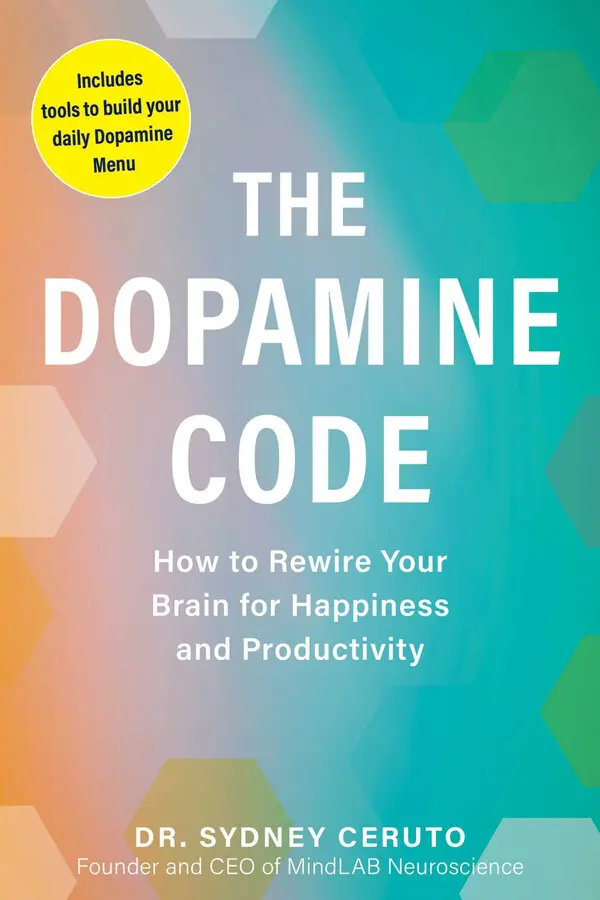
A consultation with Dr. Ceruto begins the process of reframing the career question at the neural level. From that conversation, I build a structured engagement designed to map the individual’s specific reward architecture against the career landscape. For professionals navigating a single, well-defined decision (whether to take a specific role, whether to stay or leave a particular organization) a focused NeuroSync™ engagement produces the neural clarity the decision requires. For those navigating broader career restructuring, the NeuroConcierge™ model provides the sustained partnership that multi-phase transitions require. The Dopamine Code explores the reward architecture science that underlies this work in detail for those who want to understand the neurological basis of career engagement.


Marker Traditional Approach Neuroscience-Based Approach
Focus Personality inventories, strengths assessments, and interest-based career matching Mapping the neural architecture that determines how someone actually processes decisions, handles pressure, and sustains engagement
Method Standardized assessment batteries with career counseling interpretation sessions A map of the neural architecture that identifies how the brain's valuation and decision systems interact with specific role demands
Duration of Change Assessment snapshot; recommendations become outdated as circumstances and the individual change Understanding of neural architecture that provides enduring insight into career-brain alignment across evolving opportunities

Why Career Fit Analysis Matters in Westchester County

Career Fit Analysis for Westchester’s professional population requires an approach that accounts for the specific constraints this community’s lifestyle architecture imposes. The standard career assessment framework evaluates skills, interests, and market alignment, but for the executive in Scarsdale or Bronxville, the relevant variables extend to financial architecture (can the mortgage sustain a transition period?), geographic constraint (does the new career path require the Manhattan commute or enable a local practice?), and social identity (how will the community interpret this change?). These are not peripheral concerns. They are variables that the brain’s decision-making system weighs continuously, often overriding the rational career analysis that the prefrontal cortex produces.

The Westchester professional seeking career fit work has typically already done the surface-level analysis. They know their skills, they have identified potential paths, and they may have researched the market opportunity. What they cannot do is make the decision, because the decision requires resolving a neural conflict between the reward system’s attraction to the new path and the threat-detection system’s alarm about what will be lost in the transition. This is an architectural problem, not an information problem.

My work addresses career questions at the level of the neural decision-making architecture: identifying which systems are generating the conflict between knowing what to do and being unable to do it, recalibrating the threat-detection response that treats career change as existential danger, and aligning the reward prediction system with actual values rather than inherited expectations about what success in Westchester is supposed to look like.

Dr. Sydney Ceruto, PhD, Neuroscientist & Author, MindLAB Neuroscience

Dr. Sydney Ceruto, PhD, Neuroscientist & Author, MindLAB Neuroscience

Dr. Ceruto holds a PhD in Behavioral & Cognitive Neuroscience from NYU and Master’s degrees in Clinical Psychology and Business Psychology from Yale University. She lectures at the Wharton Executive Development Program at the University of Pennsylvania and has been an Executive Contributor to the Forbes Coaching Council since 2019. Dr. Ceruto is the author of The Dopamine Code (Simon & Schuster, June 2026). She founded MindLAB Neuroscience in 2000 and has spent over 26 years leading it, pioneering Real-Time Neuroplasticity™, a methodology that durably rewires the neural pathways driving behavior, decisions, and emotional responses.

References

Doll, B. B., Hutchison, K. E., & Frank, M. J. (2011). Dopaminergic genes predict individual differences in susceptibility to confirmation bias. Journal of Neuroscience, 31(16), 6188–6198. https://doi.org/10.1523/JNEUROSCI.6486-10.2011

Rangel, A., Camerer, C., & Montague, P. R. (2008). A framework for studying the neurobiology of value-based decision making. Nature Reviews Neuroscience, 9(7), 545–556. https://doi.org/10.1038/nrn2357

Mobbs, D., Hassabis, D., Seymour, B., Marchant, J. L., Weiskopf, N., Dolan, R. J., & Frith, C. D. (2009). Choking on the money: Reward-based performance decrements are associated with midbrain activity. Psychological Science, 20(8), 955–962. https://doi.org/10.1111/j.1467-9280.2009.02399.x

Ochsner, K. N., & Gross, J. J. (2005). The cognitive control of emotion. Trends in Cognitive Sciences, 9(5), 242–249. https://doi.org/10.1016/j.tics.2005.03.010

Success Stories

“I have suffered from chronic anxiety and depression my entire adult life. I began seeing her and learned not only why I was anxious and sad, but how, through simple behavior changes, I could finally stop these feelings for good. That was 8 years ago and I still learn something new and helpful each visit.”

Erick W. Singapore

“Dr. Ceruto's neuroscience-based program transformed me from a struggling young founder on the brink of quitting to a self-aware, emotionally intelligent leader capable of building a cohesive team. Her techniques enhanced my decision-making and empowered me to foster a culture of empathy and collaboration, driving Liquid IV to remarkable success. The company I built after working with her was fundamentally different, because I was fundamentally different.”

Brandin C., CEO, Liquid IV Los Angeles, CA

“Every metric was green and I felt nothing. Conventional approaches told me I was 'burned out' or needed gratitude practices, none of it touched the actual problem. Dr. Ceruto helped me see that constant reward-chasing had raised the bar so high that normal achievement couldn't register anymore. We worked on that directly. I didn't need more success. I needed my brain to actually experience the success I already had.”

Rafael G., Chief Revenue Officer, Enterprise Software New York, NY

“Slower processing, foggier recall, decisions that used to be instant taking longer than they should. I'd been accepting it all as inevitable decline for two years. Dr. Ceruto worked with me on what was behind the change I'd been noticing. The sharpness came back. Nothing I'd tried before even addressed the right problem.”

Elliott W., General Partner, Andreessen Horowitz Atherton, CA

“Shopping had become a private ritual I couldn't explain to anyone, not the items themselves, just the moment right before buying. Therapy treated it as a willpower problem for years. Working with Dr. Ceruto, it became clear that the anticipation was driving the behavior, separate from the purchase itself. Once we worked on that directly, the urge eased.”

Sofia R., Creative Director Milan, IT

“I'd optimized everything, diet, fitness, sleep, but my cognitive sharpness was quietly declining and no one could explain why. Dr. Ceruto had me look hard at what was behind it, and built a plan. Nothing I'd tried before even addressed the right problem.”

Henrique L., Head of Strategic Planning, Galp Lisbon, PT

Frequently Asked Questions About Career Fit Analysis in Westchester County

How does a neuroscience-based Career Fit Analysis differ from standard psychometric tools like the MBTI or StrengthsFinder?
Standard psychometric tools capture self-reported preferences through questionnaires. They reflect what you consciously believe about yourself at that moment. MindLAB's work maps the neural systems underlying how you construct professional identity. This includes the medial prefrontal cortex where self-concept forms. It also examines the default mode network, the brain's self-referential thought system, that governs future-self simulation. This reveals career alignment information that personality inventories cannot access. The results are grounded in how the brain actually processes career identity.
What kind of professional typically seeks a Career Fit Analysis in Westchester County?

Professionals who arrive at MindLAB for Career Fit Analysis are typically high-capacity individuals between 25 and 40 who have already achieved measurable professional success but experience a persistent sense of misalignment. Many are navigating career inflection points: evaluating a pivot from finance to entrepreneurship, questioning direction after relocating to Westchester County, or sensing that their current trajectory reflects training rather than genuine identity. They have often completed conventional assessments and found the results insufficient.

I relocated to Westchester County from New York and feel professionally off-track. Can a Career Fit Analysis clarify what is happening?

Career displacement after relocation is a well-documented identity recalibration event. Your professional self-concept was constructed within one ecosystem and is being tested in another. A neuroscience-based read distinguishes between genuine career misfit and contextual adjustment stress by looking at the neural architecture underlying your professional identity, not just your reported preferences. This distinction prevents expensive career pivots driven by temporary disorientation.

How long does a Career Fit Analysis engagement take with Dr. Ceruto?

The work is structured as an intensive advisory process, not a single testing session. Timeline varies based on the complexity of the career question and the depth of identity work required. Every engagement begins with a consultation where Dr. Ceruto looks at fit and scope. The deliverable is a comprehensive career identity profile that maps the neural architecture underlying your professional self-concept and provides a personalized protocol for aligned career decision-making.

Is MindLAB's Career Fit Analysis available virtually for professionals outside Manhattan?

Yes. While MindLAB's office is located at 31 West 34th Street in Manhattan, Dr. Ceruto works with professionals throughout Westchester County and beyond through virtual engagement. The methodology is designed to operate with full precision regardless of format. Many professionals in Scarsdale, Bronxville, White Plains, Rye, and Larchmont engage through a combination of in-person and virtual sessions based on their schedule and preferences.

What does the consultation involve, and is it part of the engagement?

The consultation is a focused, precision conversation, not a sales pitch. Dr. Ceruto uses it to evaluate whether a full engagement is appropriate for your situation, to understand the career question, and to determine what the process would involve for your specific neural landscape. It is the first point of contact and functions as a first read in its own right. The consultation provides clarity on both sides before any commitment is made.

Can a brain-based Career Fit Analysis help me decide whether to leave finance for a startup in Westchester County?

This is exactly the decision-stage where a neuroscience-based read provides the greatest value. The read reveals your authentic risk tolerance, not the version you perform, your cognitive fit for the ambiguity of early-stage environments, and whether your vision of a founder identity is a vivid neural projection or an aspirational idea that will not sustain real-world pressure. For professionals in corporate finance or law evaluating a move into an early-stage company, this level of precision prevents costly misalignment.

Why do standard career assessments sometimes point me toward careers that do not feel right?

Standard assessments measure behavioral preferences and personality traits: surface patterns that reflect how you have adapted to your experiences. They do not measure the neural architecture that determines genuine satisfaction, sustained engagement, and natural performance under role-specific demands. A person can score high on traits that predict success in a role yet find the role neurologically draining because the brain's reward system is not activated by the actual daily demands.

The disconnect between assessment results and felt experience is a signal that the conscious preferences being measured do not align with the deeper neural valuation systems that determine actual career satisfaction. Career Fit Analysis must reach this deeper layer to be accurate.

How does a neuroscience-based read provide different information than personality inventories?

Personality inventories measure what you report about yourself: consciously accessible preferences and behavioral tendencies. The brain's actual valuation system, reward architecture, and stress-response patterns often diverge significantly from conscious self-report. People frequently pursue careers that match their stated preferences but not their neural reward profiles, producing success without satisfaction.

Dr. Ceruto maps the neural architecture that determines how you actually process decisions, sustain engagement, handle specific types of cognitive demand, and respond to different reward profiles. This biological data reveals career-brain alignment that surface-level inventories cannot access.

Can this approach help me understand why I have been successful but unfulfilled in my career?

Success without fulfillment is one of the most common patterns Dr. Ceruto encounters, and it has a precise neurological explanation. The dopamine system that drives performance and achievement operates independently of the neural systems governing meaning, satisfaction, and sustained engagement. You can have a highly effective achievement architecture, producing consistent professional success, while your reward system registers insufficient activation from the actual daily content of the work.

Understanding which neural systems are satisfied by your career and which are not provides clarity that no amount of reflection, career counseling, or job changes can achieve when the core architecture driving the pattern remains unexamined.

Is this a psychological assessment?

No. This is not psychological assessment or psychometric testing, and it produces no clinical finding of any kind. I am a neuroscientist. Standardized inventories measure traits and preferences, which is their purpose. What I look at is how your decision and reward systems are operating when a career choice is actually in front of you.

Also available in: Miami · Wall Street · Midtown Manhattan · Beverly Hills · Lisbon

The Neural Architecture Behind Every Career Decision You Make in Westchester County

Along a single train line where colleagues, neighbors, and clients overlap, career identity carries biological weight, and professional reputation travels fast. Dr. Sydney Ceruto maps your neural baseline in one conversation.

Book Your Consultation
Two navy leather armchairs face a marble table with a glass brain sculpture in a dark wood-paneled room under a copper lamp

The Dopamine Code

Decode Your Drive

Why Your Brain Rewards the Wrong Things

Your brain's reward system runs every decision, every craving, every crash, and it was never designed for the life you're living. The Dopamine Code is Dr. Ceruto's framework for understanding the architecture behind what drives you, drains you, and keeps you locked in patterns that willpower alone will never fix.

Published by Simon & Schuster, The Dopamine Code is Dr. Ceruto's framework for building your own Dopamine Menu, a personalized system for motivation, focus, and enduring life satisfaction.

Order Now!

Available now

The Dopamine Code by Dr. Sydney Ceruto, Decode Your Drive
Locations
Secret Link