Consultant in Nassau County

Strategy consulting grounded in how the brain actually works—not theory, not assumptions.

In my practice, I work with executives across Nassau County's financial services, real estate, and technology sectors who face a recurring problem: traditional strategy frameworks treat the brain as irrelevant. They focus on markets, data, and organizational structures—but they ignore the neurobiology that governs how decisions are actually made under pressure.

Real-Time Neuroplasticity™ changes that equation. My approach to strategy consulting integrates neuroscience evidence—the same mechanisms that govern attention, emotional regulation — the ability to manage emotional responses —, and cognitive flexibility—directly into how you build strategy and lead through execution. The result is a consulting engagement that moves faster, sticks longer, and produces measurable shifts in both decision-making quality and team performance.
Schedule a Strategy Call
ForbesUSA TodayHuffPostNewsweekAssociated PressCosmopolitanBusiness InsiderForbesUSA TodayHuffPostNewsweekAssociated PressCosmopolitanBusiness Insider

Strategy Consulting

In my practice, Strategy Consulting is not about building beautiful PowerPoint decks or assembling market data into a three-year plan. It’s about identifying the decision-making blind spots that cause executives to miss signals, second-guess sound judgment, or fail to execute the strategy they’ve already built.

The mechanism is straightforward. Under pressure and cognitive load, the prefrontal cortex—the region governing long-term planning, pattern recognition, and flexible thinking—becomes less efficient. Friedman and Robbins (2019) demonstrated in Neuropsychopharmacology that sustained stress directly compromises the PFC’s capacity for cognitive control and mental set shifting. This means that during the exact conditions when you most need clear strategic thinking, your brain is working against you.

Real-Time Neuroplasticity™ integrates this neurobiology into strategy work. I help you map the assumptions underlying your strategic direction, identify where cognitive bias and emotional reactivity are driving decisions, and calibrate your decision-making architecture to work with your neurobiology rather than against it. The engagement includes direct guidance on how to structure your leadership and team interactions to preserve cognitive clarity through execution.

Strategy Consulting at MindLAB is distinct because it treats your brain’s capacity as a strategic asset. The deliverable is not just a better strategy; it’s your team’s documented capacity to execute it under the conditions where execution actually happens: pressure, uncertainty, and competing demands.


Learn more about Strategy Consulting in Nassau County →

Leadership Training

Leadership Training rooted in neuroscience looks fundamentally different from the standard executive development model. Instead of teaching leadership competencies or building communication skills in a classroom, I train your nervous system—and your team’s—to operate more effectively under the exact conditions where leadership is tested.

The pattern is consistent: executives who excel in low-pressure environments often struggle when stakes rise, because the same stress response that once protected your ancestors now narrows attention, amplifies threat perception, and locks you into habitual patterns. Malizia et al. (2022) found in Frontiers in Psychology that affect plays a driving role in managerial decision-making—not as a distraction, but as the mechanism that determines which information gets processed and which gets ignored.

My Leadership Training methodology activates neuroplasticity in real time. Rather than teaching you about leadership, I help you develop the neural flexibility to lead more decisively when circumstances demand it. This includes training in attention regulation, emotional pattern interruption, and the capacity to shift mental frameworks rapidly in response to new information.

The multimodal approach—combining real-time neurofeedback, behavioral rehearsal, and guided reflection—produces measurable improvements. Barbey et al. (2019) demonstrated in npj Science of Learning that multimodal training produces significant gains in decision-making competence, which directly correlates with leadership effectiveness across contexts.

Your team leaves with tangible shifts in how they process information under pressure and make decisions that stick.

Learn more about Leadership Training in Nassau County →

Performance Improvement Consulting

Performance Improvement Consulting addresses a problem I see repeatedly in Nassau County’s scaled organizations: teams are working harder, not smarter. They’re executing tasks at high volume but not adapting quickly enough to shifting market conditions, and their cognitive load is climbing steadily toward burnout.

The neuroscience here is critical. Comotti et al. (2024) reviewed 64 studies in Frontiers in Psychology and found consistent evidence that work conditions—including task complexity, time pressure, and decision volume—directly affect cognitive function. As these pressures accumulate, working memory becomes fragmented, attention span narrows, and decision quality degrades. Martin et al. (2023) demonstrated in Cerebral Cortex that chronic stress specifically degrades the frontostriatal circuits governing working memory, explaining why high-performing teams often stall under scaling.

My approach to Performance Improvement begins with assessments: I assess the neurobiological state of your team—their cognitive load, stress physiology, and attention patterns—and map where performance is being constrained not by lack of effort, but by how the brain is being asked to work.

The intervention recalibrates your workflow, decision-making cadence, and team interaction patterns to preserve cognitive clarity and working memory. The outcome is measurable: faster iteration cycles, fewer decision reversals, and sustainable high performance without burnout.

This is especially relevant for scaling organizations where velocity matters as much as precision.

Learn more about Performance Improvement Consulting in Nassau County →

Organizational Development Consulting

Organizational Development Consulting grounded in neuroscience is a departure from the standard OD playbook. Rather than diagnosing culture issues through surveys and then prescribing structural changes, I assess the neurobiology underlying how your organization actually processes information, makes decisions, and coordinates action.

Here’s what I’ve learned: organizational dysfunction is often a reflection of collective cognitive constraints, not character flaws or misaligned values. When leaders don’t communicate clearly, it’s frequently because the organization’s structure creates information silos that make integrated thinking neurobiologically impossible. When change initiatives stall, it’s often because the speed of change exceeds the organization’s capacity for neural adaptation.

Geldenhuys et al. (2022) examined this in the Journal of Applied Neurosciences, documenting the neurobiological experiences of organizational change. Tapio et al. (2023) in Frontiers in Human Neuroscience identified specific EEG biomarkers of occupational burnout, allowing me to assess stress physiology patterns that standard assessments miss.

My OD methodology includes real-time neurophysiological assessment, mapping of decision-making pathways, and redesign of how information flows and decisions get made. The focus is on creating organizational structures that align with how healthy brains actually coordinate action.

The deliverable is a development pathway—not a consultant’s report, but a documented approach to evolving your organization’s neurocognitive capacity alongside its business strategy.

Learn more about Organizational Development Consulting in Nassau County →

Corporate Training

Corporate Training at MindLAB is built on a single principle: skills don’t transfer to real-world performance unless the training changes how the brain operates under pressure. Standard corporate training programs teach competencies in a low-stakes classroom environment, then assume those skills will activate in high-stakes situations. They don’t, because the neural patterns governing performance under pressure are distinct from those engaged in classroom learning.

Real-Time Neuroplasticity™ training uses multimodal methodology—combining behavioral rehearsal, real-time neurofeedback, and guided reflection—to embed learning in the neural patterns that actually matter in your work. Milbocker et al. (2024) demonstrated in Brain Plasticity that complex motor and cognitive training induces lasting neuroplasticity, with retention measured across months and years.

Across engagements, teams trained on decision-making frameworks using this methodology show immediate improvement in decision speed and quality. A study by Zientz et al. (2023) in Frontiers in Psychology tracked 193 employees who completed brain health training, finding significant improvements in BrainHealth Index scores, with 75% of completers showing measurable gains.

Corporate Training programs I design are customized to your specific decision contexts—whether negotiation, crisis response, or cross-functional problem-solving. The program includes assessment, multimodal skill development, real-world application, and measurement of neurophysiological and behavioral change.

Your team develops skills that activate precisely when the stakes are highest.

Learn more about Corporate Training in Nassau County →

Executive Coaching

Executive Coaching through a neuroscience lens is distinct from the standard coaching model. Rather than working primarily on behavioral change or mindset, I help you understand the neural mechanisms governing your decision-making, attention, and emotional regulation—and then deliberately reshape them.

In my practice, I work with executives on specific performance challenges: the founder who struggles to delegate because her threat-detection system is hypervigilant; the CFO whose perfectionism locks him into analysis paralysis; the COO who makes excellent strategic decisions but struggles to communicate them persuasively to his board. Each of these patterns has a neurobiological signature.

Nicolau et al. (2023) conducted a meta-analysis of 20 randomized controlled trials (N=3,188) in Frontiers in Psychology, finding that executive coaching produces a moderate effect on skill development (g=0.43) but a large effect on goal attainment (g=1.32). What distinguishes neuroscience-informed coaching is that it targets the neural patterns underlying the goal, not just the goal itself.

My methodology includes real-time neurophysiological assessment, identification of the specific neural patterns constraining performance, and direct guidance on reshaping those patterns through deliberate practice and behavioral rehearsal. Fici et al. (2023) demonstrated in Behavioral Sciences that EEG neurocoaching produces real-time neurophysiological changes, suggesting lasting neuroplastic effects.

The outcome is measurable: sustained behavioral change, improved decision-making under pressure, and genuine shifts in how you lead. Your coaching engagement is documented, measurable, and focused on outcomes that matter to your organization.

Learn more about Executive Coaching in Nassau County →

Consultant in Nassau County

Nassau County’s professional landscape demands a consulting approach built on the same precision that its residents apply to every other domain of their lives. The executive in Great Neck, the entrepreneur in Garden City, the senior professional in Manhasset — these individuals did not arrive at their current position through approximation. They operate in environments where the margin between optimal and adequate performance translates directly into measurable outcomes. A consulting engagement that offers generalized frameworks without addressing the specific neurological and environmental architecture of Nassau County life produces advice that sounds reasonable in the conference room and fails on the LIRR platform at six-thirty in the morning.

The consulting challenge specific to Nassau County involves the interaction between professional performance and the total demand architecture of this environment. The person seeking consulting here is not managing a single-domain problem. They are operating inside a system where professional output, family demands in high-pressure school districts, community obligations, financial architecture, area logistics, and identity management all draw from the same pool of prefrontal resources. A consulting approach that addresses one domain while ignoring the others will optimize a subsystem while the total system continues to degrade. The executive who improves professional decision-making but depletes the regulatory resources needed for family engagement has not solved a problem — they have relocated it.

Dr. Ceruto’s consulting work with Nassau County professionals applies neuroscience-grounded methodology to the complete architecture of performance and decision-making. This means understanding how the specific structure of Nassau County life — the area, the achievement-indexed community, the multi-domain performance demands, the cultural complexity of communities like Great Neck and Manhasset — shapes the neural systems that produce professional output. The consulting engagement examines how the executive’s decision-making architecture actually operates under the real conditions of their daily life, identifies where that architecture is producing suboptimal outputs, and designs specific interventions that account for the total demand environment rather than pretending that professional performance exists in isolation.

The result is consulting that works because it is built on the same foundation that governs all human performance: the neural architecture that produces every decision, every interaction, and every outcome that matters.

Dr. Sydney Ceruto, PhD — Founder, MindLAB Neuroscience

Dr. Sydney Ceruto holds a PhD in Behavioral & Cognitive Neuroscience from NYU and Master’s degrees in Clinical Psychology and Business Psychology from Yale University. She is a Lecturer in the Wharton Executive Development Program at the University of Pennsylvania, an Executive Contributor to Forbes Coaching Council, and an inductee in Marquis Who’s Who in America. Dr. Ceruto founded MindLAB Neuroscience in 2000 and has spent more than 26 years developing and refining her proprietary methodology, Real-Time Neuroplasticity™. She is the author of The Dopamine Code (Simon & Schuster, June 2026).

References

Diamond, A. (2013). Executive functions. Annual Review of Psychology, 64, 135–168. https://doi.org/10.1146/annurev-psych-113011-143750

Arnsten, A. F. T. (2009). Stress signalling pathways that impair prefrontal cortex structure and function. Nature Reviews Neuroscience, 10(6), 410–422. https://doi.org/10.1038/nrn2648

Lövdén, M., Bäckman, L., Lindenberger, U., Schaefer, S., & Schmiedek, F. (2010). A theoretical framework for the study of adult cognitive plasticity. Psychological Bulletin, 136(4), 659–676. https://doi.org/10.1037/a0020080

Success Stories

“It took years and many other professionals — not to mention tens of thousands of dollars — before I was recommended to Dr. Ceruto. I’d been suffering with chronic anxiety, OCD, and distorted thinking. After just two sessions, I started to see positive change. By the time my program ended, I had my sanity and my life back. Sydney creates a warm, supportive atmosphere where I found myself sharing things I’ve never told anyone. She is there for you anytime you need her.”

Nicholas M. — Private Equity Hong Kong

“Anxiety and depression had been running my life for years. Dr. Ceruto helped me see them not as permanent conditions but as neural patterns with identifiable roots. Once I understood the architecture, everything changed.”

Emily M. — Physician Portland, OR

“When my youngest left for college, I didn't just feel sad — I felt erased. My entire sense of self had been wired to caregiving for two decades, and I didn't know who I was without it. Years of talk-based approaches hadn't touched it. Dr. Ceruto mapped the identity circuitry that had fused with the role and restructured it. I didn't find a new purpose — I found the one that had been underneath the whole time.”

Diane L. — Nonprofit Director Chicago, IL

“Working with Dr. Ceruto was one of the most transformative experiences of my life. I was stuck in a cycle of dissatisfaction, unsure of where I was headed or why I felt so unfulfilled. From the very first session, she helped me peel back the layers and uncover what truly mattered. Her ability to connect neuroscience with practical life strategies was incredible. She guided me to clarify my goals, break free from limiting beliefs, and align my actions with my values. I finally feel real purpose.”

Nichole P. — Wealth Advisor Sarasota, FL

“My kids had been sleeping through the night for three years, but my brain hadn't caught up. I was still waking every ninety minutes like clockwork — no amount of sleep hygiene or supplements touched it. Dr. Ceruto identified the hypervigilance loop that had hardwired itself during those early years and dismantled it at the source. My brain finally learned the threat was over. I sleep through the night now without effort.”

Catherine L. — Board Director Greenwich, CT

“I attended a lecture Dr. Ceruto was giving at my graduate school in New York and was blown away by how much I could relate to. Everything about the mind and brain made sense in a way it never had before. I booked a consultation that same day. I was confused, anxious, and unable to commit to any decision — my career and personal life were at a standstill. Dr. Ceruto changed my entire perspective. She utilizes cognitive neuroscience so practically that results come almost immediately.”

Patti W. — Graduate Student Manhattan, NY

Frequently Asked Questions About Neuroscience-Based Organizational Excellence

How does neuroscience-based organizational advisory differ from traditional consulting?

Traditional consulting optimizes systems, processes, and structures — the organizational hardware. This approach optimizes the neural architecture of the individuals operating those systems — the human software. When organizational performance is bounded by the cognitive capacity of key personnel rather than by process design, addressing the neural layer produces improvements that process optimization alone cannot achieve.

What types of organizational challenges respond best to this approach?

Challenges where human cognitive quality is the binding constraint: leadership development that must produce behavioral change rather than knowledge acquisition, organizational transformations that require leaders to sustain clarity under ambiguity, performance improvement initiatives that have plateaued at the human capacity ceiling, and culture change that depends on the neural signals leaders actually generate rather than the values they articulate.

Can this approach improve organizational training effectiveness?

Yes. Conventional training delivers information to the conscious mind, but lasting behavioral change requires restructuring neural circuits that operate below conscious awareness. Dr. Ceruto advises on training architecture that aligns with the brain's actual learning mechanisms — attention cycles, consolidation windows, and the conditions that promote neuroplastic change — producing retention and behavioral transfer rates that standard programs cannot match.

How does this work complement existing leadership development programs?

Leadership programs develop knowledge and frameworks. Dr. Ceruto develops the neural architecture that determines whether knowledge translates into behavior under real organizational conditions. Leaders frequently report that insights from development programs become actionable after neural optimization because the biological infrastructure now supports implementation rather than constraining it.

What is the typical engagement structure for organizational work?

Organizational engagements typically begin with the Strategy Call for each key leader, followed by individualized neural architecture work tailored to each person's specific constraints and the organizational demands they face. The engagement duration depends on the scope and the number of key individuals involved. Dr. Ceruto works directly with each leader — this is individualized neural intervention, not group programming.

How do you measure the impact of neural optimization on organizational performance?

Impact is measured through observable behavioral metrics in the leaders who received intervention: decision speed and quality, performance consistency, stress tolerance, communication effectiveness, and the downstream effects on their teams and organizational units. These are quantifiable changes attributable to enhanced prefrontal function, improved social cognition, and recalibrated stress-response architecture.

Is this approach appropriate for organizations of any size?

The approach is most impactful in organizations where a small number of individuals at key decision nodes disproportionately affect organizational outcomes. This describes most organizations regardless of size — from startups where the founder's cognitive quality determines everything, to large enterprises where 5-10 senior leaders set the cognitive tone for thousands of employees.

What does the initial Strategy Call cover for organizational leaders?

The Strategy Call assesses each leader's neural architecture relative to their specific organizational demands — mapping cognitive endurance, decision-making patterns, stress-response calibration, and social cognition capacity. The assessment identifies which neural systems are most constrained and where intervention will produce the greatest return for both the individual leader and the organization.

Ready to Perform at Your Highest Level?

Whether you're navigating a merger in Brickell, scaling across Latin American markets, or restructuring under pressure, the neuroscience doesn't change. Let's explore how Real-Time Neuroplasticity™ can transform your strategic decisions and team performance.

Schedule a Strategy Call
MindLAB Neuroscience consultation room

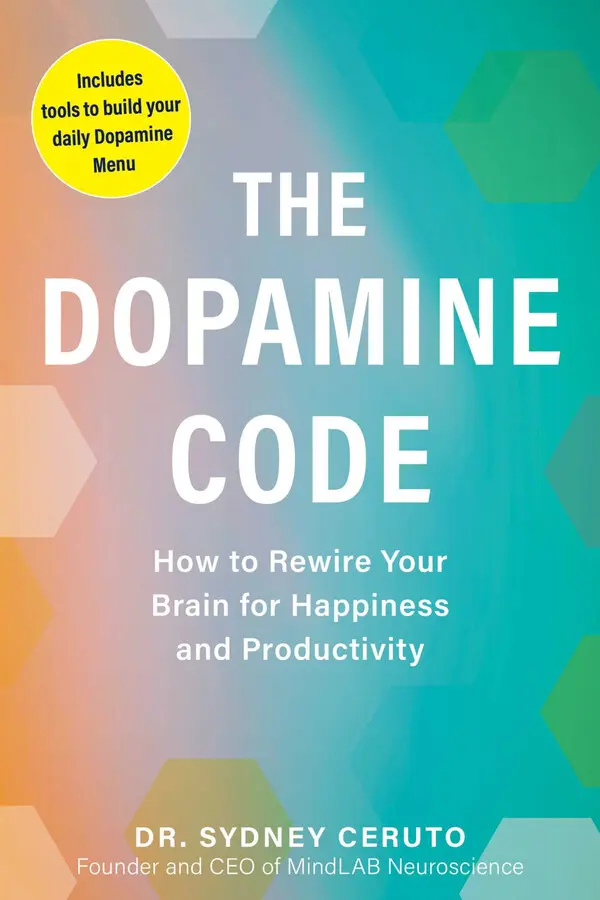
The Dopamine Code

Decode Your Drive

Why Your Brain Rewards the Wrong Things

Your brain's reward system runs every decision, every craving, every crash — and it was never designed for the life you're living. The Dopamine Code is Dr. Ceruto's framework for understanding the architecture behind what drives you, drains you, and keeps you locked in patterns that willpower alone will never fix.

Published by Simon & Schuster, The Dopamine Code is Dr. Ceruto's framework for building your own Dopamine Menu — a personalized system for motivation, focus, and enduring life satisfaction.

Order Now

Ships June 9, 2026

The Dopamine Code by Dr. Sydney Ceruto — Decode Your Drive
Locations

The Intelligence Brief

Neuroscience-backed analysis on how your brain drives what you feel, what you choose, and what you can’t seem to change — direct from Dr. Ceruto.