The High Achiever’s Emotional Intelligence Gap: Why IQ and EQ Don’t Develop Together
Key Takeaways
- The IQ-EQ gap: architectural, not motivational. Cognitive empathy overdevelops; anterior insula, inferior frontal gyrus underactivate.
- Cognitive empathy masks the deficit. Reading people and feeling with them are neurologically distinct.
- Conventional EQ workshops fail by targeting behavior, not circuitry, strengthening dominant circuits, not atrophied ones.
- Affective empathy circuits respond to sustained neuroplasticity protocols: measurable cortical thickening in social-affective regions follows.
- Rewiring requires consistency, not intensity: short bursts change nothing; 90+ days of circuit activation do.
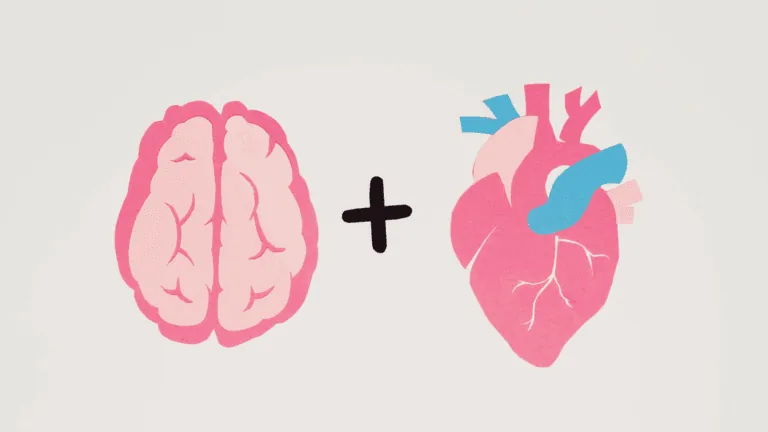
High-achieving individuals frequently score well on surface measures of emotional intelligence (reading situations, predicting others’ responses) while simultaneously failing at its deeper neural layer: affective empathy, the capacity to feel what another person feels. This dissociation reflects a measurable neural architecture asymmetry, not a character flaw, and it follows predictable patterns that targeted intervention can systematically restructure. In 26 years of practice, I have worked with hundreds of executives, founders, and senior professionals who share this specific architecture. They are among the most cognitively capable people in any room they enter. They read interpersonal dynamics with precision, anticipate reactions before they occur, and manage stakeholder relationships with strategic fluency. Yet the people closest to them (partners, children, long-tenured colleagues) consistently report the same experience: presence without warmth, understanding without resonance, competence without connection. The neural basis of this pattern is well-documented, structurally distinct from general emotional awareness, and, critically, modifiable through sustained circuit-level intervention that targets the specific regions conventional approaches leave untouched. For related insights, see emotional intelligence in leadership and real influence.
individuals with ventromedial prefrontal lesions showed the reverse: intact perspective-taking but absent affective presence.
Why Do High Achievers Struggle With Emotional Intelligence?
High achievers struggle with emotional intelligence because their brains have spent years optimizing for analytical processing at the expense of attunement to feelings. This is developmental asynchrony: a pattern where cognitive circuits strengthen through relentless use while affective processing networks receive progressively less activation, producing measurable differences in cortical thickness and functional connectivity.
This gap reflects a deeper truth: emotional intelligence runs on the neural circuitry beneath the soft skill, not on memorized scripts.
The pattern is remarkably consistent. The individual who deconstructs a complex negotiation in real time but cannot tell their partner what they actually feel. The one who manages a family crisis with extraordinary logistical precision (schedules, finances, communication trees) while everyone around them feels abandoned. The person who always knows the right thing to say but whose words land hollow because the feelings behind them were calculated, not felt. The team leader whose direct reports respect their competence but never feel genuinely supported. For related insights, see high-performance career optimization strategies.
In 26 years of practice, I have worked with hundreds of people who share this specific architecture. They are not unintelligent by any conventional measure. Most score well on conventional EQ assessments because those instruments disproportionately measure cognitive empathy: the ability to identify emotions, label them accurately, and predict behavioral responses. What the assessments miss, and what the people closest to them feel viscerally, is the absence of affective presence.
The Developmental Asynchrony Pattern
The brain is an efficiency engine. Neural circuits that receive consistent activation strengthen: synaptic connections proliferate, myelination increases, processing speed accelerates. Circuits that receive less activation prune. This is not pathology. It is how the brain conserves metabolic resources.
For people who spend their formative and professional years in environments that reward analytical performance (academic competition, professional advancement, strategic problem-solving) the prefrontal and dorsolateral circuits responsible for cognitive processing receive disproportionate reinforcement. Simultaneously, the anterior insula (the region generating the visceral, felt experience of another person’s state) and the inferior frontal gyrus receive comparatively less engagement. Research into these circuits has consistently demonstrated that activation history shapes architecture. For related insights, see executive presence and leadership impact.
Schurz and colleagues confirmed this dissociation in a comprehensive meta-analysis, identifying structurally distinct neural networks for cognitive versus affective components of social cognition. The networks develop independently based on use, which means the imbalance is not fixed. It is a product of history, not destiny.
Reading a room is not feeling with people. They are neurologically distinct operations, which is why EQ workshops that strengthen the dominant system leave the atrophied one untouched.
What Happens When Your Brain Prioritizes Analysis Over Feeling?
The prefrontal cortex actively suppresses limbic and insular activity during sustained analytical processing. In high-performing individuals, this suppression becomes the brain’s default operating mode: not a temporary state during focused work, but a persistent architectural bias that dampens affective empathy even during intimate conversations and moments when feelings matter most.
Shamay-Tsoory and colleagues demonstrated this dissociation through lesion studies. People with damage to the inferior frontal gyrus lost cognitive empathy, the ability to understand another person’s perspective, while retaining affective empathy. People with ventromedial prefrontal lesions showed the reverse: intact perspective-taking but absent affective presence. Two systems. Anatomically separable. Independently vulnerable.
This matters because most frameworks treat empathy as a single capacity. It is not. When I work with high-performing people, the presenting complaint is almost never “I cannot understand others.” They understand people brilliantly. The complaint, usually articulated by a partner or family member rather than the person themselves, is: “You understand everything but feel nothing.”
Cognitive Empathy vs. Affective Empathy: The Social Skills Trade-Off
| Feature | Cognitive Empathy | Affective Empathy |
|---|---|---|
| Neural basis | Temporoparietal junction, dorsomedial prefrontal cortex | Anterior insula, inferior frontal gyrus, anterior cingulate cortex |
| Function | Understanding what others think and feel | Feeling what others feel in your own body |
| Assessment | Easily captured by conventional EQ tests | Poorly captured by self-report instruments |
| In high performers | Typically overdeveloped | Frequently underactivated |
| Training response | Strengthened by cognitive workshops | Requires sustained experiential activation |
The trade-off is not metaphorical. Under sustained cognitive load, the prefrontal cortex actively inhibits insular activation through a process called top-down suppression. The brain cannot run both systems at full capacity simultaneously. For someone whose professional identity is built on analytical clarity, the brain learns to keep the analytical system dominant. Over years, this becomes structural: the affective circuits don’t just go quiet during work. They go quiet during dinner. During arguments. During the moments that matter most to the people around them. For a deeper look at how these instinctive processes operate, see the science of intuition and trusting your gut.
“The partner who can predict your reaction to anything but has never once made you feel truly felt: that is cognitive empathy operating without its affective counterpart.”
Why Does Emotional Intelligence Training Rarely Produce Lasting Change?
Conventional EQ instruction produces measurable short-term behavioral change but fails to generate lasting results because it targets the cognitive empathy system, the one already overdeveloped in high-performing individuals. Workshops teach frameworks for identifying emotions, managing reactions, and communicating empathetically. These are cognitive strategies that reinforce the dominant circuitry rather than activating the atrophied network beneath it.
The pattern repeats across every modality. The two-day corporate workshop. The book with the empathy exercises. The relationship program that assigns “active listening” homework. Each approach adds another cognitive layer (another framework, another strategy, another thing to remember to do) onto a system that is already performing well. The person leaves knowing more about emotions. They do not feel more. Emotionally intelligent people recognize this gap instinctively: they understand that great relational capacity requires more than intellectual comprehension.
The Relationship Management Problem That Workshops Can’t Solve
The fundamental error is treating emotional intelligence as a knowledge problem. It is an architecture problem. Adding cognitive strategies to a brain that already over-relies on cognitive processing does not rebuild affective capacity. It strengthens the compensatory pattern.
Neural circuit restructuring in the adult brain requires three conditions that no workshop or book provides: sustained activation of the target circuits over weeks rather than hours, real-time engagement with feelings rather than hypothetical scenarios, and guided processing during moments of genuine vulnerability when the brain is most receptive to structural change.
This is why the person who reads every book on emotional intelligence, attends every communication workshop, and genuinely wants to learn to connect more deeply still receives the same feedback from the people closest to them: something is missing. The knowledge is there. The architecture has not changed. An emotionally intelligent person understands this gap intellectually, but understanding it does not close it.
What I consistently observe is that the gap between knowing and feeling is the single most frustrating experience for high-capacity, intelligent people who value their relationships. They cannot understand why understanding is not enough. Successful people who demonstrate high emotional intelligence in professional contexts (managing a team, navigating stakeholder dynamics, reading a boardroom) often find the disconnect even more confusing. Their interpersonal skills at reading others mask the deeper deficit in felt presence.
How Does Neural Restructuring Rebuild Emotional Processing Circuits?
Neural restructuring rebuilds processing circuits by systematically activating the anterior insula and inferior frontal gyrus under conditions that promote long-term potentiation: the mechanism through which repeated neural activation strengthens synaptic connections and builds new circuit pathways. This requires sustained, guided engagement over months, not days.
Valk and colleagues provided the structural evidence, demonstrating measurable cortical thickening in social-affective brain regions after targeted mental training, which aligns precisely with what I observe when applying sustained circuit activation protocols in practice. The research confirmed that different types of engagement produce structural changes in different neural networks. Socio-affective practice thickened areas associated with empathy and compassion. Cognitive practice thickened regions associated with perspective-taking. The brain does not change globally. It changes specifically, in the circuits that are activated.
This is the principle that guides my methodology through Real-Time Neuroplasticity™: engaging the affective empathy circuits during live interactions rather than simulated exercises. The difference is not semantic. It is biological.
What the First 90 Days of Rewiring Look Like
A client came to me after her second marriage began showing the same pattern as her first. She managed the household, the children’s schedules, her aging parents’ medical decisions, and a charity board, all with extraordinary competence. Her husband’s complaint was identical to her first husband’s: “You handle everything, but I never feel like you’re actually here.”
The initial assessment revealed exactly the asymmetry this article describes. Her cognitive empathy was exceptional: she anticipated needs, solved problems before anyone asked, and read interpersonal dynamics with precision. Her affective empathy activation was significantly dampened. Twenty years of operating as the person who holds everything together had structurally prioritized her analytical circuits at the expense of her felt presence. An emotionally intelligent person by every conventional measure, yet the people closest to her experienced a profound absence. For more on navigating these relational patterns, see emotional intelligence and effective leadership strategies.
The first phase focused on identifying moments where cognitive processing was overriding affective response in real time, not retrospectively, not in a workbook. The second phase systematically activated the affective circuits during live interactions with her family, building the neural pathways that her competence-driven architecture had pruned. By week ten, her daughter, unprompted, told her: “Mom, you feel different.”
That shift was not behavioral. It was architectural. The circuits that generate felt presence had been rebuilt through sustained, targeted activation.
“Competence is not connection. The brain that manages everything often does so at the expense of the neural circuits that make people feel held.”
Can Emotional Intelligence Be Durably Rewired in Adulthood?
Emotional intelligence can be durably rewired in adulthood because the neural circuits governing affective empathy retain experience-dependent plasticity throughout the lifespan. The critical variable is not age: it is the duration and consistency of targeted circuit activation. Short interventions produce temporary behavioral change that decays within weeks. Sustained protocols produce structural change that persists after the intervention ends.
The misconception that patterns become fixed by adulthood reflects an outdated model of brain development. While the brain’s overall plasticity does decline with age, the specific circuits involved in empathy and processing feelings (the anterior insula, anterior cingulate cortex, and inferior frontal gyrus) remain responsive to experience-dependent change well into the fifth and sixth decades.
The Neuroplasticity Window Most Approaches Miss
The window is not about age. It is about state. Neuroplasticity is state-dependent: the brain’s capacity for structural change increases dramatically during moments of genuine activation, uncertainty, and relational vulnerability. This is precisely why Real-Time Neuroplasticity™ intervenes during live experiences rather than reflecting on them afterward.
The typical approach (process the experience later, in a calm environment, with a framework) misses the biological window entirely. The brain is most receptive to circuit restructuring when the circuits are actively firing. Waiting until the moment passes is like trying to strengthen a muscle without ever contracting it.
What I have observed across hundreds of cases is a consistent timeline. Initial shifts in awareness, noticing the gap between cognitive understanding and felt experience, emerge within the first three to four weeks. Measurable changes in how other people experience the person’s presence typically appear between weeks eight and twelve. Durable architectural change, the point where new patterns become the default rather than requiring conscious effort, consolidates between months four and six.
This is not fast by self-help benchmarks. It is remarkably fast by neuroscience standards. Structural reorganization of adult neural circuits, confirmed through behavioral markers and relational repair patterns, in under six months. The architecture is not destiny. It is history, and history can be rewritten.
What the First Conversation Looks Like
When someone reaches out to MindLAB Neuroscience about emotional intelligence, the first conversation is not an initial evaluation form or a preliminary screening. It is a focused assessment, identifying whether the pattern is truly architectural or whether something else is driving the disconnect. I listen for specific markers: the gap between understanding and feelings, the feedback from partners and family members, the history of cognitive strategies that produced knowledge but not change. Within one or two conversations, the root pattern becomes clear. For most people, that clarity alone shifts something: the realization that this is not a character flaw or a lack of caring, but a specific neural architecture that developed for good reasons and can be deliberately restructured. Intelligent people who have tried every framework and still receive the same relational feedback often find this architectural explanation the first one that actually makes sense. For related insights, see proven strategies for building healthy relationships.
What is the difference between cognitive empathy and affective empathy?
Cognitive empathy is the brain’s ability to understand and predict another person’s state: it operates through the temporoparietal junction and prefrontal cortex. Affective empathy is the capacity to physically feel what another person feels: it runs through the anterior insula and inferior frontal gyrus. High achievers frequently overdevelop cognitive empathy through years of analytical work while their affective empathy circuits receive less activation. Both systems are measurable, structurally distinct, and independently modifiable through targeted neural intervention.
Can you have high IQ but low emotional intelligence?
High IQ and low emotional intelligence is one of the most common patterns in cognitively gifted people. IQ reflects processing speed, working memory, and analytical reasoning: functions concentrated in prefrontal and parietal circuits. Emotional intelligence, particularly its affective component, depends on different neural architecture entirely: the insula, anterior cingulate, and inferior frontal regions. These systems develop independently based on which circuits receive the most activation over time, so a brain optimized for analysis can simultaneously underperform in affective processing.
Why do smart people struggle in relationships?
Cognitively gifted people often struggle in relationships because their brains default to analytical processing during interactions. Instead of feeling a partner’s distress, they analyze it: identifying causes, proposing solutions, predicting outcomes. This response, while logically sound, leaves the other person feeling unseen. The partner does not need the problem solved. They need the feelings felt. This mismatch between cognitive competence and felt presence is the most common source of relational breakdown I observe in high-performing populations.
Does emotional intelligence decrease with stress?
Sustained stress elevates cortisol, which strengthens amygdala reactivity while excessive catecholamine signaling, amplified by cortisol, weakens prefrontal-insular connectivity: the circuits that support affective empathy. Under chronic stress, the brain shifts resources toward threat detection and analytical problem-solving, further suppressing felt capacity. High-pressure professional environments do not just fail to develop emotional intelligence: they actively erode it. The longer the exposure to sustained cognitive load without affective circuit engagement, the more pronounced the architectural asymmetry becomes.
How long does it take to develop emotional intelligence as an adult?
Developing emotional intelligence in adulthood requires restructuring neural circuits, not simply learning new cognitive strategies. Initial shifts in awareness typically emerge within three to four weeks of sustained intervention. Observable changes in relational presence, how people experience your engagement, appear between weeks eight and twelve. Durable architectural change, where new patterns become the default processing mode, consolidates between months four and six. The timeline reflects the biology of adult neuroplasticity, not a lack of effort or motivation.
References
- Shamay-Tsoory, S. G., Aharon-Peretz, J., and Perry, D. (2009). Two systems for empathy: A double dissociation between emotional and cognitive empathy in inferior frontal gyrus versus ventromedial prefrontal lesions. Brain, 132(3), 617–627. https://doi.org/10.1093/brain/awn279
- Valk, S. L., Bernhardt, B. C., Trautwein, F.-M., Böckler, A., Kanske, P., Guizard, N., Collins, D. L., and Singer, T. (2017). Structural plasticity of the social brain: Differential change after socio-affective and cognitive mental training. Science Advances, 3(10), e1700489. https://doi.org/10.1126/sciadv.1700489
- Schurz, M., Radua, J., Tholen, M. G., Malber, L., Sallet, J., Mars, R. B., Bzdok, D., and Perner, J. (2021). Toward a hierarchical model of social cognition: A neuroimaging meta-analysis and integrative review of empathy and theory of mind. Psychological Bulletin, 147(3), 293–327. https://doi.org/10.1037/bul0000303
If this pattern is present in your relationships, you can schedule a strategy call with Dr. Sydney Ceruto to map the specific architecture driving the disconnect, identify which circuits are underactivated, and determine whether the pattern is addressable through sustained neural restructuring.
Related: emotional intelligence mastery hub · relationship intelligence pillar.