Intuition is not guesswork. It is rapid, non-conscious pattern recognition performed by neural systems that operate below the threshold of deliberate awareness. In over 26 years of practice, I have worked with executives who dismiss their gut feelings as irrational and with individuals who follow every impulse without discernment. Both positions misunderstand what intuition actually is at the neural level. The science reveals something far more precise: intuition is the output of your brain’s fastest processing systems, and learning to read it accurately is one of the most consequential skills you can develop.
Antonio Damasio’s somatic marker hypothesis, first published in 1994 and now supported by decades of converging evidence, provides the foundational framework. The brain does not evaluate decisions through pure logic. It encodes the emotional outcomes of past experiences as bodily sensations and replays those sensations when similar situations arise. That tightness in your chest before a business deal, that sense of ease around a new colleague, that inexplicable reluctance to board a flight: these are somatic markers, and they carry real information.
Key Takeaways
- Intuition operates through the somatic marker system, in which the ventromedial prefrontal cortex and insula replay encoded bodily outcomes of prior decisions as rapid guidance signals.
- Gut-brain axis signaling via the vagus nerve relays visceral afferent data to the insular cortex, contributing to the physiological substrate of intuitive decision-making.
- Pattern recognition stored in basal ganglia procedural circuits enables expert intuition to bypass slow prefrontal deliberation under conditions of time pressure or uncertainty.
- Norepinephrine modulation during high-stakes decisions amplifies interoceptive signal strength, making somatic intuitive cues more accessible to conscious deliberative processes.
- Deliberate reflection on past outcome patterns accelerates consolidation of implicit decision heuristics into the striatal circuitry that generates reliable intuitive responses.
How Does the Brain Generate Intuitive Signals?
Three neural structures form the core architecture of intuitive processing. The insular cortex monitors internal body states and translates them into conscious feelings. The ventromedial prefrontal cortex (vmPFC) stores the associations between past decisions and their emotional outcomes. The basal ganglia perform rapid pattern matching against accumulated experience without requiring conscious effort.
When you encounter a situation that resembles a past experience, the vmPFC retrieves the stored emotional outcome and the insula translates it into a felt sense. This process takes approximately 200 to 500 milliseconds, far faster than the deliberate analytical processing of the dorsolateral prefrontal cortex. Bechara and colleagues demonstrated this timing in their Iowa Gambling Task experiments: participants showed autonomic stress responses to risky decks 10 to 15 trials before they could consciously articulate which decks were dangerous.
What this means in practice is that your body often knows the answer before your conscious mind has finished formulating the question. In my work with decision-makers navigating complex interpersonal situations, I consistently observe that their initial somatic response to a person or proposal carries information that subsequent analysis confirms. The challenge is not generating intuition. The brain does that automatically. The challenge is learning to read the signal accurately.
The Gut-Brain Axis: Why Intuition Feels Physical
The enteric nervous system, containing approximately 500 million neurons lining the gastrointestinal tract, communicates bidirectionally with the brain through the vagus nerve. Porges describes how this gut-brain axis transmits information about the body’s internal state to the insula and the brainstem, where it is integrated into the broader landscape of somatic markers that shape intuitive judgment and threat assessment.
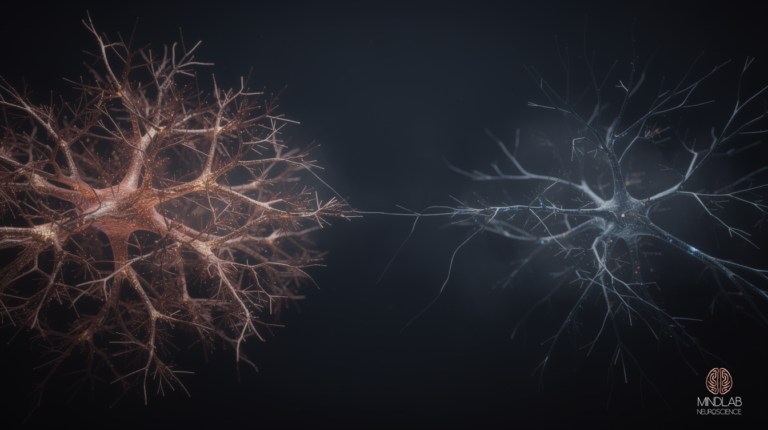
The ventromedial prefrontal cortex retrieves stored emotional outcomes in 200 to 500 milliseconds, producing intuitive signals that precede conscious deliberation.
Signals traveling from the gut to the brain via the vagus nerve influence emotional processing, threat assessment, and decision-making. The gut microbiome itself produces neurotransmitters, including approximately 95 percent of the body’s serotonin, which modulates the sensitivity of this communication channel. Disruptions to the gut-brain axis, whether from chronic stress, poor nutrition, or inflammatory conditions, can degrade the quality of intuitive signals.
This is why I pay attention when a client reports that their gut reactions have become unreliable. In some cases, the somatic marker system is intact but the interoceptive channel has degraded. The individual is generating accurate signals but cannot read them. In other cases, chronic stress has distorted the somatic markers themselves, producing anxiety-driven false alarms that mimic intuition but reflect threat-state dysregulation rather than genuine pattern recognition.
When Should You Trust Your Intuition and When Should You Override It?
Not all intuitive signals are equally reliable. The accuracy of intuition depends on two conditions identified by Kahneman and Klein in their framework for intuitive expertise. First, the environment must be sufficiently regular that patterns exist to be learned. Second, the individual must have had adequate opportunity to learn those patterns through repeated exposure and feedback.
An experienced physician’s evaluative intuition, built on thousands of individual encounters with clear outcomes, is highly reliable. An investor’s gut feeling about a startup in a novel market, where pattern regularities are weak and feedback is delayed, is less trustworthy. The neural mechanism is identical in both cases. The difference is in the quality and quantity of the patterns the basal ganglia have encoded.
In my practice, I help clients develop a framework for evaluating their own intuitive signals. The first question is domain relevance: does your experience base actually cover this type of situation? The second is emotional contamination: is the somatic marker reflecting genuine pattern recognition, or is it reflecting a current emotional state such as anxiety, fatigue, or desire that distorts the signal? The third is signal strength: a clear, immediate, embodied response carries different weight than a vague unease that could be attributed to multiple sources.
The Default Mode Network and Unconscious Problem-Solving
The default mode network (DMN), which activates when the brain is not focused on an external task, plays a significant role in intuitive processing. During rest, mind-wandering, and sleep, the DMN integrates information from disparate neural systems, forming connections and associations that the focused, task-oriented brain would miss.
This is why breakthrough insights often arrive in the shower, during a walk, or upon waking. The DMN has been processing the problem offline, combining stored patterns in novel configurations. Individuals with stronger connectivity between the DMN and the executive control network produce more creative solutions, suggesting that the most effective intuitive processing occurs when these networks collaborate rather than compete.
When I work with clients who report feeling “stuck” on a decision, the first intervention is often counterintuitive: stop deliberating. The analytical prefrontal systems have exhausted their contribution. What remains is to create conditions, rest, low-demand physical activity, emotional regulation through interpersonal connection, where the DMN can complete its integration. The answer that emerges will not arrive through more spreadsheets. It will arrive as a felt sense that the somatic marker system has resolved the pattern.
Training Interoceptive Accuracy: How to Sharpen Your Intuitive Signal
Interoceptive accuracy, the ability to perceive and correctly interpret internal body signals, is the skill that determines whether intuition functions as a reliable guide or a source of confusion. Individuals with higher interoceptive accuracy make better decisions under uncertainty and show more adaptive emotional regulation.
Interoceptive accuracy is trainable. The anterior insula, which serves as the primary cortical hub for body-state awareness, shows increased activation and gray matter density with sustained interoceptive practice. Heartbeat detection tasks, body-scan exercises, and practices that direct attention to subtle physiological shifts all strengthen this capacity. In my work, improving interoceptive accuracy produces a compounding effect: as clients become more attuned to their somatic markers, they make faster decisions, experience less rumination about those decisions, and report greater confidence in their judgment.
The practical application is straightforward but requires consistency. Before a significant decision, pause and direct attention inward. Notice what the body is communicating without immediately interpreting or analyzing. The prefrontal analytical systems can evaluate the signal afterward, but the signal itself must be received first. Most people override the somatic marker before they have fully registered it, jumping to analysis before the gut has finished speaking.
This article explores the neuroscience of intuition and decision-making. It is intended for educational purposes and does not constitute medical advice. If you are experiencing persistent difficulty with decision-making or emotional regulation, please consult a qualified healthcare professional.
Frequently Asked Questions
The following questions address common points of confusion about intuitive processing, the neural mechanisms that generate somatic signals, and the conditions under which gut-based guidance is most and least reliable. Answers draw on current neuroscience and applied experience across two decades of clinical and coaching work.
Is intuition actually reliable or is it just bias?
Genuine intuition and cognitive bias operate through similar neural mechanisms but differ in their origins. Intuition is the output of the somatic marker system processing accumulated domain experience. Bias is the same system operating on incomplete, distorted, or irrelevant patterns. The reliability depends on the regularity of the environment and the quality of your experience base within that domain.
Why does anxiety sometimes feel like intuition?
Anxiety and intuition both produce somatic markers: bodily sensations that carry emotional significance. Genuine intuition arises from pattern-matched experience and is typically situation-specific. Anxiety generates a generalized threat signal driven by amygdala hyperactivation that attaches to whatever situation is currently in focus.
Can you improve your intuition through practice?
Improvement comes through two pathways. Building domain expertise through deliberate practice with feedback gives the basal ganglia higher-quality patterns to match against. Training interoceptive accuracy allows more reliable detection and interpretation of the somatic markers your brain generates. Both pathways produce measurable improvements in decision quality under uncertainty and reduce reliance on slow analytical processing.
What is the somatic marker hypothesis?
Proposed by neuroscientist Antonio Damasio, the somatic marker hypothesis states that the brain encodes the emotional outcomes of past decisions as bodily sensations. When similar situations arise, the ventromedial prefrontal cortex retrieves these stored associations and the insula translates them into felt experiences, providing rapid decision guidance that operates before conscious deliberation begins.
How does sleep affect intuitive decision-making?
Sleep provides the default mode network extended time to integrate information from disparate sources, forming the pattern associations that fuel intuitive insight. REM sleep in particular consolidates emotional memories and strengthens the connections between the vmPFC and the amygdala that underlie somatic marker formation. Sleep deprivation degrades both the signal generation and the interoceptive accuracy needed to read it.
From Reading to Rewiring
Genuine intuition and cognitive bias operate through similar neural mechanisms but differ in their origins. Intuition is the output of the somatic marker system processing accumulated domain experience. Bias is the same system operating on incomplete or distorted patterns. Reliability depends on the regularity of the environment and the quality of experience within that domain — not on the intensity of the felt signal.
Kandel, E. R., Schwartz, J. H., Jessell, T. M., Siegelbaum, S. A., and Hudspeth, A. J. (2013). Principles of Neural Science, 5th Edition. McGraw-Hill.
Damasio, A. R. (1996). The somatic marker hypothesis and the possible functions of the prefrontal cortex. Philosophical Transactions of the Royal Society B, 351(1346), 1413-1420. https://doi.org/10.1098/rstb.1996.0125
World Health Organization. (2022). Mental health: Strengthening our response. https://www.who.int/news-room/fact-sheets/detail/mental-health-strengthening-our-response
Harvard Health Publishing. (2024). Understanding the stress response. https://www.health.harvard.edu/staying-healthy/understanding-the-stress-response
Diamond, A. (2013). Executive functions. Annual Review of Psychology, 64, 135-168. https://doi.org/10.1146/annurev-psych-113011-143750
Miyake, A., Friedman, N. P., Emerson, M. J., Witzki, A. H., Howerter, A., and Wager, T. D. (2000). The unity and diversity of executive functions and their contributions to complex frontal lobe tasks: A latent variable analysis. Cognitive Psychology, 41(1), 49-100. https://doi.org/10.1006/cogp.1999.0734