Key Points
- Unwanted behaviors persist because they are wired into your brain’s automatic circuitry, not because you lack willpower or discipline.
- Real-Time Neuroplasticity™ targets the neural architecture sustaining the pattern, producing structural change rather than surface-level coping.
- Once a behavioral circuit is rewired, the old pattern no longer fires automatically, eliminating the need for constant self-monitoring.
- Dr. Sydney Ceruto maps your specific neural pattern during the Strategy Call to determine the precise approach for your situation.
- MindLAB's methodology does not require electronic devices, ongoing maintenance programs, or clinical referrals to begin.
| Marker | Traditional Approach | Neuroscience-Based Approach | Why It Matters |
|---|---|---|---|
| Target of Intervention | Surface behaviors and symptoms | Neural circuits driving the behavior | Root-cause change vs. symptom management |
| Primary Method | Talk-based awareness and coping tools | Real-Time Neuroplasticity™ rewiring | Structural brain change, not just insight |
| Duration of Results | Requires ongoing maintenance | Durable neural pathway restructuring | Change that holds without constant effort |
| Approach to Relapse | Expected; managed with new strategies | Addressed by rewiring the trigger circuit | Eliminates the pattern, not just the episode |
| Role of Willpower | Central: client must resist urges | Minimal: the automatic circuit is recalibrated | Stops requiring you to fight yourself daily |
| Personalization | Standardized protocols and worksheets | Mapped to your specific neural architecture | Precision targeting for your exact pattern |
Why Neuroscience-Based Behavioral Change Matters in Wall Street
The Financial District selects for people who can perform under enormous pressure, and then punishes them with the behavioral patterns that pressure creates. From the trading floors near Broad Street to the private equity offices above FiDi, the professional demands are relentless. The neural circuits built to handle that intensity become rigid over time. What once felt like sharp instinct hardens into reactive patterns: impulsive decisions, escalating risk tolerance, emotional suppression that eventually leaks into every relationship outside the office. The person who thrives during market hours and unravels after them is not showing a character deficiency. They are showing what happens when the brain builds circuits for crisis and then has no mechanism to switch them off.
These patterns are not personality traits. They are neural adaptations. The prefrontal cortex, the brain region governing deliberate decision-making, becomes overridden by faster, automatic circuits when the nervous system has been trained by years of high-stakes pressure. The result is someone who can execute brilliantly at work but cannot stop repeating the same destructive cycle at home, in relationships, or in the quiet hours when performance is no longer the metric. A partner at a firm near Water Street whose temper has become a liability despite decades of professional discipline. A trader in Battery Park City whose compulsive habits escalate every time the pressure lifts. These are not problems that yield to willpower. They are problems wired into the brain’s automatic operating system.
MindLAB Neuroscience works with people throughout Lower Manhattan, Battery Park City, Tribeca, and the surrounding Financial District who recognize that their behavioral patterns have outgrown their usefulness. Dr. Ceruto’s Real-Time Neuroplasticity™ methodology does not ask you to talk through childhood memories or build a meditation practice. It directly recalibrates the neural architecture that produces the automatic behavior: the reaction that fires before you choose it. The process is precise, measurable, and structured around durable change rather than ongoing management.
For someone managing a portfolio by day and managing a crumbling personal life by night, or a professional whose anger has become the thing colleagues whisper about despite years of attempting to control it, the issue is architectural. The brain built a circuit under specific conditions, and that circuit now runs whether the conditions warrant it or not. Rewiring that circuit is precise work: work that requires an understanding of how the brain automates behavior and how those automations can be durably restructured. It is the difference between fighting yourself every day and simply no longer needing to.
Lower Manhattan’s culture of relentless performance makes it easy to defer personal reckoning indefinitely. There is always another deal, another quarter, another reason to postpone addressing the pattern. But neural circuits do not weaken with time. They consolidate. The pattern you tolerate at forty will be more deeply entrenched at fifty. Dr. Ceruto’s initial Strategy Call, a focused phone conversation, maps the specific neural mechanisms at work and provides a clear assessment of whether MindLAB’s approach fits your situation. That single call often represents the first moment of genuine clarity about why the pattern has persisted and what it would take to end it.


Dr. Sydney Ceruto, PhD, Neuroscientist & Author, MindLAB Neuroscience
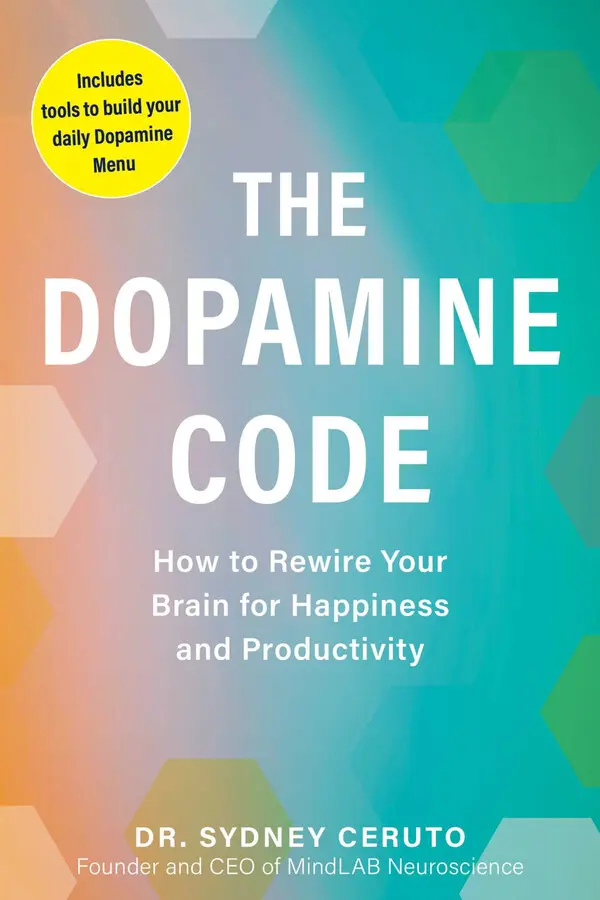
Dr. Ceruto holds a PhD in Behavioral & Cognitive Neuroscience from NYU and Master’s degrees in Clinical Psychology and Business Psychology from Yale University. She lectures at the Wharton Executive Development Program at the University of Pennsylvania and has been an Executive Contributor to the Forbes Coaching Council since 2019. Dr. Ceruto is the author of The Dopamine Code (Simon & Schuster, June 2026). She founded MindLAB Neuroscience in 2000 and has spent over 26 years leading it, pioneering Real-Time Neuroplasticity™, a methodology that durably rewires the neural pathways driving behavior, decisions, and emotional responses.
Frequently Asked Questions About Neuroscience-Based Behavioral Change
Why do high-pressure environments create such persistent behavioral patterns?
Sustained pressure trains the brain to prioritize speed over deliberation. Over time, the automatic circuits built for crisis response begin firing in everyday situations, producing reactive behaviors that feel impossible to override even when you recognize them happening.
How is neuroscience-based behavioral change different from executive coaching?
Executive coaching works at the level of strategy, awareness, and accountability. MindLAB works at the level of neural architecture. We rewire the circuits that produce the behavior, rather than building strategies to manage it after it fires.
Can this approach address behaviors that only show up outside of work?
Yes, frequently. Many people maintain exceptional control at work while the same underlying neural pattern expresses itself in personal relationships, health decisions, or private habits. The circuit does not distinguish between settings: it fires wherever the trigger conditions are met.
How long does it take to rewire a behavioral pattern?
The timeline depends on how deeply consolidated the pattern is. Many clients report noticeable shifts within weeks. Dr. Ceruto assesses your specific situation during the Strategy Call and provides a realistic framework for your engagement.
Do you work with people in Lower Manhattan and the Financial District?
Yes. MindLAB serves clients throughout Wall Street, FiDi, Battery Park City, Tribeca, and the broader Lower Manhattan area. The Strategy Call is conducted by phone, making the initial step straightforward regardless of schedule demands.
What happens during the Strategy Call?
The Strategy Call is a phone conversation with Dr. Ceruto where she maps the neural mechanisms driving your specific behavioral pattern. The call provides clarity on whether MindLAB's approach is the right fit for your situation.
I have tried willpower and it does not work. Why would this be different?
Willpower operates from the prefrontal cortex, which is easily overridden by deeper automatic circuits, especially under stress or fatigue. Real-Time Neuroplasticity™ recalibrates the automatic circuit itself, so the unwanted behavior stops firing rather than requiring you to constantly suppress it.
Can behavioral change work address anger or reactivity issues?
Reactive anger is one of the most common patterns MindLAB addresses. It is typically driven by an overactive amygdala, the brain's threat-detection center, that fires before the rational mind can intervene. Rewiring that trigger circuit produces a fundamentally different response, not just better suppression.
Is this a long-term commitment?
MindLAB's goal is durable structural change, not an ongoing management relationship. Once the neural pathway is rewired, the old automatic behavior no longer fires in the same way. Most engagements have a defined arc rather than an open-ended timeline.
Do I need a referral to begin?
No. MindLAB does not require referrals or clinical prerequisites. If you have a persistent behavioral pattern that resists your conscious efforts to change it, that is the starting point.
Also available in: Miami · Midtown Manhattan · Beverly Hills · Lisbon
Take the First Step
One hour with Dr. Sydney Ceruto. You leave knowing which neural pattern is actually driving this, and what to do about it.
Book a Strategy Call
The Dopamine Code
Decode Your Drive
Why Your Brain Rewards the Wrong Things
Your brain's reward system runs every decision, every craving, every crash, and it was never designed for the life you're living. The Dopamine Code is Dr. Ceruto's framework for understanding the architecture behind what drives you, drains you, and keeps you locked in patterns that willpower alone will never fix.
Published by Simon & Schuster, The Dopamine Code is Dr. Ceruto's framework for building your own Dopamine Menu, a personalized system for motivation, focus, and enduring life satisfaction.
Order Now!Available now