








Key Points
- The neural circuits built for high-stakes financial decision-making migrate into personal relationships, producing transactional dynamics and emotional distance.
- Emotional unavailability is not personality. It is neural architecture that developed in response to environments that penalized vulnerability.
- Long hours and sustained professional pressure cause the brain to prune circuits for deep emotional engagement over time, not through choice but through disuse.
- Real-Time Neuroplasticity™ builds new relational circuitry without dismantling the neural architecture that drives professional performance.
- Intellectual awareness of a pattern does not change the neural circuits producing it. Rewiring happens at the architectural level, not the insight level.
| Marker | Traditional Approach | Neuroscience-Based Approach | Why It Matters |
|---|---|---|---|
| Primary Focus | Relationship Pattern Analysis | Talk-Based Counseling | Executive Coaching |
| Target | Neural circuits driving repetition | Conscious narrative and feelings | Professional performance behaviors |
| Methodology | Real-Time Neuroplasticity™ | Conversational exploration | Behavioral frameworks and feedback |
| Durability of Change | Durable neural rewiring | Requires ongoing sessions | Dependent on continued practice |
| Scope | All relational domains mapped | One relationship at a time | Workplace dynamics only |
| Speed of Results | Shifts within weeks | Months to years | Variable, often slow |
How Wall Street’s Pressure Shapes Relationship Architecture
Working within blocks of the New York Stock Exchange and the Federal Reserve Bank of New York trains the brain for a specific kind of engagement: fast, transactional, and risk-averse. The neural circuits reinforced by years of assessing counterparty risk, managing positions under pressure, and maintaining composure during volatility do not stay contained to the trading floor. They migrate into every relationship. The person who cannot stop evaluating a partner’s reliability in probabilistic terms is not choosing to be cold. Their brain has been architecturally optimized for exactly that response. Every dinner conversation, every weekend morning, every moment that should belong to connection is filtered through circuitry built to detect exposure and limit downside.
In the Financial District and adjacent TriBeCa, where professional identity and personal life blur over dinners and weekend events in Battery Park, relationships form within environments that reward strategic behavior. The neural pathways built for reading a room at a client meeting become the same circuits activated during a conversation about commitment. Vulnerability registers as exposure. Emotional openness feels like an unhedged position. Partners sense this as withdrawal or control, but the person producing it often has no conscious awareness that their relational circuitry has been colonized by professional architecture. They believe they are being thoughtful and measured. Their partner experiences calculation where warmth should be.
The hours compound the problem significantly. When someone leaves the office at Broad Street or Water Street at ten or eleven at night, the relationships that survive are the ones requiring the least maintenance. Over time, the brain prunes the circuitry for deep emotional engagement because it conflicts with the demands consuming most waking hours. Partners experience this as distance or declining interest. The person experiencing it often feels nothing is wrong until the relationship ends. In the aftermath, they recognize the pattern but attribute it to schedule rather than architecture, setting up the identical dynamic with the next person. The hours were the catalyst, but the neural rewiring they produced is the sustaining mechanism. Each failed relationship reinforces the belief that the problem was compatibility, not circuitry, setting up the next cycle.
The social geography of Lower Manhattan reinforces these circuits continuously. From Stone Street’s after-work gatherings to the restaurants along Greenwich Street and the weekends spent in the Seaport, the environment provides almost no relational context that operates outside of professional social architecture. Even friendships form and function within the same transactional framework. The brain receives no input that challenges its current wiring because every relationship in the surrounding environment runs on the same circuitry. Without deliberate intervention at the architectural level, the pattern deepens with every year spent in this environment.
Dr. Sydney Ceruto’s Real-Time Neuroplasticity™ approach identifies these specific circuits and rewires them without requiring you to abandon the professional sharpness that serves you. The goal is not to soften your edge. It is to build neural architecture that supports both high performance and genuine relational depth. The result is expanded capacity, not a trade-off between the person you are at work and the person your relationships need you to become.


Dr. Sydney Ceruto, PhD, Neuroscientist & Author, MindLAB Neuroscience
Dr. Ceruto holds a PhD in Behavioral & Cognitive Neuroscience from NYU and Master’s degrees in Clinical Psychology and Business Psychology from Yale University. She lectures at the Wharton Executive Development Program at the University of Pennsylvania and has been an Executive Contributor to the Forbes Coaching Council since 2019. Dr. Ceruto is the author of The Dopamine Code (Simon & Schuster, June 2026). She founded MindLAB Neuroscience in 2000 and has spent over 26 years leading it, pioneering Real-Time Neuroplasticity™, a methodology that durably rewires the neural pathways driving behavior, decisions, and emotional responses.
Frequently Asked Questions About Relationship Pattern Analysis
What is Relationship Pattern Analysis?
It is a neuroscience-based process that identifies the recurring neural circuits producing the same relationship dynamics across different people and situations. The focus is on the architecture driving repetition, not on analyzing individual relationships.
How does working in finance affect relationship patterns?
Years of high-stakes decision-making under pressure build neural architecture optimized for risk assessment, emotional control, and transactional efficiency. Those circuits do not deactivate outside the office. They shape how you evaluate partners, respond to vulnerability, and process emotional demands.
I perform well at work but my personal relationships keep failing. Why?
Professional success and relational success often require opposing neural responses. The circuits that make you effective under pressure, such as emotional compartmentalization and rapid threat assessment, actively interfere with the vulnerability and sustained presence that close relationships demand.
Is this different from executive coaching?
Executive coaching typically addresses professional performance and leadership behaviors. Relationship Pattern Analysis targets the neural architecture governing how you connect with people in your personal life. There is overlap in the circuitry, but the focus and outcomes are distinct.
Can the long hours of finance permanently change my relational wiring?
Yes. Sustained demand on specific neural circuits strengthens those pathways while the brain prunes underused circuits. Years of prioritizing professional engagement over emotional engagement literally reshapes the neural architecture available for relationships.
What happens during the consultation?
The consultation is a focused phone conversation with Dr. Ceruto where she maps the specific neural mechanisms behind your relationship patterns and determines if this approach fits your situation. It is a working session, not a sales pitch.
Will this make me less effective professionally?
No. The process builds new neural architecture for relational engagement without dismantling the circuits that drive professional performance. The goal is expanded capacity, not a trade-off between personal and professional effectiveness.
How quickly do results appear?
Most people notice shifts in their automatic relational responses within the first several weeks. Deep pattern rewiring varies by complexity, but Real-Time Neuroplasticity™ works faster than insight-based approaches because it targets circuitry directly.
My partner says I am emotionally unavailable. Is that a pattern or just personality?
Emotional unavailability is neural architecture, not personality. The brain built circuits that dampen emotional access, usually as an adaptation to environments that punished vulnerability. Those circuits can be mapped and durably rewired.
How is Dr. Ceruto qualified for this work?
Dr. Ceruto holds a PhD in Behavioral and Cognitive Neuroscience from NYU and two Master's degrees from Yale. She has spent over 26 years pioneering Real-Time Neuroplasticity™ and works extensively with individuals navigating high-pressure professional environments.
Also available in: Miami · Midtown Manhattan · Beverly Hills · Lisbon
Take the First Step
A one-hour consultation with Dr. Sydney Ceruto. You leave knowing which neural pattern is actually driving this, and what to do about it.
Book Your Consultation
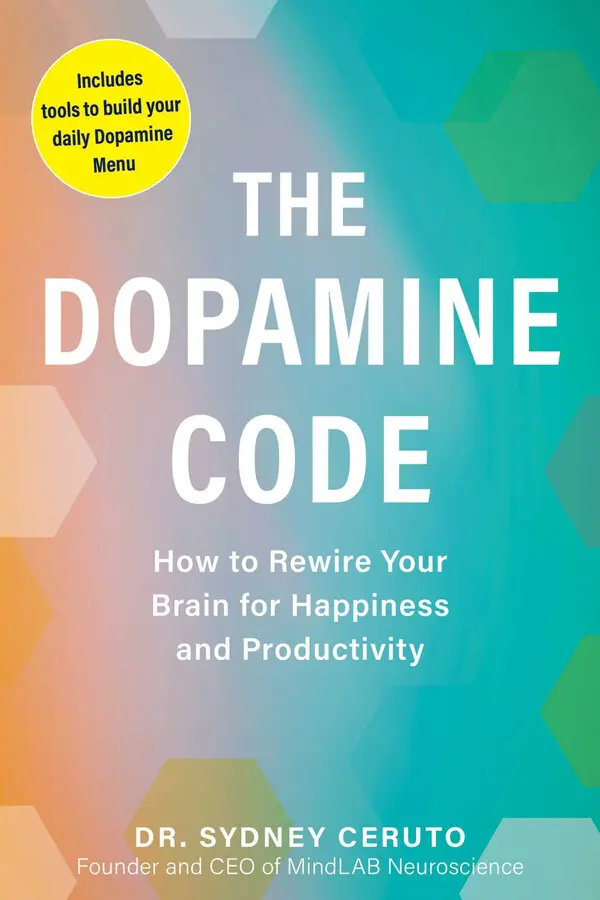
The Dopamine Code
Decode Your Drive
Why Your Brain Rewards the Wrong Things
Your brain's reward system runs every decision, every craving, every crash, and it was never designed for the life you're living. The Dopamine Code is Dr. Ceruto's framework for understanding the architecture behind what drives you, drains you, and keeps you locked in patterns that willpower alone will never fix.
Published by Simon & Schuster, The Dopamine Code is Dr. Ceruto's framework for building your own Dopamine Menu, a personalized system for motivation, focus, and enduring life satisfaction.
Order Now!Available now