| Marker | Traditional Approach | Neuroscience-Based Approach | Why It Matters |
|---|---|---|---|
Why Personal Identity Reconstruction Matters in Wall Street
How Wall Street Builds Identity Around Performance, and What Happens When It Breaks
The Financial District does something specific to identity that most industries do not. It fuses self-concept with quantifiable output so completely that the two become neurally indistinguishable. The analyst at Goldman Sachs does not simply work in finance. Their brain has encoded “person who works at Goldman Sachs” as a core component of who they are. The title, the compensation, the deal flow, the specific quality of walking into 200 West Street: all of it reinforces a self-referencing loop that the brain treats as identity, not employment.
This works beautifully until something disrupts the loop. A layoff. A fund closure. A voluntary departure that felt right in the decision but left nothing in its place. A promotion that changed the nature of the work in ways that no longer feel aligned. Any of these breaks the feedback cycle that was maintaining the identity. And because the identity was built almost entirely around professional performance, the disruption does not stay contained to the professional domain. It floods everything. The person who was certain about who they were on Friday is uncertain about everything by Monday.
The return-to-office mandates at JPMorgan and other major firms created a mass version of this pattern. During the remote period, many professionals unconsciously rebuilt portions of their identity around a different life structure. The parent who was present for morning routines. The person who exercised daily. The professional who discovered they were more effective without performative office culture. Returning to the physical office did not simply change the commute. It reactivated the old identity architecture while the new one was still under construction. Two competing self-concepts running simultaneously is one of the most disorienting experiences the brain can produce.
Bonus season acts as an annual identity stress test across the Financial District. The number that arrives is not processed by the brain as compensation alone. It is processed as a verdict on worth. When the number exceeds expectations, the identity architecture is reinforced. When it disappoints, the self-referencing system registers the shortfall as evidence against the stored self-concept. This is why a compensation outcome that is objectively generous can still produce a disproportionate emotional response: the brain is not evaluating the money. It is evaluating what the money means about who you are.
The private equity and hedge fund professionals along Greenwich Street and in the Brookfield Place complex face a version of identity fragility that is specific to small-team, high-autonomy environments. When your professional identity is defined not by an institutional brand but by a specific fund, a specific strategy, a specific track record, the identity is even more vulnerable to disruption. A fund closure is not just a job loss. It is the disappearance of the entire context that gave the identity its meaning. There is no larger institution to absorb the individual. The fund was the identity. When it ends, so does the framework.
The younger professionals entering Wall Street (analysts in their mid-twenties at Citigroup, associates at Lazard) face a different identity challenge. They arrived with a self-concept built during college, organized around potential rather than achievement. Wall Street immediately replaced that with a performance-based identity framework that is more brittle and more dependent on external validation. By their late twenties, many have built an identity they cannot inhabit comfortably but cannot imagine leaving. The golden handcuffs are not only financial. They are neural. The brain has organized its self-referencing system around a structure that feels wrong but is now load-bearing.
Dr. Sydney Ceruto works with professionals across the Financial District and Battery Park City who are navigating this specific disruption. The identity they built is no longer functional, or was never fully theirs to begin with. Real-Time Neuroplasticity™ targets the self-referencing circuits directly, enabling the brain to release identity structures that no longer serve and consolidate new ones that reflect who the person actually is, not just what they do. A Strategy Call is a phone conversation: the first step toward understanding what your brain built, what has shifted, and what reconstruction looks like.


Dr. Sydney Ceruto, PhD, Neuroscientist & Author, MindLAB Neuroscience
Dr. Ceruto holds a PhD in Behavioral & Cognitive Neuroscience from NYU and Master’s degrees in Clinical Psychology and Business Psychology from Yale University. She lectures at the Wharton Executive Development Program at the University of Pennsylvania and has been an Executive Contributor to the Forbes Coaching Council since 2019. Dr. Ceruto is the author of The Dopamine Code (Simon & Schuster, June 2026). She founded MindLAB Neuroscience in 2000 and has spent over 26 years leading it, pioneering Real-Time Neuroplasticity™, a methodology that durably rewires the neural pathways driving behavior, decisions, and emotional responses.
Frequently Asked Questions About Personal Identity Reconstruction on Wall Street
Also available in: Miami · Midtown Manhattan · Beverly Hills · Lisbon
Take the First Step
One hour with Dr. Sydney Ceruto. You leave knowing which neural pattern is actually driving this, and what to do about it.
Book a Strategy Call
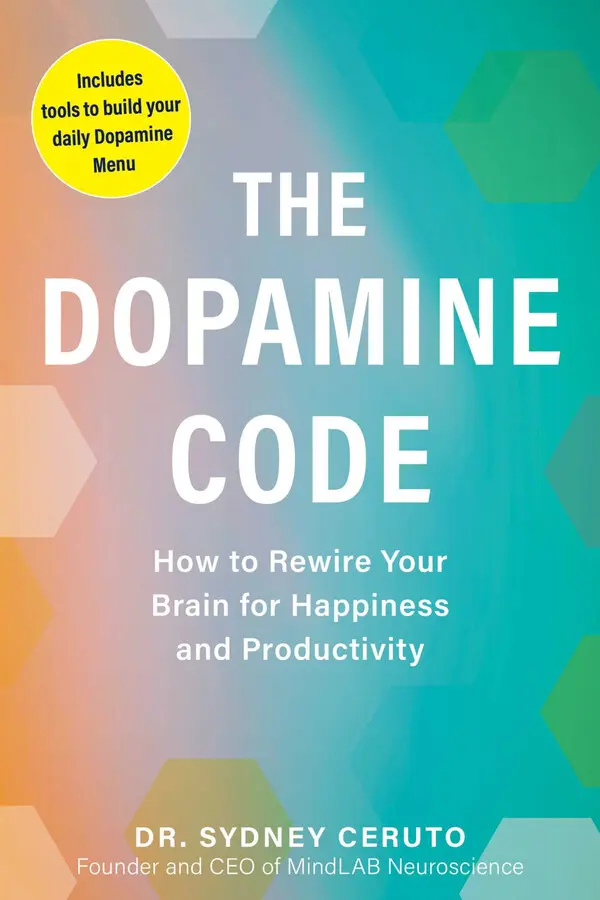
The Dopamine Code
Decode Your Drive
Why Your Brain Rewards the Wrong Things
Your brain's reward system runs every decision, every craving, every crash, and it was never designed for the life you're living. The Dopamine Code is Dr. Ceruto's framework for understanding the architecture behind what drives you, drains you, and keeps you locked in patterns that willpower alone will never fix.
Published by Simon & Schuster, The Dopamine Code is Dr. Ceruto's framework for building your own Dopamine Menu, a personalized system for motivation, focus, and enduring life satisfaction.
Order Now!Available now