







Personal Identity Reconstruction in Greenwich, CT

In Greenwich, composure is expected. Keeping it up while your own life is changing can be tiring, and hard to mention to anyone.

In Greenwich, a role you held for years, at work or at home, can end with no outward sign. The adjustment that follows tends to happen out of view, which can make it lonely.

Book Your Consultation
ForbesUSA TodayHuffPostNewsweekAssociated PressCosmopolitanBusiness InsiderForbesUSA TodayHuffPostNewsweekAssociated PressCosmopolitanBusiness Insider

The Old Answer No Longer Fits

“On a back-country estate, with fewer chance meetings in a day, a quiet stretch can leave you wondering what the days are for.”

The job ended, the marriage ended, the children left, or you moved somewhere new. On paper you are managing it. Yet when someone asks what you do or who you are, the answer that used to come easily no longer fits.

For many people the feeling does not pass on its own, even with time and reflection. Part of the reason is that who you are rests on memory of the life you have lived, and that memory still describes the old one. Until new experience adds to it, the old answer tends to be the one that comes to mind.

Memory, the Self and Daily Habit

One model from memory research describes the self as drawing on autobiographical knowledge, what you know about your own life, which in turn grounds the goals you pursue. After a large change, that store still holds the life you had, and the goals it grounds may stop fitting the life you have. Someone may keep reaching for goals that made sense in the earlier life.

Life coaching and personal development, neural pathway restructuring with copper fragments dissolving as new connections form

Thinking about yourself also engages its own part of the brain. When people decide whether a word describes them, a region of the medial prefrontal cortex, toward the front and middle of the brain, is selectively engaged. Knowledge about the self is processed somewhat apart from other knowledge, which may be part of why a change in who you are can feel unlike a change in what you know.

Daily life runs on habit too. Routines repeated again and again can become automatic, and stress tends to push people back toward them. Routines kept up for years can keep playing out after the life around them has changed.

Why the Space Between Can Feel Unsettling

Research on breakups shows how much of a self can be shared. Couples tend to build friendships and activities together, and their views of themselves can come to overlap; after a breakup, how people see themselves tends to shift and grow less clear. That loss of clarity predicted how much distress followed. Other endings may work in a similar way, though that research looked at romantic relationships.

There is also the pull of the familiar. When people choose, losses tend to count for more than gains of the same size, and letting go of an old picture of yourself can feel like a loss. With practice, those responses can shift.

How the Work Unfolds

The question people often arrive with, who am I now, rarely has one answer, so the work starts with smaller ones. Where does the old self still show up? It might be the way you introduce yourself, a routine you keep without choosing it, or a Sunday that feels empty. You and Dr. Ceruto decide together which of those to take on first.

Real-Time Neuroplasticity™ is applied in those moments as they happen, with Dr. Ceruto alongside you. New responses practiced there can start to feel like your own. Over time, new routines and choices can add up to a sense of self that fits the life you have now.

The first step is a one-hour consultation with Dr. Ceruto, by phone, about what has changed and what is still running from before.


Marker Traditional Approach Neuroscience-Based Approach Why It Matters
Not Recognizing Yourself Reflection and journaling Finding where the old self still shows up A sense of self draws on remembered experience
Old Routines Trying new activities Catching routines that run without choice Routines repeated for years can run on their own
After an Ending Waiting for time to pass Following patterns that outlast a change Self-concept clarity tended to drop after a breakup
Letting Go Planning the next chapter Noticing when the old picture of yourself feels safer In decisions, possible losses tend to outweigh equal gains
Self-Knowledge Values exercises Practicing answers that fit who you are now Deciding what describes you engages a distinct prefrontal region
Making It Stick Talking it through afterward New responses practiced in the moment they are needed A response practiced as it happens can start to feel like your own

Composure and Change in Greenwich

In Greenwich, change often arrives without an announcement. The home on Round Hill Road or in Belle Haven is kept up, the children are in good schools and the career keeps to its expected arc. What shifts can be private: a role winding down, or a question that keeps returning on the drive home.

Rosewood desk with a crystal brain sculpture on a copper stand, navy leather folios, a copper pen and a MindLAB journal

Many people in Greenwich work in hedge funds and private equity, where the days run on calls, positions and deal flow. A fund winding down, a partnership ending or work that simply stops feeling meaningful can leave whole weekdays without a plan. The calendar that ran on calls can go quiet almost at once.

Along Greenwich Avenue and in the town’s wider social life, there is an expectation that everything is handled with ease. Struggle is rarely discussed, and composure is what people see. For someone whose inner life has drifted from how they appear, the distance can grow each day. Holding one face at the Country Club of Greenwich and another alone in the car afterward can wear a person down.

Some people moved to Greenwich for a partner’s career and left behind their own work, friends and independence. Years later, daily life may be arranged almost entirely around that career, the children and the town’s expectations. When one of those shifts (the children leave, the marriage changes, the partner’s career turns), the question of what is yours can be hard to answer.

Old Greenwich and Riverside draw families at a particular stage: young children, careers settling and a first big commitment to a town that feels permanent. The changes of this stage often look like settling in. Spontaneous evenings give way to schedules, and work-first weeks give way to family-first ones. Those shifts can suit a family well. They can sit harder when the changes came without much choosing, and a day can follow its familiar order before you have asked whether you still want it.

On the back-country estates, daily life can center on a property more than a community. There is space, and fewer chance meetings, neighbors or ordinary exchanges in a day. With fewer people around, there is less everyday conversation to test your thinking against. A child leaving, a health scare or a quiet morning that suddenly feels unbearable can bring up the question of what your days are for now.

Dr. Sydney Ceruto, PhD, Neuroscientist & Author, MindLAB Neuroscience

Dr. Sydney Ceruto, PhD, Neuroscientist & Author, MindLAB Neuroscience

Dr. Ceruto holds a PhD in Behavioral & Cognitive Neuroscience from NYU and Master’s degrees in Clinical Psychology and Business Psychology from Yale University. She lectures at the Wharton Executive Development Program at the University of Pennsylvania and has been an Executive Contributor to the Forbes Coaching Council since 2019. Dr. Ceruto is the author of The Dopamine Code (Simon & Schuster, June 2026). She founded MindLAB Neuroscience in 2000 and has spent over 26 years leading it, pioneering Real-Time Neuroplasticity™, a methodology that durably rewires the neural pathways driving behavior, decisions, and emotional responses.

Success Stories

“Four hours a night for over two years. That was my ceiling. Supplements, sleep protocols, medication, nothing touched it because nothing addressed why my brain wouldn't shut down. Dr. Ceruto worked with me on the stress cycle that was keeping me wound up around the clock, and we took it apart. I sleep now. Not because I learned tricks, but because what was driving the sleeplessness finally eased.”

Adrian M., Portfolio Manager, Citadel New York, NY

“I have suffered from chronic anxiety and depression my entire adult life. I began seeing her and learned not only why I was anxious and sad, but how, through simple behavior changes, I could finally stop these feelings for good. That was 8 years ago and I still learn something new and helpful each visit.”

Erick W. Singapore

“Outperforming every metric for years and feeling absolutely nothing, no satisfaction, no drive, just a compulsive need to keep going. Executive retreats, meditation protocols, none of it made a difference. Dr. Ceruto finally got at what was driving the entire pattern. Years of overstimulation had left me unable to feel much of anything. She didn't teach me to reframe success. We worked on what it took to actually experience it.”

Mikhail D., Senior Partner, Corporate Law Washington, DC

“Every few months I'd blow up my life in a different way, new venture, new relationship, new fixation, and call it ambition. Dr. Ceruto kept pushing until I could see the pattern that was running the cycle. I had learned to chase escalation because it was the only thing that overrode what I was actually avoiding. Once that was addressed at the root, the need to escalate eased. I didn't lose my drive. I lost the desperation underneath it.”

Kofi A., Head of Growth, E-Commerce Platform London, UK

“Working with MindLAB Neuroscience and Dr. Sydney Ceruto has been the most powerful personal development program I’ve encountered in my 33 years, absolute genius! Dr. Ceruto methodically chipped away all my emotional baggage and biases, while her easy accessibility and quick responses made the transformation seamless and profound.”

Danielle G., Senior Marketing Manager, Circle Finance New York, NY

“Finding Dr. Ceruto and her neuroscience-based approach was truly life-changing. From our very first session, her deep knowledge of brain science and how it applies to anxiety gave me real hope. What sets her apart is that perfect blend of expertise and compassion. Social situations are far easier for me now, and so is work.”

Brian T., Managing Director, Software Company Chicago, IL

Also available in: Miami · Wall Street · Midtown Manhattan · Beverly Hills · Lisbon

Take the First Step

A one-hour consultation with Dr. Sydney Ceruto. You leave knowing which neural pattern is actually driving this, and what to do about it.

Book Your Consultation
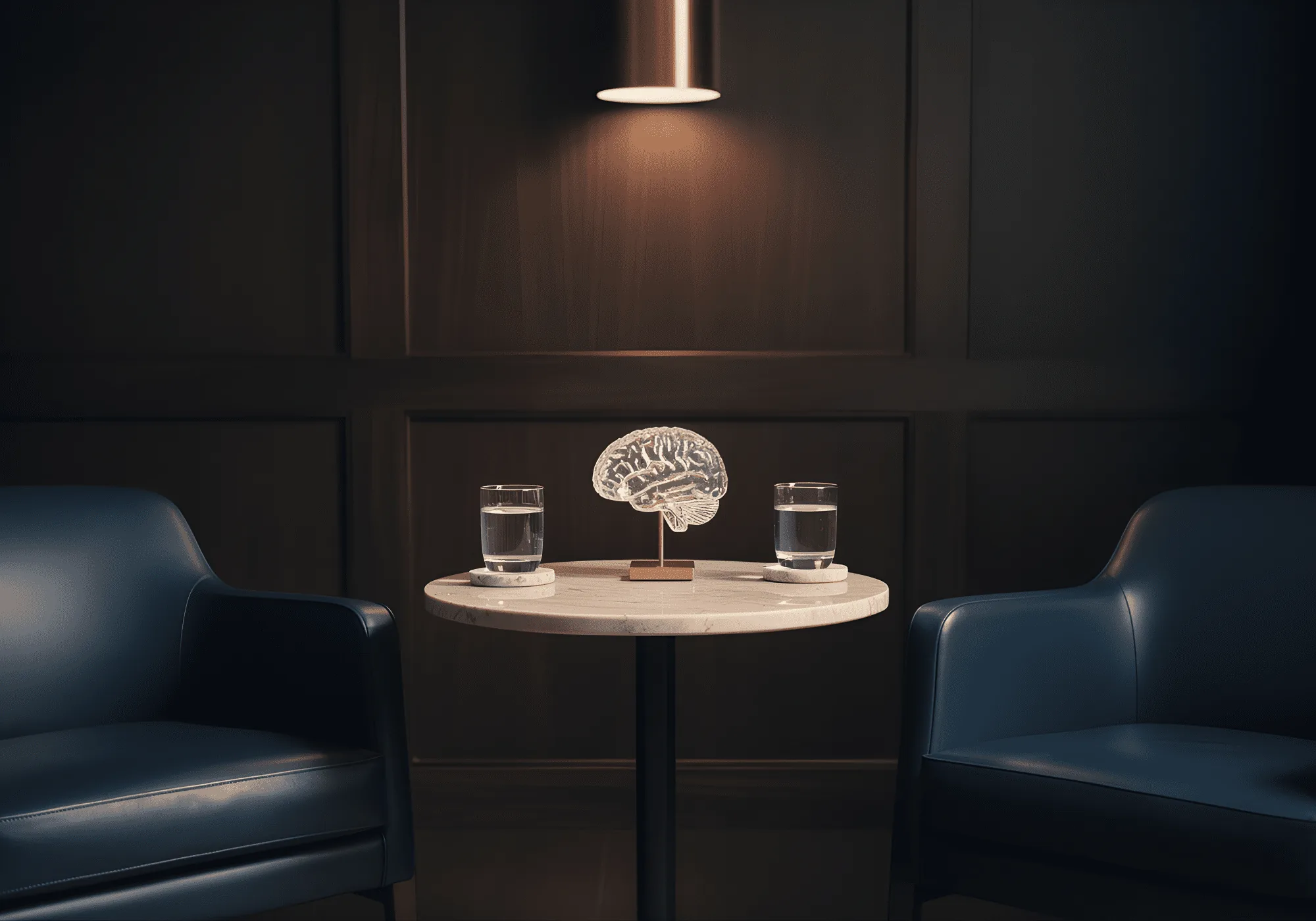
Two navy leather armchairs face a marble table with a glass brain sculpture in a dark wood-paneled room under a copper lamp

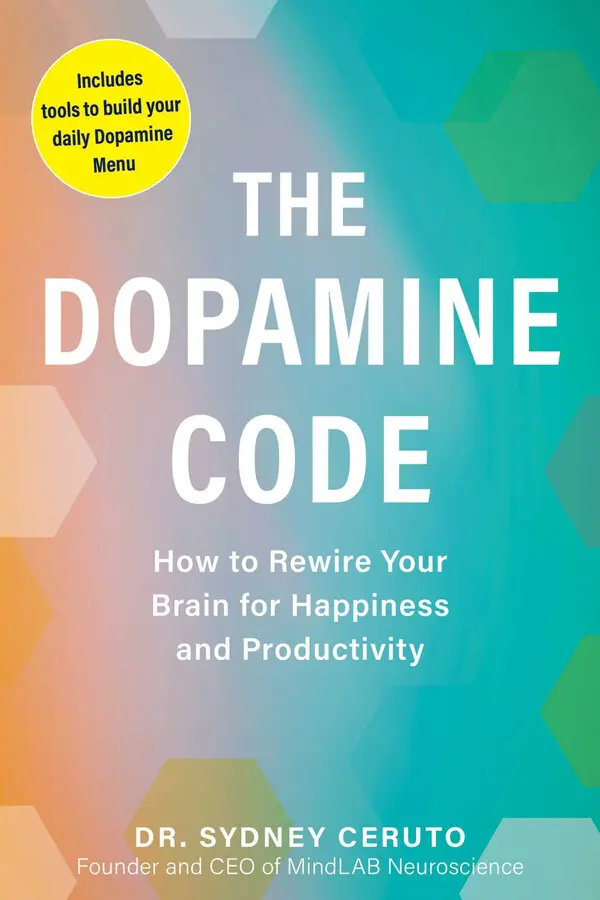
The Dopamine Code

Decode Your Drive

Why Your Brain Rewards the Wrong Things

Your brain's reward system runs every decision, every craving, every crash, and it was never designed for the life you're living. The Dopamine Code is Dr. Ceruto's framework for understanding the architecture behind what drives you, drains you, and keeps you locked in patterns that willpower alone will never fix.

Published by Simon & Schuster, The Dopamine Code is Dr. Ceruto's framework for building your own Dopamine Menu, a personalized system for motivation, focus, and enduring life satisfaction.

Order Now!

Available now

The Dopamine Code by Dr. Sydney Ceruto, Decode Your Drive
Locations
Secret Link