Key Points
- Beverly Hills' reputation-driven business culture embeds perception-management circuits into strategic decision-making, producing choices optimized for image over execution.
- Leaders who built careers on relational intuition carry neural architecture that excels at deal-making and resists the systematic discipline needed for long-range strategy.
- Personal wealth alters the neural circuits governing risk assessment, creating strategic behavior calibrated by personal safety nets rather than organizational exposure.
- Real-Time Neuroplasticity™ rewires the specific circuits creating strategic drift without sacrificing the relational and intuitive strengths that built the organization.
- In a closed-system market like Beverly Hills, strategic missteps carry reputational consequences that further entrench cautious neural defaults across the leadership team.
| Marker | Traditional Approach | Neuroscience-Based Approach | Why It Matters |
|---|---|---|---|
| Foundation | Behavioral Strategy Development | Traditional Strategy Consulting | Executive Coaching |
| Focus | Neural decision architecture | Market and financial analysis | Individual leadership skills |
| Method | Real-Time Neuroplasticity™ | Frameworks and deliverables | Conversational development |
| Durability | Durable circuit-level change | Requires ongoing engagement | Fades without reinforcement |
| Scope | Individual and organizational | Organizational only | Individual leader only |
| Execution Alignment | Strategy built on neural reality | Assumes rational execution | Does not address strategy |
Why Behavioral Strategy Development Matters in Beverly Hills
Why Beverly Hills Creates Distinct Strategic Behavioral Patterns
Beverly Hills concentrates wealth, influence, and industry power in a geography small enough that professional reputation functions as a closed system. In entertainment, luxury real estate, private equity, and the professional services firms clustered along Wilshire Boulevard and Santa Monica Boulevard, strategic decisions carry social consequences that extend far beyond the transaction. A managing partner whose firm occupies a tower on Constellation Boulevard knows that every deal, hire, and strategic pivot will be discussed at dinner in Bel Air and over lunch at the Peninsula before the week ends. This visibility embeds itself in the neural architecture governing strategic choices. Over years of operating in this environment, the circuits that evaluate strategic options become inseparable from the circuits calculating reputational impact. The strategy that gets executed is the one that satisfies both systems simultaneously, and when they conflict, reputation wins.
The entertainment and media industries anchored in Beverly Hills and the surrounding Westside create a particular kind of strategic behavior that extends into every sector operating here. Deal-making in this environment runs on relationships, access, and the ability to read a room with precision that other markets do not demand. The neural circuits optimized for these skills produce leaders who are extraordinarily effective at short-range, relationship-driven strategy and frequently underequipped for the systematic, multi-year execution that scaling a business requires. In the talent management firms along Beverly Drive and the production companies operating between Century City and Beverly Hills proper, the same neural architecture that closed the deal becomes the bottleneck when the organization needs operational discipline rather than another brilliant maneuver.
How Behavioral Strategy Transforms Decision-Making in High-Profile Markets
Beverly Hills attracts founders and executives who have built careers on instinct, charisma, and an ability to create opportunities through force of personality. These are genuine neural strengths. They are also the source of strategic blind spots that traditional consulting misses entirely because the surface-level performance is so compelling. A luxury brand CEO whose offices sit on Rodeo Drive may have built the company on remarkable intuition about consumer desire. But the neural circuits driving that intuition often resist the analytical frameworks needed when the brand expands into international markets where intuition alone cannot navigate regulatory complexity and cultural difference. The strength becomes the strategic limitation, and the leader’s neural architecture makes this invisible to them because the same circuits that need examination are the ones evaluating whether examination is necessary.
The wealth concentration in Beverly Hills also creates a strategic dynamic around risk that differs from other markets. When personal wealth provides an enormous safety net, the neural circuits that govern risk assessment in business decisions operate differently than they do for leaders whose personal exposure is directly tied to organizational outcomes. This produces strategic behavior that can appear either boldly visionary or recklessly detached depending on the outcome. In the private equity and venture firms along South Santa Monica Boulevard, this dynamic shapes investment strategy in ways the partners rarely recognize because the neural architecture processing risk was calibrated by personal circumstances, not the fiduciary reality of the capital they manage.
Real-Time Neuroplasticity™ gives Beverly Hills organizations access to strategic precision that reputation-driven environments typically prevent. Dr. Sydney Ceruto maps the neural architecture driving your leadership team’s decisions and rewires the circuits that create drift between strategic intent and actual execution. In a market where perception often matters as much as performance, the ability to execute strategy consistently, without the neural interference of reputation management, social calculation, and instinct-driven shortcuts, becomes a defining competitive advantage.


Dr. Sydney Ceruto, PhD, Neuroscientist & Author, MindLAB Neuroscience
Dr. Ceruto holds a PhD in Behavioral & Cognitive Neuroscience from NYU and Master’s degrees in Clinical Psychology and Business Psychology from Yale University. She lectures at the Wharton Executive Development Program at the University of Pennsylvania and has been an Executive Contributor to the Forbes Coaching Council since 2019. Dr. Ceruto is the author of The Dopamine Code (Simon & Schuster, June 2026). She founded MindLAB Neuroscience in 2000 and has spent over 26 years leading it, pioneering Real-Time Neuroplasticity™, a methodology that durably rewires the neural pathways driving behavior, decisions, and emotional responses.
Frequently Asked Questions About Behavioral Strategy Development
What is Behavioral Strategy Development?
Behavioral Strategy Development maps the neural circuits driving how leaders and teams make decisions, then builds strategic frameworks aligned with that architecture. It designs strategy around the brain's actual operating system rather than assuming consistent, rational execution.
Why does Beverly Hills create unique strategic challenges?
The concentration of wealth, influence, and reputation-driven business creates an environment where strategic decisions are filtered through neural circuits monitoring social and reputational impact. Over time, leaders cannot separate strategic merit from perception calculation.
How does an entertainment-industry background affect strategic decision-making?
Entertainment builds neural circuits optimized for relationship-driven, short-range deal-making. Those circuits produce extraordinary results in that context and frequently become bottlenecks when an organization needs systematic, multi-year strategic execution that rewards discipline over improvisation.
Can this approach work across different industries in Beverly Hills?
Yes. The neural principles governing strategic behavior are consistent across sectors. The specific pressures differ between entertainment, real estate, luxury retail, and professional services, but the underlying decision architecture follows the same patterns that Dr. Ceruto has mapped for over 26 years.
How does personal wealth affect strategic risk assessment?
When personal wealth provides a large safety net, the neural circuits governing business risk operate differently than they do for leaders with direct personal exposure. This produces strategic behavior calibrated by personal circumstances rather than the actual risk profile of the capital being deployed.
What does the initial engagement look like?
It begins with a Strategy Call where Dr. Ceruto maps the core behavioral dynamics driving your strategic decisions. She then identifies the specific circuits creating bottlenecks and designs a protocol calibrated to the pressures and visibility that define operating in Beverly Hills.
How quickly do results appear?
Most leaders notice measurable shifts in decision-making patterns within the first several weeks. Real-Time Neuroplasticity™ works at the circuit level, producing faster change than executive coaching or strategic retreats that address behavior without changing the underlying architecture.
Is this confidential?
Completely. Dr. Ceruto works with leaders and organizations where reputation is a primary asset. Every engagement is structured with the same discretion that Beverly Hills professionals expect from their most trusted advisors. No client information is shared in any form.
Can this help a founder transition from instinct-driven to systematic strategy?
This is one of the most common applications. The neural circuits that built a company through intuition and relational skill are not the same circuits needed for systematic scaling. Dr. Ceruto maps both architectures and builds a bridge between them without sacrificing the strengths that created the original success.
How is Dr. Ceruto qualified for this work?
Dr. Ceruto holds a PhD in Behavioral and Cognitive Neuroscience from NYU and two Master's degrees from Yale. She lectures at the Wharton Executive Development Program at the University of Pennsylvania and has spent over 26 years applying Real-Time Neuroplasticity™ to individual and organizational performance.
Also available in: Miami · Wall Street · Midtown Manhattan · Lisbon
Take the First Step
One hour with Dr. Sydney Ceruto. You leave knowing which neural pattern is actually driving this, and what to do about it.
Book a Strategy Call
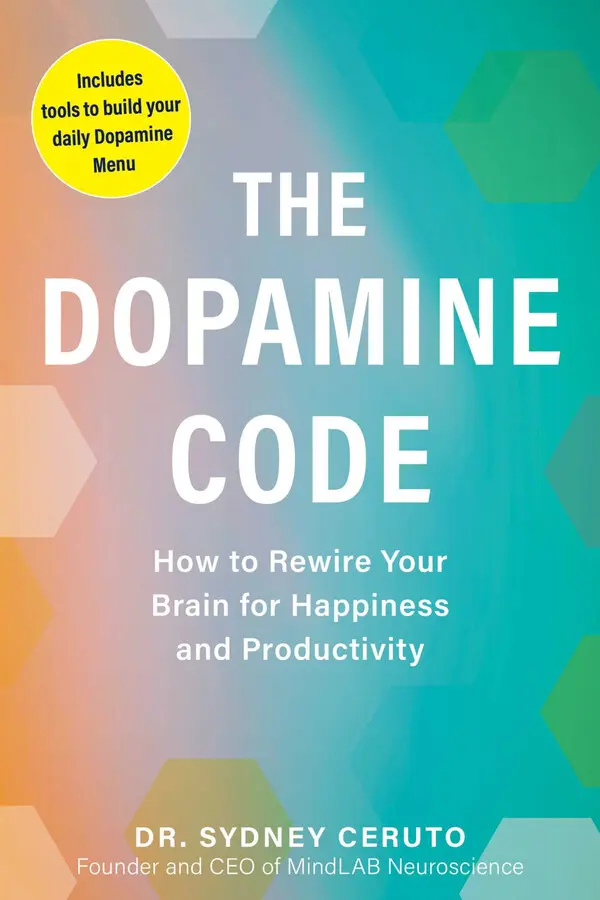
The Dopamine Code
Decode Your Drive
Why Your Brain Rewards the Wrong Things
Your brain's reward system runs every decision, every craving, every crash, and it was never designed for the life you're living. The Dopamine Code is Dr. Ceruto's framework for understanding the architecture behind what drives you, drains you, and keeps you locked in patterns that willpower alone will never fix.
Published by Simon & Schuster, The Dopamine Code is Dr. Ceruto's framework for building your own Dopamine Menu, a personalized system for motivation, focus, and enduring life satisfaction.
Order Now!Available now