






Key Points
- Midtown's professional environment trains the brain to allocate its best resources to career performance at the expense of personal life.
- The partition between professional and personal systems is neural architecture, not a scheduling problem.
- Integration builds a single operating system, not better management of two competing ones.
- Real-Time Neuroplasticity™ targets the resource allocation circuitry directly.
- Professional performance typically improves when the brain operates from an integrated foundation rather than a partitioned one.
How Midtown’s Professional Ecosystem Trains the Brain to Partition
Midtown Manhattan concentrates more professional intensity per square block than nearly any environment on earth. From the media companies at Hudson Yards to the law firms lining Sixth Avenue to the corporate headquarters stacked along Park Avenue, the entire district is engineered for professional output. The brain responds to this environment predictably: it calibrates itself to the dominant signal. And the dominant signal in Midtown, from the moment you step off the subway at Grand Central, is that professional performance is what matters.
The executives at the major media companies along the West Side face a specific integration challenge. Their work is creative and intellectually demanding, requiring sustained attention, emotional intelligence, and strategic thinking. These are the same neural capacities that personal relationships require. The brain cannot give its best creative problem-solving to the office all day and then produce equivalent emotional creativity at home. The resource pool is shared. What Midtown consumes, the Upper West Side apartment does not receive.
The legal professionals in the firms between 42nd and 59th Streets operate under a version of this pattern that is shaped by billable hours. The hourly accounting structure trains the brain to assign value to time based on productivity. Every hour has a measurable professional worth. The brain internalizes this metric and begins applying it unconsciously to non-professional time. The Saturday morning at the playground becomes cognitively expensive not because it is unpleasant but because the brain’s reward system has been trained to register unproductive time as waste. This is not a values problem. The attorney may genuinely value family time. But the neural reward circuitry was calibrated by a different system.
Midtown’s corporate headquarters (the towers along Park Avenue housing major financial services, consulting, and pharmaceutical firms) produce integration challenges at the senior leadership level that are distinct from the junior ranks. The C-suite executive has spent two decades being rewarded for a specific operating mode: strategic, controlled, emotionally regulated for the benefit of organizational stability. That mode works brilliantly in the boardroom. At home, it produces a person who is present but impenetrable. The emotional regulation that the professional environment required has become the default state. The brain does not distinguish between regulation that is contextually appropriate and regulation that has become a permanent restriction on emotional range.
The return-to-office mandates from major Midtown employers created a visible rupture in integration patterns that had quietly reorganized during the remote period. The consulting manager who spent two years building a personal routine around the work (exercising at noon, being present for school pickup, experiencing work as one component of a full day) was abruptly returned to a configuration where Midtown consumes the center of the day and personal life absorbs the margins. The neural architecture that had begun to integrate was forced back into the partitioned structure. For many, this felt more disruptive than the original transition to remote work because something had been built and was now being dismantled.
The freelance and independent consultants working from Midtown coworking spaces and hotel lobbies face the inverse version of the integration problem. Without institutional structure, they lack the external partition entirely. Work and personal life occupy the same neural space with no environmental cues to separate them. The brain receives no signal about when to shift modes. The result is a blended state that sounds appealing but produces a specific kind of exhaustion: never fully in professional mode, never fully in personal mode, always somewhere in between and fully in neither.
Dr. Sydney Ceruto works with professionals across Midtown Manhattan who have recognized that the partition between their professional and personal selves is no longer sustainable, or never was. Real-Time Neuroplasticity™ addresses the architecture that maintains the two-system structure, building an integrated foundation where professional sharpness and personal depth are not competing allocations but expressions of the same neural capacity. A Strategy Call is a phone conversation: the starting point for mapping the partition and understanding what integration looks like for your specific architecture.

Dr. Sydney Ceruto, PhD, Neuroscientist & Author, MindLAB Neuroscience
Dr. Ceruto holds a PhD in Behavioral & Cognitive Neuroscience from NYU and Master’s degrees in Clinical Psychology and Business Psychology from Yale University. She lectures at the Wharton Executive Development Program at the University of Pennsylvania and has been an Executive Contributor to the Forbes Coaching Council since 2019. Dr. Ceruto is the author of The Dopamine Code (Simon & Schuster, June 2026). She founded MindLAB Neuroscience in 2000 and has spent over 26 years leading it, pioneering Real-Time Neuroplasticity™, a methodology that durably rewires the neural pathways driving behavior, decisions, and emotional responses.
Also available in: Miami · Wall Street · Beverly Hills · Lisbon
Take the First Step
One hour with Dr. Sydney Ceruto. You leave knowing which neural pattern is actually driving this, and what to do about it.
Book a Strategy Call
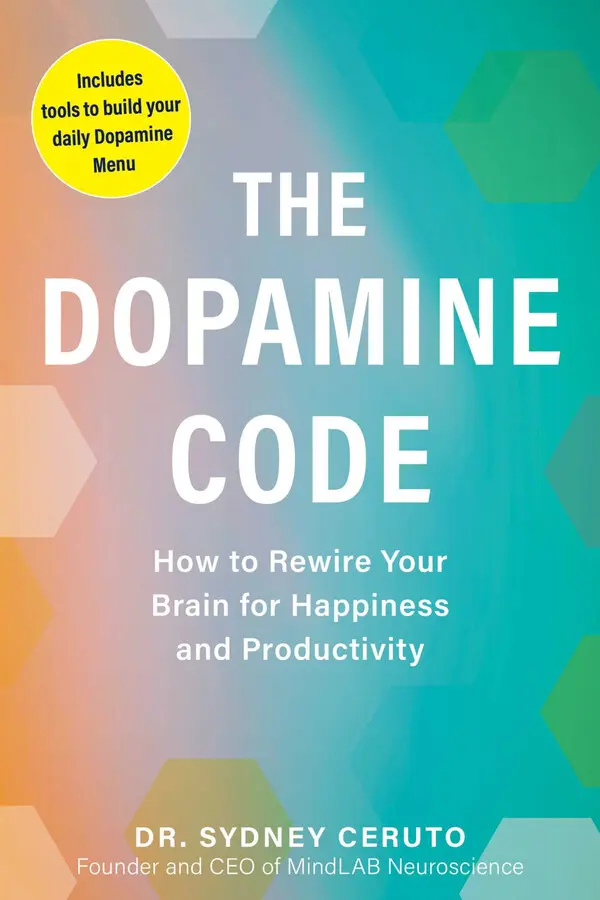
The Dopamine Code
Decode Your Drive
Why Your Brain Rewards the Wrong Things
Your brain's reward system runs every decision, every craving, every crash, and it was never designed for the life you're living. The Dopamine Code is Dr. Ceruto's framework for understanding the architecture behind what drives you, drains you, and keeps you locked in patterns that willpower alone will never fix.
Published by Simon & Schuster, The Dopamine Code is Dr. Ceruto's framework for building your own Dopamine Menu, a personalized system for motivation, focus, and enduring life satisfaction.
Order Now!Available now