





Key Points
- Greenwich reinforces professional identity through career and social context simultaneously
- Achievement-dense environments lock identity patterns tighter than most
- Real-Time Neuroplasticity™ rewires the circuits defining professional self-concept
- Post-firm transitions require neural identity recalibration, not just strategic planning
- The Strategy Call maps your specific neural architecture with Dr. Ceruto
| Marker | Traditional Approach | Neuroscience-Based Approach | Why It Matters |
|---|---|---|---|
Why Professional Identity Development Matters in Greenwich, CT
Why Greenwich Professionals Carry Deeply Reinforced Identity Patterns
Greenwich, Connecticut concentrates one of the most achievement-dense professional populations in the country. The hedge fund and private equity community along Greenwich Avenue and the surrounding offices employs professionals whose identities were forged under extreme performance pressure. Every quarter, every fund return, every allocation decision reinforced a specific neural definition of who you are professionally. That definition becomes load-bearing, and extraordinarily resistant to modification.
The pattern extends beyond finance. Greenwich draws corporate executives, entrepreneurs, and professional services leaders who chose the town precisely because it matches the professional identity they built. The community reinforces that identity through social context: school networks, club memberships, and the town’s unmistakable signal that professional accomplishment is the price of belonging. The brain reads these signals and locks the identity tighter.
Post-pandemic Greenwich amplified the pressure. The migration of financial professionals from Manhattan to Greenwich brought an influx of talent that raised the competitive baseline. Professionals who had been the most accomplished person at the dinner table suddenly found themselves surrounded by peers with comparable or greater credentials. The brain’s status-tracking system recalibrated, and for many, the result was not motivation but a quiet erosion of professional confidence.
Old Greenwich and Riverside attract professionals in transition: those who have left the firms that defined them and are navigating what comes next. Board seats, advisory roles, family office management, and philanthropic leadership all require a professional identity that the brain has not yet built. The capabilities are present. The neural self-concept has not caught up.
The generational pressure in Greenwich adds another layer. Professionals raising children in a community where achievement is visible and comparative often find that parenting expectations and professional identity compete for the same neural resources. The brain cannot sustain a high-performance professional identity and a high-engagement parent identity without conflict unless the underlying patterns are recalibrated.
Cos Cob and Riverside draw professionals in transition between major career chapters. After decades in institutional leadership, these professionals need an identity suited to independent advisory work, fund launches, or board governance. The brain’s model was trained on institutional signals and generates anxiety when those signals disappear. The capability transfers, but the neural identity does not, creating a gap between what they can do and what they believe they can do.
The backcountry and mid-country areas of Greenwich attract professionals who have achieved significant financial independence and face identity questions that success alone cannot answer. When the brain built its professional identity around career acceleration and wealth accumulation, the absence of those signals, even through choice, triggers the same neural response as failure. Dr. Ceruto rewires the model so purpose-driven identity replaces achievement-driven identity without the destabilization.

Dr. Ceruto works with Greenwich professionals across finance, corporate leadership, entrepreneurship, and professional transition. Real-Time Neuroplasticity™ rewires the neural architecture so your professional identity reflects your actual capabilities and ambitions, not the version your brain locked in years ago.

Dr. Sydney Ceruto, PhD, Neuroscientist & Author, MindLAB Neuroscience
Dr. Ceruto holds a PhD in Behavioral & Cognitive Neuroscience from NYU and Master’s degrees in Clinical Psychology and Business Psychology from Yale University. She lectures at the Wharton Executive Development Program at the University of Pennsylvania and has been an Executive Contributor to the Forbes Coaching Council since 2019. Dr. Ceruto is the author of The Dopamine Code (Simon & Schuster, June 2026). She founded MindLAB Neuroscience in 2000 and has spent over 26 years leading it, pioneering Real-Time Neuroplasticity™, a methodology that durably rewires the neural pathways driving behavior, decisions, and emotional responses.
Frequently Asked Questions About Professional Identity Development in Greenwich, CT
Also available in: Miami · Wall Street · Midtown Manhattan · Beverly Hills · Lisbon
Take the First Step
One hour with Dr. Ceruto. You leave knowing which neural pattern is actually driving this, and what to do about it.
Book a Strategy Call
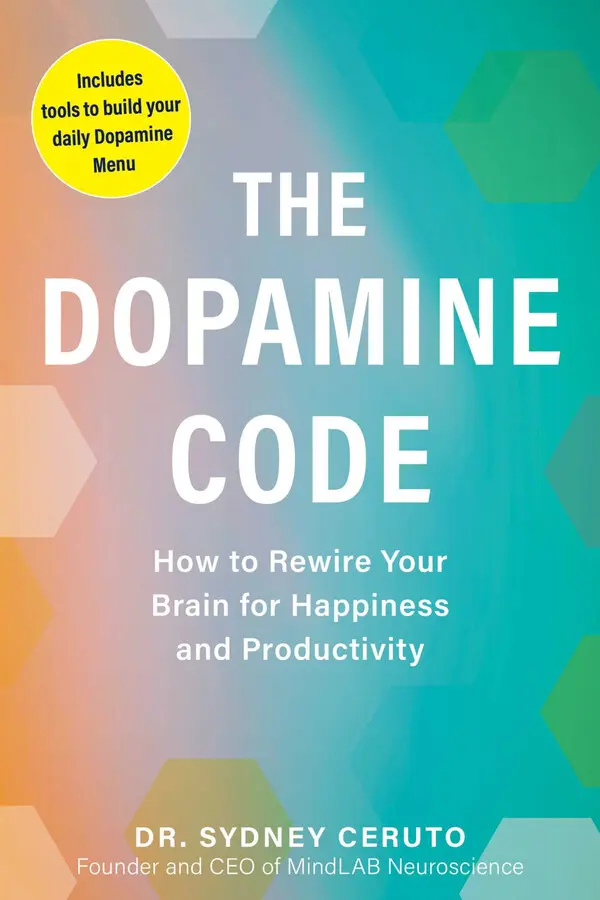
The Dopamine Code
Decode Your Drive
Why Your Brain Rewards the Wrong Things
Your brain's reward system runs every decision, every craving, every crash, and it was never designed for the life you're living. The Dopamine Code is Dr. Ceruto's framework for understanding the architecture behind what drives you, drains you, and keeps you locked in patterns that willpower alone will never fix.
Published by Simon & Schuster, The Dopamine Code is Dr. Ceruto's framework for building your own Dopamine Menu, a personalized system for motivation, focus, and enduring life satisfaction.
Order Now!Available now