
Key Takeaways
- The dorsomedial prefrontal cortex evaluates partner compatibility within 90 milliseconds, before conscious awareness registers attraction.
- Dopamine, norepinephrine, and phenylethylamine produce the physical sensations people describe as instant romantic connection.
- Mirror neuron systems and scent-based HLA detection operate within seconds, shaping attraction below conscious access.
- “Love at first sight” maps onto reward-circuit activation, not oxytocin-vasopressin bonding pathways of sustained attachment.
- The ventral tegmental area floods the nucleus accumbens with dopamine, the circuit addictive substances activate.
- Romantic love requires repeated exposure and shared experience to activate long-term pair bonding architecture.
Love at first sight is not a metaphor. The neuroscience of love at first sight reveals a precisely orchestrated sequence of neural events, from subcortical pattern recognition to a full neurochemical cascade, that unfolds in under one second. Your brain has already made its assessment before you finish registering someone’s face. The question is not whether instant attraction is real. The question is what it actually represents at the level of neural circuitry, and whether it has any relationship to enduring love.
How Does Your Brain Evaluate a Stranger in Milliseconds?
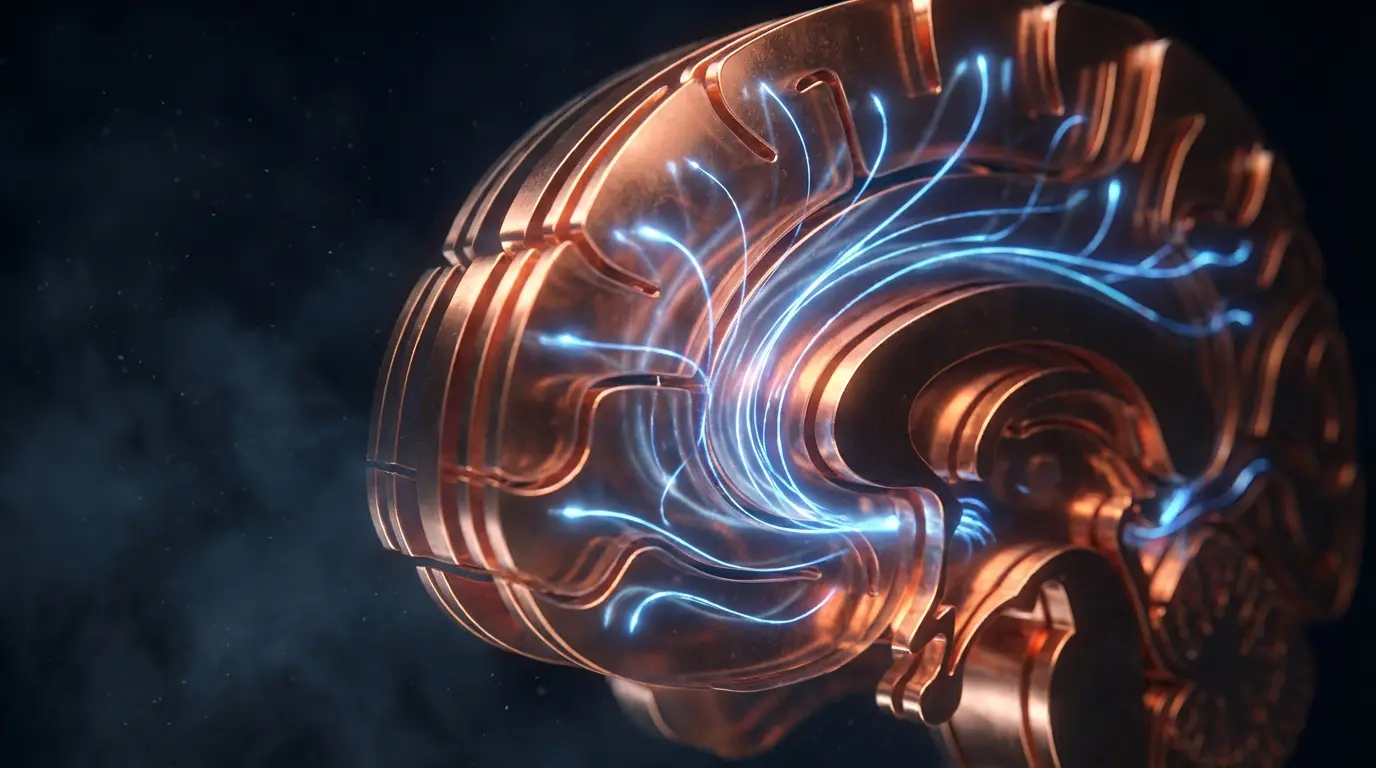
The dorsomedial prefrontal cortex (dmPFC) screens potential romantic partners with extraordinary speed: functional MRI data confirms this region generates compatibility judgments within 90 milliseconds of initial visual contact. This happens well below the threshold of conscious awareness. You are not deciding whether you find someone attractive. Your brain has already decided.
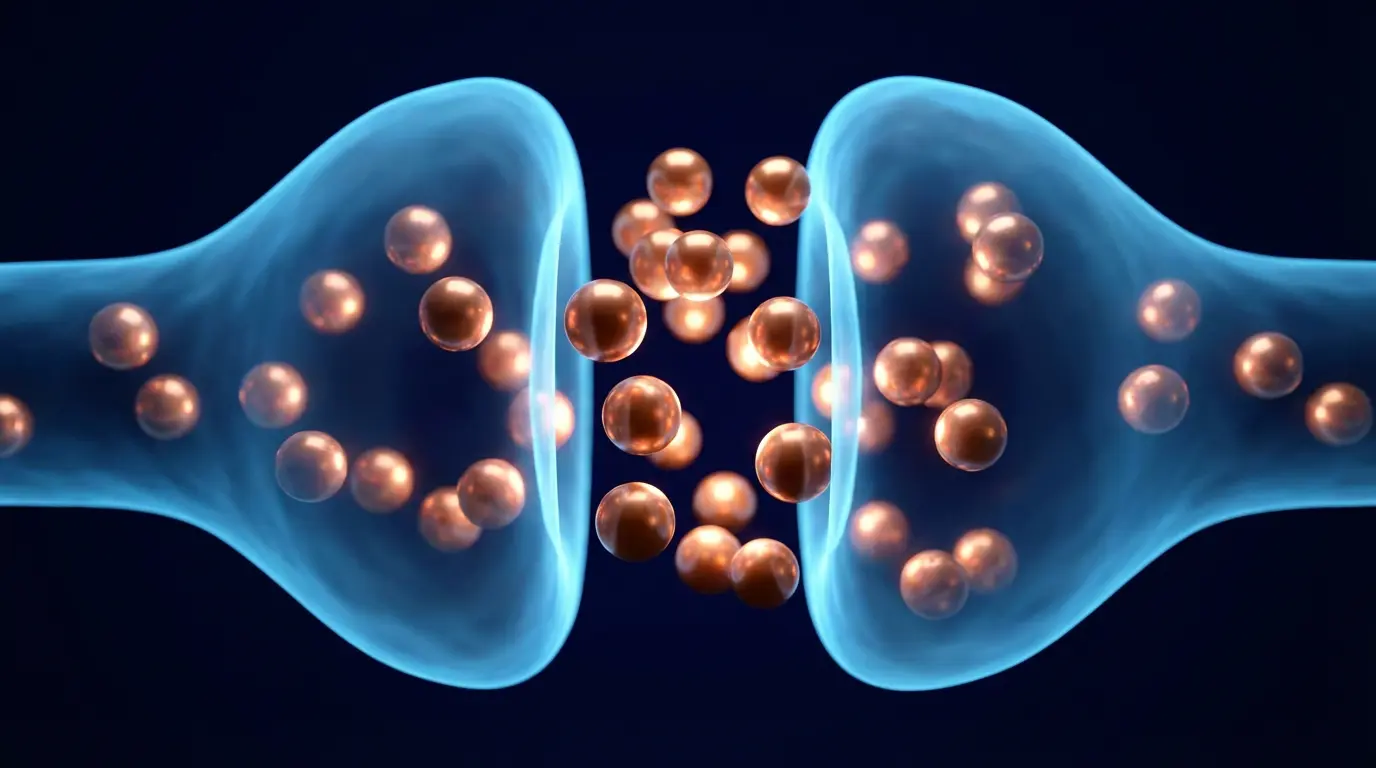
The dmPFC integrates facial symmetry data, body proportion analysis, and stored templates from prior attachment figures, all in a fraction of a second. Simultaneously, the fusiform face area processes identity-specific features while the superior temporal sulcus reads microexpressions, gaze direction, and social intent. These parallel streams converge into a binary signal: approach or withdraw.
What makes this process remarkable is its accuracy relative to its speed. The brain is not generating a random response. It is cross-referencing incoming sensory data against deeply encoded templates built from every significant attachment relationship in an individual’s history. The stranger across the room is being compared (unconsciously, instantaneously) against a neural composite of every person who has ever mattered.
You experience this as a jolt: a sudden, full-body certainty that this person is different. That certainty feels like information. Neurologically, it is pattern completion: your brain has matched enough data points against its stored templates to generate a high-confidence signal before you have exchanged a single word.
In my practice, I consistently observe that clients who report powerful “love at first sight” experiences often describe partners who share specific physical or behavioral features with early attachment figures. The conscious mind experiences this as spontaneous chemistry. The neural architecture reveals it as pattern recognition operating at a speed consciousness cannot match.
What Neurochemicals Create the Feeling of Instant Love?
The subjective experience of love at first sight (racing heart, euphoria, singular focus) maps directly onto a specific neurochemical cascade. Dopamine surges from the ventral tegmental area (VTA) to the nucleus accumbens, activating the same mesolimbic reward pathway that responds to highly addictive substances. This is not analogy. The same circuit, the same neurotransmitter, the same receptor sites.
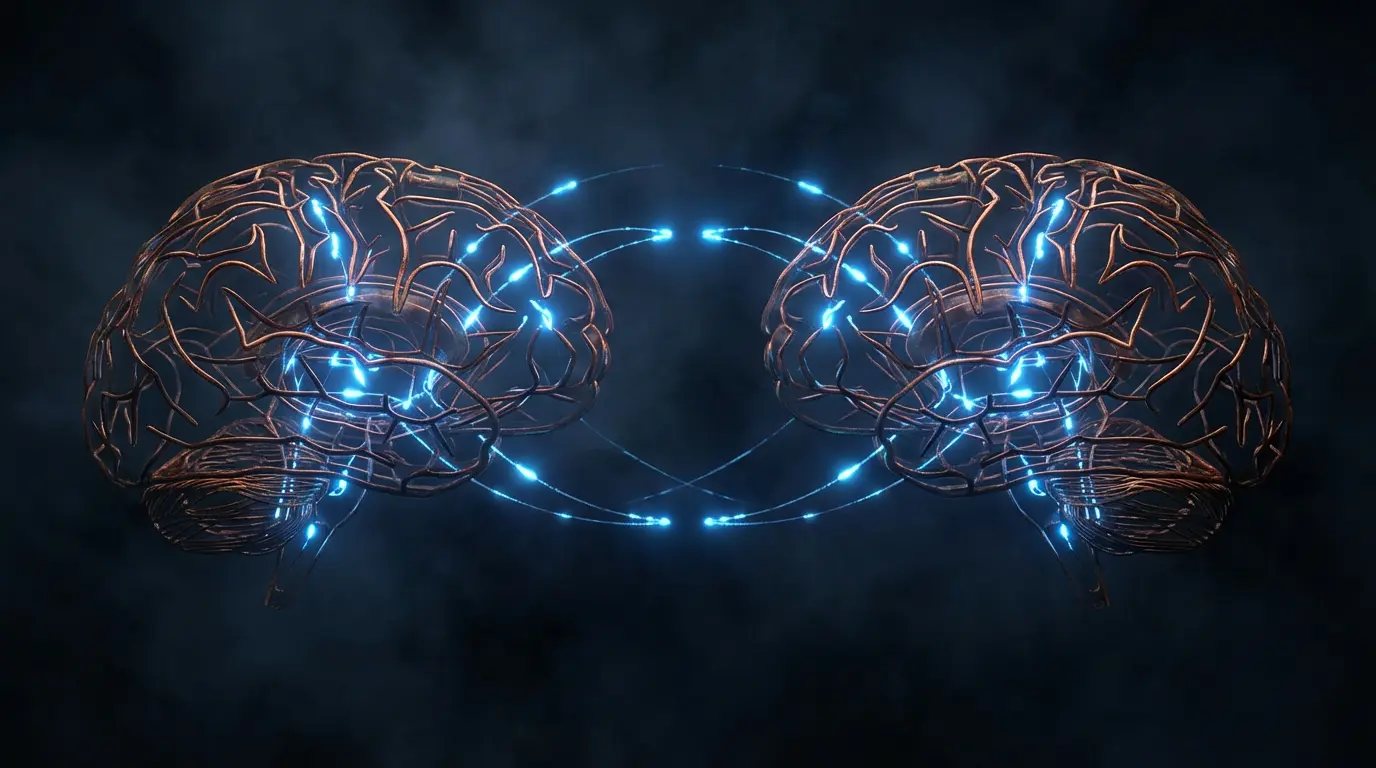
Norepinephrine release from the locus coeruleus produces the cardiovascular symptoms, elevated heart rate, flushed skin, sweating palms. This is the fight-or-flight system repurposed for approach behavior. The body is preparing for something it categorizes as high-stakes, high-reward.
Phenylethylamine (PEA), an endogenous amphetamine-class compound, amplifies both dopamine and norepinephrine effects. PEA levels spike during states of romantic excitement and decline sharply over 12 to 18 months, which maps precisely onto the timeline most people describe for the fading of “new relationship energy.”
The neurochemical signature of love at first sight is, in pharmacological terms, a stimulant cocktail. The brain is producing its own version of amphetamine and flooding its reward circuitry with dopamine. This explains the singular focus, the inability to think about anything else, the loss of appetite, the disrupted sleep. These are not poetic descriptions. They are the predictable behavioral consequences of a specific neurochemical state.
If you have lived this, you already know what it feels like: the world narrows to one person, background noise drops away, and your body feels like it is running on something you did not consent to take. That overwhelming quality is not a sign of destiny. It is a sign that your mesolimbic system has assigned maximum salience to a single stimulus.
“The brain is producing its own version of amphetamine and flooding its reward circuitry with dopamine. This is not metaphor, it is mechanism.”
– Dr. Sydney Ceruto
How Do Mirror Neurons and Scent Shape Instant Attraction?
Two systems operate in the first seconds of an encounter that never reach conscious awareness but profoundly influence the experience of instant attraction: the mirror neuron system and olfactory HLA detection.
Mirror neurons, first identified in the premotor cortex, fire both when an individual performs an action and when they observe another person performing the same action. During face-to-face encounters, this system generates automatic motor simulations of the other person’s facial expressions and body movements. When this mirroring process aligns smoothly, when the other person’s movement patterns are easy for your motor system to simulate, the subjective experience is one of immediate rapport, a sense that you “click.” You feel understood before either of you has said anything substantive. That uncanny familiarity is not intuition. It is motor resonance producing a felt sense of compatibility at a speed language cannot match.
The olfactory system adds a second, entirely non-conscious layer. Major histocompatibility complex (MHC) genes, the portion of the genome that governs immune function, produce signature scent compounds detectable by the vomeronasal organ. Research on HLA-mediated mate selection demonstrates that humans preferentially select partners with dissimilar MHC profiles, which would produce offspring with broader immune diversity.
What the research does not capture is the clinical reality of how these systems interact. In 26 years of practice, I have worked with individuals who describe instant, almost magnetic attraction to someone they cannot logically explain. When we map the characteristics of that person (movement patterns, vocal cadence, even described scent) the neural logic becomes visible. The attraction is not random. It is the output of multiple biological evaluation systems converging on the same signal: this person is a viable partner.
Is Love at First Sight Real Love or Intense Desire?
This is where the neuroscience becomes unambiguous. The neural signature of love at first sight does not match the neural signature of sustained romantic love. They activate different circuits, different neurotransmitters, and different functional outcomes.
“Love at first sight” activates the mesolimbic reward system: VTA, nucleus accumbens, caudate nucleus. This is the wanting circuit. It generates desire, pursuit, fixation. Sustained romantic attachment activates the oxytocin and vasopressin pathways, mediated through the paraventricular nucleus of the hypothalamus and receptor-dense regions of the ventral pallidum. This is the bonding circuit. It generates comfort, security, distress at separation.
These two systems are neurologically distinct. Dopamine-driven desire can exist without any oxytocin-mediated bonding. Bonding can exist without intense dopamine-driven desire. In healthy long-term relationships, both systems become integrated, but this integration requires time, repeated contact, shared vulnerability, and physical proximity. It cannot be generated in a first encounter.
The standard interpretation frames love at first sight as lust wearing borrowed language, the reward circuit mislabeled as the bonding circuit. But in my experience, this framing is incomplete. What I observe is that intense first-encounter attraction can, in specific neural architectures, serve as a reliable signal that the bonding system will engage if given sufficient time and contact. The first signal is not love. But it can be a neurologically valid predictor that love is possible.
In my practice, I see individuals who fall hard and fast, and the question that brings them to me is never “was it real?” It is always “why does what feels so right keep ending the same way?” The answer almost always lives in the gap between the reward circuit and the bonding circuit. The first fires on cue. The second never gets the chance to engage, not because the connection was false, but because the individual’s attachment architecture redirects the process before bonding can take hold.
That lived experience, the pattern of intensity followed by collapse, feels like evidence that love does not work for you. It is not. It is evidence that your reward system and your bonding system are operating on different timelines, and no one has shown you how to bridge the gap between them.
“The first signal is not love. But it can be a neurologically valid predictor that love is possible, and that distinction matters clinically.”
– Dr. Sydney Ceruto
Can Instant Attraction Develop Into Lasting Attachment?
The transition from dopamine-driven desire to oxytocin-mediated bonding follows a specific neural timeline. Repeated exposure triggers gradual upregulation of oxytocin receptors in the ventral pallidum and nucleus accumbens. Vasopressin, particularly through V1a receptors, begins to mediate partner-specific preference. This process requires weeks to months of consistent contact.
The initial dopamine surge does not sustain itself. PEA levels normalize. Norepinephrine habituates. What determines whether an intense first encounter develops into lasting attachment is not the intensity of the initial neurochemical response but whether the two individuals’ attachment systems are compatible enough to allow the slower bonding circuits to engage.
This is where individual neural architecture becomes determinative. Individuals with secure attachment patterns (well-regulated hypothalamic-pituitary-adrenal axis, healthy oxytocin receptor density) can transition smoothly from initial attraction to stable bonding. Individuals with anxious or avoidant attachment patterns may experience the initial dopamine surge more intensely (the neural alarm system amplifies the signal) but struggle with the oxytocin-mediated phase that follows.
The practical implication: the intensity of a first encounter tells you about the state of your reward circuitry. It tells you nothing about your capacity for sustained bonding with that specific person. These are separate neural questions that require separate evaluation.
The practical question is not whether you felt something real. It is whether your specific attachment architecture will allow what you felt to develop into what you want. That answer is not available in any article, because it depends on variables that are individual to your neural profile: your receptor density, your attachment encoding, the specific patterns your brain learned from your earliest bonds. The neuroscience can explain the mechanism. What it cannot do from a page is tell you which part of the mechanism is working against you.
This article is part of MindLAB’s Intimacy & Bonding hub, within the Relationship Intelligence pillar.
What the First Conversation Looks Like
A strategy call with Dr. Ceruto is not an intake form and not a sales conversation. It is a private, one-hour session where she assesses neural architecture in real time, identifying the specific patterns driving your decisions, emotional responses, and relational dynamics.
Most people who book a strategy call have already recognized that something in their wiring is producing outcomes they did not choose. The call is designed to make that wiring visible: which circuits are overactive, which are suppressed, and what a targeted intervention would look like for your specific neural profile.
Dr. Sydney Ceruto works with a limited number of individuals at any given time. The strategy call determines whether her methodology, Real-Time Neuroplasticity™, is the right fit for your particular architecture.
How long does love at first sight take to register in the brain?
The dorsomedial prefrontal cortex generates a compatibility judgment within approximately 90 milliseconds of initial visual contact, well before conscious awareness processes the encounter. Parallel systems, the fusiform face area for facial identity and the superior temporal sulcus for social intent, simultaneously feed evaluative data. The complete subcortical assessment occurs in under one second, producing an approach-or-withdraw signal that the conscious mind later interprets as instant attraction or indifference.
Is love at first sight the same as physical attraction?
Love at first sight and physical attraction share overlapping neural substrates in the mesolimbic reward system, but they are not identical experiences. Physical attraction activates the hypothalamus and generates primarily sexual motivation. The phenomenon described as love at first sight additionally activates the caudate nucleus and ventral tegmental area, producing intense romantic focus, idealization, and singular fixation on a specific individual, a pattern that extends beyond generalized sexual response into partner-specific reward encoding.
Can love at first sight predict relationship success?
The intensity of an initial dopamine-mediated attraction does not reliably predict whether a relationship will succeed over time. Lasting attachment depends on the oxytocin-vasopressin bonding system, which activates through repeated contact, shared vulnerability, and consistent proximity over weeks to months. Initial attraction signals reward-circuit compatibility, not bonding-circuit compatibility. However, when both individuals have secure attachment architecture, strong initial attraction can serve as a valid starting signal for the slower bonding process.
Why do some people experience love at first sight more than others?
Individual variation in dopamine receptor density, particularly D2 receptors in the nucleus accumbens, influences how intensely the reward system responds to novel social stimuli. People with higher baseline dopamine sensitivity experience stronger, faster attraction responses. Attachment history also plays a determinative role. Individuals with anxious attachment patterns often report more frequent and more intense instant-connection experiences because their neural alarm system amplifies approach signals. This is not greater romantic capacity, it is heightened reward-circuit reactivity.
Does the brain distinguish between love and lust at first sight?
Neuroimaging studies confirm that the brain activates partially overlapping but functionally distinct networks for sexual desire versus romantic love. Sexual desire activates the hypothalamus, anterior cingulate cortex, and somatosensory regions. Romantic love additionally recruits the ventral tegmental area, caudate nucleus, and insula, producing cognitive fixation and partner-specific reward encoding. At the moment of first encounter, both systems may fire simultaneously, which is why the subjective experience feels undifferentiated. The conscious mind receives a blended signal from two distinct neural circuits.
References
- Cacioppo, S., Bianchi-Demicheli, F., Frum, C., Pfaus, J. G., & Lewis, J. W. (2012). The common neural bases between sexual desire and love: A multilevel kernel density fMRI analysis. The Journal of Sexual Medicine, 9(4), 1048–1054. https://doi.org/10.1111/j.1743-6109.2012.02651.x
- Fisher, H. E., Aron, A., & Brown, L. L. (2006). Romantic love: A mammalian brain system for mate choice. Philosophical Transactions of the Royal Society B: Biological Sciences, 361(1476), 2173–2186. https://doi.org/10.1098/rstb.2006.1938
- Wedekind, C., Seebeck, T., Bettens, F., & Paepke, A. J. (1995). MHC-dependent mate preferences in humans. Proceedings of the Royal Society B, 260(1359), 245–249. https://doi.org/10.1098/rspb.1995.0087
- Acevedo, B. P., Aron, A., Fisher, H. E., & Brown, L. L. (2012). Neural correlates of long-term intense romantic love. Social Cognitive and Affective Neuroscience, 7(2), 145–159. https://doi.org/10.1093/scan/nsq092