Key Takeaways
- Dopamine generates motivation through prediction errors, expectation versus outcome, not pleasure or reward.
- Achieving a major goal collapses prediction error to zero, shutting off the neurochemical drive signal.
- Post-success flatness is the reward circuit working as designed, not burnout, not laziness, not ingratitude.
- “Set bigger goals” restores the prediction gap temporarily but accelerates tolerance, requiring ever-larger wins.
- Lasting recovery shifts reward-circuit encoding from outcome-dependent to process-dependent dopamine release through directed neuroplasticity.
Why Motivation Disappears After Success: What Your Reward Circuits Are Actually Doing
Motivation disappears after success because the brain’s dopamine system does not respond to rewards. It responds to the difference between expected and actual outcomes. Once a goal is achieved, that prediction gap collapses to zero, and the neurochemical signal that powered the original pursuit shuts off. This is not a character failure or a mindset problem. It is a circuit-level recalibration that follows predictable rules, and in 26 years of practice, I have mapped exactly how to reverse it.
The flatness you feel after a major win has a name in computational neuroscience: prediction error collapse. Understanding the mechanism changes everything about how you recover from it. Every high performer I have worked with over two and a half decades describes a version of the same experience: the goal that consumed their attention for months or years finally arrives, and what follows is not satisfaction but a disorienting absence of drive. The neurological explanation is precise and well-documented. The dopamine system that fueled the entire pursuit was never responding to the goal itself. It was responding to the prediction gap: the distance between current reality and the brain’s internal model of where you were headed. When reality catches the model, the signal that felt like purpose goes silent. This process engages multiple interconnected neural pathways that work together to shape behavioral and emotional outcomes across varied contexts. What matters is that the silence is not a malfunction. It is the system completing its computation. And once you understand the computation, you can restructure it.
What Causes Motivation to Disappear After Achieving a Goal?
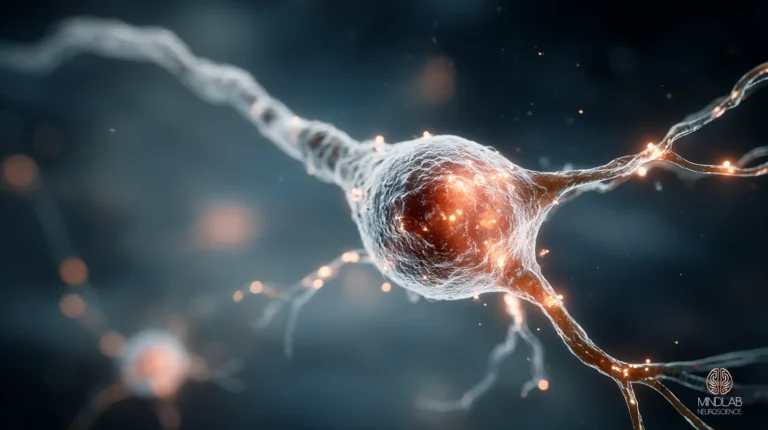
Dopamine is not a pleasure chemical. This is the single most consequential misunderstanding in popular neuroscience. The dopamine system encodes prediction errors, the mathematical difference between what the brain expects and what actually happens, and this distinction determines everything about why success kills drive.Midbrain dopamine neurons encode reward prediction errors. When an outcome exceeds expectation, dopamine surges. When it matches expectation exactly, dopamine flatlines at baseline. When it falls short, dopamine drops below baseline. The system registers surprise, not absolute reward magnitude.
Dopamine neurons in the ventral tegmental area encode the gap between expected and received reward with high precision, and post-achievement silence in this signal, rather than a flood of satisfaction, is what produces the motivational vacuum that follows goal completion.
Setting process-oriented sub-goals immediately after a major outcome keeps the reward circuit generating fresh prediction errors, which is the neural rationale behind momentum-preservation strategies.
This mechanism explains why the pursuit feels more alive than the achievement. During pursuit, every incremental signal that the goal is approaching generates a positive prediction error. The closer you get, the more refined those predictions become.
Then you succeed. The brain expected the outcome (it had been updating its internal model throughout the pursuit) and now reality matches prediction perfectly. Dopamine returns to baseline. That feeling you called drive was never about the goal. It was about the gap between where you were and where the circuit predicted you would be. Read about proven steps toward lasting success.
Why the Pursuit Always Feels Better Than the Win
The asymmetry is built into the hardware. During pursuit, uncertainty is high: micro-surprises arrive daily, each generating a prediction error, each generating dopamine. The system is constantly recalibrating. Achievement eliminates that uncertainty, the prediction model completes, and a complete model produces zero prediction error. The circuit goes quiet because the math resolved.
What Does Post-Achievement Motivation Loss Actually Look Like?
Post-achievement motivation loss presents as a specific three-marker pattern: motivational flatness, decision paralysis on direction, and nostalgia for the pursuit. In 26 years of practice, I have observed this pattern so consistently that I can predict it before the person describes it.Someone achieves something significant (closes a transformative deal, navigates a family through a health crisis, rebuilds a life after devastating loss) and within weeks, sometimes days, they experience a motivational state they cannot explain. They describe it in remarkably similar language: “I should feel great, but I feel nothing.”
The pattern does not discriminate by domain. It discriminates by architecture.
I look for three specific markers:
| Marker | What the Individual Reports | Circuit-Level Mechanism |
|---|---|---|
| Motivational flatness | Cannot generate enthusiasm for new goals despite intellectually recognizing their importance | Prediction error at baseline: no gap between expectation and outcome to generate a dopamine signal |
| Decision paralysis on direction | Knows they need to choose a next objective but every option feels equally uncompelling | Without a prediction error gradient, the reward circuit cannot rank competing options by anticipated value |
| Nostalgia for the pursuit | Misses the intensity of working toward the goal more than they enjoy having achieved it | Retrospective recognition that the dopamine signal was prediction-error-dependent, not outcome-dependent |
The prediction error mechanism does not distinguish between categories of success (corporate milestone or deeply personal triumph). It only registers the gap between expected and unexpected outcomes.
Post-achievement motivation loss presents as three measurable markers: blunted dopamine response in the nucleus accumbens, reduced prefrontal goal-encoding activity, and hedonic adaptation where prior rewards no longer generate anticipatory drive. For many high performers, this shift sets in soon after the goal is reached rather than building gradually.
This is not burnout. Burnout involves HPA axis dysregulation and stress-driven prefrontal erosion. What I am describing is a motivational architecture problem: the reward circuit is functioning exactly as designed, but the conditions that generated drive have been eliminated by the success itself.
How Does the Reward Circuit Recalibrate After Success?
The dopamine system adapts to each success by raising the baseline expectation, which means every subsequent achievement must be larger to produce the same motivational signal. The distinction between wanting and liking is neurologically dissociable: high performers experience a collapse of wanting with intact liking after major achievements.Worse, the system exhibits tolerance. Each success updates the baseline expectation upward. The first major professional milestone generates a substantial prediction error. The third requires a proportionally larger gap to produce the same motivational intensity. This is not a metaphor for hedonic adaptation: it is the literal circuit-level mechanism by which hedonic adaptation operates.
The damage extends beyond a single circuit. Dopamine dynamics operate as spatiotemporal waves across the striatum (the brain’s central reward-processing region), not as simple point signals, meaning a prediction error collapse causes the entire credit assignment system to lose its gradient. The brain cannot determine which behaviors are worth repeating because the signal that ranked them has gone silent.
Why Does Setting Bigger Goals Make It Worse?
Setting bigger goals after a motivation collapse temporarily restores dopamine signaling but accelerates the tolerance cycle, requiring progressively larger wins to generate equivalent drive. The logic seems sound: if the prediction error collapsed, create a new, bigger gap. Initially, this works: a larger ambition generates a fresh prediction error, dopamine responds, and drive returns.But this approach has a structural flaw visible only across multiple cycles. Each round of bigger-goal, pursuit, achievement, and collapse trains the reward circuit to require an ever-larger prediction gap. The person who needed a VP title to feel driven now requires the CEO seat.
I have watched this escalation pattern erode the quality of life for people who, by every external metric, should be thriving: objectively larger outcomes, progressively less satisfaction. They interpret this as a character deficiency or a failure of gratitude. It is neither. It is a predictable consequence of how dopamine circuits encode value.
When the only variable you change is the size of the outcome, the dopamine system responds by raising the threshold: each win trains the circuit to need a bigger one, until no achievable goal generates signal.
How Do You Rebuild Drive After the Prediction Error Collapses?
Sustainable drive requires restructuring the reward circuit’s value encoding: shifting from outcome-dependent to process-dependent dopamine release so that the work itself generates the prediction errors, not the anticipated result. Reward circuit restructuring targets which variables the system treats as prediction-relevant, rewiring the encoding rather than resetting the cycle.In practice, the intervention involves training the dopamine system to generate prediction errors from the process of work itself (the moment-to-moment uncertainty of solving problems, navigating complexity, and building skill) rather than from the anticipated outcome. When process generates the prediction error, achievement does not collapse the signal. Every problem solved reveals a new one.
This is not a cognitive reframe. It is a circuit-level intervention that uses Real-Time Neuroplasticity™, specifically, directed long-term potentiation (the biological process that strengthens neural connections through repeated activation) in the mesocortical pathway (the dopamine circuit connecting the midbrain to the prefrontal cortex), to strengthen the synaptic connections between process engagement and dopamine release in the ventral tegmental area (the brain’s primary dopamine production center). The prediction error shifts from “did I reach the goal?” to “what am I learning in this moment?” The second question never fully resolves.
I explore the full mechanism in The Dopamine Code. The prediction error architecture described here is the foundation of the book’s central argument: dopamine is not your enemy or your drug. It is a precision instrument that most people use incorrectly because they do not understand what it actually responds to.
What Is the Timeline for Rebuilding Motivation?
Circuit restructuring from outcome-dependent to process-dependent dopamine encoding follows a predictable three-phase arc, and the pattern holds regardless of whether the original achievement was professional, personal, or relational in nature across the individuals I have guided through the full protocol. First phase: Recognition and relief. The individual recognizes that the flatness is architectural, not a personal failing. This alone produces measurable relief: they stop interpreting their experience as ingratitude or weakness. No circuit change yet, but the absence of self-blame reduces the cortisol load that would otherwise compound the problem. Second phase: Process-dependent engagement emerges. The first measurable shift in how the reward circuit fires. Individuals report moments where the work generates its own momentum: brief windows where the doing, not the anticipated outcome, produces the drive signal. These windows expand with consistent protocol engagement. Third phase: Sustained restructuring consolidates. The reward circuit’s default encoding shifts from outcome to process. Achievement still produces satisfaction, but the absence of a pending achievement no longer produces flatness. Drive becomes self-sustaining rather than goal-dependent. Long-term potentiation in the mesocortical pathway has consolidated: the new encoding pattern persists without active effort.The critical variable is consistency of circuit engagement during the restructuring period. The prediction error coding reverts to its established pattern without sustained reinforcement.
This article is part of MindLAB’s Dopamine & Motivation hub, which covers the full spectrum of how the reward circuit shapes drive, decision-making, and long-term engagement, a core domain within the Cognitive Architecture pillar.
This article explains the neuroscience underlying post-achievement motivation loss. For personalized neurological assessment and intervention, contact MindLAB Neuroscience directly.
When Your Drive Architecture Needs Professional Restructuring
If the pattern described here (motivational flatness after success, escalating goal-setting with diminishing returns, nostalgia for the pursuit) describes your experience, this is not something that resolves through willpower or a new vision board. The circuit requires restructuring at the level where the prediction error is encoded.
A strategy call with Dr. Sydney Ceruto is the starting point for mapping your specific prediction error patterns. The conversation identifies which circuits are producing the flatness, assesses how long the outcome-dependent pattern has been running, and determines whether the Dopamine Architecture Protocol™ is the appropriate intervention for your neurological profile.
Why does motivation disappear after achieving a big goal?
The brain’s dopamine system generates drive through prediction errors: the gap between expected and actual outcomes. When you achieve a goal, that gap closes to zero and the neurochemical signal that powered your pursuit switches off. This response is normal dopamine function, not a character flaw. Dopamine neurons encode surprise, not reward magnitude: once the outcome is expected, the signal flatlines regardless of how significant the achievement was.
Is post-achievement motivation loss the same as burnout?
No. Burnout involves HPA axis dysregulation and chronic cortisol elevation: the stress system is overloaded. Post-achievement motivation loss is a dopamine prediction error collapse: the reward circuit stops generating drive signals because the prediction gap has closed. Different mechanisms require different interventions: burnout needs stress architecture repair, while motivation loss requires reward circuit restructuring through directed neuroplasticity.
Can setting bigger goals fix post-success motivation loss?
Temporarily, yes: a bigger goal creates a new prediction gap and dopamine responds with renewed drive. But each cycle raises the baseline expectation, requiring progressively larger achievements for the same signal. This tolerance escalation produces the paradox of objectively increasing success with subjectively decreasing satisfaction. The sustainable solution is a structural shift in what the reward circuit treats as prediction-relevant: from outcomes to the process of work itself.
How long does it take to rebuild motivation after it fades?
The initial cognitive shift, recognizing the flatness as architectural rather than personal failure, produces measurable relief in the first phase. Process-dependent engagement, where the work itself generates momentum rather than anticipated outcomes, typically emerges in the second phase. Sustained circuit restructuring, where drive becomes self-generating rather than goal-dependent, consolidates in the third phase. The timeline depends on consistency of protocol engagement and how long the outcome-dependent pattern has been established.
Why do high achievers feel guilty about losing motivation after success?
The guilt compounds the neurological problem. High achievers interpret the flatness as ingratitude because they intellectually recognize they should feel satisfied. But the prediction error collapse is architecture, not attitude: the circuit shut off because the prediction gap closed, not because the person lacks gratitude. The guilt activates stress pathways that further suppress dopamine firing, creating a feedback loop: flatness produces shame, shame deepens flatness.
References
- Howe, M. W., Tierney, P. L., Sandberg, S. G., Phillips, P. E. M. and Graybiel, A. M. (2013). Prolonged dopamine signalling in striatum signals proximity and value of distant rewards. Nature, 500(7464), 575–579. doi.org
- Everitt, B. J. and Robbins, T. W. (2013). From the ventral to the dorsal striatum: Devolving views of their roles in drug addiction. Neuroscience & Biobehavioral Reviews, 37(9), 1946–1954. doi.org
- Sharpe, M. J., Chang, C. Y., Liu, M. A., Batchelor, H. M., Mueller, L. E., Jones, J. L., Niv, Y. and Schoenbaum, G. (2017). Dopamine transients are sufficient and necessary for acquisition of model-based associations. Nature Neuroscience, 20(5), 735–742. doi.org
From Reading to Rewiring
Understand the neuroscience. Apply it to your life. Work directly with Dr. Sydney Ceruto to build a personalized strategy.
Book a Strategy Call