Career Coaching for Professionals in Bergen County

Rewire the neural architecture behind career advancement for professionals across Bergen County's diverse professional landscape.

Bergen County's pharmaceutical, professional services, and corporate talent face career pressures that are fundamentally neurological. MindLAB Neuroscience uses Real-Time Neuroplasticity™ to restructure the cognitive circuits behind career trajectory, professional decision-making, and the sustained momentum that separates advancement from stagnation.

Book a Strategy Call
ForbesUSA TodayHuffPostNewsweekAssociated PressCosmopolitanBusiness InsiderForbesUSA TodayHuffPostNewsweekAssociated PressCosmopolitanBusiness Insider

Key Points

  1. Professional practice builds habituated prefrontal circuits that resist the cognitive evolution career advancement requires — producing stagnation that looks like a choice but is architectural.
  2. Real-Time Neuroplasticity™ recalibrates the dopamine, executive function, and cognitive flexibility circuits that govern career behavior and professional transitions.
  3. Industry transitions require restructuring the dorsolateral prefrontal and reward circuits that have been calibrated to a specific professional domain.
  4. Dr. Ceruto maps your specific neural architecture during the Strategy Call to identify which circuits are running career-limiting programs.
  5. MindLAB's methodology produces permanent structural change — addressing root neural architecture rather than layering strategies on top of existing cognitive constraints.
Marker Traditional Approach Neuroscience-Based Approach Why It Matters
Target of Intervention Surface-level career strategies and goal-setting Neural circuits governing professional behavior Root-cause rewiring vs. strategy overlay
Approach to Stagnation New tactics, accountability, motivation techniques Recalibration of prefrontal and dopamine pathways Structural brain change, not behavioral tips
Duration of Results Fades when external accountability ends Permanent neural pathway restructuring Change that holds without constant reinforcement
Personalization Standardized career frameworks and assessments Mapped to your specific neural architecture Precision targeting for your exact pattern

Why Career Coaching for Professionals Matters in Bergen County

Career Coaching for Professionals in Bergen County

Bergen County concentrates one of the most diverse and accomplished professional populations in the New York metropolitan area. The pharmaceutical executives in Paramus and Hackensack, the professional services leaders in Teaneck, the corporate managers across Englewood, Ridgewood, and Fort Lee, the medical professionals in the county’s healthcare centers — these professionals navigate career pressures shaped by Bergen County’s unique position as home to major corporate campuses, pharmaceutical headquarters, and a professional services infrastructure that spans virtually every industry. The career challenges that emerge in this environment are specific and neurological. The pharmaceutical executive in Paramus whose career trajectory stalled when the role shifted from scientific expertise to organizational leadership. The professional services partner in Teaneck whose business development instincts are strong but whose self-advocacy disappears in contexts that determine compensation and advancement. The corporate manager in Ridgewood who has been performing at two levels above their title for years but cannot translate that performance into promotion. These are not motivation deficits. They are neural architecture problems — circuits built for one set of professional demands that have not been restructured for the demands that matter now.

The neuroscience behind career stagnation for Bergen County professionals involves measurable brain mechanisms that conventional career approaches miss entirely. The prefrontal cortex develops habituated patterns through years of professional practice — and those patterns become the default operating system for career-related decisions. When a professional’s career demands evolve — from technical execution to strategic leadership, from individual contribution to organizational influence, from domain expertise to cross-functional navigation — the prefrontal circuits often continue running the previous program. The dopamine system compounds this: calibrated to the reward patterns of familiar professional activities, it produces diminishing motivation toward the unfamiliar cognitive work that advancement requires. A pharmaceutical professional in Hackensack whose research career was exceptional but whose transition to executive leadership has stalled is not failing to adapt. Their prefrontal and dopamine circuits are still optimized for the precise, measurable work of research and have not been restructured for the ambiguous, relationship-intensive work of senior leadership.

Dr. Ceruto’s methodology addresses these career-constraining patterns at the neurological level where they operate. Real-Time Neuroplasticity™ recalibrates the circuits that govern professional behavior — restructuring the prefrontal patterns that automate career-limiting defaults, rebalancing the dopamine pathways that determine which professional activities generate genuine motivation, and rewiring the executive function networks that either enable strategic career thinking or keep defaulting to tactical execution. For the professional services leader in Teaneck whose career advancement depends on visibility and influence but whose neural architecture deprioritizes those activities in favor of client deliverables, the intervention targets the specific reward circuit creating the imbalance. For the corporate executive in Englewood whose strategic capability is evident to peers but invisible to decision-makers, the process identifies and restructures the neural patterns governing self-advocacy and professional presence.

Bergen County’s professional landscape adds a neurological dimension that is particular to its geographic and cultural position. Professionals here often navigate career trajectories that span multiple industries and professional contexts — pharmaceutical to biotech, corporate to consulting, established firms to emerging ventures. Each transition demands cognitive flexibility that the brain does not automatically provide. The cognitive flexibility required to shift professional identity, evaluate opportunities through a new lens, and sustain motivation through the uncertainty of career change is governed by specific neural circuits — primarily in the dorsolateral prefrontal cortex and the dopamine-mediated reward system. When those circuits have been shaped by years of practice in one professional domain, they actively resist the recalibration that transition requires. This resistance feels like ambivalence or indecision but is actually architectural — a brain running circuits optimized for a career context that no longer exists.

For professionals throughout Bergen County — from the pharmaceutical executives of Paramus and Hackensack to the corporate leaders of Englewood, Ridgewood, and Fort Lee to the professional services specialists of Teaneck and beyond — the Strategy Call represents a fundamentally different approach to career advancement. Dr. Ceruto maps the specific neural mechanisms constraining your trajectory in a focused phone conversation. No personality assessments, no motivational frameworks, no accountability structures that assume the problem is effort. Instead, precision identification of which circuits are running career-limiting programs — and what restructuring those circuits would actually require. In a county where professionals have access to comprehensive career resources and strong professional networks, the differentiator is addressing the cognitive architecture that determines whether those resources and networks translate into actual career advancement.

Neuroscience consultation — rosewood table with crystal brain sculpture and branded journal for strategy call preparation
Dr. Sydney Ceruto, PhD — Founder, MindLAB Neuroscience

Dr. Sydney Ceruto, PhD — Founder & CEO, MindLAB Neuroscience

Dr. Ceruto holds a PhD in Behavioral & Cognitive Neuroscience from NYU and two Master’s degrees from Yale University. She lectures at the Wharton Executive Development Program at the University of Pennsylvania and has been an Executive Contributor to the Forbes Coaching Council since 2019. Dr. Ceruto is the author of The Dopamine Code (Simon & Schuster, June 2026). She founded MindLAB Neuroscience in 2000 and has spent over 26 years pioneering Real-Time Neuroplasticity™ — a methodology that permanently rewires the neural pathways driving behavior, decisions, and emotional responses.

Success Stories

“Dr. Ceruto's methodology took me from a founder on the verge of quitting to a leader capable of building the team and culture that drove Liquid IV's success. Her ability to restructure how I make decisions and lead under pressure changed the trajectory of the entire company. I don't say that lightly. The company I built after working with her was fundamentally different from the company I was building before — because I was fundamentally different.”

Brandin C. — Tech Founder Los Angeles, CA

“Dr. Ceruto restructured how I show up in high-stakes conversations. The blind spots I couldn't see for years became visible in our first sessions. I went from an overwhelmed Managing Director to a leader people actually want to follow. The change wasn't cosmetic — it was architectural. The way I process high-pressure interactions is fundamentally different now.”

Matteo R. — Investment Banker London, UK

“It took years and many other professionals — not to mention tens of thousands of dollars — before I was recommended to Dr. Ceruto. I’d been suffering with chronic anxiety, OCD, and distorted thinking. After just two sessions, I started to see positive change. By the time my program ended, I had my sanity and my life back. Sydney creates a warm, supportive atmosphere where I found myself sharing things I’ve never told anyone. She is there for you anytime you need her.”

Nicholas M. — Private Equity Hong Kong

“Nothing was wrong — and that's exactly why no one could help me. I wasn't struggling. I wanted to know what my brain was actually capable of if its resting-state architecture was optimized. Dr. Ceruto mapped my default mode network and restructured how it allocates resources between focused and diffuse processing. The cognitive clarity I operate with now isn't something I'd ever experienced before — and I had no idea it was available.”

Nathan S. — Biotech Founder Singapore

“The moment two priorities competed for bandwidth, my attention collapsed — and I'd convinced myself my brain was fundamentally broken. Dr. Ceruto identified the specific attentional pattern that was causing the collapse and restructured it. My prefrontal cortex wasn't broken. It was misfiring under competing demands. Once that pattern changed, everything I was trying to hold together stopped requiring so much effort.”

Rachel M. — Clinical Researcher Boston, MA

“The divorce wasn't destroying me emotionally — it was destroying me neurologically. My amygdala was treating every interaction with my ex, every legal update, every quiet evening as a survival-level threat. Years of talk-based approaches hadn't touched it. Dr. Ceruto identified the attachment disruption driving the response and restructured it at the root. The threat response stopped. Not because I learned to tolerate it — because the pattern was no longer running.”

Daniela M. — Attorney North Miami Beach, FL

Frequently Asked Questions About Career Coaching for Professionals

Why do accomplished Bergen County professionals experience career stagnation?

Years of professional practice build prefrontal circuits optimized for one set of demands. When career advancement requires different cognitive approaches — strategic leadership, organizational influence, cross-functional navigation — those circuits continue running the previous program, producing stagnation that has nothing to do with capability.

How does a neuroscience approach help with career transitions between industries?

Industry transitions stall because the brain's reward, identity, and cognitive flexibility circuits have been calibrated to a specific professional domain. MindLAB restructures the dorsolateral prefrontal and dopamine circuits that govern professional adaptability — creating genuine cognitive flexibility rather than forcing change against existing neural resistance.

Can this approach help pharmaceutical professionals transition into executive leadership?

Yes. The neural architecture built through years of scientific and technical practice — precision-oriented, evidence-driven, individually focused — often constrains the relational, ambiguous, and organizational thinking that executive leadership demands. Restructuring those circuits enables the cognitive shift without sacrificing the analytical strengths.

What happens during the Strategy Call?

The Strategy Call is a focused phone conversation with Dr. Ceruto. She maps the specific neural mechanisms constraining your professional trajectory and determines whether MindLAB's methodology fits your situation. It provides precision about why the pattern has persisted and what restructuring looks like.

Is this approach available to professionals throughout Bergen County?

Yes. MindLAB Neuroscience works with professionals across Bergen County including Paramus, Hackensack, Teaneck, Englewood, Ridgewood, Fort Lee, and the broader county area. The Strategy Call is conducted by phone.

Also available in: Miami · Wall Street · Midtown Manhattan · Beverly Hills · Lisbon

Take the First Step

The Strategy Call is a focused conversation with Dr. Ceruto that maps the specific neural mechanisms constraining your career trajectory and determines the right path forward.

Book a Strategy Call
MindLAB Neuroscience consultation room

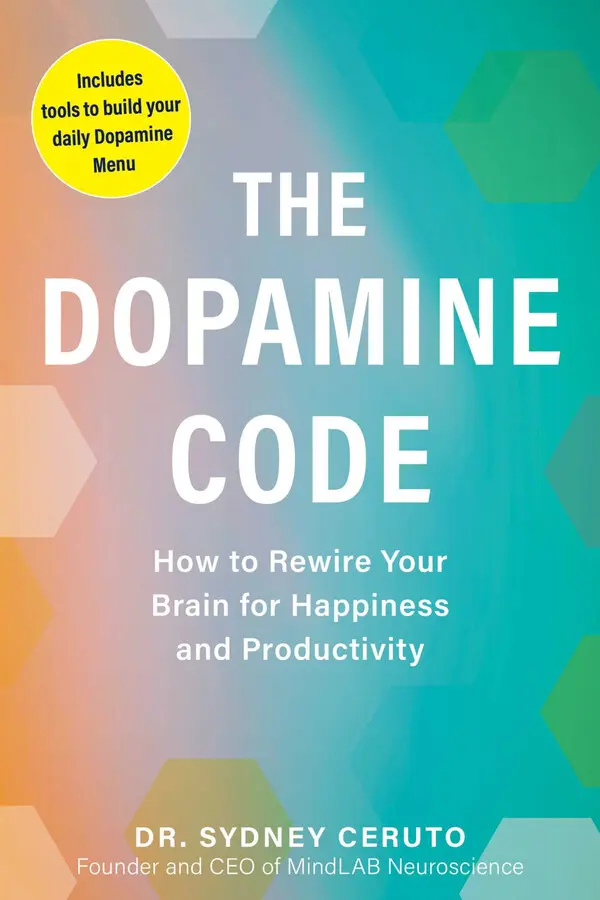
The Dopamine Code

Decode Your Drive

Why Your Brain Rewards the Wrong Things

Your brain's reward system runs every decision, every craving, every crash — and it was never designed for the life you're living. The Dopamine Code is Dr. Ceruto's framework for understanding the architecture behind what drives you, drains you, and keeps you locked in patterns that willpower alone will never fix.

Published by Simon & Schuster, The Dopamine Code is Dr. Ceruto's framework for building your own Dopamine Menu — a personalized system for motivation, focus, and enduring life satisfaction.

Order Now

Ships June 9, 2026

The Dopamine Code by Dr. Sydney Ceruto — Decode Your Drive
Locations
Secret Link

The Intelligence Brief

Neuroscience-backed analysis on how your brain drives what you feel, what you choose, and what you can’t seem to change — direct from Dr. Ceruto.