





Career Coaching for Professionals in Midtown Manhattan

Restructure the neural patterns behind executive presence, strategic thinking, and career momentum in corporate Manhattan.

Midtown's corporate headquarters demand a cognitive profile that most career guidance never addresses. MindLAB Neuroscience uses Real-Time Neuroplasticity™ to rewire the neural architecture behind executive presence, strategic decision-making, and the professional momentum that separates advancement from stagnation.

Book a Strategy Call
ForbesUSA TodayHuffPostNewsweekAssociated PressCosmopolitanBusiness InsiderForbesUSA TodayHuffPostNewsweekAssociated PressCosmopolitanBusiness Insider

Key Points

  1. Executive presence is governed by the prefrontal-amygdala circuit — not personality — and can be permanently restructured through targeted neural intervention.
  2. Corporate environments train the brain to allocate cognitive resources to social threat-monitoring, often at the expense of strategic thinking and leadership capacity.
  3. Real-Time Neuroplasticity™ recalibrates the specific circuits constraining career advancement — from dopamine pathways to executive function networks.
  4. Dr. Ceruto maps your specific neural architecture during the Strategy Call to identify which circuits are running career-limiting programs.
  5. MindLAB's methodology produces permanent structural change — addressing the root architecture rather than layering strategies on top of existing constraints.
Marker Traditional Approach Neuroscience-Based Approach Why It Matters
Target of Intervention Surface-level career strategies and goal-setting Neural circuits governing professional behavior Root-cause rewiring vs. strategy overlay
Approach to Stagnation New tactics, accountability, motivation techniques Recalibration of dopamine and executive function pathways Structural brain change, not behavioral tips
Duration of Results Fades when external accountability ends Permanent neural pathway restructuring Change that holds without constant reinforcement
Personalization Standardized career frameworks and assessments Mapped to your specific neural architecture Precision targeting for your exact pattern

Why Career Coaching for Professionals Matters in Midtown Manhattan

Career Coaching for Professionals in Midtown Manhattan

Midtown Manhattan concentrates more corporate headquarters, media companies, and advertising agencies per square mile than anywhere else in the world. The professionals who operate in this environment — from the executive floors of Park Avenue towers to the creative agencies clustered around Madison and the media companies near Times Square and Hudson Yards — face career pressures that are as much neurological as they are professional. The executive who presents flawlessly in boardrooms but freezes when it is time to advocate for their own advancement. The creative director whose ideation is extraordinary but whose executive presence evaporates in senior leadership meetings. The mid-career professional at a Fortune 500 headquarters who has mastered every technical competency and still cannot break through to the C-suite. These patterns are not confidence problems. They are specific neural configurations — circuits built for one set of professional demands that become constraints when the demands evolve.

The neuroscience of career stagnation in Midtown’s corporate environment involves measurable brain mechanisms. Executive presence — the quality that determines whether someone is perceived as leadership material — is not a personality trait. It is a function of how the prefrontal cortex manages the amygdala’s threat-detection system during high-stakes social interactions. When the amygdala interprets a board meeting or a salary negotiation as a threat, it triggers subtle physiological responses — micro-expressions, vocal shifts, postural changes — that undermine authority before a single word of content is delivered. A senior vice president on Park Avenue whose career has plateaued despite exceptional performance reviews may be running a neural pattern where the threat-detection circuit fires in precisely the situations that require confident self-advocacy. No amount of presentation coaching addresses this because the pattern operates below the level where conscious strategy can intervene.

Dr. Ceruto’s methodology targets these career-constraining patterns at their neurological source. Real-Time Neuroplasticity™ recalibrates the circuits that govern how professionals process high-stakes situations — restructuring the prefrontal-amygdala pathways that determine whether a career-critical moment triggers confident engagement or subtle self-sabotage. For the advertising executive near Madison Avenue whose creative brilliance is undermined by an inability to navigate corporate politics, the intervention addresses the specific neural patterns that produce social threat responses in hierarchical environments. For the media professional near Hudson Yards whose career trajectory stalled when the role shifted from execution to strategy, the process restructures the executive function circuits that either enable or prevent the transition from tactical to strategic thinking.

Midtown’s corporate culture adds a particular dimension to career stagnation that is often invisible from the inside. The emphasis on perception management — how you are seen mattering as much as what you deliver — creates neural patterns where the brain allocates enormous cognitive resources to monitoring social signals rather than generating strategic insight. Over time, this hypervigilance becomes automated. The anterior cingulate cortex, which monitors for conflict and social evaluation, becomes overactive, leaving fewer cognitive resources available for the creative and strategic thinking that defines leadership. A professional who feels perpetually exhausted despite adequate sleep and fitness may be experiencing the metabolic cost of a brain that is running social threat-monitoring circuits at maximum capacity throughout every workday. This is not burnout in the conventional sense. It is a specific neural resource allocation pattern that can be restructured.

For professionals throughout Midtown — from the corporate towers of Sixth Avenue to the law firms of Third Avenue to the consulting agencies surrounding Grand Central — the Strategy Call represents a fundamentally different entry point into career advancement. Dr. Ceruto maps the specific neural mechanisms constraining your trajectory in a focused phone conversation. No personality assessments, no motivational frameworks, no accountability structures that assume the problem is effort. Instead, a precise identification of which circuits are running career-limiting programs — and what restructuring those circuits would actually require. In a borough where everyone has access to the same career advice, the differentiator is addressing the architecture that determines whether advice can be implemented at all.

Walnut credenza with crystal brain sculpture and MindLAB journal in diffused dusk light suggesting high-floor Midtown Manhattan private office
Dr. Sydney Ceruto, PhD — Founder, MindLAB Neuroscience

Dr. Sydney Ceruto, PhD — Founder & CEO, MindLAB Neuroscience

Dr. Ceruto holds a PhD in Behavioral & Cognitive Neuroscience from NYU and two Master’s degrees from Yale University. She lectures at the Wharton Executive Development Program at the University of Pennsylvania and has been an Executive Contributor to the Forbes Coaching Council since 2019. Dr. Ceruto is the author of The Dopamine Code (Simon & Schuster, June 2026). She founded MindLAB Neuroscience in 2000 and has spent over 26 years pioneering Real-Time Neuroplasticity™ — a methodology that permanently rewires the neural pathways driving behavior, decisions, and emotional responses.

Success Stories

“Willpower, accountability systems, cutting up cards — none of it worked because none of it addressed what was actually driving the behavior. Dr. Ceruto identified the reward prediction error that had been running my purchasing decisions for over a decade. Once the loop was visible, it lost its power. The compulsion didn't fade — it stopped.”

Priya N. — Fashion Executive New York, NY

“Every close relationship I had eventually hit the same wall — I'd flood emotionally and shut down or explode, and nothing I'd tried gave me real control over it. Dr. Ceruto identified that my autonomic nervous system was defaulting to fight-or-flight the moment real intimacy was on the line. She didn't give me coping tools. She restructured the default. The flooding stopped because the trigger architecture changed.”

Simone V. — Publicist New York, NY

“I could perform at the highest level professionally and still feel hijacked emotionally in my closest relationships — and no conventional approach had ever explained why those two realities coexisted. Dr. Ceruto identified the limbic imprint — an amygdala encoding from childhood that was running every intimate interaction I had. She didn't help me understand it better. She dismantled it. The reactivity isn't something I regulate anymore. The pattern that generated it is gone.”

Natasha K. — Art Advisor Beverly Hills, CA

“Dr. Ceruto restructured how I show up in high-stakes conversations. The blind spots I couldn't see for years became visible in our first sessions. I went from an overwhelmed Managing Director to a leader people actually want to follow. The change wasn't cosmetic — it was architectural. The way I process high-pressure interactions is fundamentally different now.”

Matteo R. — Investment Banker London, UK

“I knew the scrolling was a problem, but I didn't understand why I couldn't stop — or why it left me feeling hollow every time. Dr. Ceruto identified the dopamine-comparison loop that had fused my sense of worth to a feed. Years of trying to set boundaries with my phone hadn't worked because the problem was never the phone. Once the loop broke, the compulsion just stopped. My relationships started recovering almost immediately.”

Anika L. — Creative Director Los Angeles, CA

“It took years and many other professionals — not to mention tens of thousands of dollars — before I was recommended to Dr. Ceruto. I’d been suffering with chronic anxiety, OCD, and distorted thinking. After just two sessions, I started to see positive change. By the time my program ended, I had my sanity and my life back. Sydney creates a warm, supportive atmosphere where I found myself sharing things I’ve never told anyone. She is there for you anytime you need her.”

Nicholas M. — Private Equity Hong Kong

Frequently Asked Questions About Career Coaching for Professionals

Why does career stagnation happen to high-performing Midtown professionals?

High-performing professionals often build neural circuits optimized for execution and tactical excellence. When career advancement requires strategic thinking, executive presence, or self-advocacy, those same circuits become constraints. The stagnation is architectural — the brain is running programs built for a previous level.

How does neuroscience address executive presence?

Executive presence is governed by the prefrontal-amygdala circuit. When the amygdala interprets leadership moments as threats, it triggers subtle physiological responses that undermine authority. MindLAB recalibrates this circuit so that high-stakes situations engage confident cognition rather than defensive reactivity.

Can this approach help with career transitions within corporate environments?

Yes. Internal career transitions often stall because the brain's reward and identity circuits have been calibrated to a specific role. Restructuring those circuits creates the cognitive flexibility needed to operate credibly in a new capacity without the neural resistance that typically accompanies major professional shifts.

What happens during the Strategy Call?

The Strategy Call is a focused phone conversation with Dr. Ceruto. She maps the specific neural mechanisms constraining your professional trajectory and determines whether MindLAB's methodology fits your situation. It provides precision about why the pattern has persisted and what restructuring looks like.

Is this approach available to Midtown Manhattan professionals?

Yes. MindLAB Neuroscience works with professionals throughout Midtown Manhattan, including Park Avenue, Madison Avenue, Hudson Yards, the Times Square district, and the broader Midtown corporate area. The Strategy Call is conducted by phone.

Also available in: Miami · Wall Street · Beverly Hills · Lisbon

Take the First Step

The Strategy Call is a focused conversation with Dr. Ceruto that maps the specific neural mechanisms constraining your career trajectory and determines the right path forward.

Book a Strategy Call
MindLAB Neuroscience consultation room

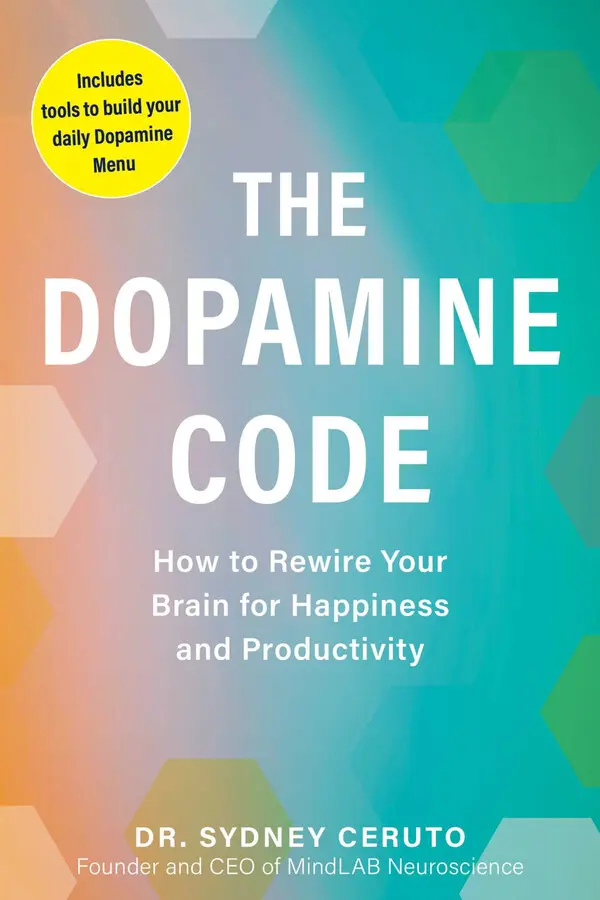
The Dopamine Code

Decode Your Drive

Why Your Brain Rewards the Wrong Things

Your brain's reward system runs every decision, every craving, every crash — and it was never designed for the life you're living. The Dopamine Code is Dr. Ceruto's framework for understanding the architecture behind what drives you, drains you, and keeps you locked in patterns that willpower alone will never fix.

Published by Simon & Schuster, The Dopamine Code is Dr. Ceruto's framework for building your own Dopamine Menu — a personalized system for motivation, focus, and enduring life satisfaction.

Order Now!

Available now

The Dopamine Code by Dr. Sydney Ceruto — Decode Your Drive
Locations
Secret Link